

 US Dollar

What Is Eyelet Fabric? Complete Guide for Sewing & Crafting
Posted by BLG on 2026 Apr 16th
Posted by BLG on 2026 Apr 16th

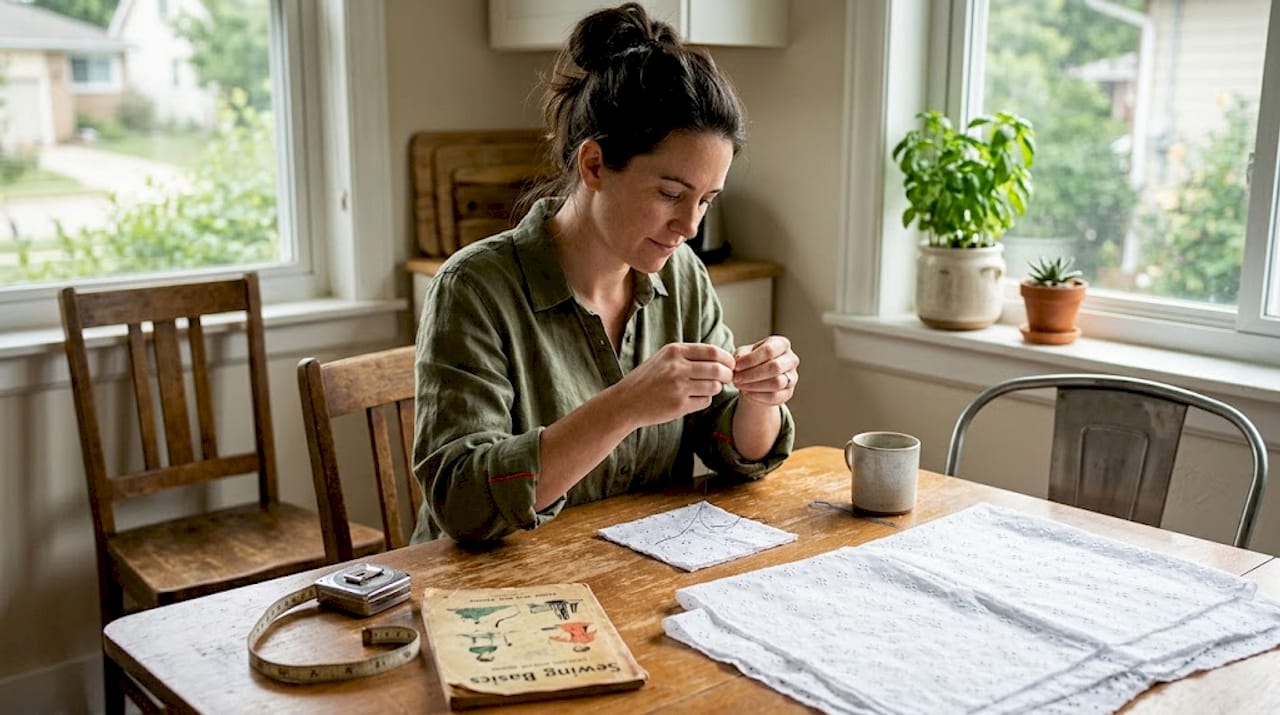
TL;DR:
- Eyelet fabric features a solid woven base with decorative punched or embroidered holes, differing from lace.
- Its construction provides breathability, softness, durability, and a semi-sheer, lightweight drape.
- Proper care involves delicate washing, gentle ironing, and mindful storage to maintain embroidery and shape.
Eyelet fabric gets mistaken for lace constantly, and that single misunderstanding holds a lot of sewing projects back. Unlike lace, which is built from knotted or looped threads, eyelet starts as a solid woven base with holes cut or punched through it and finished edges that keep everything intact. That structural difference changes everything: how it drapes, how you cut it, how it wears, and how long it lasts. Whether you’re building a summer dress, outfitting a child, or refreshing your home with breezy curtains, understanding eyelet fabric properly is the first step toward using it well.
| Point | Details |
|---|---|
| Distinct look and feel | Eyelet fabric is lightweight, breathable, and recognized by its embroidered holes and often soft texture. |
| Project flexibility | You can use eyelet fabric for airy garments and stylish home decor by choosing the right weight and hole size. |
| Care is essential | Handle eyelet gently with cold washes and air drying to keep its structure intact. |
| Selection tips matter | Pick eyelet fabric based on project type, drape, and lining needs to achieve the best results. |
Eyelet fabric is a woven textile with small decorative holes punched, cut, or embroidered into it, most often in repeating floral or geometric patterns. The holes are not the structure itself — they’re openings made within an existing woven fabric, typically cotton. This is what separates it from lace, which has no solid base and instead relies entirely on its thread work for structure. Eyelet sits comfortably between a plain cotton and an open lace: you get durability and softness from the base, plus ventilation and visual interest from the perforations.
The history of eyelet lace traces back to 16th century European needlework traditions, where artisans hand-embroidered tiny holes in fine linen as a form of status display. By the 19th century, the industrial revolution brought machine-made eyelet to the masses, and it became a fixture in children’s clothing, women’s undergarments, and Victorian housewares. Today, eyelet fabric has moved far beyond those associations and appears in resort wear, bohemian fashion, home textiles, and even accessories.
The physical properties that make eyelet so useful come directly from its construction. Key characteristics include:
A lot of sewists treat eyelet the same as any other cotton. That’s a mistake. The holes change how you lay out pattern pieces, how you press seams, and even how you choose interfacing.
| Feature | Eyelet fabric | Plain weave cotton | Lace |
|---|---|---|---|
| Base structure | Woven with punched holes | Solid woven | No base (thread only) |
| Opacity | Semi-sheer | Opaque | Sheer |
| Requires lining | Usually yes | Rarely | Sometimes |
| Durability | High (reinforced edges) | High | Moderate |
| Breathability | Very high | Moderate | High |
| Best use | Apparel, decor | Anything | Detail, trim, overlay |
“Breathable and airy due to perforations, lightweight, soft texture, semi-sheer, good drape, durable with reinforced edges” — this combination of qualities is what makes eyelet stand apart from every other decorative cotton fabric on the market.
If you want to see how eyelet fabrics are made with different embroidery and lace techniques, browsing a full collection gives you a strong visual reference for comparing hole sizes, edge treatments, and base weights.
With the basics and background established, let’s look at how eyelet fabric is actually created. The process sounds simple but involves precision at every step, and shortcuts in manufacturing show up fast once you start sewing.
Here’s how quality eyelet is built:
The base material matters more than most people realize. Pure cotton eyelet breathes best and softens with washing, making it ideal for garments worn close to the skin. Polyester blends resist wrinkles and hold their shape better, which helps in home decor applications where you want structured curtains or pillow covers that stay crisp.
| Type | Machine-made eyelet | Hand-embroidered eyelet |
|---|---|---|
| Cost | Lower | Higher |
| Consistency | Very uniform | Slight variation per hole |
| Texture | Smooth, regular | Richer, more tactile |
| Availability | Widely available | Limited, specialty |
| Best for | Everyday garments, decor | Heirloom pieces, couture |
Strong fabric durability in design always comes back to how well edges are finished. With eyelet, check that the embroidery around each hole is dense and even. Loose or thin stitching will unravel after the first few washes.
Pro Tip: Turn the fabric over and check the back side. The wrong side of quality eyelet will show tight, even stitching with no loose thread tails. If the back looks messy or the embroidery pulls away easily, the hole edges won’t hold up over time.
Once you understand how it’s made, you’re ready to choose the right eyelet for your project. The good news is that eyelet suits a wide range of applications, from summer dresses and kids wear to curtains and table linens. The challenge is matching the fabric’s specific properties to what you’re actually making.
Start with weight and hole size. Lightweight eyelet with small, closely spaced holes reads as refined and formal. Heavier eyelet with large, open holes has a boho, relaxed quality that works better in casual apparel or rustic home decor. Getting this match right prevents the frustrating situation where your fabric feels wrong for the final project even if it looked perfect on the bolt.
Popular project categories:
Our fabric selection guide breaks down how to match fabric properties to project types, which is helpful if you’re new to working with specialty textiles. And if you need a deeper look at how fabric weight affects construction choices, the guide to understanding fabric weights is worth reading before you cut.
Lining decisions are tied directly to hole size and base opacity. If you can read print through the fabric when you hold it up to light, you need a lining for any garment project. For curtains, a sheer backing might be intentional since the filtered light is part of the effect.
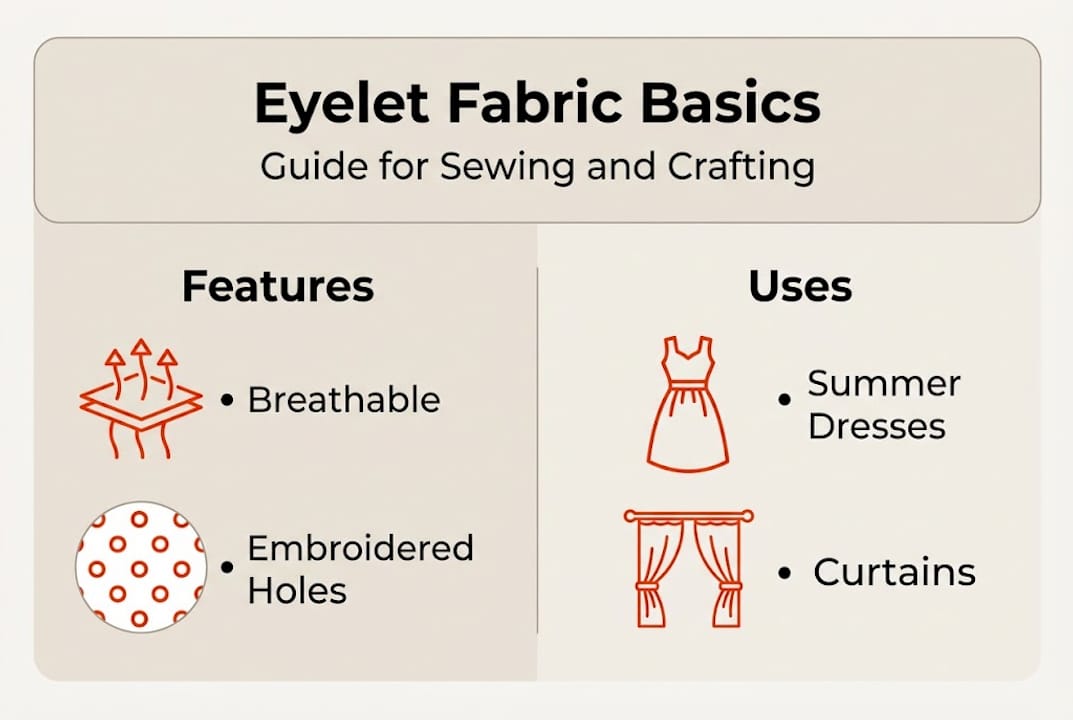
Pro Tip: Eyelet patterns often have a directional flow based on how the holes are arranged. Before cutting, fold the fabric and hold it at arm’s length to see if the pattern reads differently from different angles. Misaligned pattern pieces are one of the most common eyelet sewing mistakes.
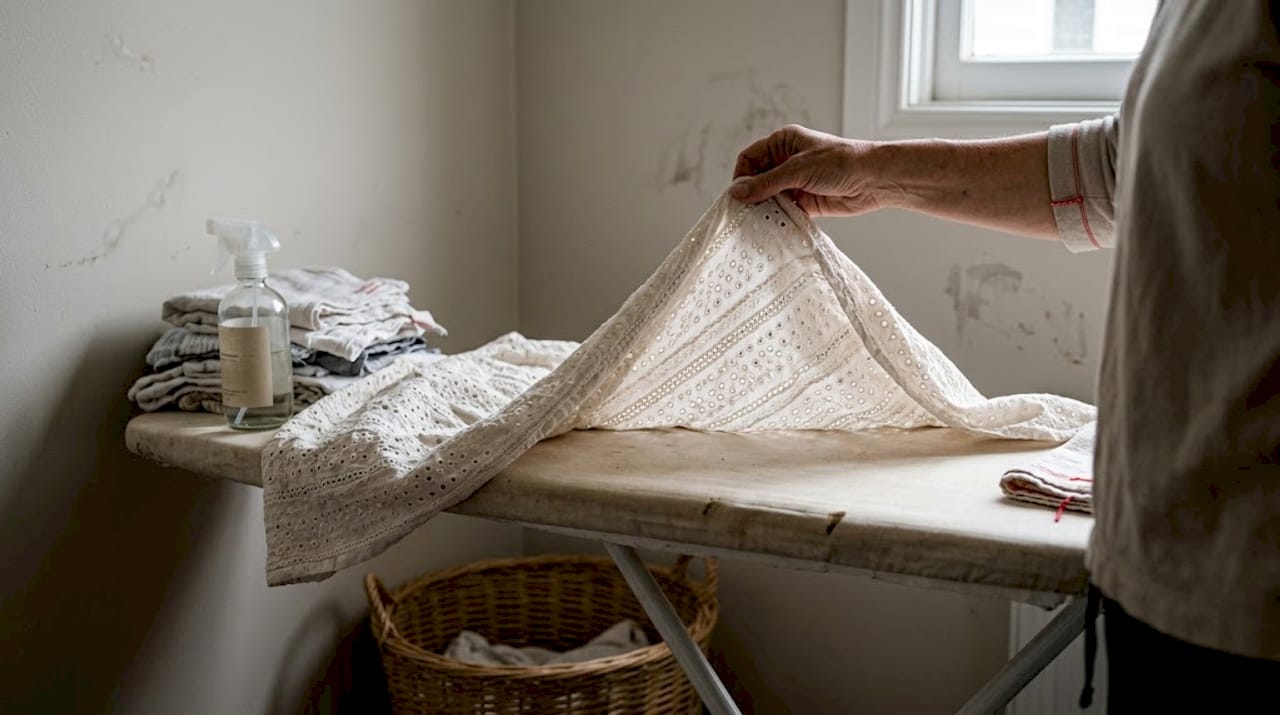
After selecting and sewing with eyelet fabric, proper aftercare is crucial to keep your work beautiful. Cotton eyelet in particular responds well to care, but a few common mistakes can distort the holes, fray the embroidered edges, or fade the fabric faster than necessary.
Follow these steps for best results:
Common care mistakes to avoid:
Cotton eyelet actually gets softer and more comfortable with careful washing over time. The fibers relax, the hand improves, and the drape becomes more fluid — which means a well-cared-for eyelet dress or curtain genuinely gets better with age.
For lined eyelet projects, follow the care instructions of whichever layer is most delicate. Our fabric care guide covers multi-layer situations in detail, and the fabric care checklist is handy to keep near your laundry station.
Here’s an honest observation from years of watching creative projects unfold: most sewists try eyelet once, make a sweet summer blouse, and then mentally file it under “seasonal specialty.” That’s selling the fabric short in a significant way.
Eyelet in 2026 looks nothing like the white cotton trim of decades past. Manufacturers are producing it in deep jewel tones, bold geometrics, and large-scale embroidered designs that read as statement fabric rather than background detail. A black eyelet blazer is not a lace garment. A terracotta eyelet curtain is not a cottage throwback. The material has evolved even if the perception hasn’t.
The real shift happens when you stop thinking of eyelet as a category and start thinking of it as a construction technique applied to many different fabric weights and patterns. Our fabric selection tips show just how wide the design range actually is when you approach textiles with an open mind.
Pro Tip: Seek out large-scale embroidered eyelet or versions in unexpected colors. Pairing deep-colored eyelet with a contrasting lining creates a two-tone effect that plain lace simply cannot achieve.
Ready to experiment? Here’s where you can find high-quality eyelet and similar fabrics for your upcoming creations.

At fabric-fabric.com, we stock a wide range of eyelet fabrics suited to both apparel and home decor projects. Whether you’re searching for classic white cotton eyelet for a summer dress or something bolder for a statement home piece, our home decor fabric section and our curated backdrop fabrics selection give you plenty of starting points. Browse by weight, color, and pattern scale to find exactly what your project calls for. Our team is also available to answer questions about pairing, lining choices, and yardage estimates so you can order with confidence.
Eyelet fabric works especially well for summer dresses and curtains because of its light and airy qualities, and it’s a natural choice for kids’ clothing, pillow covers, and table linens too.
Lining is recommended for most apparel projects since eyelet is semi-opaque to sheer, but decor pieces like curtains may skip the lining if filtered light is the desired effect.
Wash eyelet on a delicate, cold cycle and air dry to prevent distortion. Avoid high heat in both washing and drying to protect the embroidered hole edges.
Eyelet starts with a plain weave base that gets holes cut and embroidered into it, while lace has no base fabric and is formed entirely by looping or knotting threads together.