

 US Dollar

What is slub fabric? A 2026 guide for crafters
Posted by BLG on 2026 Mar 13th
Posted by BLG on 2026 Mar 13th

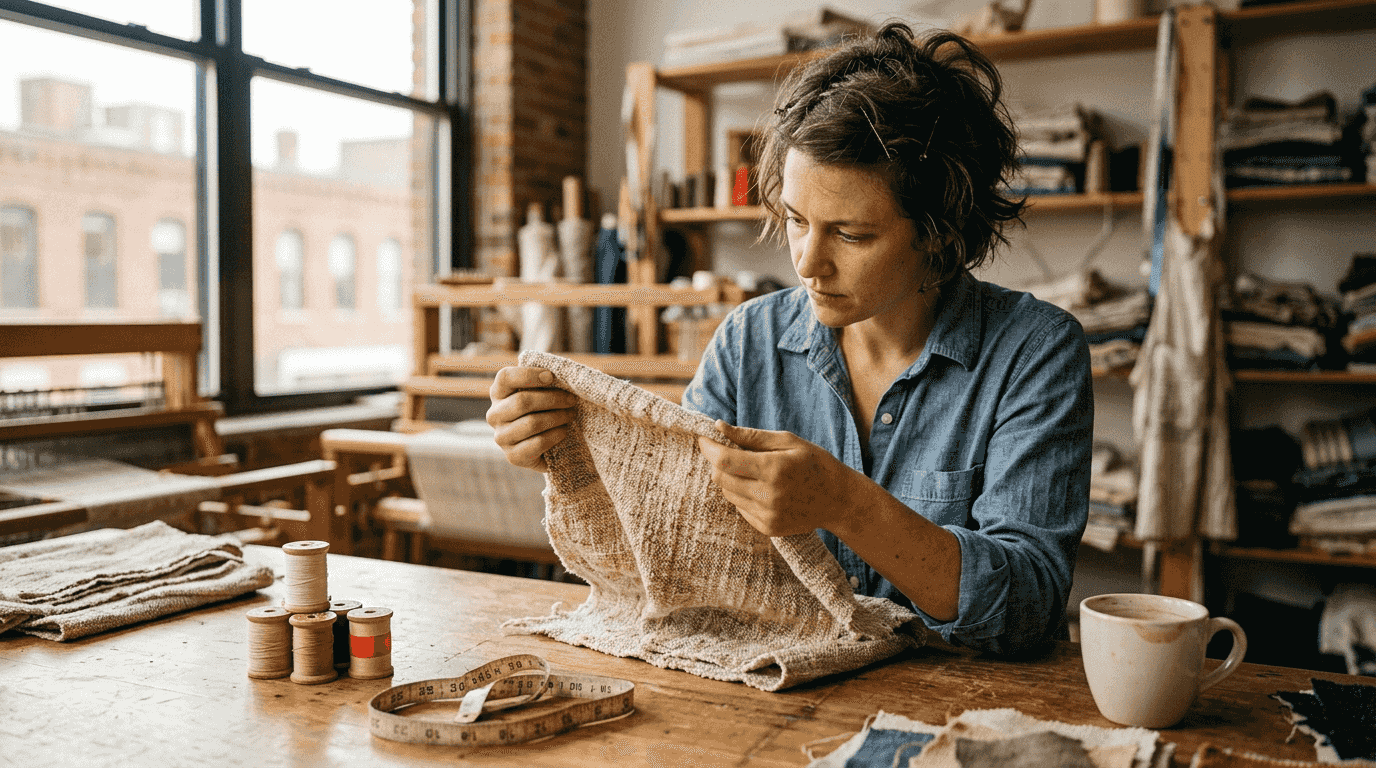
You’ve probably seen fabric with that charming, slightly bumpy texture and wondered what makes it different from smooth cotton or linen. That distinctive unevenness isn’t a flaw but a deliberate feature called slub texture. Understanding what creates this unique look helps you choose the right materials for sewing projects, home decor items, and craft creations. This guide breaks down slub fabric’s characteristics, explores different fiber types and constructions, and shares practical care tips so you can confidently work with this textured textile in your creative projects.
| Point | Details |
|---|---|
| Texture origin | Slubs are intentional thick spots in yarn created during spinning that produce the fabric’s uneven surface |
| Fiber variety | Cotton, linen, silk, rayon, and wool bases each bring distinct qualities to slub fabrics |
| Construction types | Knitted slub jersey offers stretch for garments while woven slub provides structure for decor |
| Care essentials | Cold water washing and air drying preserve texture and prevent shrinkage in slub fabrics |
| Project versatility | Works beautifully for casual clothing, textured home accessories, and artisanal craft items |
Slub fabric stands out because of its deliberately uneven surface texture. Slub cotton fabric is characterized by an uneven texture due to ‘slubs’ or thicker areas within the yarn, created during the spinning process. These slubs form when yarn makers intentionally vary the twisting during spinning, allowing some sections to remain thicker while others stay thinner. The result is a fabric surface with visible bumps and texture variations that catch light differently than smooth, uniform textiles.
This manufacturing technique creates visual interest you won’t find in standard fabrics made from evenly spun yarn. Regular cotton or linen uses consistent yarn thickness throughout, producing a smooth, predictable surface. Slub fabrics break that uniformity with their organic, slightly irregular appearance. The texture adds depth and character, making these materials popular for projects where you want a more relaxed, artisanal aesthetic rather than a polished, formal look.
The tactile quality matters just as much as the visual appeal. When you run your hand across slub fabric, you feel the gentle bumps and variations, giving the material a distinctive hand feel. This texture works especially well for casual garments, throw pillows, and craft projects where you want fabric that feels lived in and approachable. The slubs create natural shadow and dimension, adding complexity without requiring printed patterns or embellishments.
Pro Tip: Compare slub fabric to felt fabric side by side to appreciate how yarn construction dramatically changes texture. Felt has uniform density throughout, while slub shows deliberate variation in every inch.
Understanding how slubs form helps you evaluate fabric quality and predict how it will behave in your projects. Well made slub fabric has evenly distributed thick spots that create consistent texture without weak points. Poorly executed slub might have irregular clumping or thin areas that could affect durability. When shopping, examine the fabric closely to ensure the slubs appear intentional and well integrated into the overall weave or knit structure.
“The beauty of slub fabric lies in its imperfection. Each slub tells the story of yarn that refused to be completely tamed during spinning, creating texture that feels authentic and handcrafted.”
Different fiber bases transform slub fabric’s characteristics and best uses. Slub fabrics can be made from various fibers, each offering different properties. Cotton slub is often used for its natural and organic feel, while linen slub offers crispness and breathability. Cotton slub delivers softness and comfort, making it ideal for t-shirts, casual dresses, and lightweight throws. The natural fiber breathes well and gets softer with washing, developing a relaxed drape over time.
Linen slub brings structure and crisp texture to home decor projects. The fiber’s natural stiffness holds shape beautifully in curtains, table runners, and upholstery applications. Linen slub also offers exceptional breathability and moisture wicking properties, making it perfect for warm weather projects. The texture becomes more supple with use while maintaining the characteristic slub appearance that adds visual interest to any space.
Silk slub combines luxury with texture, offering smooth hand feel punctuated by deliberate thick spots. This fiber choice works wonderfully for special occasion garments, decorative pillows, and craft projects where you want elegant texture without sacrificing drape. Rayon slub provides similar fluidity at a lower price point, with excellent color absorption that makes dyed versions particularly vibrant. The synthetic fiber mimics natural textures while offering easy care and consistent performance.
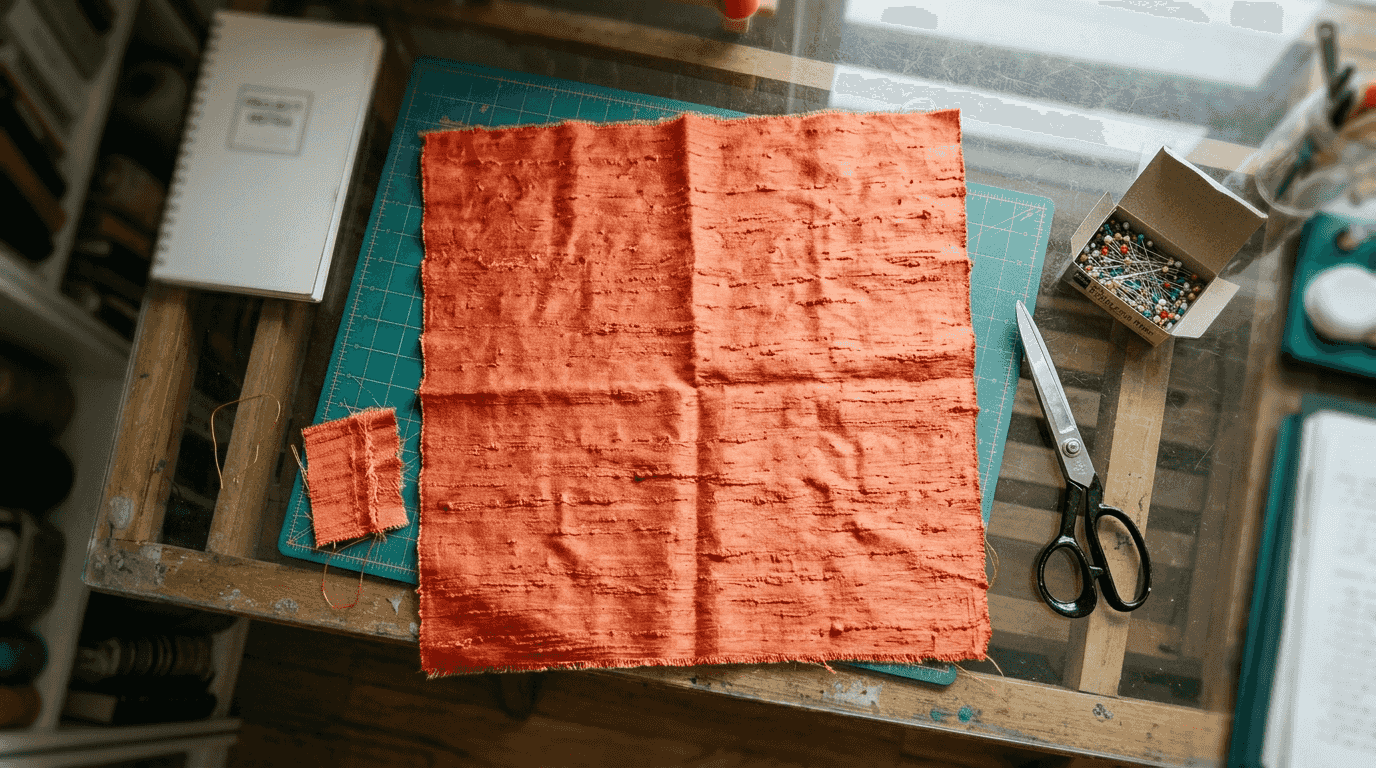
Wool slub delivers warmth and durability for cold weather projects and sturdy home decor items. The fiber’s natural crimp combines with slub texture to create substantial fabric perfect for throws, cushions, and outerwear. Wool slub resists wrinkles naturally and provides insulation, making it practical for functional items that need to withstand regular use.
Slub fabric fiber comparison
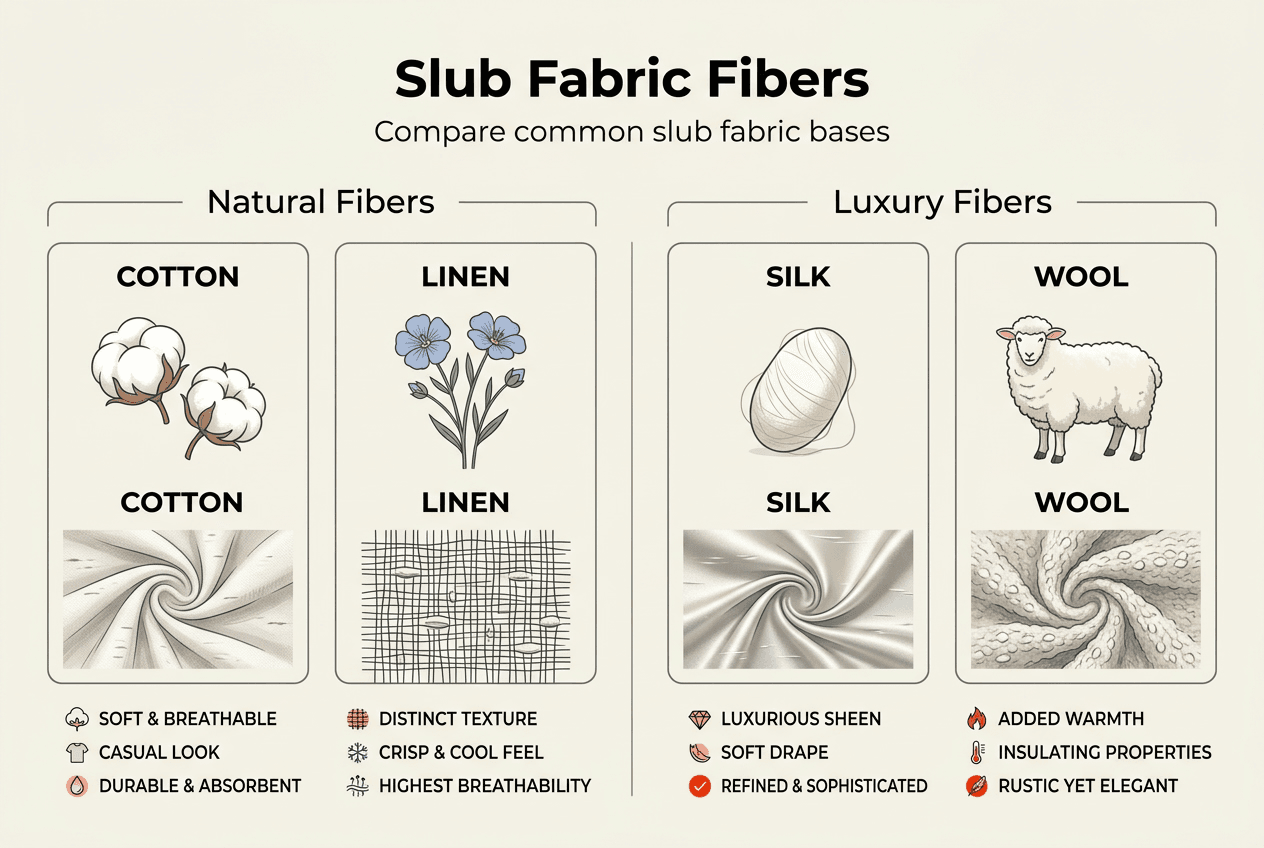
| Fiber | Key qualities | Best uses | Care considerations |
|---|---|---|---|
| Cotton | Soft, breathable, improves with washing | Casual garments, lightweight decor | Machine washable, air dry preferred |
| Linen | Crisp, structured, highly breathable | Curtains, table linens, upholstery | May wrinkle, benefits from pressing |
| Silk | Luxurious drape, smooth with texture | Special garments, decorative pillows | Gentle wash or dry clean |
| Rayon | Fluid drape, vibrant colors, affordable | Flowing garments, craft projects | Delicate wash cycle recommended |
| Wool | Warm, durable, wrinkle resistant | Throws, cushions, cold weather items | Hand wash or gentle cycle, lay flat to dry |
Choosing the right fiber base depends on your project requirements and desired aesthetic. Consider how the finished item will be used and cleaned. Cotton and linen slubs handle frequent washing better than silk or wool versions. Rayon offers middle ground with reasonable durability and easier care than natural luxury fibers.
Pro Tip: Reference how to care for fabrics step guide before starting projects with unfamiliar fiber types to avoid care mistakes that could damage your finished work.
Fiber content also affects how slub texture appears in the finished fabric. Cotton slubs tend to be softer and more rounded, while linen creates more pronounced, crisp bumps. Silk slubs catch light beautifully, creating subtle shimmer that enhances the textured surface. Understanding these nuances helps you select materials that deliver the exact look and feel you envision for your creative projects.
Fabric construction method dramatically changes how slub texture performs in finished projects. Slub jersey fabric is knitted from a single slub yarn, while woven slub fabric is woven. Knitted slub jersey offers stretch and recovery, making it perfect for comfortable garments that move with your body. The knit structure creates soft, drapey fabric ideal for t-shirts, casual tops, and relaxed dresses where you want texture without stiffness.
Woven slub fabric provides more structure and stability because yarns interlace at right angles rather than looping together. This construction creates firmer fabric suitable for button-up shirts, structured garments, home decor items, and craft projects requiring shape retention. Woven slubs show texture clearly on both fabric faces, while knitted versions may display slubs more prominently on one side depending on the knit structure.
The stretch factor makes the biggest practical difference. Knitted slub jersey stretches across the width, allowing garments to fit comfortably without requiring closures like buttons or zippers. This makes jersey perfect for pull-on styles and fitted garments that need give. Woven slub has minimal stretch, requiring proper fit adjustments and closures for garments. The stability works better for items like pillows, curtains, and structured clothing that shouldn’t stretch out of shape.
Selecting between knit and woven slub for your project requires considering several factors:
Knitted slub jersey dominates the casual apparel market because consumers love the soft, textured feel in everyday clothing. The fabric’s forgiving stretch accommodates different body types without complex fitting. Woven slub fabrics shine in home decor applications where you want texture without stretch. Curtains, throw pillows, and table linens benefit from woven stability that maintains shape through use and cleaning.
Understanding construction differences helps you shop effectively and set realistic expectations for how fabric will behave. A knitted slub won’t provide the crisp structure needed for tailored home decor, while woven slub lacks the comfortable give wanted in casual clothing. Matching construction to purpose ensures successful projects. For deeper understanding of these fundamental differences, explore difference between knit and woven to see how construction affects all fabric types.
Some advanced crafters combine both construction types in single projects, using woven slub for structured elements and knitted slub for softer accents. This approach works beautifully in mixed media textile art, quilted projects with varied textures, and garments featuring contrast panels. Experimenting with both types expands your creative possibilities and helps you discover new applications for slub texture.
Slub texture has gained significant traction in premium fashion and home decor markets. Textured denims, including slub varieties, accounted for nearly 20% of premium denim collections between 2020 and 2023. This trend reflects growing consumer preference for fabrics with character and visual interest over perfectly uniform materials. Crafters and home decorators increasingly seek slub fabrics because the texture adds artisanal quality to handmade projects without requiring complex techniques.
The movement toward unique, handcrafted aesthetics in both fashion and interiors has elevated slub fabric from niche material to mainstream choice. People want items that feel personal and distinctive rather than mass produced. Slub texture delivers that individuality naturally through its inherent variation. Each piece of slub fabric looks slightly different, giving finished projects one of a kind character that resonates with makers and consumers alike.
Proper care preserves slub fabric’s distinctive texture and extends its lifespan significantly. To preserve the texture and longevity of cotton slub fabrics, wash them in cold water on a gentle cycle and avoid high-heat drying. Air drying is recommended, especially for cotton-linen blends, to prevent shrinkage and maintain softness. Heat causes natural fibers to contract unevenly, potentially distorting the deliberate slub texture or creating unwanted shrinkage that ruins garment fit or decor dimensions.
Follow these expert care practices to maintain your slub fabric projects:
Cotton and cotton blend slubs respond especially well to gentle treatment. The natural fibers soften beautifully over time when cared for properly, developing a lived in comfort that enhances rather than diminishes the slub texture. Harsh detergents or hot water can fade colors and weaken fibers prematurely, so investing in proper care products pays dividends in fabric longevity.
For mixed fiber slubs like cotton-linen blends, air drying becomes even more critical. Linen shrinks readily under heat, while cotton tolerates it better. Drying these blends in machines often results in puckering or distortion as fibers react differently to heat exposure. Taking the extra time to air dry preserves both the fabric’s dimensions and its intended texture.
“Treating slub fabric gently isn’t just about preservation but about honoring the intentional imperfection that makes these textiles special. Proper care allows the texture to age gracefully rather than deteriorate.”
Daily use considerations matter too. Slub fabrics work beautifully for items that see regular use but benefit from rotation. Having multiple slub throw pillows or garments allows you to rotate them, reducing wear on any single piece. This approach extends the life of textured items while letting you enjoy the aesthetic regularly. Check out textured weave fabric key types to discover complementary textures that pair well with slub in mixed fabric projects.
When storing slub fabric projects or yardage, keep them away from direct sunlight, which can fade colors and weaken fibers over time. Use breathable storage containers rather than plastic bags, allowing air circulation that prevents musty odors or moisture damage. These simple storage practices protect your investment and keep fabrics ready for use whenever inspiration strikes. Additional guidance appears in how to care for fabrics step guide with specific instructions for various fiber contents.
Now that you understand slub fabric’s unique characteristics and care requirements, you’re ready to source quality materials for your creative work. Finding the right fabrics makes all the difference in how your finished projects look and perform. Whether you’re planning textured garments, decorative home accessories, or mixed media craft creations, having access to diverse fabric options lets you bring your vision to life with confidence.
Browse curated selections of backdrop fabrics perfect for creating textured backgrounds in photography or event styling projects. Explore quilting fabric online collections that pair beautifully with slub textures in mixed fabric quilts and textile art. Discover home decor fabric options ideal for pillows, curtains, and upholstery projects where slub texture adds visual interest and tactile appeal. Quality materials set the foundation for successful crafting, making your creative process more enjoyable and your finished work more satisfying.
The texture distinguishes these fabrics completely. Slub cotton features intentional thick spots called slubs distributed throughout the yarn, creating visible bumps and texture variation across the surface. Regular cotton uses uniformly spun yarn with consistent thickness, producing smooth fabric without texture irregularities. Slub provides decorative visual interest and distinctive hand feel, while regular cotton offers predictable smoothness. Both come from the same fiber, but the spinning process creates entirely different aesthetic and tactile results.
Absolutely, especially woven slub fabrics made from durable fiber bases like linen, cotton blends, or heavier weight materials. The texture adds visual dimension and tactile interest to furniture, throw pillows, curtains, and decorative accessories. Woven construction provides the stability needed for upholstery applications, while the slub texture creates sophisticated, organic appeal. Choose medium to heavyweight slub fabrics for high use items like chair cushions, and reserve lighter weights for decorative pillows or window treatments. Explore options at home decor fabric to find suitable weights and fiber contents for your specific project requirements.
Gentle washing preserves slub texture beautifully over time. Use cold water on a gentle cycle and avoid high-heat drying, with air drying recommended especially for cotton-linen blends to prevent shrinkage and maintain softness. Skip fabric softeners that can coat fibers and diminish the tactile quality you want to preserve. If ironing becomes necessary, press from the wrong side on low heat to protect the textured surface. These simple practices keep your slub fabric projects looking and feeling their best through years of use. Find detailed care instructions for various fabric types at how to care for fabrics step guide to ensure you’re treating each fiber appropriately.
Casual, relaxed projects showcase slub texture most effectively. T-shirts, loose fitting tops, casual dresses, and comfortable loungewear benefit from the soft, textured aesthetic that slub provides. The fabric works beautifully for home decor items like throw pillows, curtains, table runners, and decorative throws where you want organic visual interest. Craft projects seeking an artisanal, handmade look gain character from slub’s inherent texture variation. The fabric suits projects where slight irregularity enhances rather than detracts from the design. Avoid using slub for formal garments or applications requiring perfectly smooth surfaces, as the texture creates a deliberately casual, approachable aesthetic.