

 Canadian Dollars

How to Care for Fabrics: Step-by-Step Guide for Lasting Quality
Posted by BLG on 2025 Nov 19th
Posted by BLG on 2025 Nov 19th


Over 60 percent of clothing damage comes from simple at-home care mistakes. From shrinking sweaters to faded shirts, keeping your garments in good shape feels like a constant challenge. Understanding the secrets behind proper fabric care helps you avoid these pitfalls and makes your favorite pieces last much longer. This step-by-step guide reveals how to handle every fabric with confidence, giving you clear answers for washing, drying, ironing, and everyday maintenance.
| Essential Insight | Clear Explanation |
|---|---|
| 1. Identify fabric types accurately | Examine care labels to understand fabric characteristics and washing instructions for proper care. |
| 2. Sort laundry by color and fabric type | Separate whites, darks, and delicates to prevent color bleeding and protect fragile items during washing. |
| 3. Choose correct washing and drying methods | Match washing temperatures to fabric types, and consider air drying to preserve fabric integrity. |
| 4. Use proper ironing techniques | Adjust iron settings according to fabric labels, using pressing cloths for delicate materials to avoid damage. |
| 5. Regularly inspect for damage | Check garments routinely for signs of wear, addressing any minor issues before they escalate into major problems. |
Successfully caring for fabrics starts with understanding their unique characteristics and deciphering those tiny care labels. In this step, you will learn how to identify different fabric types and interpret care instructions like a pro.
Begin by examining the fabric label carefully. According to the Federal Trade Commission, clothing manufacturers are required to provide clear care instructions that guide consumers in maintaining their garments. Each label contains vital symbols representing washing, drying, ironing, and bleaching guidelines.
Look for these common fabric identifiers: natural fibers like cotton, wool, and silk have different care requirements compared to synthetic materials such as polyester and nylon. Cotton typically tolerates high temperatures and machine washing, while delicate silks often need handwashing or dry cleaning. Pay attention to specific symbols like a bucket of water indicating machine washability, an iron symbol showing appropriate pressing temperatures, or a triangle representing bleach guidelines.
Pro tip: When in doubt about a fabric type, perform a small spot test on an inconspicuous area or consult a professional cleaner. By mastering these identification skills, you are well on your way to preserving the quality and longevity of your textiles.
Ready to dive deeper into fabric care? Let’s move on to understanding the best washing techniques for different materials.
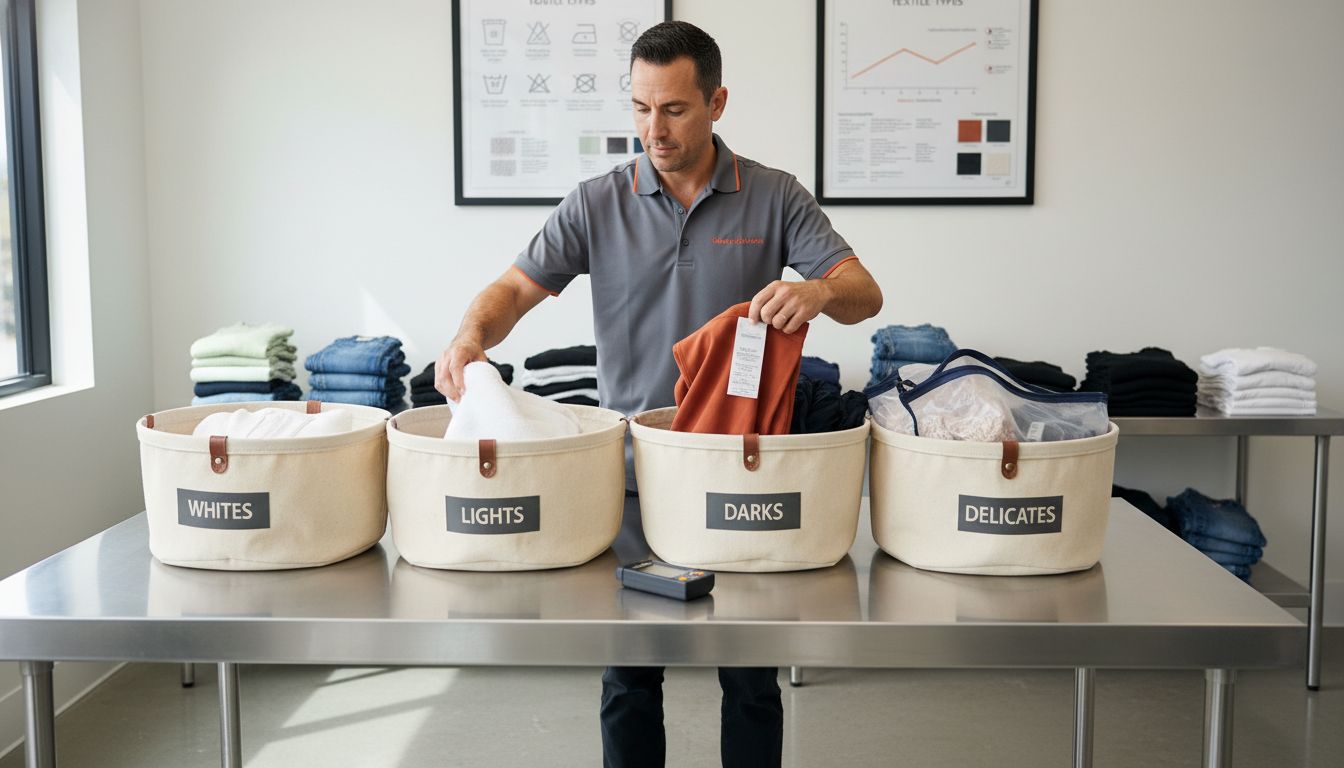
Before tossing your laundry into the washing machine, understanding how to properly sort your fabrics can save your clothing from potential damage and preserve their quality. This step will help you organize your textiles strategically and prevent color bleeding or fabric deterioration.
According to the American Cleaning Institute, sorting laundry is crucial for maintaining garment appearance and longevity. Begin by separating your fabrics into clear categories: whites, light colors, dark colors, and delicates. The goal is to prevent color transfer and protect more fragile items from harsh washing conditions. Mississippi State University Extension Service recommends creating separate piles for different fabric weights and sensitivities.
Pro tip: Create dedicated sorting zones in your laundry area using different hampers or baskets. Organize your textiles by color intensity white and pastels in one group, medium tones in another, and dark or deeply saturated colors in a separate pile. For delicate items like silk, lace, or wool, always use a gentle cycle or consider handwashing to maintain their intricate fibers.
By mastering this sorting technique, you are setting the stage for cleaner, longer lasting clothing.
 Ready to learn the next steps in fabric care? Let’s explore specific washing techniques for your carefully sorted textiles.
Choosing the right washing and drying methods can make the difference between clothing that looks fresh and fabrics that quickly deteriorate. In this step, you will learn how to match your washing techniques to specific fabric requirements for optimal care and longevity.
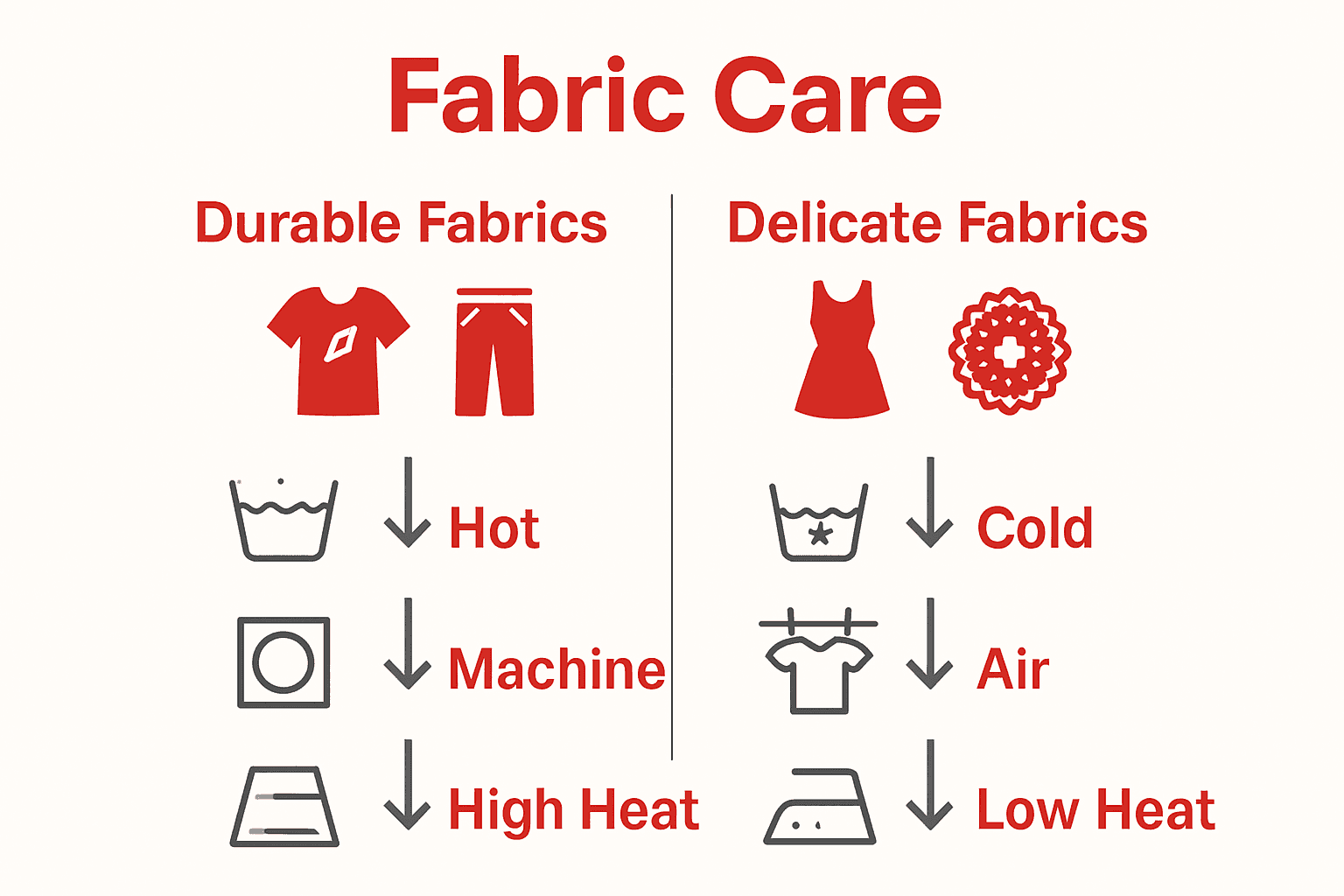
According to the American Cleaning Institute, selecting proper washing temperatures is critical for maintaining fabric quality. Start by checking the care label and matching the water temperature to the fabric type. Delicate items like silk and wool typically require cold water, while sturdy cottons can handle warm or hot temperatures. When in doubt, cool water is always a safe default that minimizes potential fabric damage.
Oxfam Ireland’s Care Hub recommends considering air drying as a gentler alternative to machine drying. Hang lightweight fabrics on a clothesline or drying rack to prevent shrinkage and fabric stress. For items like sweaters and delicates, lay them flat to dry to maintain their original shape and prevent stretching.
Pro tip: Invest in mesh laundry bags for delicate items like lingerie, preventing snags and protecting intricate fabrics during machine washing. Always separate heavy fabrics from lightweight ones to ensure even drying and prevent potential damage.
By mastering these washing and drying techniques, you are taking significant steps toward preserving your clothing’s quality and appearance.
Ready to explore stain removal and fabric maintenance? Let’s move to the next phase of fabric care.
Preserving your fabrics goes beyond washing and drying techniques iron correctly and store smartly to extend the life of your garments and textiles. In this step, you will learn how to handle different fabrics with precision and care during ironing and storage.
According to the American Cleaning Institute, following care labels is crucial when selecting iron settings. Start by checking the fabric label for specific heat recommendations. Delicate fabrics like silk and synthetic materials require low heat settings, while cotton and linen can withstand higher temperatures. Always use a pressing cloth between the iron and delicate fabrics to prevent direct heat damage.
The Textile and Fashion Industry Training Centre recommends creating a dedicated storage system that protects your textiles from potential damage. Use padded hangers for structured garments, fold knits and sweaters to prevent stretching, and store seasonal items in breathable cotton bags. Keep your storage areas cool and dry to prevent moisture buildup that can lead to mildew or fabric degradation.
Pro tip: Invest in moth repellent sachets and cedar blocks for wool and natural fiber storage. These help protect your garments from insects while providing a fresh scent. When storing delicate items like wedding dresses or vintage textiles, use acid free tissue paper to prevent yellowing and potential fabric damage.
By mastering these ironing and storage techniques, you are ensuring your fabrics remain pristine and beautiful for years to come. Ready to tackle the final steps of comprehensive fabric care? Let’s continue our journey.
Preserving your textiles requires more than just cleaning regular inspection is key to catching potential issues before they become irreparable. In this critical step, you will learn how to systematically examine your garments and fabrics for early signs of wear and damage.
According to Mississippi State University Extension Service, conducting routine fabric inspections helps extend the lifespan of your clothing. Begin by examining each garment in good lighting, checking seams, hems, and high stress areas like armpits, knees, and elbows. Look for subtle signs of wear such as thinning fabric, loose threads, small holes, or color fading. Pay special attention to areas that experience frequent friction or movement.
The American Cleaning Institute recommends inspecting garments thoroughly before washing to prevent further damage. For knitted items, check for stretched areas or loose stitches. On woven fabrics, examine for fraying edges or weakening fabric. Silk and delicate materials require extra careful examination for snags or minor tears that could worsen during cleaning.
Pro tip: Use a magnifying glass for detailed inspection of intricate or delicate fabrics. Create a repair kit with matching thread, small scissors, and basic mending supplies so you can address minor issues immediately.
By mastering these inspection techniques, you are taking proactive steps to extend the life of your wardrobe. Ready to learn how to repair and maintain your fabrics? Let’s explore the next phase of fabric care.
Caring for your fabrics well requires the best textiles that match your lifestyle and projects. Whether you need durable cotton for everyday wear or delicate lace for special occasions, choosing the right fabric type is crucial to making your care routine easier and more effective. This article highlighted key steps such as identifying fabric types, sorting by care needs, and using proper washing and ironing methods to extend your textiles’ life. Avoid common frustrations like shrinking, color fading, or fabric damage by starting with premium quality materials designed for your specific use.

Discover a wide range of fabrics with clear descriptions, usage tips, and care advice at Fabric-Fabric.com. Take advantage of seasonal promotions and free shipping offers to stock up on everything from satin and velvet to sequins and quilting textiles. Make your fabric care effortless by choosing the perfect textiles tailored to your apparel, home decor, or craft projects. Visit our site now and begin creating with confidence that your fabrics will stay beautiful and last longer.
To identify different fabric types, examine the care label attached to your clothing. Look for symbols that indicate washing, drying, and ironing instructions, and familiarize yourself with common fiber types like cotton, wool, and polyester to ensure proper care.
Sort your fabrics into clear categories such as whites, light colors, dark colors, and delicates. By separating items based on color intensity and fabric sensitivity, you can prevent color bleeding and fabric damage during washing.
Match the washing method to the fabric type specified on the care label. Typically, delicate fabrics like silk require cold water, while sturdier cotton items can handle warm or hot washes, so always refer to the label for optimal settings.
Use the appropriate heat settings based on the fabric type specified on the care label. For delicate fabrics like silk, keep the iron on low heat, and always place a pressing cloth between the iron and the fabric to prevent heat damage.
Inspect your garments regularly by checking seams, hems, and high-stress areas in good lighting. Look for thinning fabric, loose threads, or small holes, and address any issues promptly to prevent further damage.
Store your fabrics properly by using padded hangers for structured garments and folding knits to prevent stretching. Additionally, keep your storage areas cool and dry, and use breathable bags for long-term storage to protect against mildew and damage.