

 US Dollar

Identify Woven Fabric: 4 Quick Tests and Buyer's Checklist for Sewists
Posted by BLG on 2026 Sep 6th
Posted by BLG on 2026 Sep 6th

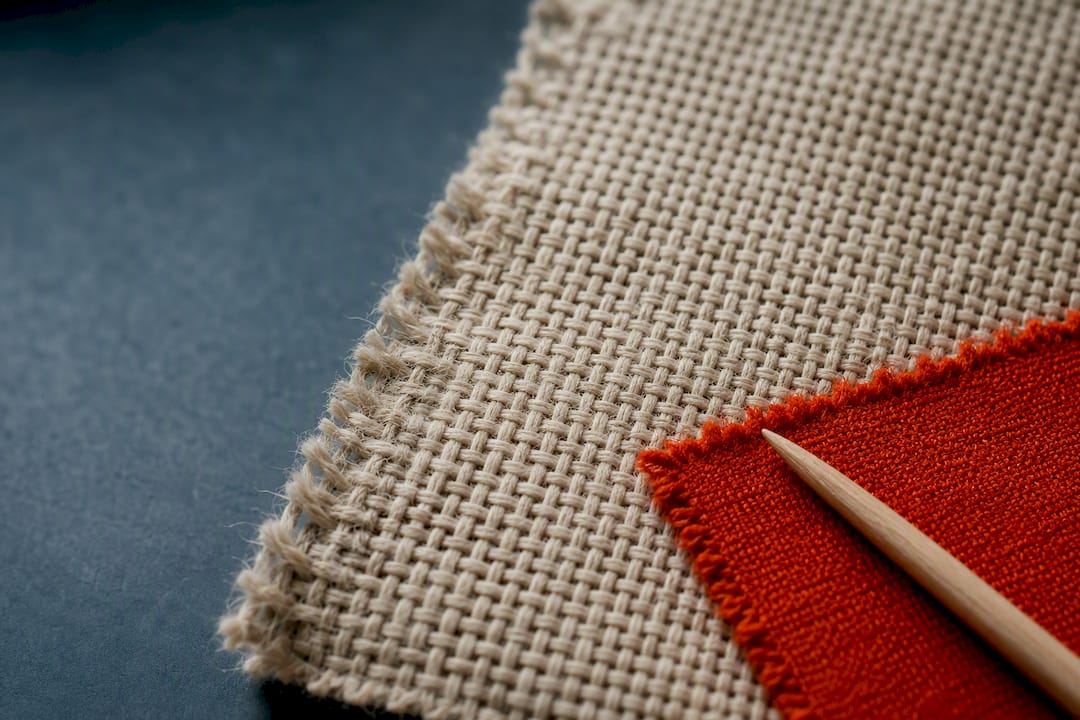
In clothing, “woven” means the fabric is made by interlacing two sets of yarns, called warp and weft, at right angles on a loom. That construction locks the yarns into a stable grid, so woven fabric holds its shape, resists stretch, and works well for structured garments like shirts, trousers, and jackets. Woven cloth can come from cotton, wool, synthetic fibers such as polyester, or blends of any of these.
TL;DR:
- Woven fabric’s stability and shape retention depend heavily on the correct alignment of the grainline, which is the warp direction.
- The primary weave types—plain, twill, and satin—affect the fabric’s texture, drape, and durability, influencing garment choice and function.
- Woven fabrics are best for structured garments like shirts and trousers, while knits are more suitable for stretchy, body-movement garments.
- Identifying woven fabric by hand involves tests for stretch, fraying, selvage, and the visible grid of yarns, especially before cutting bias pieces.
- Ordering fabric swatches before buying full yardage prevents costly mistakes by confirming weave, weight, and drape.
Every woven textile starts with two sets of yarn. The warp runs lengthwise, held under tension on the loom. The weft (sometimes called the fill) runs crosswise, threaded over and under the warp yarns one row at a time. That over-under interlacement, locked at right angles, builds the grid structure you see when you hold a piece of shirting up to the light.
That grid isn’t just visual. It dictates how the fabric behaves once it’s cut and sewn.
Get the grainline wrong and a sleeve will hang crooked no matter how careful the stitching is.
Before a single pick of weft goes in, the warp yarns get wound onto a beam and threaded through the loom under even tension. Uneven tension here is the most common reason home-woven or poorly manufactured cloth ends up puckered or bowed.
Once the warp is set, three motions repeat thousands of times per yard:
The loom itself matters more than most hobbyists expect. A tappet loom handles simple, repeating patterns like plain weave. A dobby loom manages small geometric patterns such as birdseye or waffle weaves. A jacquard loom controls each warp yarn individually, which is how you get large figured designs like brocade or elaborate florals.
Pro Tip: If a fabric listing mentions “jacquard,” expect a higher price tag. That loom setup is slower and more expensive to run than a standard tappet loom, and the cost shows up on the price tag.
Weave structure falls into three basic families: plain, twill, and satin. Each one changes texture, drape, and durability in a way you can usually spot without a microscope.
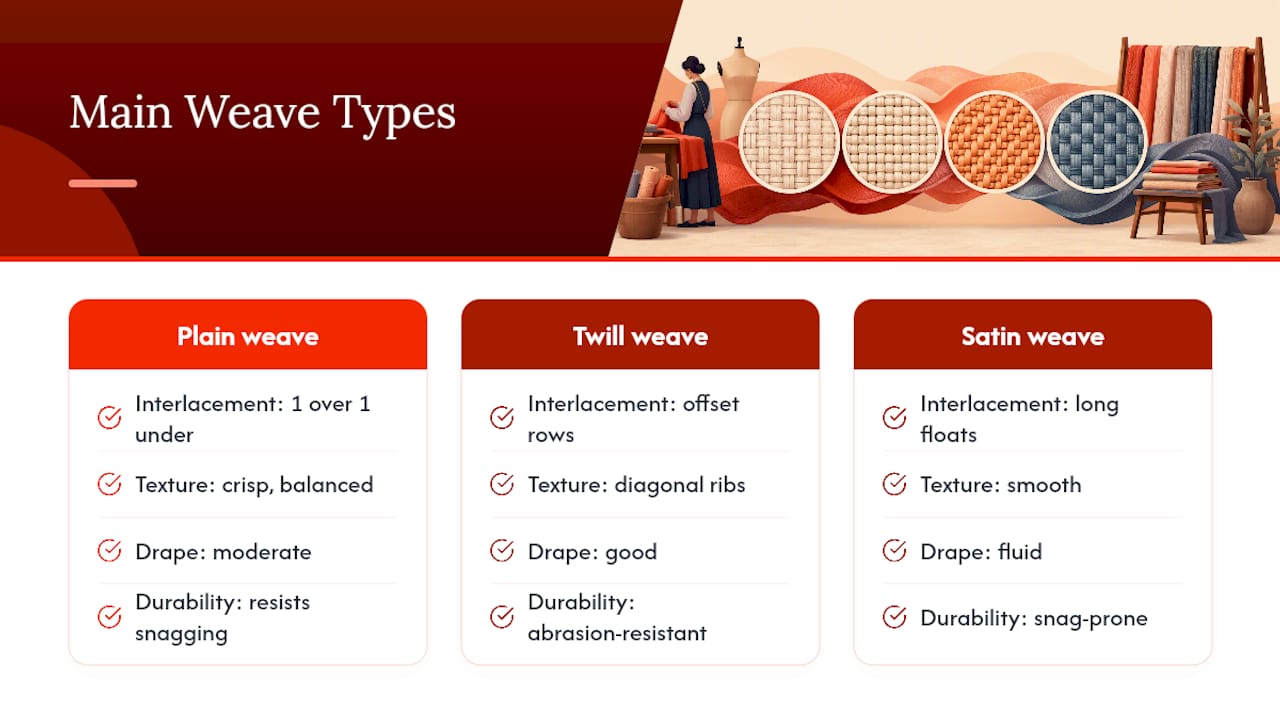
Plain weave is the simplest: one warp thread, one weft thread, alternating over and under. It’s the crispest, most balanced structure and shows up in canvas, poplin, and muslin. Plain weaves tend to wrinkle more but resist snagging well because there’s no long yarn float exposed on the surface.
Twill weave offsets each row by one yarn, creating the diagonal ribs you can see on denim and chino. That diagonal structure hides soil and holds up better against abrasion than plain weave, which is exactly why work pants and jeans are almost never plain weave.
Satin weave floats the warp (or weft) yarn over several threads before it dips under one, so the surface stays smooth with minimal visible interlacement. That’s where the sheen in silk charmeuse or polyester lining comes from, but the long floats also make satin more prone to snagging and pulling.
Beyond the big three, you’ll run into jacquard for woven-in patterns and rib or basket weaves for a chunkier, more textured hand. Yarn count and weave density push things further: a tightly packed 200-thread-count poplin feels crisp and opaque, while a loosely woven gauze in the same fiber feels airy and see-through. For a deeper breakdown of each structure, the full guide to fabric weaves covers more specialty variations.
The core difference is stretch. Woven fabric holds a stable, dimensionally consistent shape with little give, while knit fabric loops its yarn into interlocking chains that stretch and recover.
If you’re still deciding between the two for a specific project, the knit versus woven comparison walks through more garment-by-garment examples, and cotton knit fabric is worth a look if stretch is the priority.
You don’t need a lab to confirm whether a fabric is woven. A few quick checks on a sample tell you almost everything.
Pro Tip: Always test bias stretch before cutting bias-cut pieces like a full circle skirt. Some tightly woven fabrics have almost no bias give at all, and that changes how much ease you need to build into the pattern.
Matching the right woven fabric to the right project saves fabric, thread, and frustration. Here’s a fast reference:
Each of these fits a different point on the weight and drape spectrum, and picking the wrong one is the fastest way to end up with a garment that hangs or moves wrong. The woven fabric types guide breaks these down further by weight class and typical yardage needs, and the woven fabric use cases page covers home decor and industrial applications if your project goes beyond clothing.
A short checklist keeps fabric selection from turning into guesswork:
Skipping the swatch step is the single most common mistake that turns a promising pattern into wasted yardage.
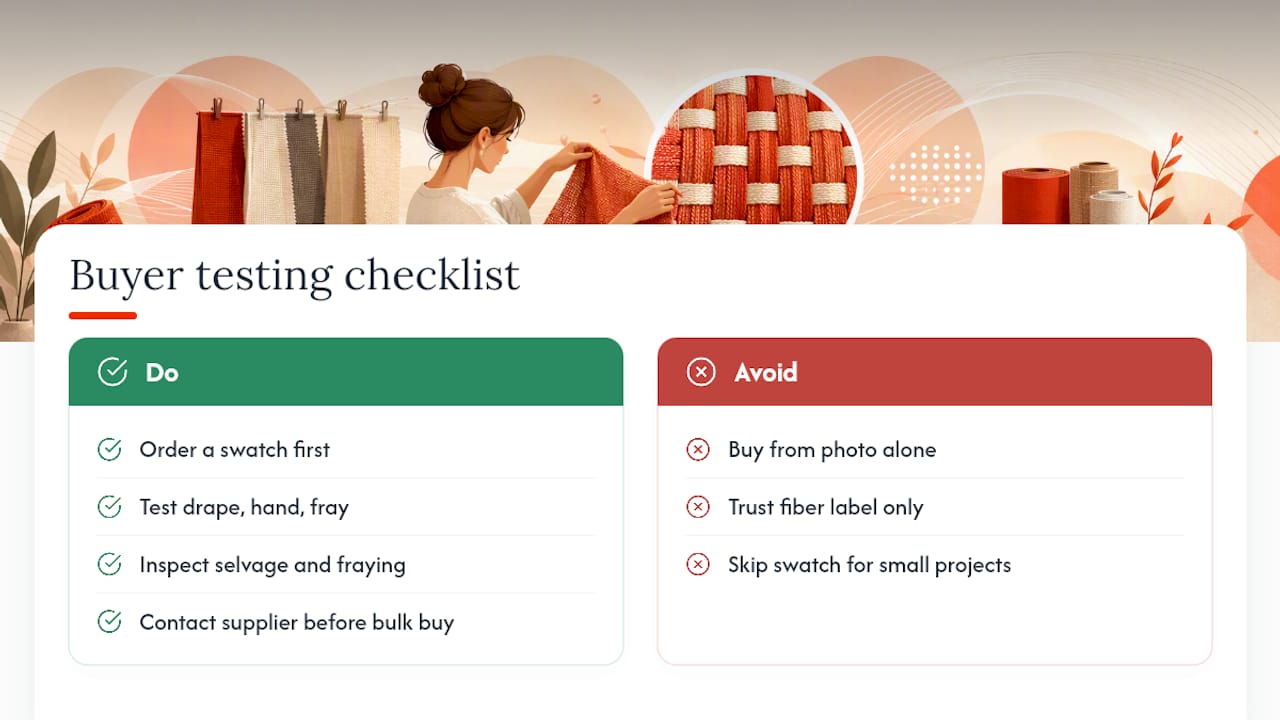
Most fabric disappointments trace back to the same mistake: buying yardage based on a thumbnail photo and a fiber content label. A weave that photographs as crisp poplin can drape closer to a soft lawn once it’s in your hands, and no product description fully captures that. Ordering a swatch first isn’t a formality. It’s the only way to check drape, hand, and how the fabric actually frays before you’ve committed to five yards.
The identification tests in this guide, the stretch pull, the fray check, the selvage look, work just as well on a swatch as on full yardage, so there’s no reason to skip that step even on a small project. If you’re weighing a bulk order for a small production run, reach out before you buy. Getting the weight and weave right the first time costs less than a second shipment.
— kev
Woven yardage sold online ideally includes real swatches, clear fiber content, and no minimum commitment before purchase. The Backdrop Fabrics collection is the place to start if you’re shopping structured wovens for clothing, from crisp cottons to heavier twills.
Many listings include a sample swatch option, so customers can perform stretch tests, check drape, and confirm hand feel before ordering full yardage. That matters most when you’re cutting bias pieces or matching a print, where a swatch catches a mismatch that a photo never will. Bulk pricing is often available for larger orders, which can be useful for small manufacturers planning production runs rather than single garments. Order a swatch from the Backdrop Fabrics page today, and confirm the weave and weight are right before the full bolt ships.