

 US Dollar

What Are Woven Fabrics Used For: Clothing, Home and Industry
Posted by BLG on 2026 Jul 30th
Posted by BLG on 2026 Jul 30th

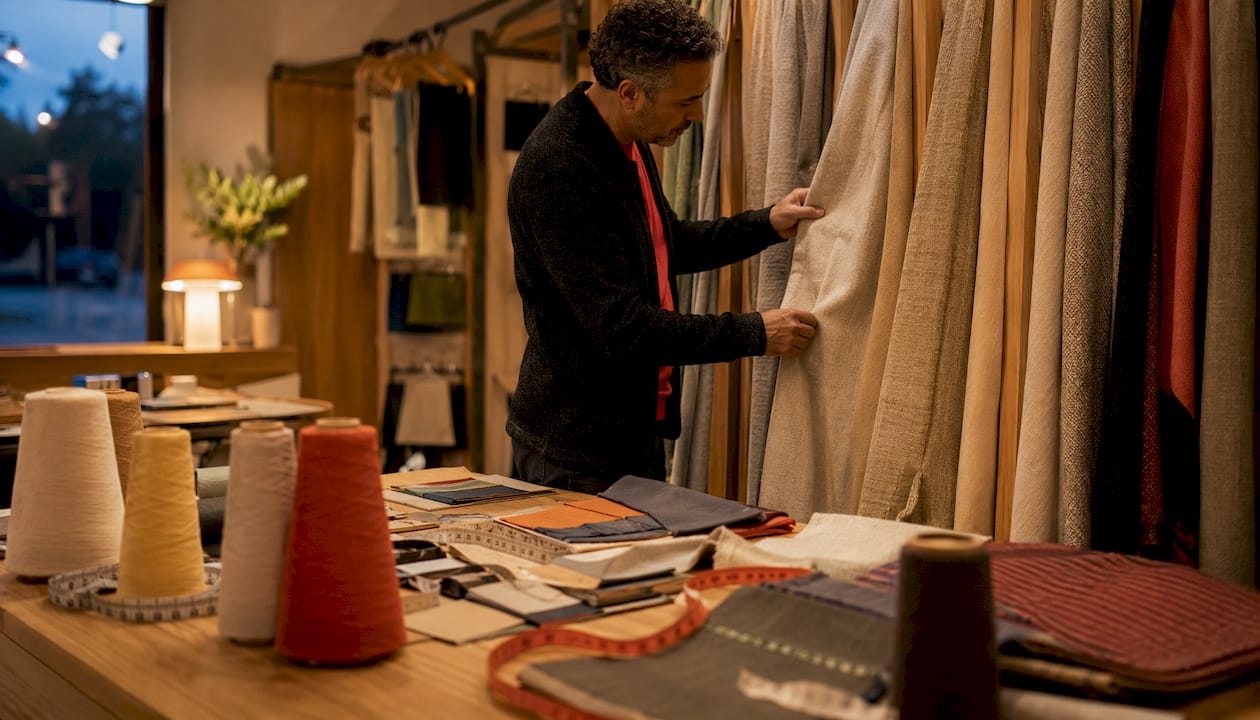
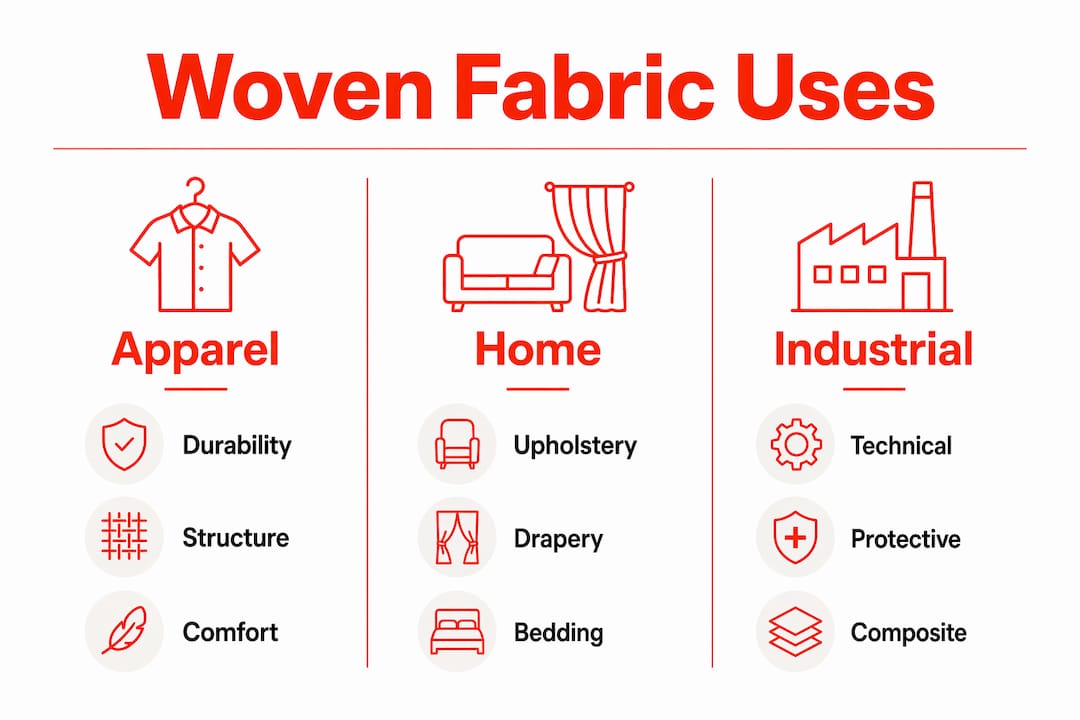
Woven fabrics are the go-to choice for apparel, home furnishings, and a wide range of industrial and technical applications because their interlaced structure delivers dimensional stability, predictable drape, and reliable strength. The core uses break down like this:
The scale of woven fabric use in North America is substantial. The U.S. alone accounts for 87% of regional consumption in the narrow woven fabrics segment, at 173 thousand tons, which gives you a sense of how deeply these materials are embedded in manufacturing and daily life. Across all three sectors, the decision about which woven fabric to use comes down to weave structure, fiber choice, and finishing — not just the fabric name.
A woven fabric is made by interlacing two sets of yarns at right angles on a loom: the warp (lengthwise threads) and the weft (crosswise threads). That interlacing creates crimp — a slight waviness in each yarn where it passes over and under the other. Crimp is what gives woven fabrics their dimensional stability. Unlike knits, which are formed from looped yarns and stretch easily in multiple directions, wovens have very low stretch on the grain (along warp or weft) and moderate bias stretch at 45 degrees.
The grainline matters enormously in practice. Cut a woven panel off-grain and the finished piece will twist or hang unevenly — a structural problem that cannot be pressed away. Woven fabrics are produced on shuttle, rapier, or air-jet looms, in widths ranging from narrow (webbing, ribbons, seatbelts) to broad (apparel and furnishing widths of 44–60 inches). Finishing processes applied after weaving — scouring, mercerizing, coating, heat-setting — change the hand, performance, and end-use suitability significantly.
Pro Tip: When evaluating a woven fabric for a new project, fold a corner on the bias and let it drape over your hand. A fabric with good drape will flow; a stiff canvas will hold its shape. That 10-second test tells you more about end-use suitability than the fiber content label alone.
Apparel wovens may be designed for a lifespan of months to a few years; furnishing wovens are built to last longer and often meet abrasion and lightfastness standards; technical textiles follow strict mechanical and safety specifications. The same fabric category can serve all three markets — what changes is the spec.
The weave family is the first filter when matching a fabric to a use. Here is a practical reference:
| Weave / Fabric Family | Typical Fibers | Key Properties | Common Uses |
|---|---|---|---|
| Plain weave (poplin, muslin, canvas) | Cotton, linen, polyester | Balanced, firm, breathable | Shirts, linings, tote bags, filtration |
| Twill (denim, gabardine, serge) | Cotton, wool, polyester | Diagonal rib, durable, drapes well | Jeans, suits, outerwear, workwear |
| Satin / sateen | Silk, polyester, cotton | Smooth face, lustrous, slippery | Eveningwear, linings, bedding |
| Canvas / duck | Cotton, linen, synthetic blends | Heavy, stiff, abrasion-resistant | Tote bags, boat covers, upholstery |
| Jacquard / dobby | Cotton, silk, wool, synthetics | Woven-in patterns, decorative | Decorative upholstery, brocade, damask |
| Leno weave | Cotton, glass fiber, polyester | Open, stable mesh structure | Curtain sheers, filtration, packaging |
| Narrow woven (webbing, tape) | Polyester, nylon, aramid | High tensile strength, narrow width | Seatbelts, straps, lifting slings |
A few things worth noting: the same weave family performs very differently depending on fiber and finish. A cotton poplin at a budget price point and a mercerized premium version carry the same name but behave differently in wear and wash. Canvas woven from cotton duck serves tote bags; the same leno structure in glass fiber goes into industrial filtration. Finishing and fiber choice are where the real differentiation happens — the weave name is just the starting point.
For craft and small-project inspiration, woven fabric examples for crafts show how plain and twill weaves translate into practical handmade items.
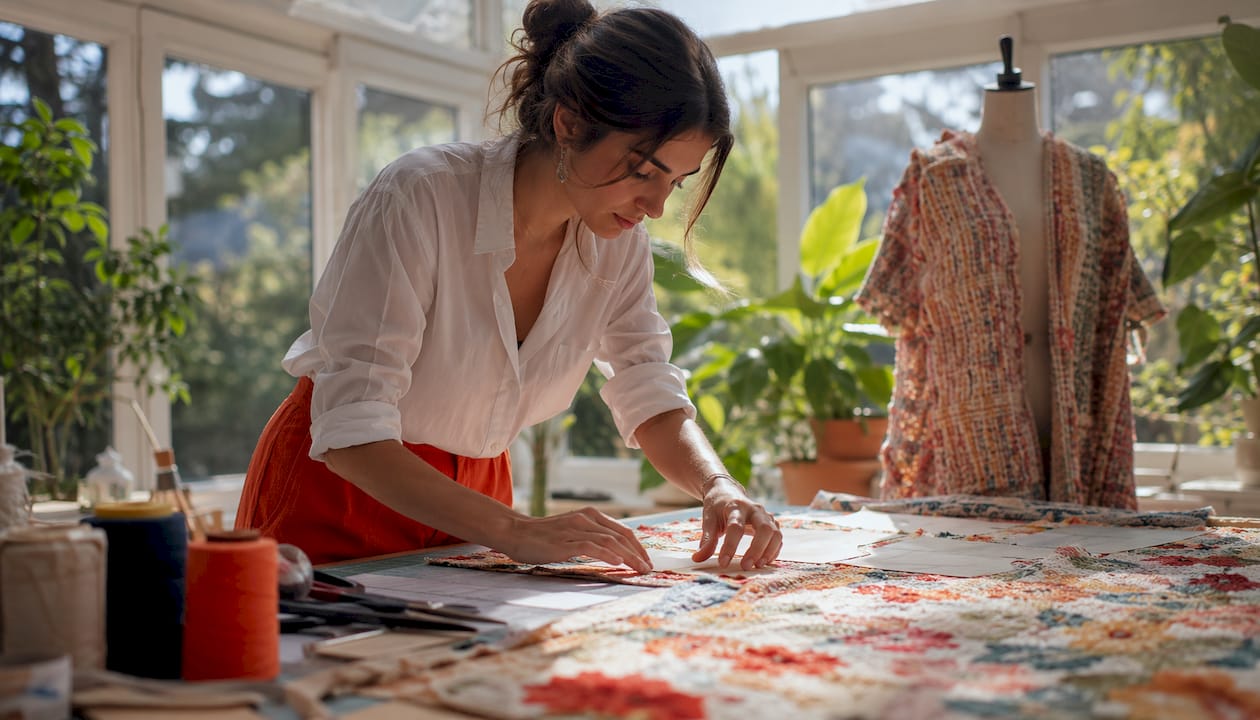
Woven fabrics cover the full range of apparel categories, from the lightest voile to the heaviest coating cloth. The key applications:
The construction implication of using woven versus knit fabric is significant. Wovens require positive ease in pattern design — the garment must be cut larger than the body measurements to allow movement, because the fabric itself will not stretch to compensate. Seam allowances fray and need finishing (serging, French seams, or bound edges). Darts, pleats, and princess seams do the shaping work that stretch does in a knit.
Pro Tip: When sewing a structured woven like suiting or canvas, interface the collar, cuffs, and front placket with a woven fusible interfacing cut on the same grain as the shell fabric. A knit interfacing on a woven shell creates a mismatch in stretch behavior that shows up as bubbling after the first wash.
For a deeper look at how woven and knit construction choices affect garment fit, the knit vs. woven guide at Fabric-fabric covers the key differences clearly.
Home textiles are one of the largest markets for woven fabric applications, and the performance priorities shift significantly from apparel. Durability, colorfastness, and cleanability take over from drape and wearing ease.
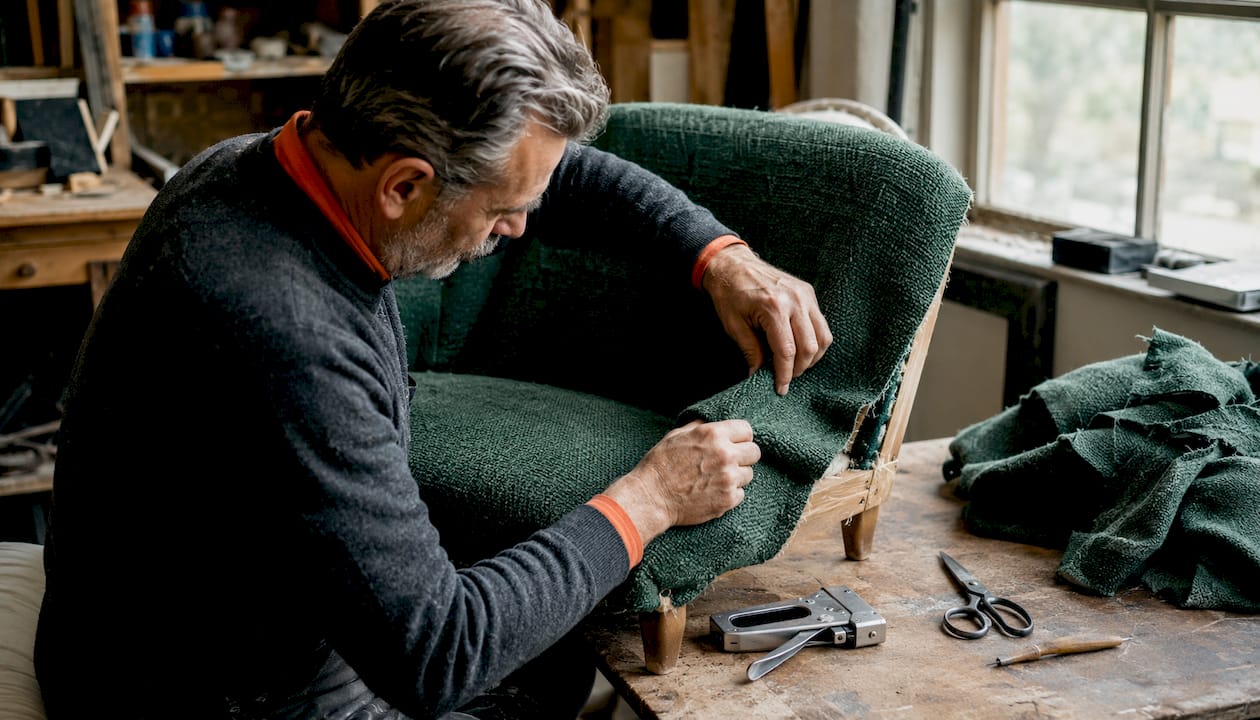
Upholstery is the most demanding home use. The standard measure is the Martindale or Wyzenbeek rub test — residential upholstery typically needs 15,000+ double rubs; contract or commercial upholstery starts at 30,000. Jacquard and dobby wovens are popular here because the pattern is woven in rather than printed, so it does not wear off. Canvas and heavy plain weaves in linen or cotton-linen blends are also common for casual furniture.
Drapery and curtains prioritize lightfastness (resistance to fading from UV exposure) and weight. Heavier wovens hang better and block more light. Linen, cotton-linen blends, and polyester wovens are standard choices. Sheer curtains use leno or open plain weaves in polyester or cotton voile.
Bedding uses sateen (a satin-weave cotton) for its smooth, cool hand, or percale (a plain weave) for a crisp, breathable feel. Thread count matters here, but only up to a point — a well-finished 300-thread-count percale in long-staple cotton outperforms a poorly finished 600-count fabric every time.
Table linens, cushion covers, and decorative textiles round out the home category. Damask jacquard is the traditional choice for formal table linens; plain and twill weaves in cotton or linen work for everyday use. For home decor fabric options by project type, Fabric-fabric’s home decor range covers upholstery weights through to lighter drapery fabrics.
The practical checklist for home wovens:
This is where woven fabric engineering gets genuinely interesting. In technical applications, the fabric is not a surface material — it is a load-bearing or functional component, specified with the same rigor as a metal part.
Key industrial uses:
Growth in the technical segment is concentrated in aerospace composites, medical narrow fabrics, conductive narrow fabrics for wearables, and automotive safety components — all areas where the performance requirements are tightening rather than loosening.
Choosing the right woven fabric means matching measurable performance traits to the demands of the application. Here is how the main characteristics map to uses:
| Characteristic | Why It Matters | Example Application |
|---|---|---|
| Tensile strength | Resistance to pulling forces along warp or weft | Seatbelts, lifting slings, composites |
| Tear strength | Resistance to propagating a cut or nick | Outerwear, sails, geotextiles |
| Abrasion resistance | Surface durability under repeated friction | Upholstery, workwear, conveyor belts |
| Thread count / sett | Fabric density; affects porosity and hand | Filtration media, bedding, shirting |
| Drape coefficient | How the fabric falls under gravity | Dresses, drapery, linings |
| Porosity / air permeability | How much air or liquid passes through | Filtration, airbags, geotextiles |
| Flame resistance | Resistance to ignition and flame spread | Workwear, aircraft interiors, FR drapery |
Fiber choice sets the ceiling for most of these properties. Aramid fibers deliver flame resistance and cut resistance that polyester cannot match. UHMWPE offers extraordinary tensile strength at low weight. Cotton breathes but absorbs moisture; polyester resists it. Finishing then adjusts the baseline: a calendered (heat-pressed) fabric has lower porosity than the same fabric unfinished; a PU coating adds water resistance; a flame-retardant treatment changes the ignition behavior without changing the weave.
The fabric finishes guide at Fabric-fabric explains how specific coatings and treatments alter these performance characteristics in practice.
The production sequence for a woven fabric follows a consistent path: yarn selection, warping (winding warp yarns onto a beam at precise tension), drawing-in (threading warp yarns through heddles and reed on the loom), weaving, and then inspection and finishing.
Loom type shapes what is possible. Tappet looms handle simple structures up to 12 shafts; dobby looms extend that to 32 shafts for small geometric patterns; jacquard looms control individual warp threads and can produce any figured design. Shuttle looms produce a true selvedge; rapier and air-jet looms are faster but create a cut edge that needs finishing.
Finishing processes and their effects:
The same base fabric can end up in very different markets depending on which finishing steps are applied. That is why a fabric label alone is not enough for specification — the finish and yarn quality determine whether a cotton poplin is suitable for a budget shirt or a premium dress shirt, as Redmore’s research on woven textile design makes clear. For embroidery and surface decoration, finishing compatibility also matters — the embroidery finishing methods guide from Flossom covers how fabric structure affects stitch behavior and finishing choices.
Work through these steps in order and you will avoid the most common sourcing mistakes.
Pro Tip: For any project where the fabric will face repeated stress (upholstery, bags, workwear), cut a 4-inch swatch and rub it 50 times against a contrasting fabric. If the surface pills or the color transfers, that fabric will not hold up in use — regardless of what the spec sheet says.
The fabric sourcing checklist at Fabric-fabric walks through the supplier evaluation steps in more detail, which is useful when you are ordering in quantity.
For sustainable sourcing considerations alongside performance criteria, the sustainable fabrics guide covers how to balance environmental impact with functional requirements.
General care rules follow the fiber, but finishing overrides them. A cotton canvas with a PU coating cannot be machine-washed on hot — the coating will delaminate. A FR-treated workwear fabric must never be washed with fabric softener, which coats fibers and degrades the flame-retardant finish.
Care by use category:
Pro Tip: Always pre-wash apparel woven fabrics before cutting, using the same wash cycle you plan to use for the finished garment. Cotton and linen can shrink 3–5% in the first wash — cutting before washing means a garment that no longer fits after its first laundry.
For a broader set of laundering and care guidance, Fabric-fabric’s care tips guide covers handling across fabric types.
Grainline is not optional. When cutting woven panels, align the pattern grainline arrow precisely to the warp thread. Even a few degrees of misalignment creates a permanent twist in the finished panel — the side seams rotate forward, the hem dips on one side, and no amount of pressing fixes it. This is a structural consequence of how woven fabrics are built, not a sewing error that can be corrected later.
Adapting knit patterns for woven use requires more than just swapping fabric. Knit patterns are drafted with negative ease — the garment is smaller than the body because the fabric stretches to fit. A woven version of the same pattern will be unwearable. You need to add wearing ease across the chest, hips, and sleeves (typically 2–4 inches depending on the garment type), reposition closures so the garment can be put on without stretch, and add darts or seams to create the shaping the stretch previously provided.
For technical wovens, supplier validation matters more than the spec sheet alone:
Pro Tip: When specifying a technical woven for a load-bearing application, ask the supplier for the warp and weft tensile values separately. Wovens are anisotropic — strength in the warp direction is often 20–30% higher than in the weft. If your application loads the fabric at an angle, the bias strength (significantly lower than either on-grain direction) may be the limiting factor.
Woven fabrics serve apparel, home furnishings, and industrial applications because their interlaced warp-and-weft structure delivers dimensional stability, predictable strength, and a wide range of achievable finishes.
| Point | Details |
|---|---|
| Three core use sectors | Woven fabrics cover apparel, home furnishings, and industrial/technical applications across all weight and performance ranges. |
| Weave family sets the baseline | Plain, twill, satin, canvas, jacquard, and narrow woven each suit different performance needs — match the weave to the application first. |
| Finishing changes everything | The same base fabric can be finished for water resistance, flame retardancy, or high sheen — always specify finish alongside fiber and weave. |
| Grainline discipline is non-negotiable | Cutting woven panels off-grain creates permanent structural twist; this cannot be corrected after construction. |
| Fabric-fabric for sourcing | Fabric-fabric carries home decor, quilting, and backdrop wovens with usage guidance to help match fabric to project. |
The conventional wisdom treats woven fabrics as the “traditional” option — the thing you use when you are not using a stretch knit or a technical nonwoven. That framing undersells them badly. The same structural logic that makes a cotton poplin shirt breathable and crisp is what makes a woven aramid panel stop a bullet. The warp-and-weft architecture is not a limitation; it is a precision tool that textile engineers have been refining for centuries.
What gets overlooked is how much finishing and fiber choice multiply the base weave. A plain weave in glass fiber is a filtration component. The same plain weave in mercerized cotton is a luxury shirting. The weave is the skeleton; everything else is what you build on it. Buyers who focus only on the fabric name and miss the finish and yarn quality are making a specification error, not just a style choice.
The other thing worth saying plainly: woven fabrics reward careful selection and punish careless cutting. Get the grainline right, match the finish to the use, and a well-chosen woven will outlast almost any alternative. Cut it wrong or wash a coated canvas on hot, and you will understand very quickly why the details matter.
Knowing which woven fabric fits your project is half the work. Finding it at a fair price, with enough product detail to make a confident decision, is the other half.
Fabric-fabric carries a broad range of woven fabrics organized by end use, so you are not hunting through a generic catalog. For home projects, the home decor fabric category covers upholstery-weight wovens through to lighter drapery fabrics, with usage notes on each listing. For quilting and craft projects, the geometric quilting fabric range offers tightly woven cotton prints suited to precise cutting and piecing. For larger-scale or backdrop applications, the backdrop fabrics section carries wide-width wovens in heavier constructions. Browse by project type, order swatches before committing to yardage, and use the product descriptions to confirm finish and care requirements before you cut.