

 Canadian Dollars

Your Fashion Fabric Checklist for Sewing Success
Posted by BLG on 2026 May 30th
Posted by BLG on 2026 May 30th

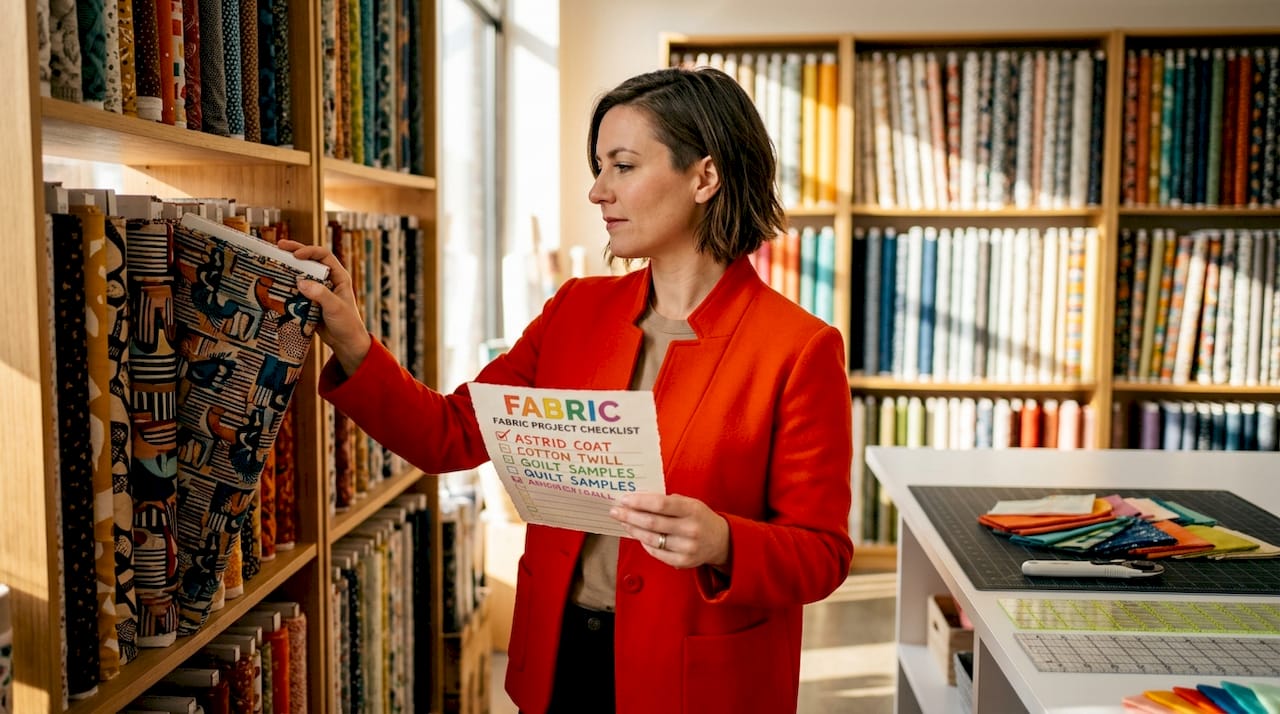
TL;DR:
- Creating a precise fabric checklist ensures accurate material selection and prevents costly sewing mistakes.
- It should detail fiber percentages, construction type, GSM with tolerances, stretch, finish, and colorfastness ratings.
Walking into a fabric store or scrolling through an online shop without a clear plan is how most sewing projects go sideways. A fashion fabric checklist, what textile professionals call a fabric brief or fabric specification sheet, takes the guesswork out of selecting materials and gives you measurable criteria that actually match your project goals. This article breaks down every point of a solid checklist, from fiber composition and GSM to colorfastness testing and sustainability certifications, so you can buy with confidence and sew without regrets.
| Point | Details |
|---|---|
| Specify exact fiber blends | Generic terms like “cotton” are not enough; always note exact percentages and construction type. |
| Test before you cut | Simple at-home tests for drape, stretch, and colorfastness prevent costly mistakes. |
| Know your GSM ranges | Fabric weight determines garment performance, with ranges from 120 GSM for linings to 300+ GSM for outerwear. |
| Check compliance labels | OEKO-TEX certification types and validity dates matter when sourcing sustainable fabric options. |
| Match fabric to use case | Breathability, drape, and durability requirements differ significantly across garment categories. |
The single biggest mistake sewists and small-brand founders make is writing “cotton” on their fabric brief and calling it done. Cotton is a universe, not a specification. General terms like “cotton” are insufficient; precise specs such as 95% organic cotton / 5% elastane in a jersey construction prevent sampling errors and production headaches.
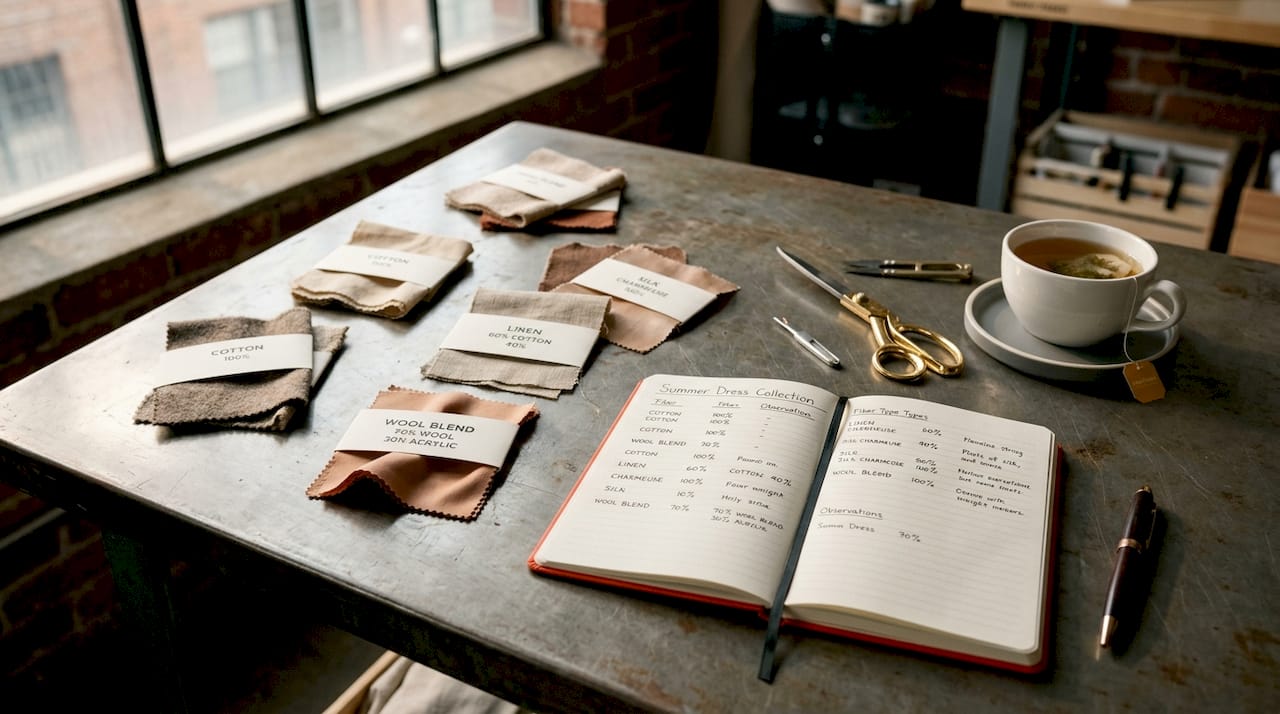
Your checklist should record the exact fiber percentages, the specific fiber variants (mercerized cotton, Pima cotton, recycled polyester), and the fabric construction type. Is it knit or woven? Jersey or interlock? Twill or plain weave? Each answer changes how the finished garment drapes, stretches, breathes, and wears over time. This is the foundation of any serious fabric selection guide.
Knit fabrics stretch with the body because their looped structure has built-in give. Woven fabrics have interlaced threads that create stability but less natural stretch. Getting this wrong means a fitted dress that won’t go over your shoulders or a structured blazer that puckers at the seams.
Your checklist point here is simple: identify the construction type before anything else. Then ask whether the construction matches the pattern instructions. Most commercial patterns specify one or the other, and ignoring that note is where beginner sewists lose hours of work.
GSM stands for grams per square meter, and it’s the most objective weight measurement you can put on a checklist. GSM ranges run from 120 to 150 GSM for linings and delicate blouses, 160 to 190 GSM for everyday tees, 220 to 300 GSM for activewear, and 280 GSM and above for heavyweight outerwear and hoodies.
Knowing the target GSM also protects your budget. High-GSM fabrics cost more to ship and handle, while lighter weights suit breathable garments and keep costs lower. Fabric-fabric’s guide on understanding GSM walks through how to measure and interpret these numbers at home.
Pro Tip: When ordering fabric from a supplier, always specify your target GSM with a tolerance range, such as 280 GSM ± 5%, rather than a single number. This is standard in professional fabric briefs and reduces rejected samples.
Stretch percentage tells you how much a fabric extends. Recovery tells you whether it snaps back. Both belong on your checklist, especially for activewear, fitted garments, or anything cut on the bias. A fabric with 40% stretch but poor recovery will sag at the knees and elbows within a few wears.
Detailed fabric briefs from production-level designers always include stretch and recovery percentages alongside the fiber blend. For home sewists, this translates to performing a simple snap-back test on your swatch before cutting: stretch the fabric firmly across its width, release it, and check whether it returns to its original dimensions within a second or two.
Fabric finishes are applied after weaving or knitting and dramatically affect how a fabric feels and performs. Mercerizing adds luster and dye uptake to cotton. Carbon peaching creates a soft, brushed surface. Sanforizing prevents excessive shrinkage. Anti-wrinkle finishes help linen behave in ways its natural structure resists.
These processes need to appear on your fabric checklist because two fabrics with identical fiber content and GSM can behave completely differently depending on their finish. Ask your supplier to confirm any mechanical or chemical treatments applied, and note whether those treatments are permanent or wash-out after a few cycles.
Colorfastness is how well a fabric holds its color under real-world stress. It breaks into three separate tests, each checking something different. Wash fastness checks color retention after laundering. Rub fastness (also called crocking) tests whether dye transfers to other surfaces through friction. Light fastness measures color stability after UV exposure.
All three belong on your checklist as separate line items, not a single catch-all note. Fabric-fabric’s breakdown of colorfastness basics explains the rating scales used in industry testing, which run from 1 (very poor) to 5 (excellent). For garments, you generally want a wash fastness rating of at least 3 to 4.
Certifications matter for two reasons: personal safety and ethical sourcing. OEKO-TEX STANDARD 100 certifies that every component of a fabric has been tested for harmful substances. MADE IN GREEN by OEKO-TEX goes further, covering environmental and social production standards. Verifying OEKO-TEX certification requires checking the certificate type, number, scope, and validity date. An expired or vague claim tells you nothing.
Add a certification column to your fabric checklist whenever you’re sourcing sustainable fabric options. Note the exact standard name, the certifying body, and whether the certificate is current. This habit separates informed purchasing from greenwashing.
Here’s a quick reference for the fabrics you’ll encounter most often in a fashion sewing context.
Natural fibers:
Synthetic and performance fibers:
Blends:
| Blend | Best use | Trade-off |
|---|---|---|
| Cotton/polyester | Everyday wear, uniforms | Less breathable than pure cotton |
| Cotton/spandex | Fitted tees, leggings | Requires ballpoint needle |
| Linen/cotton | Summer dresses, shirts | Softer than pure linen but loses some crisp texture |
| Wool/nylon | Suiting, structured coats | Costs more, dry-clean often required |
For summer-specific fabric picks, Fabric-fabric’s guide to best fabrics for summer covers breathable options in detail.
Buying fabric based on a photo and a description alone is a risk. Samples change everything. Here’s a numbered process for evaluating swatches before committing to yardage.
Pro Tip: Store your tested swatches in a small binder with your notes attached to each sample. This becomes a personal fabric library that speeds up future sourcing decisions and prevents buying the same disappointing fabric twice.
| Garment type | Recommended fiber | GSM range | Stretch needed | Breathability | Care level |
|---|---|---|---|---|---|
| Summer dress | Cotton, linen, rayon | 100–160 | Low to none | High | Easy |
| Activewear | Nylon, polyester/spandex | 180–240 | High (40%+) | Moderate | Easy |
| Outerwear shell | Nylon, polyester | 120–180 | Low | Low | Easy |
| Structured blazer | Wool, wool/nylon | 250–320 | None | Moderate | Dry-clean |
| Underwear/base layer | Cotton/spandex, modal | 120–160 | High | High | Easy |
This table reflects the kind of choosing fabrics for apparel decision matrix professional designers use. Matching your project category to these ranges before shopping saves time and money.
I’ve learned that the gap between a satisfying sewing project and a frustrating one almost always traces back to a decision made before cutting a single thread. It’s the fabric choice itself.
What surprised me most early on was how useless vague notes are. Writing “medium weight jersey” in a project file means nothing six months later when you’re trying to reorder. I now note the fiber blend percentage, the GSM with tolerance, the finish type, and the supplier. That level of detail feels excessive until the moment you need to reorder 10 yards and your notes actually match what arrives.
I’ve also learned to be skeptical of sustainability claims on bolt labels. Checking OEKO-TEX validity takes about 90 seconds on their website and has saved me from buying fabrics that had long-expired certifications. Precision in specifications, whether you’re sewing one dress or planning a small run, is what separates projects that go well from those that teach you expensive lessons.
— kev
Once you’ve built your checklist and tested your swatches, you need a reliable source that actually stocks what your spec sheet calls for. Fabric-fabric carries a curated range of fabrics across every major category, from satin and velvet to seersucker and lace, with clear product descriptions that include usage guidance and pricing. Whether you’re hunting for structured suiting, flowing dress fabrics, or materials to expand your sewing projects into home applications, the selection is organized by use case to make shopping faster.
If you want a starting point, browse the backdrop fabrics collection for versatile options that cross over beautifully between fashion and decorative applications. Fabric-fabric also covers home decor textiles that inspire fresh fabric combinations you might not have considered. Armed with your checklist, every product page becomes a faster, smarter decision.
A fashion fabric checklist should include fiber composition with exact percentages, fabric construction type, GSM with tolerance, stretch and recovery specs, finish type, and colorfastness ratings for wash, rub, and light exposure.
Cut a 10 cm x 10 cm sample, weigh it in grams, and multiply by 100. This gives you the grams per square meter value to compare against your specification target.
Nylon and polyester/spandex blends in the 180 to 240 GSM range offer the best combination of stretch, recovery, moisture management, and durability for activewear garments.
Check the certificate type (STANDARD 100 vs. MADE IN GREEN), locate the certificate number on the label, and verify it on the official OEKO-TEX website to confirm scope and current validity.
Swatches let you test GSM, drape, stretch recovery, and colorfastness at home before committing to full yardage, which prevents expensive mistakes and fabric waste on your actual project.