

 US Dollar

30% More Stretch: Cotton Knit Fabric for Sewists and Makers
Posted by BLG on 2026 Aug 31st
Posted by BLG on 2026 Aug 31st

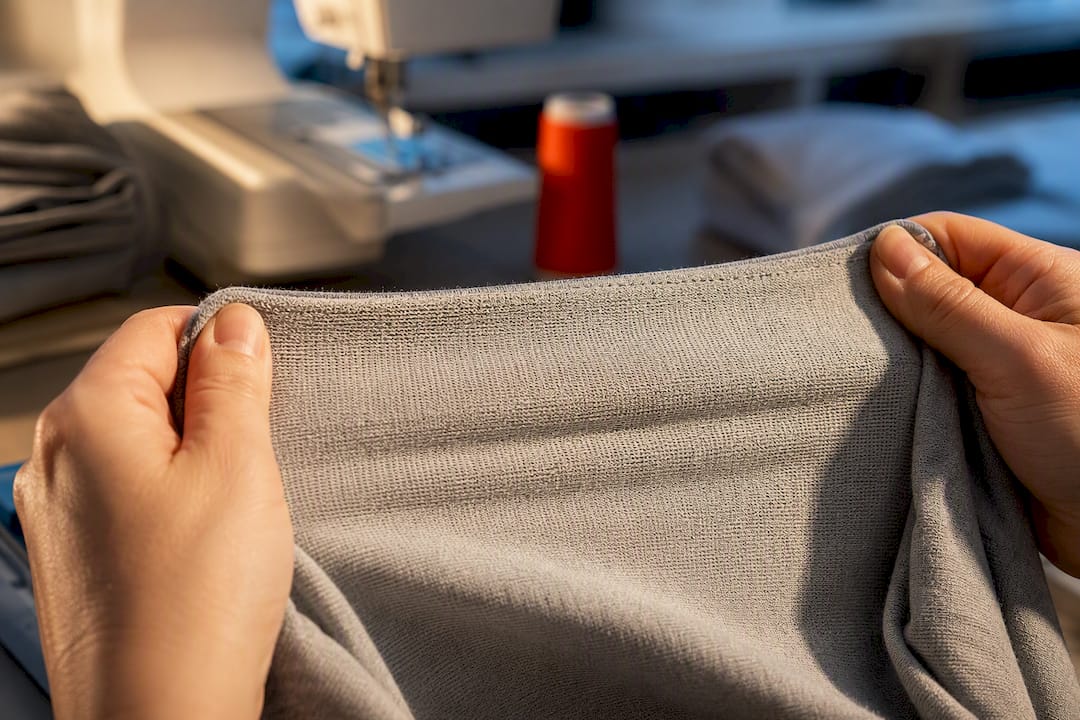
Cotton knit fabric is cotton yarn formed into cloth by interlooping stitches rather than weaving threads over and under each other. That looped construction is why knits stretch and drape against the body instead of holding a stiff shape, which is exactly why they dominate T-shirts, underwear, and activewear. If you’ve ever wondered why a woven cotton shirt feels structured while a cotton tee gives with your movement, the loop is the answer.
TL;DR:
- Cotton knit fabrics vary widely in feel and performance based on construction type, weight, and yarn choice, affecting stretch, drape, and durability.
- Interlock knits provide better shape retention and abrasion resistance than single jersey, making them suitable for higher-end T-shirts and babywear.
- Higher GSM knits generally resist pilling and shrinkage better, but lightweight jerseys tend to pill faster and shrink more unless preshrunk.
- Woven cotton fabrics hold shape better through washing, while knits require shrinkage management and stabilization techniques for sewing.
- Requesting fabric swatches before cutting helps avoid surprises with stretch, recovery, and drape, especially for fitted or structured garments.
Every knit fabric starts with a single continuous strand of yarn pulled through itself in a series of connected loops. Those loops stack into rows (courses) and columns (wales), and the give between each loop is what lets the whole fabric stretch. That’s a fundamentally different logic from weaving, where two sets of threads lock at fixed right angles with no slack to pull.
Most cotton knits are weft knits, built loop by loop across a row, the same way a knitting machine or hand-knitter works a sweater. Warp knits, built with each yarn moving diagonally down its own column, show up less often in cotton apparel but appear in some technical and lace-effect fabrics. The construction method itself determines how a fabric behaves before fiber content even enters the picture.
Yarn choice modifies the outcome considerably:
None of these variables are cosmetic. They’re the reason two “100% cotton knit” fabrics can feel completely different on the bolt.
Knit fabric isn’t one thing. It’s a family of structures, and picking the wrong one is a common reason a sewing project doesn’t turn out the way the pattern envelope promised.
Structure changes more than the feel in your hand. Experimental comparisons of ten weft-knit variations found measurable differences in bursting strength, air permeability, and drape across these families, with double-bed structures like interlock consistently showing better abrasion resistance than single jersey.
Stretch is the headline feature, and it comes straight from the loop. Each loop has slack built into it, so the whole fabric can elongate and spring back without any added fiber. Blend in elastane and that recovery improves noticeably, particularly in fitted garments where a plain cotton knit would eventually bag out at the knees or seat.
Drape and hand shift with both stitch type and weight. A 140 GSM single jersey flows and clings; a 300 GSM fleece stands away from the body and holds structure. Rib and interlock knits tend to show better drapeability than plain single jersey in side-by-side testing, which is part of why interlock reads as a “nicer” fabric even at a similar weight.
Knitted fabrics typically show about 30% higher air permeability and stretchability than comparable woven fabrics, according to comparative testing between the two structures. That open, looped structure is also why cotton knit absorbs and moves moisture away from skin more readily than a tightly woven equivalent, which is exactly what you want in a T-shirt or activewear base layer.
A few practical trade-offs to weigh before you cut into yardage:
The core difference is mechanical. Woven cotton locks warp and weft threads at fixed angles, so the fabric holds a rigid shape and doesn’t give. Knit cotton loops yarn continuously, and that slack is what lets it stretch in one or both directions. Neither structure is “better.” They’re built for different jobs, and a full breakdown of how they differ across construction and use is worth reading if you’re new to fabric shopping.
That structural gap shows up everywhere downstream:
If your pattern says “knits only,” don’t substitute a woven, even a lightweight one. There’s no stretch mechanism to fall back on.
Before you commit to a cut length, a few quick checks tell you what you’re actually holding.
Edge curling on single jersey is the pitfall that trips up most beginners. Stabilize the fabric before you cut, either with a light spray starch or a strip of fusible stay tape along seams and hems, and cut with weights instead of pins to avoid distorting the loops.
Use a ballpoint or jersey needle so you’re pushing between fibers instead of piercing them, and sew with a narrow zigzag or a dedicated stretch stitch so seams flex instead of popping. Preshrink your yardage with a wash and dry cycle that matches how you’ll actually launder the finished garment, since cotton knit shrinkage shows up mostly in the first wash.
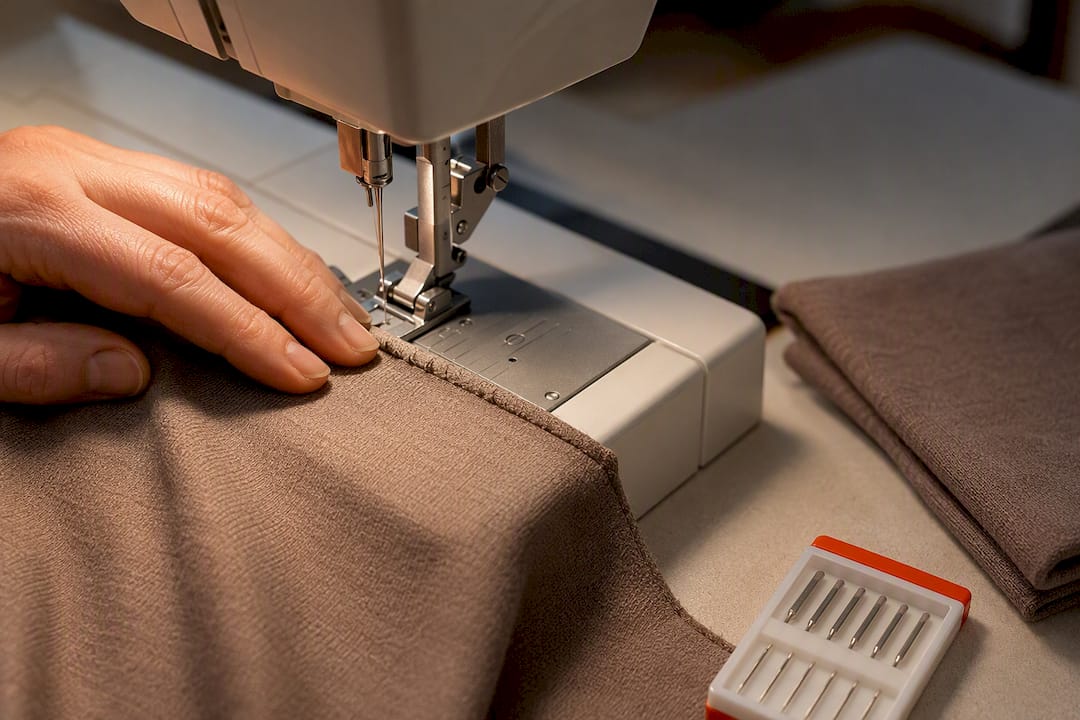
Pro Tip: For a clean hem on lightweight jersey, skip a folded double hem and use a twin needle instead. It mimics a coverstitch, lies flatter, and stretches with the fabric instead of cracking at the seam.
We list composition, GSM, and recommended end use on every cotton knit product page for a reason: those three numbers tell you more about how a fabric will behave than a photo ever will. A 160 GSM single jersey and a 220 GSM interlock are both “cotton knit,” but they sew and wear completely differently.
If you’re sewing a fitted garment, requesting a swatch before ordering yardage saves you from a shrinkage or drape surprise later. Browse our double-knit and interlock options for stable, beginner-friendly choices, or check our home decor fabric selection when a project calls for a heavier hand.
Most fabric confusion isn’t about cotton versus polyester. It’s about treating “knit” as a single category when it’s really a spectrum of structures with wildly different behavior. I’d argue the GSM number matters more than most beginners realize, more than fiber content, more than thread count claims on a listing. A 140 GSM single jersey and a 260 GSM interlock share a fiber but not a personality.
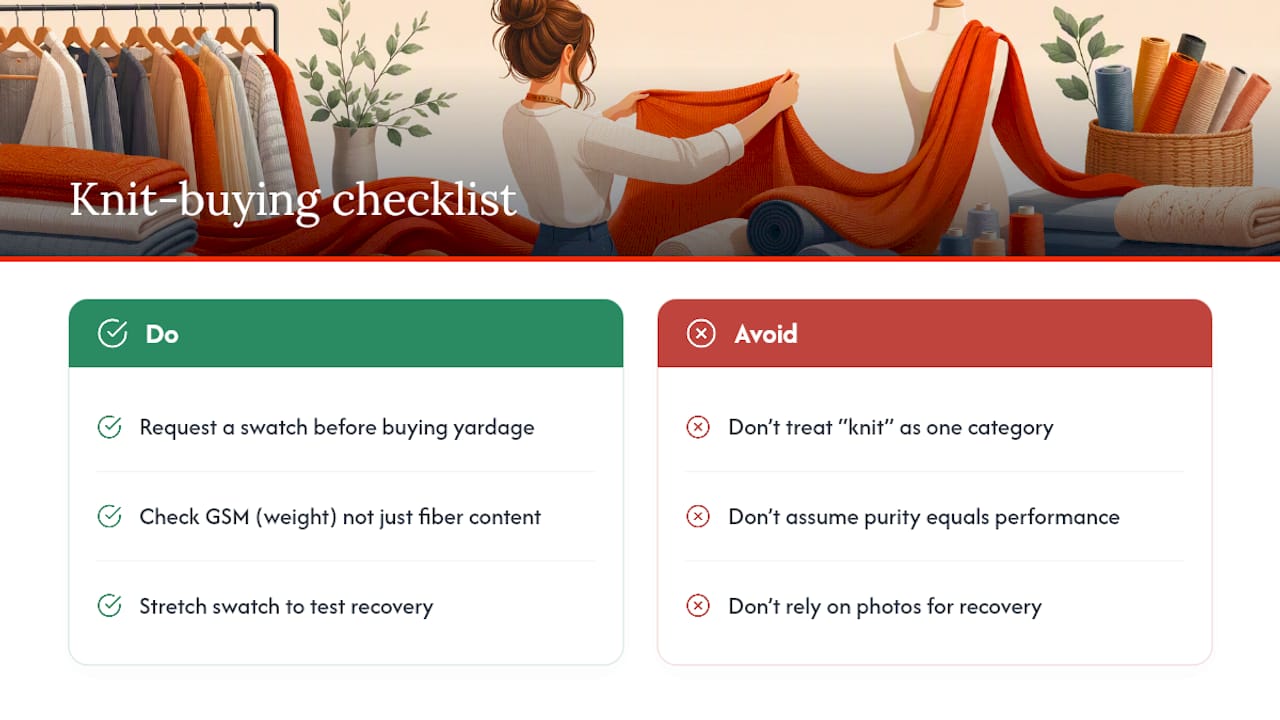
The other blind spot is elastane. Purity isn’t the same as performance here, and conflating the two leads to stretched-out waistbands and disappointing fitted tees.
If there’s one habit worth building, it’s requesting a swatch before buying yardage for anything fitted. Photos can’t tell you how a knit recovers after you stretch it, and that recovery is the whole point of choosing a knit in the first place.
— kev