

 US Dollar

Key benefits of buying bulk fabric for DIY projects
Posted by BLG on 2026 Apr 27th
Posted by BLG on 2026 Apr 27th

TL;DR:
- Bulk fabric purchasing reduces costs per yard by 15 to 30% and minimizes waste.
- Pre-cut bundles and bolts improve efficiency, save time, and ensure fabric consistency.
- Proper storage and planning are essential to maximize savings and avoid fabric degradation.
Keeping your creative projects funded without raiding your entire budget is a real challenge for crafters. A single yard of quality quilting cotton at a local fabric store can run $12 to $18, and when you need 15 yards for a set of curtains, the numbers sting fast. Buying fabric in bulk changes that math in ways that go well beyond a simple discount. From dramatically lower cost per yard to pre-coordinated color bundles that eliminate the guesswork, bulk buying offers both financial and creative advantages that most hobbyists overlook until they try it once and never go back.
| Point | Details |
|---|---|
| Lower costs | Bulk fabric buyers spend up to 30 percent less per yard, stretching budgets for more projects. |
| Less waste | Pre-cut bundles and bulk bolts can reduce fabric waste by up to 25 percent compared with buying retail. |
| Creative readiness | A well-chosen stash ensures you can start new projects anytime with color-coordinated, project-ready fabric. |
| Storage matters | Proper storage is essential to protect your bulk investment from mold, pests, and degradation. |
| Smart planning | Bulk buying only truly pays dividends if you match purchase volumes to your actual creative needs. |
The most immediate reason crafters turn to bulk purchasing is straightforward: it costs less per yard. Buying fabric in bulk reduces cost per yard by 15 to 30% compared to retail purchases, enabling cost-effective sourcing for multiple DIY projects, home decor, and apparel. On a 15-yard bolt priced at around $10 per yard retail, that percentage drop saves you $22 to $45 in a single order. Across four or five bolts per year, those savings stack up into a meaningful portion of your annual craft budget.
Small cuts at retail are expensive for a simple reason: the store factors in handling, repackaging, and the labor involved in cutting custom lengths. When you buy by the bolt or bundle, you eliminate most of that overhead. The unit price drops because the seller is moving more material with less effort per transaction. That efficiency gets passed on to you.
The upfront investment can feel steep, especially when you’re used to buying two or three yards at a time. But the smarter way to look at it is cost per project, not cost per purchase. A $120 bolt of muslin that covers three full projects actually costs $40 per project. Three separate retail cuts of the same material, at $14 per yard, would cost roughly $60 per project. The bolt wins every time.
| Purchase type | Yards | Price per yard | Total cost |
|---|---|---|---|
| Retail cut | 5 | $14.00 | $70.00 |
| Bolt purchase | 15 | $10.00 | $150.00 |
| Cost per 5 yards (bolt) | 5 | $10.00 | $50.00 |
| Savings per 5 yards | $20.00 |
Projects that benefit most from bulk economics include:
Pro Tip: Always calculate cost per yard before committing to a bulk order. A “sale” at a craft store may still be more expensive per yard than a standard bolt purchase from an online retailer. Check the math, not just the label.
For a deeper look at maximizing fabric savings across different project types, it helps to understand how different fabric categories price out at volume. And if you’re sourcing from multiple vendors, knowing how to approach negotiating fabric prices can unlock even better rates than standard list prices.
Cost savings are just one layer of the bulk fabric advantage. Efficiency and reduced waste are just as compelling, especially for crafters who’ve tossed out scraps from a poorly planned project and felt that familiar frustration.
Pre-cut bundles and bolts reduce fabric waste by up to 25% through precise sizing and eliminate measuring and cutting time. That 25% figure matters more than it sounds. On a 10-yard project, 25% waste at retail means 2.5 yards in the bin. That’s $30 to $45 worth of fabric going nowhere.
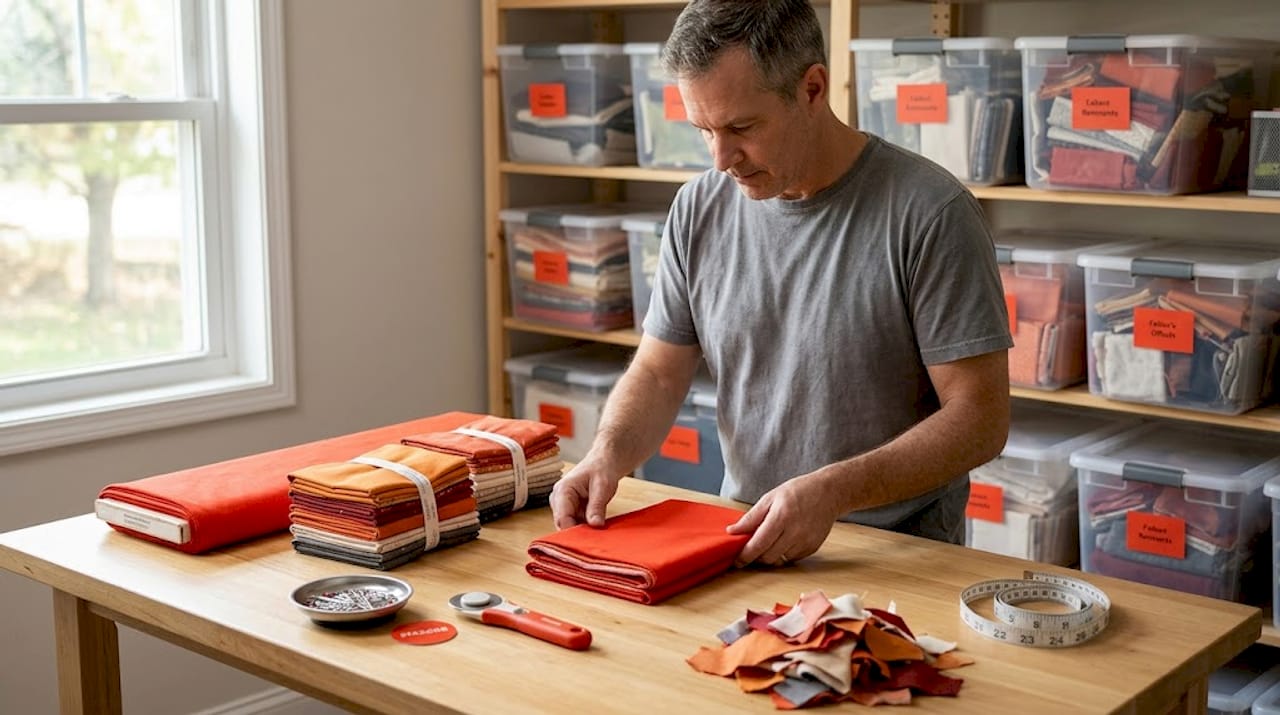
Pre-cut formats like fat quarters (18x22 inches), jelly rolls (2.5-inch strips), and charm packs (5-inch squares) are designed with specific project types in mind. A jelly roll, for example, lines up perfectly for strip quilts and table runners without a single extra cut. The sizes eliminate the need to measure and re-measure, which saves time every single session.
Here are three ways pre-cuts simplify your workflow:
| Sourcing method | Average waste % | Prep time per project | Consistency |
|---|---|---|---|
| Retail by the yard | 20 to 30% | 45 to 90 minutes | Varies by dyelot |
| Pre-cut bundles | 5 to 15% | 10 to 20 minutes | Coordinated by design |
| Bulk bolt | 10 to 20% | 20 to 40 minutes | Single dyelot |
“Planning your bundle size around actual project dimensions is the single most effective way to eliminate leftover fabric you don’t know what to do with. Match your bundles to your patterns before you buy, and waste nearly disappears.” — Experienced textile sourcing specialist
Pro Tip: Track every leftover piece in a small bin labeled by fabric type and size. Leftovers from a bolt purchase are great for small accent projects like patchwork pouches, headbands, or holiday ornaments. Tracking them keeps your stash useful and your workspace clear.
Understanding how to lay out your purchases before ordering is part of a solid bulk fabric ordering guide. Once you’ve worked through a few larger purchases, you’ll also want to think about planning fabric inventory across your whole stash so nothing gets overlooked.
With waste minimized, the next real advantage of bulk buying is what it does for your creative freedom. A well-stocked fabric stash turns impromptu ideas into immediate action. Instead of waiting for a shipping order or making a store run, you pull from what’s already on your shelf.
A project-ready stash supports spontaneous crafting with coordinated colors that spark creativity without matching stress. Pre-packaged bundles do a lot of that work for you. When a fabric designer releases a coordinated collection, every print in the bundle is designed to work together. You get the benefit of a professional color story without spending an afternoon pulling bolts off a wall and comparing them under the store lights.
Wide backing fabrics, especially 108-inch wide versions built for quilt backs, are another stash staple that bulk buyers swear by. A single bolt of wide backing eliminates piecing entirely and covers multiple projects. Keeping one or two neutral colorways on hand means you’re never stuck without a backing option.
Impromptu projects enabled by a full stash include:
“Having a coordinated stash means you can say yes to creative impulses instead of postponing them. The frustration of a great idea waiting on a fabric order is one of the most creativity-killing experiences in this hobby.” — Quilt designer and longtime craft blogger
The stash also removes decision fatigue. When you already know the prints work together and you have enough yardage, your brain goes straight to the fun part: making things. That shift in mental energy is surprisingly significant.
For home-focused crafters, building a stash with textiles suited to home decor fabric guide projects is a smart strategy. And if you’re looking for specific material types to keep on hand, the list of DIY home decor fabrics can help you prioritize what fills your shelves.
A well-stocked stash is only as valuable as the care you put into storing and managing it. Bulk buying done carelessly leads to wasted money, cluttered space, and frustration rather than creative freedom.
Bulk buying requires upfront capital and careful storage planning, including keeping fabric at 60 to 75°F with 30 to 50% relative humidity in airtight bins to avoid mold, pests, and material degradation. These aren’t optional conditions. Cotton and linen stored in a damp basement or a hot attic will yellow, weaken, and develop musty odors that no amount of washing fully removes.
Three storage rules that protect your investment:
Bulk buying only pays off when it’s tied to real project plans. Buying in bulk can cost you more if poor planning leads to unused fabric and storage degradation. The unit price savings disappear entirely if the fabric sits for three years and ends up in a donation bag.
Common pitfalls to avoid:
Pro Tip: Before every buying session, spend 10 minutes reviewing your current stash against your upcoming projects. Match what you need to what you already have, then fill only the genuine gaps. This one habit prevents most overbuying.
Tying your purchases to a realistic schedule is part of planning fabric inventory effectively. And when you’re comparing price per yard across sources, a clear process for estimating fabric costs helps you make smarter decisions before hitting checkout.
Bulk fabric buying is genuinely one of the smartest moves a dedicated crafter can make, but it is not magic. It is a tool, and like any tool, it only works well in the right hands.
The crafters who get the most out of bulk purchasing are the ones who inventory what they have, rotate through their stash with intention, and store everything with basic but consistent care. They buy ahead of projects, not in response to sale emails. They know their most-used fabrics and keep a reliable supply of those rather than chasing novelty at volume.
The temptation to overbuy on a great deal is real and we understand it completely. But the actual win is matching your buying habits to your real creative pace. A stash that fits your lifestyle and project rhythm is far more satisfying than a closet full of beautiful fabric you never quite get to.
Finding your personal sweet spot, somewhere between a versatile, inspiration-ready stash and a manageable, well-organized storage system, is the actual goal. For practical guidance on getting started, how to source bulk fabric is a solid place to begin building that foundation.
If you’ve decided that bulk buying fits your creative goals, the next step is knowing where to look for quality selections at the right price points.
At fabric-fabric.com, you’ll find extensive collections suited to exactly this kind of strategic shopping. Whether you’re building a home decor stash or stocking up for large-scale craft and event projects, bulk backdrop fabrics offer a wide range of options at volume-friendly pricing. For room-by-room projects and interior updates, the discount home decor fabric collection brings together upholstery, drapery, and decorative textiles with clear usage guidance and competitive pricing. Start with the categories that match your most frequent projects and build from there.
Crafters typically save 15 to 30% per yard when buying fabric by the bolt or bundle compared to regular retail prices, which adds up significantly across multiple projects.
Store your fabric in airtight bins at 60 to 75°F with 30 to 50% humidity to prevent mold, pests, and fiber degradation over time.
Pre-cut bundles reduce waste by up to 25%, especially when you choose bundle sizes that match your project dimensions rather than buying more than you’ll realistically use.
Yes, and they’re worth taking seriously. Bulk buying can cost more when poor planning leads to unused fabric that degrades in storage, so always check unit prices and buy with specific projects in mind.