

 US Dollar

Fabric Pricing Negotiation Guide for Successful Savings
Posted by BLG on 2025 Dec 22nd
Posted by BLG on 2025 Dec 22nd


Most American fabric buyers discover that prices can fluctuate by as much as 30 percent between suppliers. Sourcing the right materials is not just about finding low rates. It is about understanding market trends and navigating choices that impact both your budget and your project’s success. With practical steps focused on research, negotiation, and careful documentation, this guide helps you approach every stage of the American fabric buying process with confidence.
| Key Insight | Explanation |
|---|---|
| 1. Research Multiple Fabric Sources | Gather pricing data from various suppliers to establish a competitive baseline. |
| 2. Document Findings Thoroughly | Create a detailed spreadsheet to track fabric specs and pricing from different suppliers. |
| 3. Build a Compelling Negotiation Case | Prepare a persuasive proposal backed by solid market research and visual aids. |
| 4. Communicate Professionally with Suppliers | Initiate contact with a clear outline of your needs and demonstrate genuine interest. |
| 5. Confirm All Details Before Finalizing | Carefully review the agreed terms and request detailed quotes to avoid misunderstandings. |
Understanding fabric pricing requires systematic market research to secure the best rates for your project. Your initial goal is gathering comprehensive pricing intelligence across multiple fabric suppliers and sources, which will help you establish realistic budget expectations and negotiation strategies.
Start by exploring multiple sourcing channels to compare fabric rates effectively. The Garment Costing Guide recommends investigating various procurement pathways, including wholesale retailers, textile trade shows, online marketplaces, and direct manufacturer connections. Create a detailed spreadsheet tracking fabric specifications like material type, weight, color, and per meter pricing from at least 5-7 different suppliers. Pay special attention to variations in dye lots, potential shrinkage factors, and transportation costs that could impact your final pricing.
Here’s a concise comparison of common fabric sourcing channels and their typical advantages:
| Sourcing Channel | Typical Advantage | Example Use Case |
|---|---|---|
| Wholesale Retailers | Bulk discounts, fast delivery | Large stock orders |
| Textile Trade Shows | Access to new trends | Finding novel suppliers |
| Online Marketplaces | Wide selection, convenience | Comparing global prices |
| Direct Manufacturers | Customization, lower margins | Unique fabric specifications |
Carefully document your research findings, noting price ranges for similar fabric qualities and identifying potential volume discounts. Cornell University’s sourcing materials course suggests examining both stock fabrics and custom specification options to understand how lead times and production methods influence pricing. Remember that comprehensive market rate assessment takes time but provides critical leverage in future negotiations.
Pro tip: Create digital price comparison folders with screenshots and documentation of your research to maintain a clear record of market rates and serve as a reference for future fabric purchasing decisions.
Crafting a strong negotiation strategy requires meticulous preparation and a clear understanding of your fabric purchasing objectives. Your goal is to develop a persuasive argument that demonstrates your knowledge, value, and potential for a mutually beneficial transaction with fabric suppliers.

Harvard Law School’s Program on Negotiation recommends establishing your best alternative to a negotiated agreement as a critical first step. This means thoroughly researching competitive fabric prices, understanding market rates, and identifying multiple supplier options. Compile a comprehensive document that includes detailed cost comparisons, specific fabric requirements, and potential volume purchase scenarios. Highlight your research by creating visual aids like charts or spreadsheets that clearly demonstrate your market knowledge and purchasing potential.
When building your negotiation case, focus on presenting a professional and data driven approach. Emphasize your long term potential as a customer by showing how your purchasing needs align with the supplier’s business goals. Include specific metrics such as anticipated order volumes, frequency of purchases, and potential for future collaborative relationships. Practice articulating your key points concisely and confidently, ensuring you can communicate your value proposition clearly and persuasively.
Pro tip: Develop a one page negotiation summary document that succinctly captures your research, pricing expectations, and proposed terms, making it easy for suppliers to understand your proposal at a glance.
Reaching out to potential fabric suppliers is a critical step in your negotiation process that requires strategic planning and professional communication. Your objective is to establish initial connections that demonstrate your seriousness as a potential buyer while gathering essential information about their product offerings and pricing structures.
The Garment Costing Guide recommends understanding different purchasing scenarios when initiating supplier communication, whether you are exploring local or international fabric sources. Begin by preparing a professional email or introductory package that clearly outlines your fabric requirements, anticipated order volumes, and specific project needs. Include your detailed market research and a concise summary of why you are an attractive potential customer. When making initial contact, focus on building a relationship by showing genuine interest in their product line and demonstrating your preparedness.
Cornell University’s sourcing materials course emphasizes the importance of discussing shipping costs and lead times upfront, especially when considering stock or custom fabric specifications. During your initial interactions, ask targeted questions about minimum order quantities, available fabric types, production timelines, and potential volume discounts. Be prepared to provide specific details about your project requirements and show flexibility in your approach. Remember that successful supplier relationships are built on clear communication, mutual understanding, and a professional demeanor.
Pro tip: Create a standardized communication template for initial supplier outreach that you can quickly customize, ensuring consistent and professional first impressions across all potential fabric suppliers.
Negotiating fabric pricing requires a strategic approach that balances assertiveness with professionalism. Your goal is to secure the most favorable terms while maintaining a positive relationship with potential suppliers that could benefit you in future transactions.
Harvard Law School’s Program on Negotiation recommends making the first offer as a critical negotiation strategy, which allows you to anchor the discussion around your preferred pricing. Develop a comprehensive proposal that includes your targeted price point, anticipated order volume, and specific fabric requirements. When presenting your offer, approach the conversation with confidence but remain open to reasonable counterproposals. Use your market research and competitive pricing data as leverage, demonstrating that your offer is both fair and well informed.
Structure your negotiation as a collaborative dialogue rather than a confrontational exchange. Be prepared to explain the rationale behind your pricing expectations, highlighting the value you bring as a potential long term customer. Discuss potential flexibility in areas such as payment terms, delivery schedules, or minimum order quantities. Listen carefully to the supplier’s perspective and look for creative solutions that can benefit both parties. Be willing to compromise on some points while holding firm on your most critical requirements.
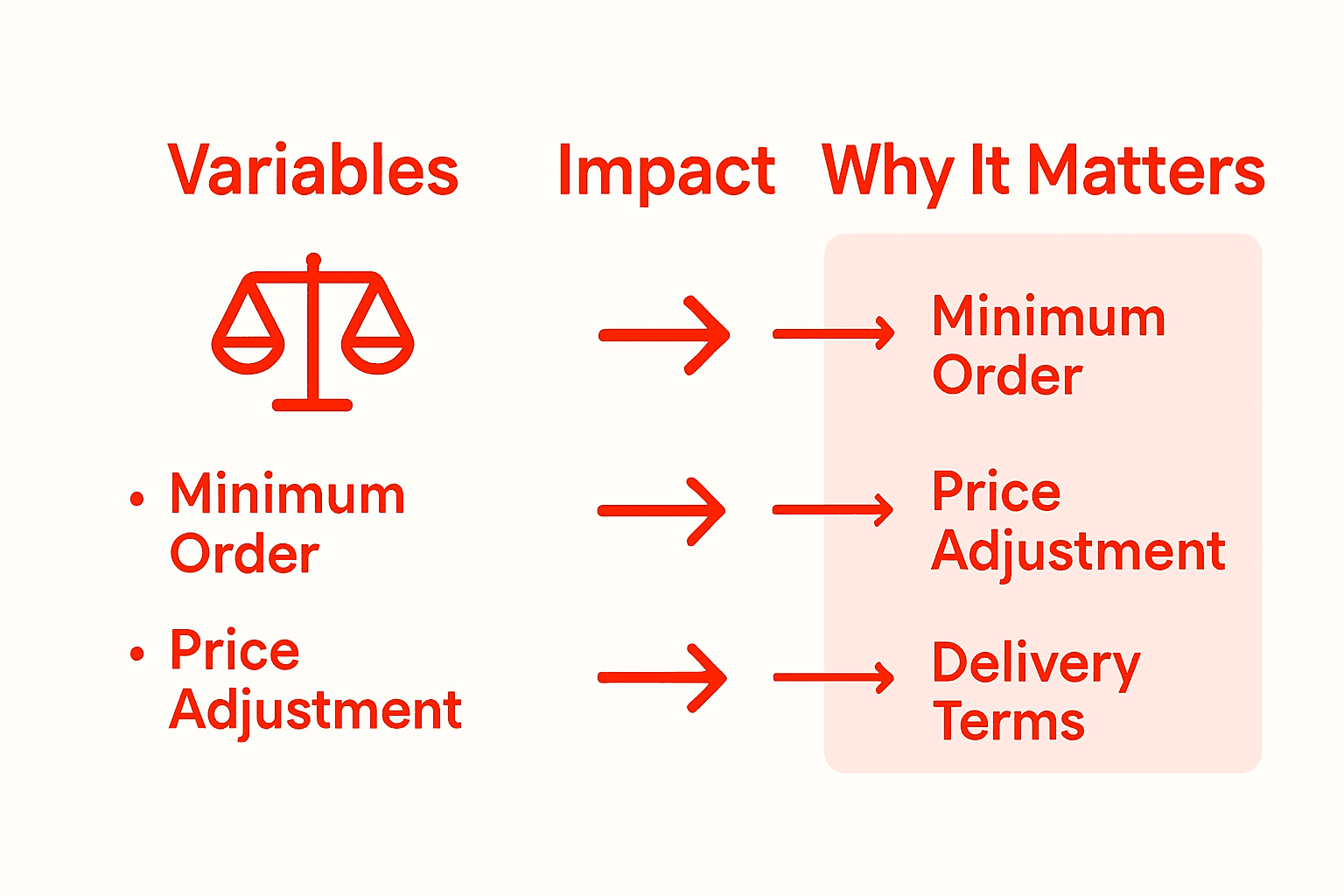
To aid your fabric negotiation strategy, here’s a summary of critical negotiation variables and their potential impact:
| Negotiation Variable | Potential Impact on Agreement | Why It Matters |
|---|---|---|
| Minimum Order Quantity | Influences price breaks | Affects total project cost |
| Payment Terms | Determines cash flow requirements | Impacts budget management |
| Lead Time | Affects project timelines | Crucial for on-time delivery |
| Shipping Costs | Increases overall purchase price | Alters final cost analysis |
Pro tip: Create a negotiation worksheet that tracks your bottom line, ideal terms, and acceptable compromise points to help you stay focused and strategic during fabric pricing discussions.
Finishing your fabric purchasing negotiation requires meticulous attention to detail and a systematic approach to confirming all agreed terms. Your primary objective is to ensure that every aspect of the transaction matches your original expectations and protects your interests.
The Garment Costing Guide emphasizes carefully reviewing all pricing details, including potential variations in dye lots and material specifications. Request a comprehensive written quote that itemizes every component of the transaction, including fabric specifications, per meter pricing, anticipated order volume, potential shrinkage factors, and any additional costs like transportation or taxes. Carefully compare this document against your original negotiation notes to confirm that all discussed terms are accurately represented.
Cornell University’s sourcing materials course recommends thoroughly examining shipping terms and lead times during the final order confirmation. Clarify exactly when you can expect delivery, understand the full pricing structure, and confirm the payment schedule. Request sample swatches if possible to verify fabric quality before committing to the full order. Create a final checklist that covers every critical detail from your negotiations, ensuring nothing is left to chance or misunderstanding.
Pro tip: Photograph and digitally archive all order confirmation documents, creating a comprehensive record that can serve as a reference for future negotiations and protect your interests.
Negotiating fabric prices can feel overwhelming when balancing market research, supplier communication, and order confirmation. This guide highlights the key challenges such as understanding market rates, preparing a strong negotiation case, and verifying all pricing details to secure the best deal without sacrificing quality. Many readers share the goal of gaining confidence to negotiate effectively and avoid paying more than necessary.
Take control of your fabric sourcing journey with resources designed to simplify these steps. At fabric-fabric.com, we provide a wide selection of detailed fabric listings like seersucker, satin, lace, and velvet, complete with transparent pricing and clear descriptions that help you compare options easily. Our user-friendly platform removes complexity by offering:
Explore our collection today to find quality fabrics matched to your project needs and budget.
Start your smart fabric negotiation now by shopping where prices are clear and reliable. Visit fabric-fabric.com for the fabrics you trust at prices you can negotiate confidently. Don’t miss out on discounts and seasonal offers that keep your purchasing power strong.
Understanding market rates requires thorough research. Gather pricing information from at least 5-7 fabric suppliers, tracking key specifications like material type, weight, color, and pricing per meter. Document this information in a detailed spreadsheet to establish a solid foundation for your negotiations.
Your negotiation case should encompass detailed market research, including competitor pricing and potential order volumes. Prepare a one-page summary that highlights your purchasing needs and demonstrates your knowledge of fabric costs to strengthen your position during the negotiation.
Communicate your interest through a professional email or introductory package that outlines your specific fabric requirements and project needs. Include insights from your market research to establish rapport and show that you are a serious buyer.
When presenting your offer, focus on market research to demonstrate that your suggested prices are informed and reasonable. Clearly outline your anticipated order volume, any specific fabric requirements, and be open to discussing other negotiation variables like payment terms and lead times.
Carefully review the written quote from the supplier to ensure all agreed terms align with what was discussed, including fabric specifications and pricing. Use a final checklist to confirm delivery timelines, payment schedules, and any additional costs to protect your interests in the transaction.
Maintain a comprehensive record of all communication regarding pricing, agreements, and order confirmations. Archive documents digitally, including photographs of quotes and agreements, to support future negotiations and provide a clear reference for your transactions.