

 US Dollar

Discover Burnout Fabric: Unique Features, Uses & Tips
Posted by BLG on 2026 Apr 16th
Posted by BLG on 2026 Apr 16th

TL;DR:
- Burnout fabric is created by chemically dissolving cellulose fibers to produce semi-transparent, lace-like patterns.
- Its unique texture offers lightweight, draping, and visually layered effects ideal for apparel and décor.
- Proper handling, lining, and pre-washing are essential due to its delicate, fiber-removing chemical process.
Burnout fabric is built on a paradox: it gets its beauty by having parts of itself deliberately dissolved. Using a chemical process called devoré, cellulose-based fibers are selectively dissolved to create semi-transparent, lace-like patterns on blended textiles. The result is a fabric with extraordinary visual depth, tactile contrast, and a luxurious feel that draws crafters, apparel makers, and home decor enthusiasts alike. This guide covers everything you need to know about burnout fabric: what it is, how it’s made, where it works best, and how to handle it without ruining your project.
| Point | Details |
|---|---|
| Burnout explained | Burnout fabric uses a chemical process to create sheer, patterned effects in blended textiles. |
| Standout properties | It is lightweight, breathable, and offers a striking mix of translucent and textured zones. |
| Creative versatility | Ideal for apparel and décor, burnout fabric mimics lace and offers unique artistic potential. |
| Careful handling matters | Delicate sheer areas require special handling, sewing tips, and proper lining for lasting results. |
Burnout fabric goes by another name in the textile world: devoré, from the French word meaning “devoured.” That name is fitting. The process works by applying a chemical paste, usually sodium bisulfate or a similar acid-based agent, to a blended fabric. The chemical eats away the cellulose fibers (like cotton or rayon) while leaving synthetic or protein fibers (like polyester or silk) completely intact. What remains is a fabric with raised, opaque areas sitting alongside sheer, open zones that let light pass through.
The devoré process creates semi-transparent patterns by dissolving cellulose-based fibers and leaving protein or synthetic fibers untouched. This is why fiber content matters so much. You cannot perform burnout on a 100% cotton fabric because there would be nothing left after the chemical treatment. The process requires a blend. Common blends include polyester-rayon, polyester-cotton at an optimal 60/40 ratio, and silk-cellulose combinations.
The history of devoré stretches back to late 19th-century France, where it was used to create richly patterned velvet for luxury fashion. Today, the technique has expanded far beyond couture. You’ll find burnout used in everything from fast-fashion overlays to artisan home textiles. Knowing how to explore types of apparel fabrics helps you understand where burnout sits in the broader textile landscape.
| Fiber blend | Cellulose component | Remaining fiber | Result |
|---|---|---|---|
| Polyester-rayon | Rayon | Polyester | Sheer patterned knit |
| Polyester-cotton (60/40) | Cotton | Polyester | Crisp burnout print |
| Silk-cotton | Cotton | Silk | Luxurious velvet-like finish |
| 100% cotton | Cotton | None | Not suitable for burnout |
Pro Tip: Always check the fiber content label before buying fabric for burnout projects. If the label shows 100% of any single fiber, the process won’t work as intended. Look for premium burnout fabrics that already carry the correct blend ratios.
One thing crafters often overlook is process loss. Because the chemical dissolves actual fiber mass, burnout fabrics are inherently more delicate than their base fabric would suggest. That fragility is part of the design, but it also means you need to handle these textiles with more care than a standard woven.
Burnout fabric has a set of physical properties that set it apart from almost every other textile you’ll work with. Understanding these characteristics before you start a project saves time and prevents frustration.
Here’s what makes burnout fabric distinct:
The tactile contrast is what truly defines burnout fabric. Run your hand across a piece and you’ll feel the shift from a plush, raised surface to a nearly weightless sheer section. That contrast is the whole point. It mimics the effect of lace or embroidery without any weaving or stitching involved.
Burnout fabric delivers a lace-like effect without a single stitch of weaving, making it one of the most creatively efficient materials a maker can reach for.
The properties of burnout knit also include a semi-opaque quality in the dense zones, which gives garments a sense of depth that flat fabrics simply can’t replicate. When light hits a burnout piece, the sheer areas glow softly while the raised areas absorb and diffuse light differently. This optical play is why burnout is so popular for stage costumes, evening wear, and decorative panels.
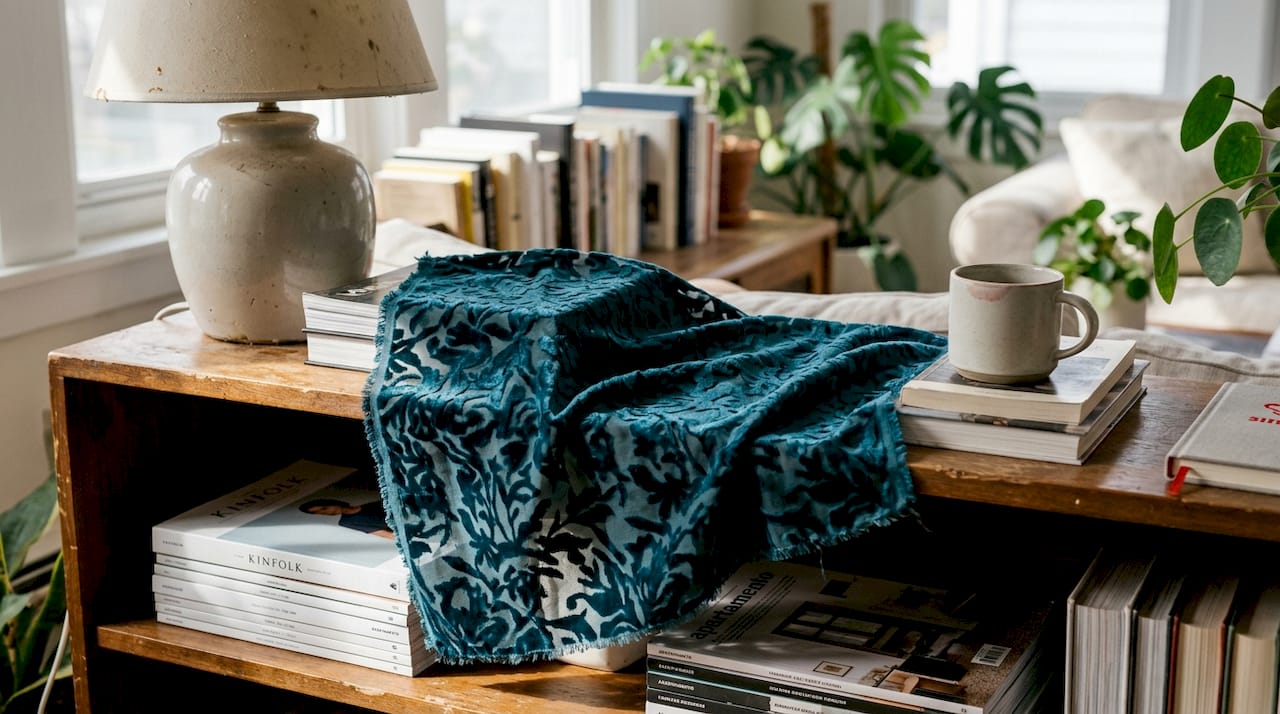
For home use, burnout fabric works beautifully as backdrop fabrics for photography or display settings. Its performance and durability depend heavily on how you handle and finish it, which we’ll cover shortly.
Burnout fabric’s combination of lightness, visual texture, and drape makes it one of the most versatile specialty textiles available. Its uses span evening wear, dresses, blouses, lingerie, and overlays as well as home décor applications like curtains, table runners, and decorative panels.
In apparel, burnout shines in:
For home décor, burnout fabric adds a level of sophistication that most standard fabrics can’t match. Sheer burnout curtains filter light in a way that creates shifting patterns on walls throughout the day. Explore home décor fabrics to see how burnout compares to other decorative textiles.
Pro Tip: Line your burnout fabric with a complementary solid to create stunning sheer curtains or layering pieces. The lining adds body, improves durability, and makes the burnout pattern pop visually.
| Feature | Burnout fabric | Flocked fabric | Laser-treated fabric |
|---|---|---|---|
| Texture method | Fiber removal | Fiber addition | Fiber distressing |
| Sheer effect | Yes | No | Partial |
| Best use | Apparel, décor overlays | Upholstery, fashion accents | Denim, casual wear |
| Feel | Soft, velvety or silky | Raised, fuzzy | Worn, distressed |
You can also experiment with fabric dyeing for décor to add color depth to burnout pieces before or after cutting.
Burnout fabric rewards patience. The sheer zones are genuinely fragile, and rushing through prep or construction leads to snags, distortion, and frustration. Follow these steps to get the best results.
For care, avoid ironing velvet-type burnout directly. Steam from the reverse side or use a press cloth for non-velvet blends. Wash finished garments on a delicate cycle or by hand. The apparel sewing workflow for specialty fabrics applies well here.
Pro Tip: Always support the fabric’s weight while sewing. Letting burnout hang freely off the edge of your work table can stretch and distort the sheer zones permanently.
Burnout, flocked, and laser-processed fabrics are often grouped together because they all create surface texture or visual pattern. But they work in completely different ways, and mixing them up leads to wrong material choices.
Burnout removes fibers to create sheer zones, while flocked fabric does the opposite: it adds short fibers to a base fabric using adhesive, creating a raised, velvety texture with no transparency at all. Flocked fabric is denser, heavier, and better suited for upholstery or fashion accents where you want texture without sheerness.
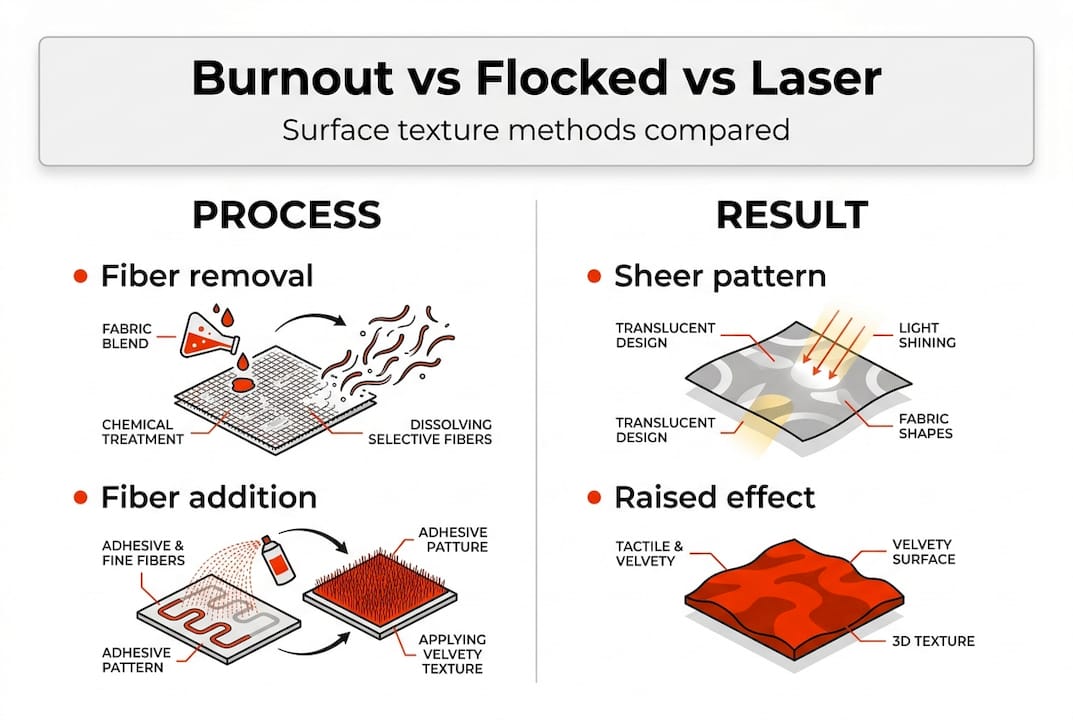
Laser burnout is a different technique used primarily for distressing denim or other sturdy fabrics. It uses heat from a laser to fade or weaken fibers, creating a worn look rather than a patterned sheer effect. It is not true devoré.
How to identify each method:
| Property | Burnout | Flocked | Laser-treated |
|---|---|---|---|
| Fiber change | Removal | Addition | Distressing |
| Transparency | Yes | No | Partial or none |
| Common base fabric | Velvet, knit, chiffon | Velvet, cotton | Denim, canvas |
| Typical use | Apparel, décor | Fashion, upholstery | Casual wear |
For more context on how these fit into the wider textile world, explore more fabric types across the full range of apparel and décor materials.
Most crafters approach burnout fabric with caution, and that caution is earned. But the bigger mistake we see is treating it as too precious to experiment with. Burnout fabric isn’t reserved for couture ateliers or experienced sewers. It’s genuinely accessible, and even small creative projects benefit from its visual impact.
The contrarian truth: burnout fabric is not just a luxury material. A single burnout panel on a plain pillow cover or a scarf made from a half-yard of burnout velvet can transform an ordinary project into something that looks considered and intentional. You don’t need a full garment to make it work.
The hard-won lesson from working with burnout is this: prep time is not optional. Crafters who skip pre-washing, skip testing their needle choice, or skip lining the sheer zones always regret it. The chemical process that creates the fabric’s beauty also makes it less forgiving than a standard woven. Respect that.
Use burnout for statement panels, not full garments, until you’re confident managing delicate seams. Find quality burnout fabric sources that clearly label fiber content and blend ratios. That information alone will save you from costly mistakes.
Ready to put these ideas into practice? The right burnout fabric makes all the difference between a project that looks homemade and one that looks intentional and polished.
At fabric-fabric.com, you’ll find a curated selection of burnout and specialty fabrics suited for everything from evening wear to home décor accents. Browse the backdrop fabrics collection for large-format decorative uses, or explore the full range of home décor fabric options to find the perfect burnout piece for curtains, panels, or layered textiles. With clear product descriptions, fiber content details, and competitive pricing, finding the right fabric for your next project is straightforward and satisfying.
Burnout removes fibers to create sheer, patterned zones, while flocked fabric adds fibers onto a base to build a raised, non-sheer texture. One creates transparency; the other creates density.
True burnout fabric requires special chemicals and blended fibers that make at-home production risky without proper safety equipment and experience. Buying pre-made burnout fabric is strongly recommended for most crafters.
Avoid ironing velvet burnout directly, always use stretch needles for knit versions, line sheer areas for durability, and pre-wash before cutting to prevent unexpected shrinkage or distortion.
Burnout’s patterns are permanent and resistant to fading, but the sheer zones are inherently delicate. Proper finishing, lining, and gentle washing extend the life of burnout pieces significantly.