

 US Dollar

Performance Fabric: Boosting Textile Durability and Function
Posted by BLG on 2026 Jan 27th
Posted by BLG on 2026 Jan 27th


Quilters and sewing enthusiasts across North America know the frustration of a project losing its shape or comfort after just a few uses. Choosing the right fabric can make the difference between a beloved heirloom and a disappointing finish. Understanding performance fabric means delving into materials engineered for both durability and functionality, offering solutions to common challenges like wear, stretch, and moisture management. This guide helps clarify what performance fabric is and clears up common myths so your creations stand the test of time.
| Point | Details |
|---|---|
| Understanding Performance Fabrics | Performance fabrics are engineered for specific functionalities, addressing needs like moisture management, durability, and environmental resistance. |
| Misconceptions About Costs | Performance fabrics are not exclusively high-end; they vary in cost and can be applied in everyday apparel as well as specialized uses. |
| Important Features for Use | Key characteristics for effective performance fabrics include moisture-wicking properties, temperature regulation, and durability under repeated-use conditions. |
| Risks in Application | Common mistakes in performance fabric projects arise from improper material selection and handling, emphasizing the need for careful testing and maintenance guidance. |
Performance fabric represents a sophisticated textile technology designed to enhance functionality beyond traditional fabric capabilities. At its core, performance fabric refers to materials engineered to withstand specific environmental challenges and meet precise user requirements, whether for athletic wear, outdoor equipment, or specialized industrial applications. Textile performance fundamentally measures fitness for purpose, evaluating a fabric’s ability to maintain integrity under various conditions.
Understanding performance fabric requires recognizing its multifaceted attributes. These specialized textiles are not simply about durability, but about creating materials that actively respond to user needs. Durability expectations vary dramatically across different industry sectors, from fashion to protective gear. A performance fabric might prioritize moisture-wicking in sportswear, temperature regulation in outdoor clothing, or chemical resistance in industrial settings.
Common misconceptions about performance fabrics often stem from oversimplifying their complexity. Many people assume these textiles are universally expensive or exclusively for high-end applications. In reality, performance fabrics range widely in cost and accessibility. They can be designed for everyday clothing, home textiles, and specialized equipment. Key characteristics typically include:
Pro tip: When selecting performance fabrics, always consider the specific environmental conditions and functional requirements of your intended project to ensure optimal material selection.
Performance fabrics encompass a diverse range of materials engineered to deliver exceptional functionality across multiple applications. These textiles are strategically developed to meet specific performance requirements, ranging from athletic wear to industrial protective gear. Materials benchmark research reveals ongoing innovations in developing advanced textile technologies that prioritize both performance and sustainability.

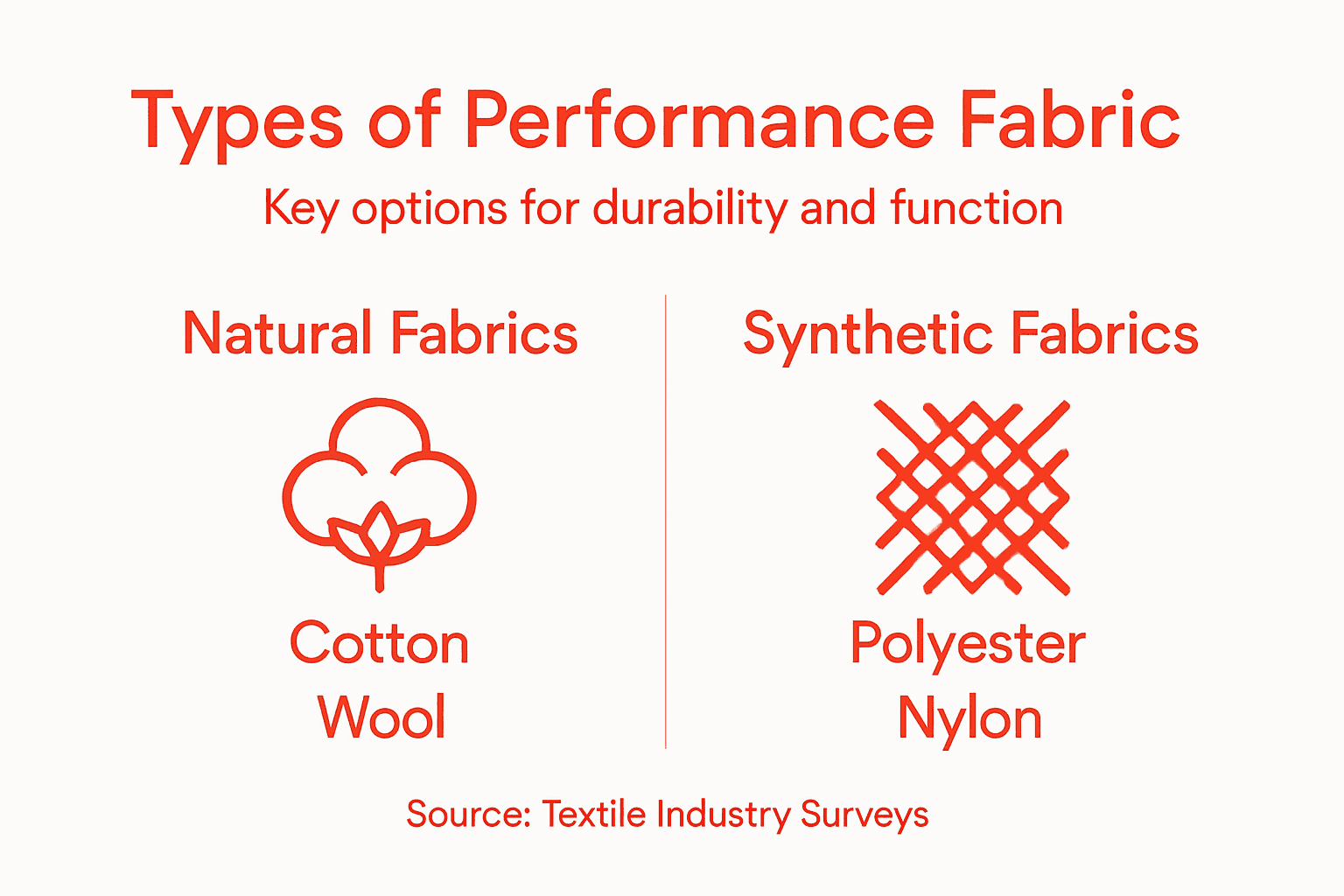
The landscape of performance fabrics can be broadly categorized into several key types. Natural performance fabrics include specially treated cotton, wool, and silk that have been enhanced with advanced finishing techniques. Synthetic performance fabrics represent another crucial category, featuring materials like polyester, nylon, and advanced polymers designed for specific environmental challenges. These synthetic options often provide superior moisture-wicking, temperature regulation, and durability compared to traditional textiles.
Understanding the nuanced characteristics of performance fabrics requires exploring their material composition and technological enhancements. Textile fiber chemistry reveals complex material selection processes, where engineers carefully select and modify fibers to achieve desired performance attributes. Key performance fabric types include:
Here’s a quick comparison of natural and synthetic performance fabric types:
| Fabric Type | Example Materials | Main Advantages | Typical Applications |
|---|---|---|---|
| Natural Performance | Treated cotton, wool | Breathability, comfort | Fashion, premium apparel |
| Synthetic Performance | Polyester, nylon | High durability, moisture control | Sportswear, outdoor gear |
| Advanced Polymeric | Specialized polymers | Extreme resistance, technical use | Industrial, protective gear |
Pro tip: Always examine the specific performance requirements of your project before selecting a fabric to ensure optimal material compatibility and functionality.
Performance fabrics are critical for crafters and clothing designers seeking superior functionality and comfort. Moisture management represents a key feature for textiles used in active wear and quilting projects, directly impacting user experience and garment effectiveness. These advanced materials go beyond traditional fabric limitations, offering innovative solutions for temperature regulation, durability, and movement flexibility.
In quilting and apparel applications, performance fabrics must balance multiple critical characteristics. Knitted fabric mechanics demonstrate complex interactions between material properties and structural design. Essential features for quilters and clothing designers include stretchability, breathability, moisture-wicking capabilities, and resistance to wear and tear. These attributes ensure that projects maintain their aesthetic appeal while providing practical functionality.
The most sought-after performance fabric features for quilting and apparel can be categorized into several key areas:
Pro tip: When selecting performance fabrics for your project, always test fabric samples under conditions similar to their intended use to verify their actual performance characteristics.
Performance fabrics transform textile projects by introducing sophisticated engineering that goes far beyond traditional material capabilities. Performance fabrics meet specific functional criteria enabling designers and crafters to achieve exceptional results across diverse applications. These advanced textiles provide targeted solutions that address complex challenges in durability, comfort, and functionality.
The strategic selection of performance fabrics empowers textile professionals to create products with enhanced characteristics. Different project requirements demand specific fabric attributes, whether for athletic wear, outdoor equipment, or intricate quilting designs. By understanding material properties like moisture management, stretch recovery, and environmental resistance, creators can select fabrics that dramatically improve project outcomes and user experience.
Key ways performance fabrics enhance textile projects include:
Sustainable fabric sourcing further elevates textile projects by ensuring materials meet environmental standards while delivering exceptional performance. This approach allows designers to create innovative products that are both functional and environmentally responsible.
Pro tip: Conduct thorough fabric testing under simulated project conditions to validate performance characteristics before committing to large-scale production.
Performance fabrics present unique challenges that can compromise project outcomes if not carefully managed. Fabric defect detection remains critical for maintaining quality and preventing expensive mistakes during textile production. Understanding these potential risks helps crafters and designers anticipate and mitigate issues before they escalate into significant problems.
The most prevalent application mistakes often stem from improper material selection and handling. Designers frequently underestimate the complexity of performance fabric requirements, leading to premature wear, functionality loss, and decreased user satisfaction. Performance fabric application risks include incorrect finishing treatments and misalignment between fabric properties and intended use, which can dramatically reduce a textile project’s effectiveness.
Critical risks and common application mistakes include:
The table below summarizes key performance fabric risks and strategies to address them:
| Risk Factor | Impact on Project | Best Mitigation Strategy |
|---|---|---|
| Improper material selection | Premature failure | Thorough material testing |
| Inadequate care instructions | User dissatisfaction | Clear, project-specific guidelines |
| Incorrect finishing | Loss of functionality | Follow manufacturer recommendations |
Successful performance fabric projects require meticulous attention to detail, comprehensive understanding of material characteristics, and a systematic approach to material selection and maintenance. Recognizing potential pitfalls allows designers to develop more resilient and high-performing textile solutions.
Pro tip: Always conduct comprehensive material testing and create detailed care instructions specific to each performance fabric type to minimize potential application risks.
Struggling to find fabrics that truly withstand wear and deliver on comfort and functionality Performance fabrics offer solutions designed for durability moisture management and stretch recovery as highlighted in the article. Whether you are crafting apparel quilts or specialty items understanding the fabric’s performance features is key to avoiding common pitfalls and ensuring lasting quality.
Discover a curated selection of high-quality performance fabrics at Fabric-Fabric to meet your specific project needs. Shop fabrics chosen to excel in temperature regulation strength and moisture control. Act now and benefit from expert descriptions and customer support that guide you to the perfect textile for your intended use. Start enhancing your creations today by exploring Fabric-Fabric’s collection and experience the difference performance fabric makes.
Performance fabric refers to advanced textiles designed to offer enhanced durability, moisture management, temperature regulation, and comfort. Key features often include superior strength-to-weight ratios, resistance to environmental stressors, and specialized protective properties.
Natural performance fabrics, such as treated cotton and wool, offer breathability and comfort, making them ideal for fashion applications. In contrast, synthetic performance fabrics like polyester and nylon are typically more durable and moisture-wicking, making them suitable for sportswear and outdoor gear.
Essential characteristics for quilting and apparel include moisture management, stretchability, temperature regulation, and resistance to wear and tear. These features ensure the fabric provides practical functionality while maintaining aesthetic appeal.
Common mistakes include improper material selection, inadequate initial fabric testing, incorrect care instructions, and overlooking environmental stress factors. Ensuring thorough testing and following manufacturer recommendations can mitigate these risks.