

 Canadian Dollars

What is napped fabric? A crafter's guide to texture
Posted by BLG on 2026 Mar 26th
Posted by BLG on 2026 Mar 26th

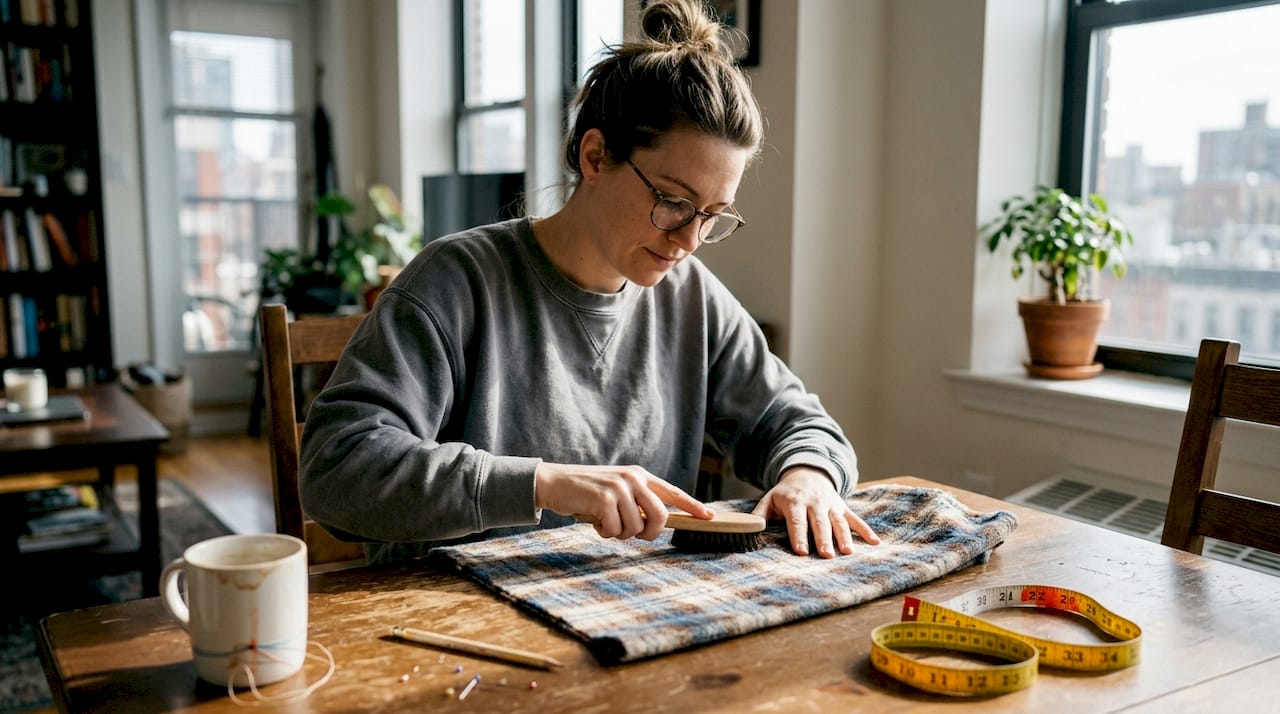
Most crafters assume that any soft, fuzzy fabric is either velvet or pile. That assumption leads to miscut panels, mismatched shading, and wasted yardage on otherwise beautiful projects. Napped fabric) is a textile with a raised, fuzzy surface created by lifting existing fibers through mechanical finishing after weaving or knitting. It is not the same as pile, and treating it like a plain fabric will cost you. This guide covers what nap is, how it’s made, the main types, and exactly how to cut, sew, and care for napped fabrics with confidence.
| Point | Details |
|---|---|
| Nap is raised surface | Napped fabric features a fuzzy surface made by raising fibers after weaving or knitting. |
| Nap requires direction care | Cutting and sewing with the nap in the same direction ensures color and texture consistency. |
| Extra fabric needed | Working with nap typically requires 30–45% more material due to directional layout needs. |
| Popular for warmth | Napped fabrics are favored in clothing and decor for their insulating, soft, and cozy qualities. |
Nap is the fuzzy, raised surface you feel on fabrics like flannel, melton, and brushed cotton. It is created after the base fabric is woven or knitted, by mechanically lifting fibers from the yarn surface. The result is a soft, directional texture that changes how the fabric looks and feels depending on which way you stroke it.
The biggest source of confusion is the difference between nap and pile. Pile vs nap is a real distinction: pile is woven or knitted raised yarns) added intentionally during construction, like the cut loops in velvet or the ridges in corduroy. Nap uses no extra yarns. It simply pulls existing fibers upward from the base cloth after weaving.
Here is a quick breakdown of how these surface textures compare:
“Not every soft fabric is pile. If you can feel a difference in smoothness when you stroke it in opposite directions, you are holding a napped fabric.”
Pro Tip: Run your palm slowly across the fabric in both directions. One way will feel smooth and the other will feel slightly rough or look darker. That is the nap direction, and it matters for every cut you make.
Understanding textured fabrics at this foundational level saves you from costly mistakes before you ever pick up your scissors.
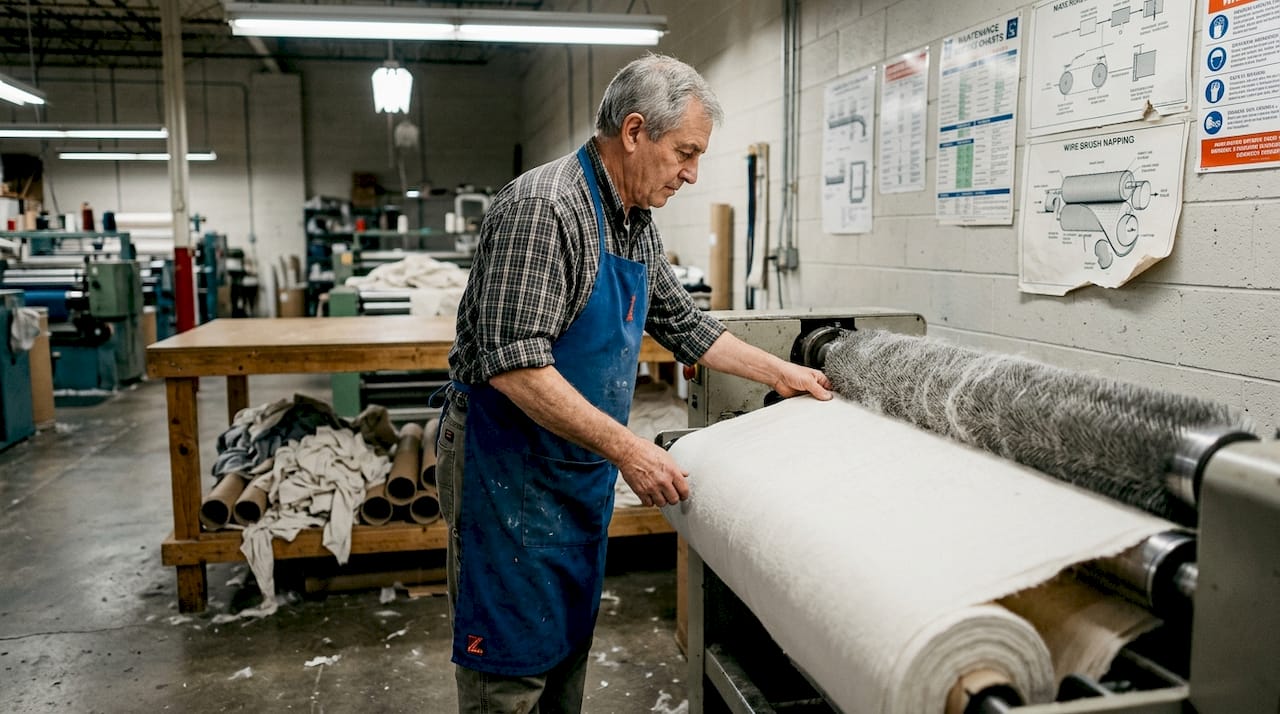
The production of napped fabric is more precise than most crafters realize. It is not simply brushing a cloth. The process involves specialized machinery, controlled tension, and sometimes moisture, all working together to create a consistent surface.
Here is how it works from start to finish:
Modern wire brushes have largely replaced teasels for speed and durability. However, teasels are still preferred for premium wool and cashmere because they produce a finer, softer finish without damaging delicate fibers. Wool also requires dampening before napping, while cotton goes directly to shearing.
| Method | Best for | Finish quality | Speed |
|---|---|---|---|
| Wire brush rollers | Cotton, synthetics | Good | Fast |
| Teasel heads | Wool, cashmere | Excellent | Slow |
| Abrasive rollers (sueding) | Fine wovens | Very fine, short nap | Moderate |
Pro Tip: When buying wool flannel or brushed cashmere, check the product description for “teasel finished” or “hand finished.” These terms signal a gentler process that preserves fiber integrity and produces a noticeably softer hand.
For your own projects, understanding the production method helps you predict how a fabric will behave. A heavily napped melton, for example, will require very different precision cutting techniques than a lightly sueded cotton.
Once you know how nap is created, choosing the right type for each project becomes straightforward. Each napped fabric has a distinct weight, fiber content, and surface character that suits specific applications.
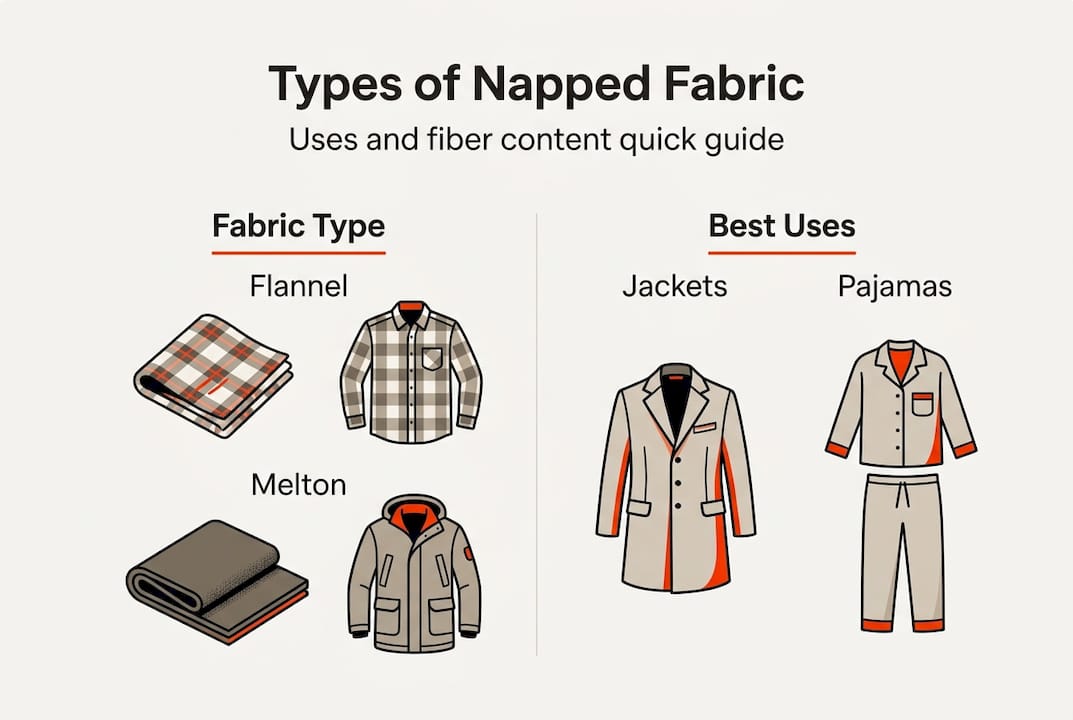
Common napped fabrics include flannel, moleskin, melton, brushed cotton, velveteen, and sueded fabrics. Here is how they compare:
| Fabric | Fiber content | Nap weight | Best uses |
|---|---|---|---|
| Flannel | Wool or cotton | Medium | Shirts, pajamas, baby items |
| Melton | Wool blend | Heavy | Coats, outerwear, crafts |
| Moleskin | Cotton | Medium-heavy | Trousers, jackets, bags |
| Brushed cotton | Cotton | Light-medium | Quilts, casual wear, linings |
| Velveteen | Cotton | Short, dense | Dresses, home decor, costumes |
| Sueded fabric | Cotton or synthetic | Very fine | Blouses, soft furnishings |
Beyond aesthetics, there is a functional reason napped fabrics are so popular for cold-weather projects. Napped surfaces trap air pockets that increase thermal insulation and friction resistance, making them genuinely warmer than smooth fabrics of the same weight.
Here is a quick guide to matching fabric type to project:
The warmth factor alone makes napped fabrics a top choice for fall and winter sewing. A well-chosen melton coat will outperform a smooth wool of the same thickness in real-world warmth.
Nap direction is the single most misunderstood concept in working with textured fabrics. Even experienced sewists occasionally skip this step, and the results are always visible: panels that look like different shades under the same light, or a garment that feels rough in one area and smooth in another.
Here is why it happens. Nap has a directional quality) that affects color, shade, texture, and drape. When fibers lie toward you (with the nap), the fabric looks lighter and feels smooth. When fibers point away (against the nap), the fabric looks darker and feels slightly rough. Place two pieces cut in opposite directions next to each other and the color difference is immediately obvious.
Managing nap direction requires a few consistent habits:
“Nap direction is not optional. It is the difference between a professional result and a project that looks like a mistake.”
Pro Tip: After marking your nap direction, photograph the fabric with your phone before cutting. If you lose track mid-project, the photo shows exactly which way the arrow pointed.
For a deeper look at managing this in your workflow, the guides on fabric nap direction and cutting napped fabrics are worth bookmarking.
Knowing the theory is one thing. Executing it cleanly at your cutting table and sewing machine is another. These practical steps will help you get professional results every time.
Before you cut:
At the sewing machine:
Pressing and finishing:
Pro Tip: Keep a lint roller and a soft bristle brush at your cutting table. Napped fabrics shed during cutting, and loose fibers can get caught in seams or affect the surface of adjacent pieces.
Storage and care:
For more guidance on choosing the right materials before you start, the fabric selection tips guide covers how to evaluate hand, weight, and finish together.
Shopping for fabrics can get tricky when manufacturers use terms interchangeably, so let’s clear up the confusion. The words nap, pile, and sueded all describe raised surfaces, but they are not the same thing.
Pile is woven or knitted raised yarns), added during construction. Velvet, velour, and corduroy are all pile fabrics. Nap is post-weave raised fibers, with no extra yarn involved. Sueding, also called emerizing or peach finish, is a related but distinct process using abrasive rollers to create a shorter, finer nap) with a suede-like feel.
| Feature | Nap | Pile | Sueded |
|---|---|---|---|
| How it’s made | Post-weave fiber raising | Extra yarns woven in | Abrasive roller finishing |
| Fiber length | Medium | Long or short (cut/loop) | Very short |
| Feel | Soft, directional | Plush, dense | Ultra-soft, fine |
| Examples | Flannel, melton | Velvet, corduroy | Peach-finish cotton |
| Care difficulty | Moderate | High | Low-moderate |
Here is how to spot a true napped fabric when shopping:
For a side-by-side comparison of closely related textures, the guide on velvet vs velour breaks down the pile family in detail. Understanding where napped fabric sits in relation to these options helps you shop with precision and communicate clearly with other crafters.
You now know how to identify, cut, sew, and care for napped fabrics with real confidence. The next step is finding quality materials that match your project vision.
At fabric-fabric.com, we carry a wide selection of brushed, napped, and textured fabrics suited for every skill level and project type. Whether you are making a cozy quilt, a structured coat, or a statement home decor piece, you will find the right weight and finish in our curated collections. Browse our quilting fabrics for soft brushed cottons and flannels, explore the home decor fabric range for velveteen and heavier napped options, or check out our backdrop fabrics for dramatic textured surfaces. Free shipping thresholds and seasonal discounts make it easy to stock up on the fabrics you love.
Brush your hand across the fabric in both directions. A true nap feels smooth one way and rougher or changes shade the other way.
Misaligned nap changes the fabric’s color and feel between panels. All pieces must be cut in the same direction) for a uniform look and consistent drape.
Sueded fabric is technically napped but uses abrasive rollers to produce finer, shorter fibers) for a softer, suede-like finish than traditional napping.
Yes. Because all pieces must face the same direction, you typically need 30 to 45% more fabric) than a standard layout would use.
Napped fabrics trap air between raised fibers, which means increased thermal insulation and softness, making them ideal for cool-weather clothing and cozy home items.