

 Canadian Dollars

Velvet vs Velour: 5mm Pile Difference for Crafters 2026
Posted by BLG on 2026 Mar 2nd
Posted by BLG on 2026 Mar 2nd

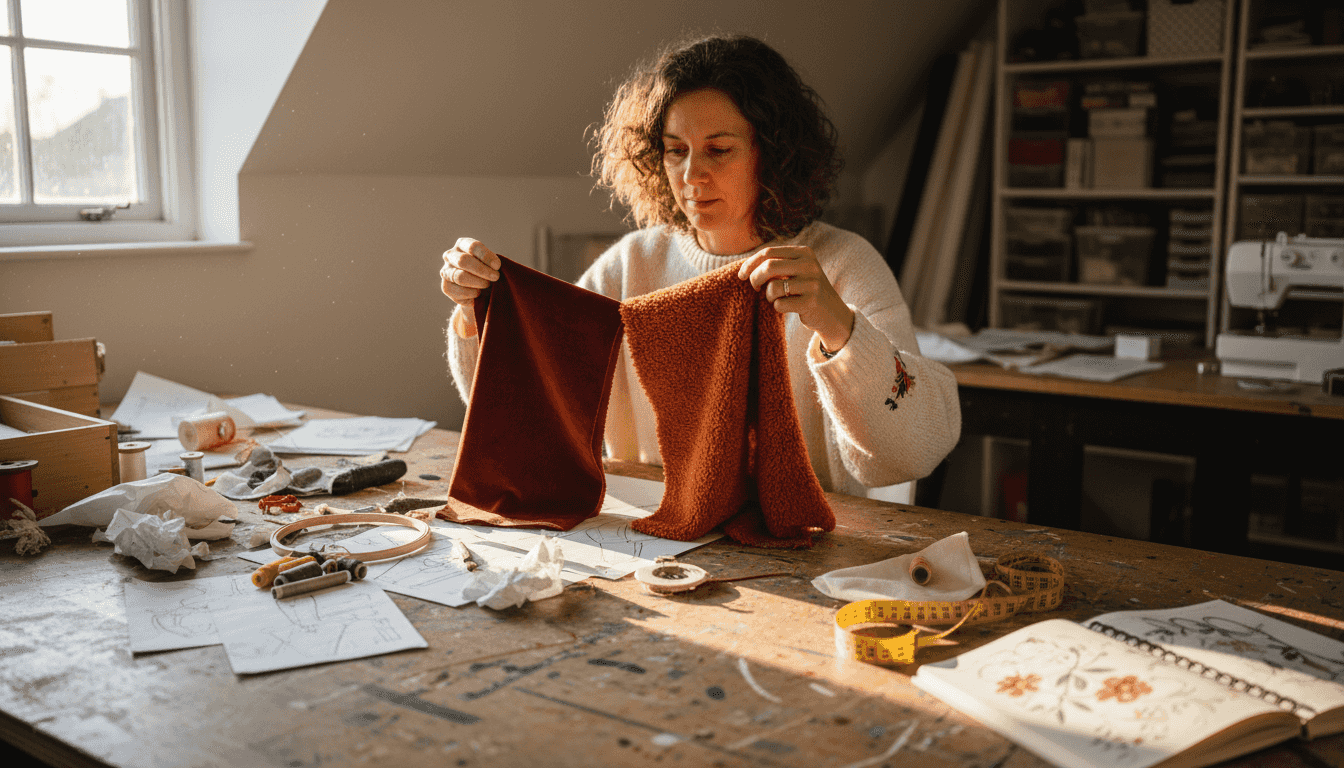
Many crafters believe velvet and velour are identical fabrics. In reality, velvet is woven producing a denser, less stretchy fabric, while velour is knit, stretchier, and softer. This structural difference affects your project results dramatically. Understanding these distinctions helps you select the perfect fabric for upholstery, apparel, or decorative crafts. This guide clarifies the key differences to empower confident fabric choices.
| Point | Details |
|---|---|
| Construction Method | Velvet is woven for firmness; velour is knit for stretch |
| Pile Length | Velour has longer pile (up to 5mm); velvet has shorter, denser pile (0.5 to 2mm) |
| Durability | Velvet suits high traffic upholstery; velour is better for soft crafts and apparel |
| Care Requirements | Velvet needs dry cleaning or gentle washing; velour is machine washable |
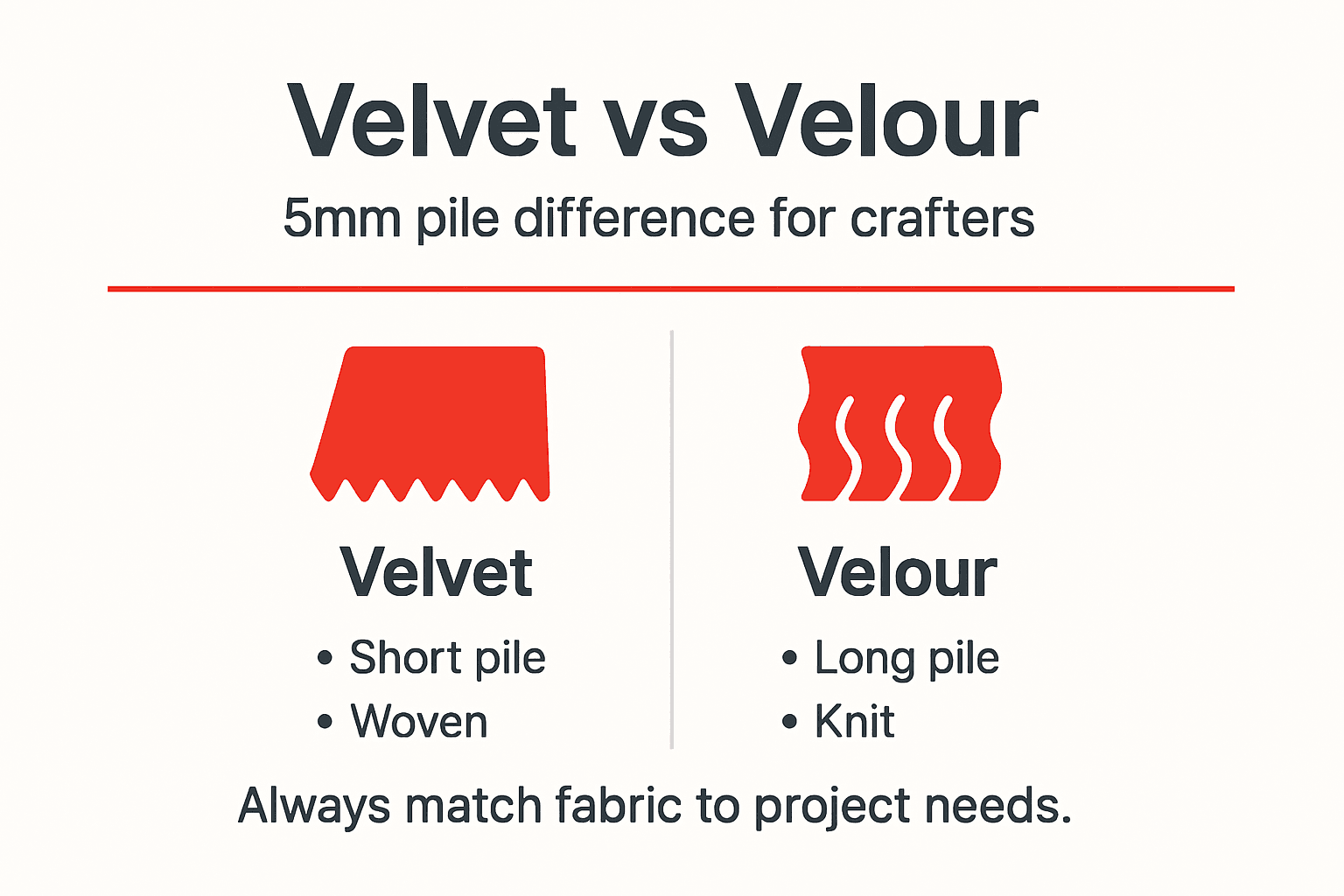
Velvet is a woven fabric with a short, dense pile that creates a firm texture. The double warp construction produces a luxurious surface with minimal stretch. Velour is a knit fabric featuring a longer, plush pile that feels softer and stretchier.
Common fiber choices differ between these fabrics. Velvet often uses silk or synthetic fibers for its elegant drape and sheen. Velour typically incorporates cotton or cotton blends, contributing to its casual comfort.
The visual and tactile differences are immediately noticeable. Velvet feels firmer against your skin and maintains its shape without stretching. Velour yields to pressure, offering flexibility and a cuddlier texture. These qualities determine which fabric excels in specific crafting and decorating applications.
Both fabrics work beautifully in home decor and craft projects. Velvet brings formal elegance to cushions, curtains, and upholstered furniture. Velour adds cozy softness to clothing, stuffed toys, and casual decorative items.
Velvet’s woven double warp construction creates exceptional density and durability. Two sets of warp yarns interlace with weft yarns, and the pile is formed by cutting the upper warp threads. This method produces a fabric that resists stretching and maintains structural integrity under stress.
Velour’s knit structure allows the fabric to stretch comfortably in multiple directions. The knitting process creates loops that form the pile, resulting in a textile that moves with your body. This construction makes velour ideal for stretch fabrics requiring flexibility.
Fiber types significantly influence performance characteristics. Velvet traditionally uses silk for luxury applications, though modern versions often incorporate polyester, rayon, or nylon. These synthetics maintain the elegant appearance while improving durability and reducing cost. Velour predominantly features cotton or cotton polyester blends, making it softer and more breathable for everyday use.
Manufacturing differences directly impact how you work with each fabric. Velvet’s woven structure requires careful handling during cutting and sewing to prevent fraying. Velour’s knit construction is more forgiving, though it can curl at cut edges.
Pro Tip: Always test your needle and thread on fabric scraps before starting your main project. Velvet may require a sharp microtex needle to penetrate cleanly, while velour works well with standard ballpoint needles designed for knits.
The fabric manufacturing differences between woven and knit construction explain why these materials behave so differently in your hands. Understanding these fundamentals helps you anticipate challenges and choose appropriate techniques for your specific project.
Pile length creates the most obvious textural distinction between these fabrics. Velour displays pile lengths up to 5mm, producing that signature plush, cushy surface. Velvet maintains shorter pile between 0.5mm and 2mm, creating a smoother, more refined texture.
Surface sheen varies dramatically between the two. Velvet exhibits a lustrous shine due to its dense, uniform pile that reflects light consistently. The tightly packed fibers create depth and visual richness. Velour presents a more matte appearance with softer light reflection, giving it a casual, approachable look.
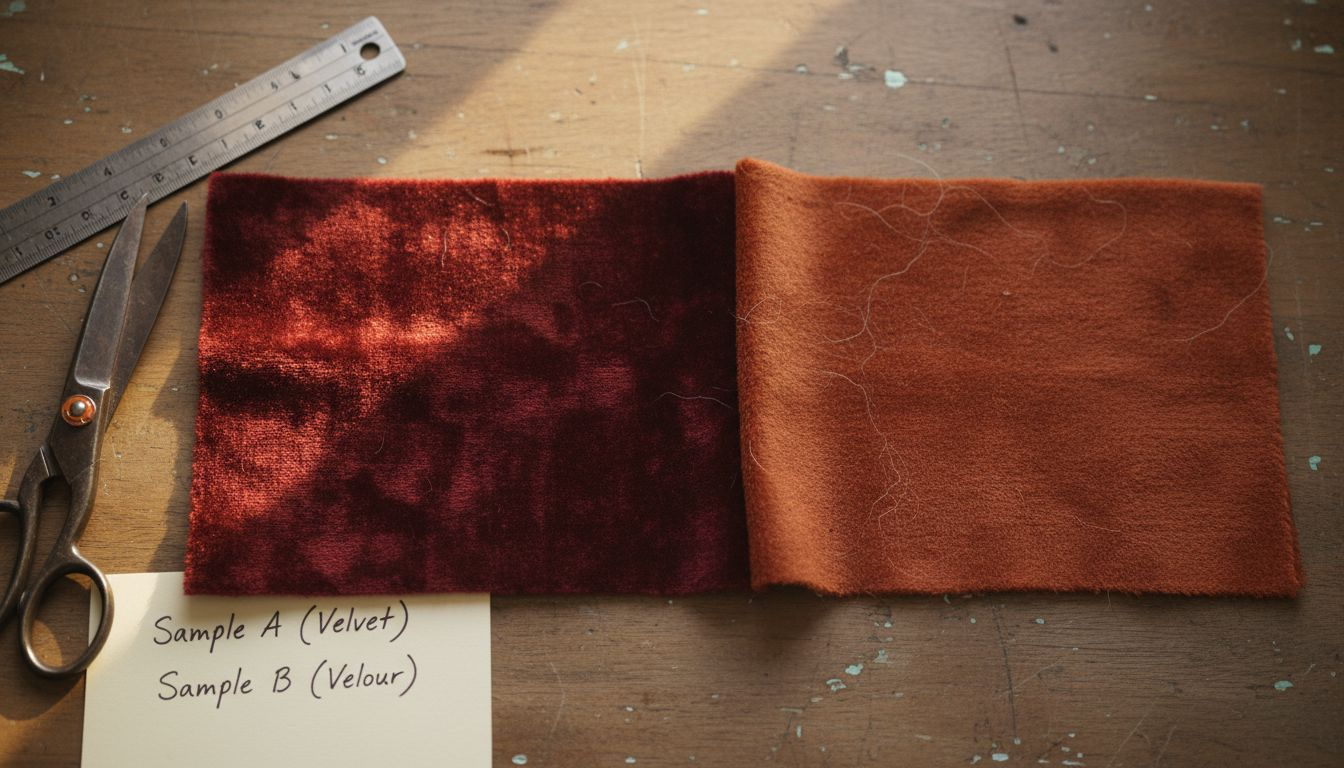
The stretch characteristics stem directly from construction methods. Velour’s knit structure allows it to expand and contract easily, conforming to curved surfaces and body movements. Velvet resists stretching, holding its shape firmly even under tension.
| Attribute | Velvet | Velour |
|---|---|---|
| Pile Length | 0.5 to 2mm | Up to 5mm |
| Surface Sheen | High luster | Matte finish |
| Stretch | Minimal | Significant |
| Texture | Dense, smooth | Plush, soft |
Color vibrancy differs based on pile density. Velvet’s compact pile creates saturated, jewel tone colors that shift beautifully as light hits from different angles. Velour displays softer, more uniform coloration without the dramatic directional shading.
Pro Tip: When selecting fabric for decorative pillows, consider lighting conditions. Velvet pillows create visual drama in well lit spaces, while velour provides consistent color in rooms with variable lighting.
These textural differences guide fabric selection for specific applications. Velvet suits projects requiring structure and elegance. Velour excels when comfort and flexibility matter most.
Velvet offers superior durability for high traffic applications. Its woven structure resists abrasion and maintains appearance even with frequent use. The tightly interlaced fibers prevent pilling and hold up well on upholstered furniture that sees daily wear.
Velour shows less durability under heavy use conditions. The knit construction and longer pile are prone to matting, crushing, and pilling over time. This makes velour less suitable for furniture pieces that receive constant contact.
Care requirements differ substantially between the fabrics. Velvet requires more delicate care, usually dry cleaning or gentle hand washing, while velour is more machine washable due to its cotton content and knit structure. These maintenance differences affect long term ownership costs and convenience.
Specific care considerations include:
Durability extends beyond physical wear to colorfastness and fade resistance. Quality velvet maintains color vibrancy longer due to denser pile protecting individual fibers. Velour’s exposed longer pile may show sun fading more quickly in bright locations.
Environmental impact varies by fiber content rather than fabric construction. Natural fiber options like silk velvet or cotton velour have different sustainability profiles than synthetic versions. Cotton velour generally uses less water intensive processing than silk velvet production.
For projects requiring longevity and minimal maintenance challenges, velvet proves more practical despite higher initial costs. Velour serves well in applications where easy care and soft comfort outweigh durability concerns.
Crafters frequently make assumptions about these fabrics that lead to disappointing results. Clearing up these misunderstandings helps you avoid costly mistakes.
Velvet and velour are the same fabric with different names. This is false. Their construction methods differ fundamentally, with velvet woven and velour knit. This structural difference affects every aspect of performance.
Both fabrics require identical care methods. Wrong. Treating velour like velvet by dry cleaning it wastes money, while machine washing velvet can ruin the fabric permanently.
Velour works as well as velvet for upholstery. Not true. Velour’s lower durability and tendency to pill make it unsuitable for high traffic furniture. You will see premature wear and disappointment.
These fabrics stretch the same amount. Incorrect. Velour stretches significantly due to its knit construction, while velvet barely stretches at all. Confusing this leads to poor pattern fitting.
Price differences reflect only brand markup. False. Velvet typically costs more due to complex weaving processes and often higher quality fibers. The price reflects real manufacturing differences.
Both fabrics drape identically. Not accurate. Velvet drapes with more body and structure, holding shapes well. Velour drapes softly with fluidity, conforming easily to curves.
Understanding these facts prevents common project failures. Many crafters select velour for upholstery projects expecting velvet like durability, only to see their work deteriorate quickly. Others choose velvet for stretchy garments, then struggle with fit and movement restrictions. Matching fabric properties to project requirements ensures success.
Velvet shines in applications demanding durability and formal elegance. Choosing velvet fabrics for upholstery brings lasting beauty to sofas, chairs, and ottomans. The fabric maintains its appearance through years of daily use. Velvet curtains add luxury while providing excellent light blocking and insulation.
Velour excels in soft, comfort focused projects. The stretchy, plush texture makes it perfect for:
Understanding types of velvet helps match specific varieties to projects. Crushed velvet adds texture to bohemian decor. Silk velvet brings unparalleled luxury to evening wear. Synthetic velvets offer budget friendly options for large scale decorating.
The role of velvet in interiors extends beyond upholstery. Consider velvet for headboards, accent walls, and decorative panels. These applications showcase the fabric’s visual depth while avoiding high wear concerns.
Velour works beautifully for seasonal crafts. Use it for plush holiday decorations, costume elements requiring stretch, or soft baby items. The easy care properties make velour practical for items requiring frequent washing.
Project planning should match fabric properties to functional requirements. High traffic areas demand velvet’s durability. Personal comfort items benefit from velour’s softness. Display pieces can use either fabric based on desired aesthetic.
Color selection interacts with fabric choice. Velvet’s lustrous surface makes bold, saturated colors appear richer and more dramatic. Velour’s matte finish suits softer, more casual color palettes.
Key distinctions between velvet and velour stem from their construction methods, fiber content, and resulting physical properties. These differences determine which fabric succeeds in specific applications.
| Feature | Velvet | Velour |
|---|---|---|
| Construction | Woven | Knit |
| Pile Length | 0.5 to 2mm | Up to 5mm |
| Stretch | Minimal | Significant |
| Durability | High | Moderate |
| Surface | Lustrous | Matte |
| Care | Dry clean/delicate | Machine washable |
| Best For | Upholstery, formal decor | Apparel, soft crafts |
Use this decision checklist when selecting fabric:
Your final fabric choice balances aesthetic preferences with practical requirements. Velvet delivers enduring elegance and structural integrity. Velour offers approachable comfort and flexibility. Neither fabric is universally superior. Success comes from matching properties to your specific project needs.
Now that you understand the fundamental differences between these fabrics, finding the right materials for your project becomes straightforward. Fabric Fabric offers carefully curated selections of both velvet and velour to match your exact requirements.
Browse premium backdrop fabrics for photography and event decorating that demands rich texture. Explore affordable home decor fabrics including both velvet and velour options for every budget. Our home decor fabric selection guide provides additional insights for choosing materials that transform your space beautifully.
Velvet is a woven fabric with shorter pile and firmer texture, creating a luxurious, structured material. Velour is knit with longer pile and significant stretch, producing a softer, more casual fabric. These construction differences affect durability, care requirements, and appropriate applications.
Velvet is strongly preferred for upholstery due to superior durability and resistance to wear. Velour lacks the structural integrity for high traffic furniture, showing premature pilling and crushing. For lasting upholstery results, choose velvet over velour.
Velvet requires more delicate care, usually dry cleaning or gentle hand washing, while velour is more machine washable due to its cotton content and knit structure. Following proper care instructions extends fabric life significantly. Always test cleaning methods on inconspicuous areas first.
Yes, velour stretches considerably due to its knit construction, making it ideal for fitted garments and flexible applications. Velvet barely stretches because of its woven structure, maintaining shape and structure. This stretch difference is crucial for pattern selection and project planning.
Velvet typically costs more due to complex weaving processes and often higher quality fiber content like silk. Velour’s simpler knit construction and cotton content usually make it more budget friendly. Price differences reflect real manufacturing complexity and material quality, not just branding.