

 US Dollar

What Is Interfacing? A Practical Guide for Sewists
Posted by BLG on 2026 May 31st
Posted by BLG on 2026 May 31st

TL;DR:
- Interfacing is a support fabric applied to the wrong side of textiles to add stiffness, shape, and stability.
- Choosing the correct type and attachment method is essential for maintaining garment structure and achieving a professional finish.
Interfacing is defined as a support fabric applied to the wrong side of a garment or textile to add stiffness, shape, and stability to areas prone to stretching or distortion. The Cambridge Dictionary notes that in electronics and computing, “interfacing” also refers to connecting systems to communicate. In textiles, though, the term means something entirely physical: a hidden layer that makes your collar stand up, your buttonholes hold firm, and your waistband keep its shape through years of wear. Understanding interfacing is not optional for anyone serious about garment construction or textile crafts. It is the difference between a garment that looks handmade and one that looks professionally finished.
Interfacing is a textile used on the unseen or wrong side of fabrics to make garment areas more rigid and stable, preventing stretching and maintaining shape. It is not a lining, and it is not a backing in the decorative sense. Interfacing is a structural layer, placed specifically where a garment needs to hold its form under stress.
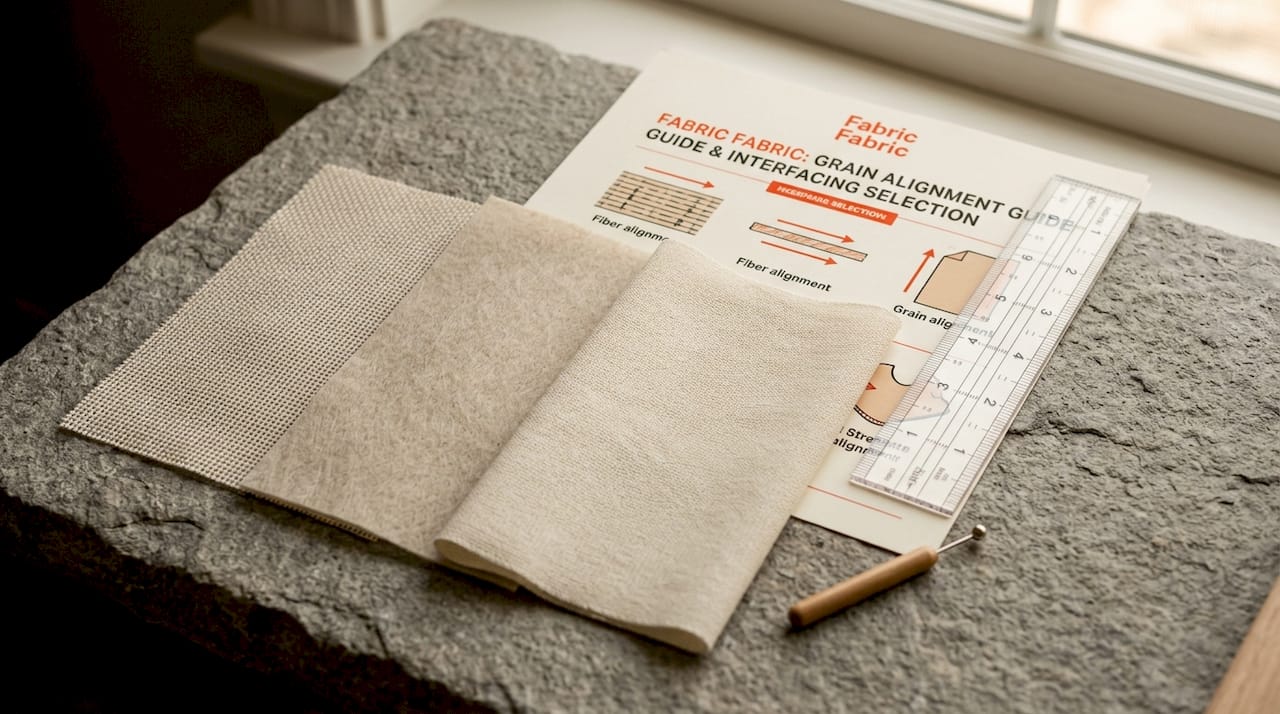
The most common application areas are collars, cuffs, lapels, facings, waistbands, and the zones around buttonholes. Each of these locations takes repeated mechanical stress during wear and laundering. Without interfacing, a collar wilts, a waistband rolls, and a buttonhole tears. Interfacing solves all three problems with one well-chosen material.
Interfacing adds stiffness and body to fabric in garment construction and craft projects, strengthening weak points. That structural contribution also helps garments visually maintain their silhouette over time. A well-interfaced jacket lapel looks sharp after fifty washes. A poorly interfaced one looks tired after five.
Beyond garments, interfacing appears in accessories like handbags, tote bags, and belts, as well as in home textile projects including structured pillow covers and decorative panels. Anywhere a fabric needs to behave more firmly than its natural drape allows, interfacing is the answer.
Interfacing types are woven, non-woven, and knit, and each differs in grain behavior, drape, and stretch compatibility. Choosing the wrong type for your fabric is one of the most common mistakes in garment construction, and the results are immediately visible in the finished piece.
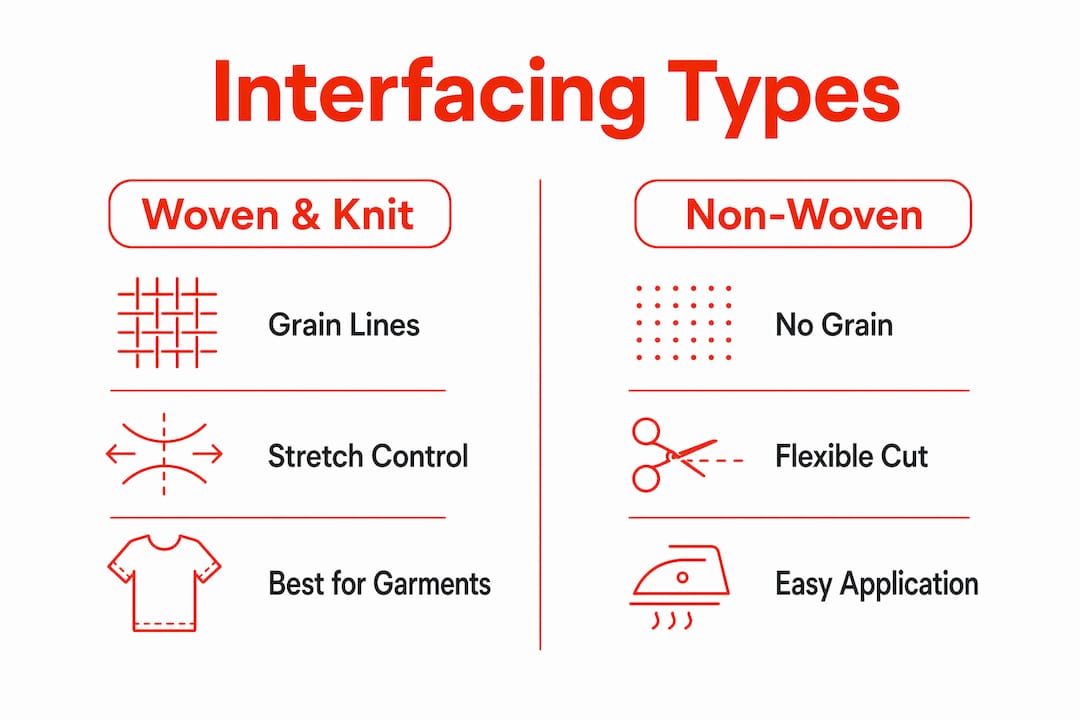
Woven interfacing behaves like woven fabric. It has a grain line, and you must align it with the grain of your fashion fabric. When cut on the bias, it adds soft structure with natural drape. It is the preferred choice for tailored garments in woven fabrics like wool, linen, and cotton shirting. Misaligning the grain causes the interfaced area to pull or distort.
Non-woven interfacing has no grain at all. You can cut it in any direction without affecting its behavior, which makes it the most forgiving option for beginners and for projects where precise grain alignment is difficult. It tends to be stiffer than woven interfacing of the same weight, which makes it well-suited for structured bags, stiff collars, and craft projects. Non-woven construction is explored in depth in this guide to nonwoven fabric properties.
Knit interfacing supports stretch fabrics while maintaining flexibility and comfort. Unlike rigid woven interfacing, knit interfacing moves with the fabric rather than restricting it. If you apply woven interfacing to a knit garment, you eliminate the stretch in that area entirely, which defeats the purpose of using a knit fabric. For anyone working with jersey, interlock, or other stretch textiles, knit interfacing is the correct choice.
| Type | Grain behavior | Stretch | Best use |
|---|---|---|---|
| Woven | Must align with grain | None | Tailored woven garments, lapels, cuffs |
| Non-woven | Cut in any direction | None | Structured bags, craft projects, stiff collars |
| Knit | Follows fabric stretch | Yes | Jersey, interlock, stretch garments |
Understanding the difference between knit and woven fabrics is the foundation for selecting the right interfacing type for any project.
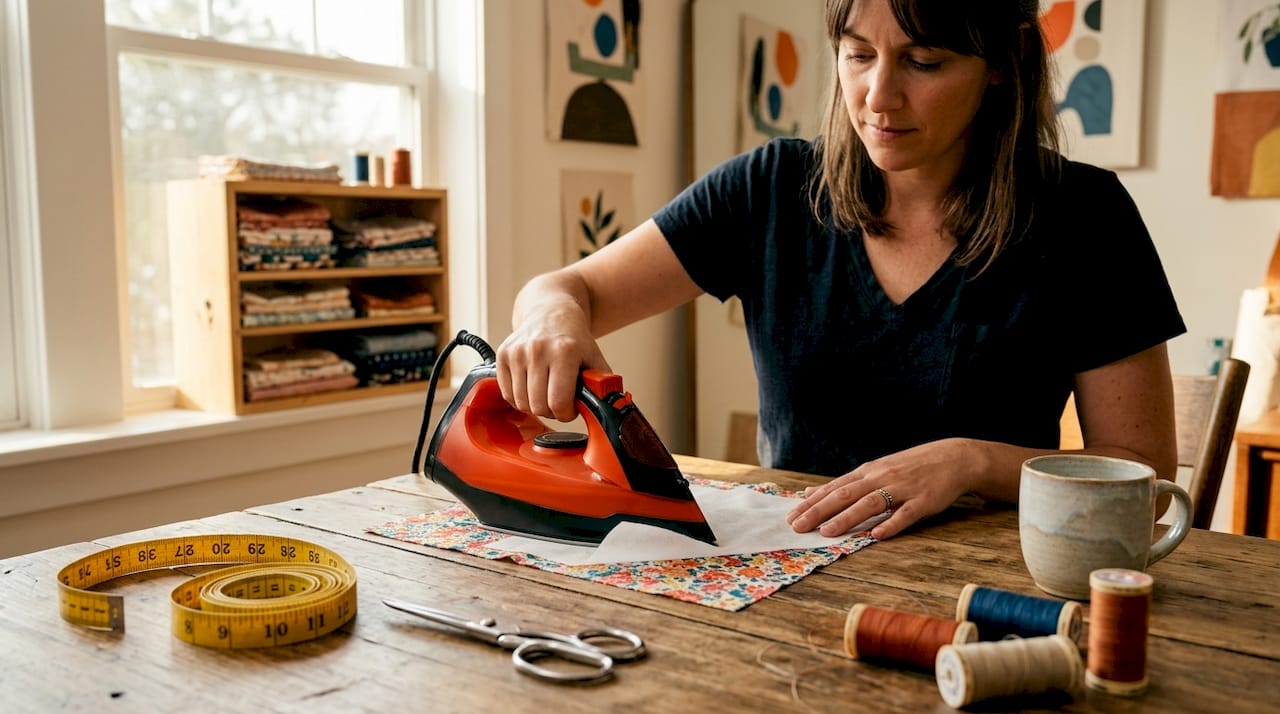
Fusible interfacing uses heat-activated adhesive applied with an iron, while sew-in interfacing is stitched into seams without any adhesive. These two attachment methods suit different fabrics, different skill levels, and different project requirements.
Fusible interfacing bonds to fabric using small dots of adhesive that activate under heat and steam. The process is fast and produces a firm, consistent bond when done correctly. Professional application demands precise heat and steam handling to avoid bubbles and fabric damage. The most common mistakes are using too high a temperature, sliding the iron instead of pressing it, and skipping the cooling step that locks the adhesive bond.
Key steps for successful fusible application:
Pro Tip: Always test fusible interfacing on a scrap of your fashion fabric before cutting into your main piece. Some fabrics, particularly those with a nap or a loose weave, react unpredictably to heat and adhesive.
A quality ironing setup makes a real difference here. An easy-fit ironing board cover provides the firm, padded surface that professional pressing requires.
Sew-in interfacing is basted and secured near seam lines, then caught in the final stitching during garment construction. It offers detailed control without any heat exposure, making it the right choice for delicate fabrics like silk, velvet, and loosely woven tweeds that would be damaged or distorted by a hot iron. The trade-off is time. Sew-in interfacing requires more handling steps, but the result is a softer, more controlled structure that moves naturally with the garment.
Interfacing appears wherever a garment needs to hold its shape under repeated stress. The logic is simple: fabric alone does not have the structural memory to maintain crisp edges, firm openings, or stable waistbands through regular wear and washing. Interfacing gives it that memory.
The most common application areas, and the reason each one needs support:
Craft applications extend the list further. Structured tote bags, fabric book covers, and decorative wall panels all rely on interfacing to behave like finished objects rather than limp fabric. For home decor projects, pairing interfacing with the right home decor fabric produces results that hold up to daily use.
Working with stretch fabrics adds a specific consideration. When you interface a knit garment, you must preserve the stretch in areas that need to move while adding stability only where structure is required. A knit waistband, for example, benefits from knit interfacing that stabilizes without eliminating the give that makes it comfortable to wear. For more on working with stretch textiles, the guide on fabric stretch and garment fit covers the mechanics in detail.
Interfacing labels often describe construction, attachment, weight, color, and format simultaneously, which makes selection feel more complicated than it needs to be. Breaking the decision into a sequence of questions simplifies the process.
Start with fabric type. If your fashion fabric is a knit, you need knit interfacing. If it is a woven, you choose between woven and non-woven interfacing based on how much drape you want to preserve. Woven interfacing maintains more of the fabric’s natural movement. Non-woven interfacing produces a firmer result.
Then consider weight. Interfacing should be the same weight as your fabric or lighter. Applying heavy interfacing to a lightweight fabric creates a stiff, unnatural result. A sheer cotton blouse collar needs a lightweight woven interfacing, not the medium-weight non-woven you would use for a structured bag.
Color matters more than most beginners expect. White interfacing can show through light-colored fabrics, creating a visible layer under the fashion fabric. Black or charcoal interfacing is the correct choice for dark fabrics. For anything in between, test on a scrap first.
Specialty interfacing types expand your options further. Fusible fleece adds both structure and loft, making it useful for padded accessories and quilted panels. Weft insertion interfacing combines the cut-any-direction advantage of non-woven with a degree of drape closer to woven. Each specialty product solves a specific problem.
Pro Tip: Testing interfacing on fabric scraps before full application prevents adhesive bleed-through, fabric damage, and poor bonding. Cut a 4-inch square of both your fashion fabric and your chosen interfacing, fuse or sew them together, and evaluate the result before committing to the full project.
Matching interfacing type to fabric stretch and grain is the single most critical factor in maintaining the intended behavior of your finished garment. Getting this right separates a professional result from an amateur one.
Interfacing is a structural textile layer that determines whether a garment holds its shape, and selecting the right type and attachment method is as important as choosing the fashion fabric itself.
| Point | Details |
|---|---|
| Interfacing definition | A support fabric applied to the wrong side of textiles to add stiffness and stability. |
| Three construction types | Woven, non-woven, and knit each suit different fabrics and project needs. |
| Two attachment methods | Fusible bonds with heat; sew-in is stitched into seams for delicate or heat-sensitive fabrics. |
| Weight and color matching | Interfacing should match or be lighter than the fashion fabric, and match its color value. |
| Always test first | Testing on scraps before full application prevents adhesive bleed, fabric damage, and poor bonding. |
Most sewing guides treat interfacing as a footnote. Pick a fusible, iron it on, move forward. After years of working with garments and textiles, I find that attitude is exactly why so many home-sewn pieces look unfinished.
The choice between fusible and sew-in is only the beginning. What actually determines the quality of a finished garment is whether the interfacing construction matches the fabric construction. I have seen beautifully sewn jackets ruined by non-woven interfacing applied to a fluid woven fabric. The collar stood up like cardboard. The problem was not the sewing. It was the interfacing selection.
Beginners tend to default to fusible non-woven because it is the most available and the easiest to apply. That is fine for craft projects and structured bags. For garments, though, I would push anyone past the beginner stage to invest time in understanding woven interfacing and when knit interfacing is non-negotiable. The difference in the finished result is not subtle.
One more thing that rarely gets said: the fusing technique matters as much as the product. I have watched experienced sewists apply fusible interfacing by sliding the iron across the surface, then wonder why it bubbles after the first wash. Pressing, not sliding, is the rule. Cooling before moving the fabric is the rule. These are not suggestions. They are the difference between a bond that lasts and one that fails.
Interfacing is a system, not a product. Treat it that way and your garments will show it.
— kev
Whether you are building structure into a tailored jacket or adding body to a craft project, the fabric you pair with your interfacing matters as much as the interfacing itself.
Fabric-fabric carries a wide selection of textiles suited to garment construction, home decor, and craft applications. From structured backdrop fabrics to specialty textiles for upholstery and accessories, the product pages include detailed descriptions, usage guidance, and fabric specifications to help you match materials to your project requirements. Browse the full range at Fabric-fabric and find the fabric that works with your interfacing, not against it.
Interfacing is applied to the wrong side of fabric in areas that need structural support, including collars, cuffs, waistbands, buttonholes, and facings. It prevents stretching, maintains shape, and strengthens weak points in garment construction.
Fusible interfacing bonds to fabric using heat-activated adhesive applied with an iron. Sew-in interfacing is stitched into seams without adhesive, making it the better choice for delicate or heat-sensitive fabrics like silk and velvet.
No. Woven and non-woven interfacing restrict stretch entirely. Knit interfacing is designed specifically for stretch fabrics, maintaining flexibility and comfort while still adding the reinforcement the garment needs.
Match the interfacing weight to your fashion fabric or go lighter. Heavy interfacing on a lightweight fabric produces a stiff, unnatural result. Always test on a scrap before applying to your main project.
No. Lining covers the inside of a garment for comfort and finish. Interfacing is a structural layer applied only to specific areas that need stiffness or stability, and it is typically hidden inside the garment construction rather than visible on the interior.