

 Canadian Dollars

Understanding GSM in Textiles: Choose the Right Fabric
Posted by BLG on 2026 Apr 4th
Posted by BLG on 2026 Apr 4th


TL;DR:
- GSM measures fabric weight per square meter, not quality or thickness.
- Different fabric types with identical GSM can have vastly different feels and uses.
- Using GSM alongside fiber content and weave helps select suitable fabrics for projects.
GSM is one of those terms that gets tossed around constantly in fabric descriptions, yet most people misread what it actually tells them. It’s easy to assume a higher number means a better or thicker fabric, but that’s not quite right. GSM measures weight per unit area, not quality or thickness, and once you understand that distinction, your entire approach to fabric shopping changes. Whether you’re sewing garments, upholstering furniture, or planning a craft project, knowing how to read and apply GSM will save you from costly mistakes and frustrating results. This article walks you through everything: what GSM is, how to interpret the ranges, and how to put that knowledge to work.
| Point | Details |
|---|---|
| GSM defined | GSM stands for grams per square meter and measures fabric weight, not quality or thickness. |
| Interpreting GSM ranges | Ultra-light to heavyweight fabrics cover 30 GSM up to 400+, impacting drape and durability. |
| Choosing fabric wisely | Always consider GSM alongside fiber, weave, and use to pick the ideal fabric for your project. |
| Practical application | Use GSM readings, touch tests, and context to avoid project mistakes and get your best results. |
Let’s start with the basics. GSM stands for Grams per Square Meter, a standard metric that measures the weight or density of fabric. That’s it. Not softness. Not durability. Not quality. Just how much a one-meter-by-one-meter square of that fabric weighs in grams.
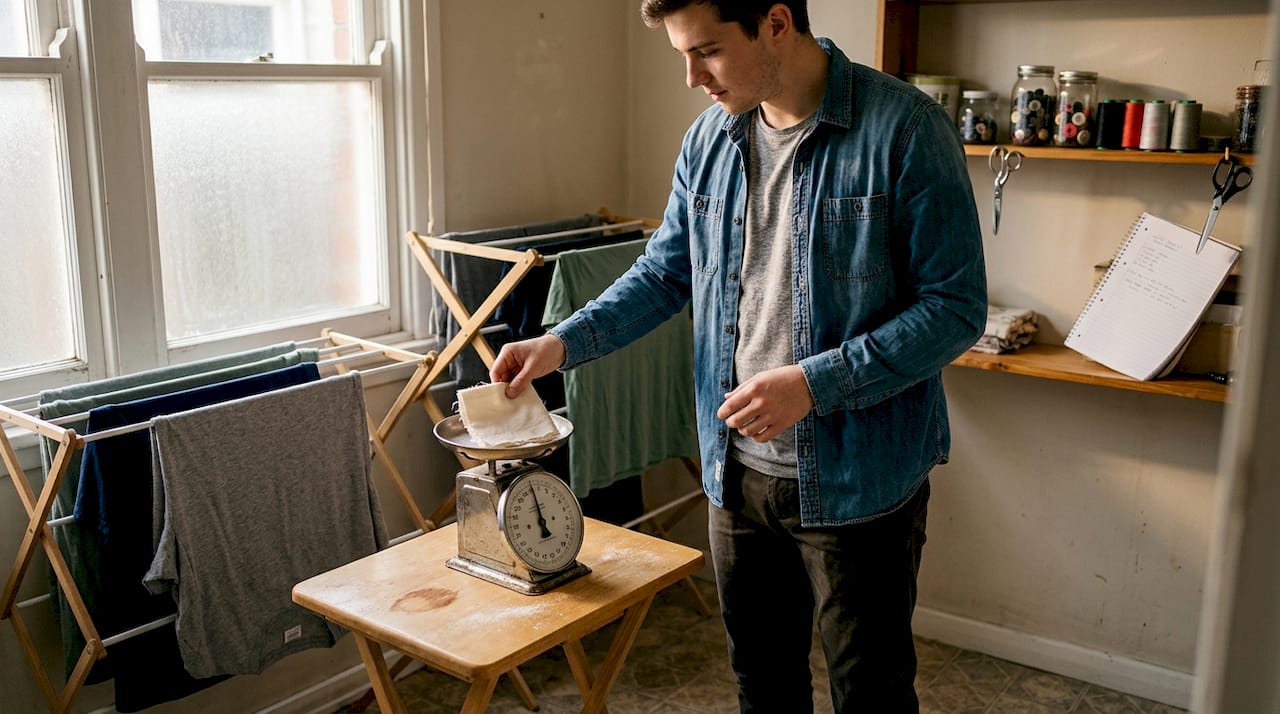
To calculate GSM, manufacturers cut a precise 1x1 meter swatch of fabric and weigh it on a scale. The result is the GSM value. In practice, smaller swatches are often used and then scaled up mathematically, but the principle stays the same. It’s a straightforward measurement that gives everyone in the supply chain, from mill to retailer to maker, a shared language for describing fabric density.
What makes GSM so useful is its universality. A cotton jersey and a linen blend can both carry a GSM label, making it possible to compare them on a level playing field even though they’re completely different materials. You can explore GSM ranges explained in more depth, but the core idea is that GSM gives you a starting point for understanding how a fabric will behave before you ever touch it.
Here’s a quick reference for what GSM tells you at a glance:
| GSM value | What it signals |
|---|---|
| Low (30-70) | Very light, sheer, minimal structure |
| Medium-low (70-150) | Soft, breathable, good drape |
| Medium (150-250) | Balanced weight, moderate structure |
| High (250-400+) | Heavy, dense, durable |
One thing worth noting: two fabrics with identical GSM values can feel completely different. A 200 GSM silk and a 200 GSM canvas are both the same weight per square meter, but they drape, stretch, and wear in entirely different ways. GSM is a density signal, not a full fabric profile. Think of it like knowing the calorie count of a meal without knowing what’s in it. Helpful, but not the whole story.
Pro Tip: When shopping online, always look for GSM alongside fiber content. Together, those two data points tell you far more than either one alone.
Now that you understand what GSM measures, let’s look at how different values map to real fabrics you already know. Typical GSM ranges break down like this: ultra-lightweight sits at 30-70, lightweight at 70-150, medium weight at 150-250, and heavyweight at 400 and above.
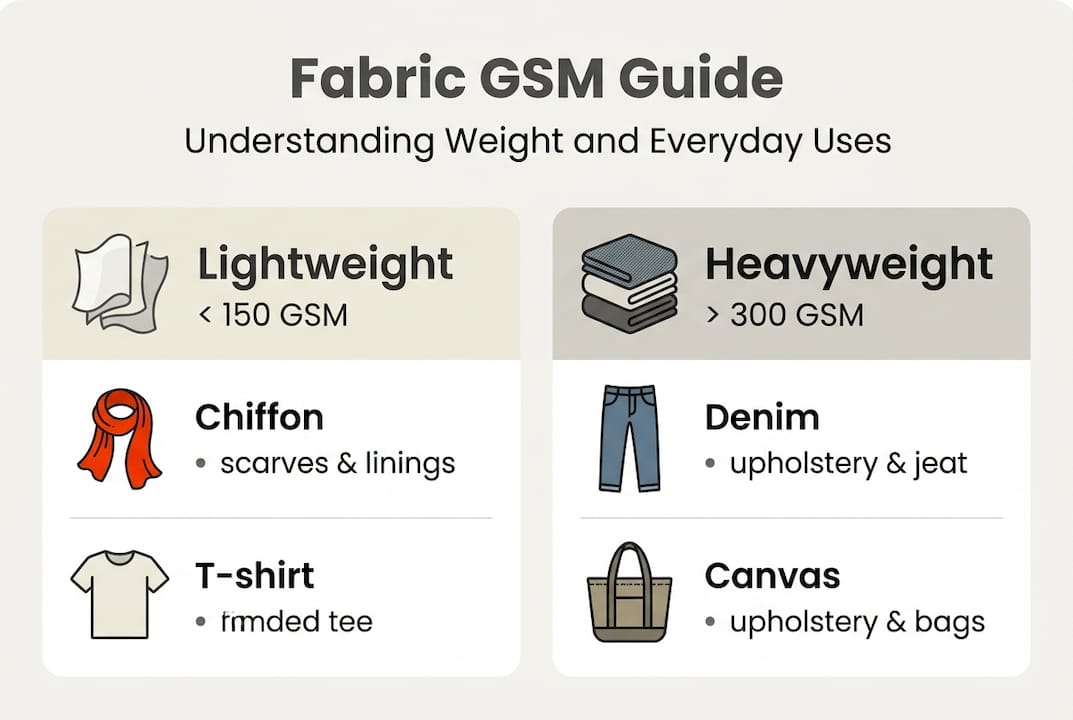
Ultra-lightweight fabrics (30-70 GSM) include materials like chiffon, organza, and fine voile. These are sheer, delicate, and often used for overlays, bridal wear, and decorative applications. They float beautifully but offer little warmth or structure.
Lightweight fabrics (70-150 GSM) cover a wide range of everyday materials. Standard T-shirts typically fall between 140-220 GSM, with summer-weight blouses and shirts sitting toward the lower end of this range. These fabrics breathe well and drape softly, making them ideal for warm-weather garments.
Medium-weight fabrics (150-250 GSM) are the workhorses of most sewing projects. Dress shirting, casual pants, quilting cotton, and lightweight denim all live here. They hold their shape without feeling stiff and are versatile enough for both apparel and light home decor.
Heavyweight fabrics (400+ GSM) are built for endurance. Think upholstery canvas, heavy denim, and thick wool coating. These materials resist wear, provide insulation, and hold structure under pressure. You can read more in a heavyweight fabric guide if you’re working on furniture or outerwear projects.
“Knowing where your fabric lands on the GSM scale before you buy is like checking a weather forecast before packing. It doesn’t guarantee a perfect outcome, but it dramatically reduces surprises.”
Here’s a more detailed comparison table for common fabric types:
| Fabric type | Typical GSM | Common uses |
|---|---|---|
| Chiffon | 30-60 | Overlays, bridal, scarves |
| Jersey (T-shirt) | 140-220 | Casual tops, activewear |
| Quilting cotton | 100-150 | Quilts, crafts, light apparel |
| Denim (light) | 200-300 | Jeans, jackets |
| Upholstery canvas | 400-600 | Furniture, bags, outdoor use |
When you see a GSM label on a fabric tag or product listing, use this table as a quick mental anchor. It helps you immediately visualize how the fabric will behave in your hands and in your finished project. You can also explore GSM in textile selection for more guidance on matching weight categories to specific project types.
GSM is genuinely useful, but it’s also easy to over-rely on it. Here’s what it actually influences and where its limits begin.
GSM directly affects four key performance qualities:
That said, GSM must be paired with fiber content, weave, and intended use for a full assessment. Higher GSM suits cold-weather or high-durability projects, while lower GSM works better for breathable summer garments. But the fiber matters enormously. A 200 GSM linen will feel completely different from a 200 GSM polyester fleece, even though the numbers match.
Weave structure also plays a major role. A tightly woven fabric at 150 GSM will feel firmer and more resistant than a loosely woven fabric at the same weight. Finish treatments like mercerization, brushing, or coating add another layer of complexity that GSM alone can’t capture.
Pro Tip: Before committing to a fabric for a structured garment, check the fabric selection guide and cross-reference GSM with fiber content and weave type. This three-point check prevents most common fabric selection mistakes.
For durability-focused projects like bags, workwear, or upholstery, you can also look into how fabric durability and GSM interact to understand the full picture before you buy.
Knowing what GSM means is one thing. Using it confidently in your buying decisions is another. Here’s a practical approach.
Step 1: Define your project’s demands. Before looking at any fabric, write down what your finished item needs to do. Does it need to drape softly? Resist abrasion? Breathe in heat? This gives you a GSM target range before you start browsing.
Step 2: Read labels and listings carefully. Good retailers list GSM prominently. If a listing doesn’t include it, ask. Knowing the fabric selection process helps you ask the right questions and interpret what you find.
Step 3: Test at home when possible. You can estimate GSM yourself. Cut a 10x10 cm swatch, weigh it in grams, and multiply by 100. It’s not lab-precise, but it’s close enough for project planning. The fabric swatch selection process is a great habit to build before committing to large quantities.
Step 4: Match GSM to use case. Lightweight fabrics for flowing garments. Medium weights for structured clothing and quilts. Heavyweight for upholstery and outerwear. If you’re ordering in volume, reviewing a bulk fabric ordering guide can help you avoid costly miscalculations.
Step 5: Always feel the fabric. Numbers are a starting point, not a final answer. A fabric’s hand feel, the way it moves in your fingers, tells you things no label can.
GSM is a key reference for matching customer needs with fabric properties and project requirements. But it works best as a filter, not a final decision-maker. Use it to narrow your options, then let your hands and experience make the call.
Here’s something the fabric industry doesn’t always say out loud: experienced textile professionals sometimes trust their hands more than the spec sheet. And there’s good reason for that.
GSM is a reliable starting point, but it can mislead you if you treat it as a guarantee. We’ve seen customers order a 300 GSM fabric expecting a sturdy, structured result, only to find it felt floppy and thin. Why? Because the fiber was a loosely spun synthetic that added weight without adding density or structure. The number was accurate. The expectation was wrong.
The real skill in fabric selection is learning to read GSM as one signal among several. Touch and drape tests, fiber knowledge, and an honest assessment of your project’s needs often matter more than the number on the tag. When you’re choosing heavyweight fabrics, for example, understanding why you want that weight is just as important as confirming the GSM value.
GSM gives you a framework. Experience and touch give you the final answer. Don’t skip either step.
Now that you have a solid understanding of GSM and how it shapes fabric performance, the next step is finding materials that actually match your vision.
At fabric-fabric.com, fabrics are organized to make your search straightforward. Whether you need airy backdrop fabrics for photography or events, rich textures for home decor fabrics, or something in between, you’ll find options across every GSM range. Product listings include weight details, fiber content, and usage suggestions so you can shop with confidence. Browse all fabrics and filter by type or intended use to find exactly what your next project needs.
Cut a 10x10 cm swatch, weigh it in grams, and multiply by 100 to estimate GSM. This method is based on the principle that GSM is determined by weighing a known area of fabric.
Not always. Higher GSM means heavier and often more durable fabric, but quality also depends on fiber content, weave, and finish.
Fabrics with a GSM of 70-150 are ideal for summer garments. Lightweight fabrics in this range are common for T-shirts and blouses because they breathe well and feel comfortable in heat.
Yes, absolutely. Fiber type, weave, and finish all affect how fabric feels and performs, even when GSM is identical between two materials.