

 Canadian Dollars

What is GSM in Fabric? 4 Weight Ranges Explained
Posted by BLG on 2026 Feb 28th
Posted by BLG on 2026 Feb 28th


You reach for two fabrics that look nearly identical in thickness, yet one drapes beautifully for a summer dress while the other sags and disappoints. The culprit? A measurement most crafters overlook called GSM. Understanding this single metric transforms your fabric selection from guesswork into confident, informed choices that save money and deliver the results your projects deserve.
| Point | Details |
|---|---|
| GSM Definition | GSM stands for grams per square meter and objectively measures fabric weight per unit area. |
| Weight Categories | Lightweight fabrics range 30-120 GSM, medium 200-300 GSM, and heavy fabrics exceed 300 GSM. |
| Not Thickness | GSM measures weight, not thickness; fabric structure and fiber type independently affect perceived thickness. |
| Project Matching | Selecting appropriate GSM prevents material waste and ensures fabrics meet durability and drape requirements. |
| Measurement Precision | Accurate GSM requires precision scales and standardized cutting to ensure consistent, repeatable results. |
GSM quantifies fabric weight as grams per square meter of surface area. This objective measurement applies universally whether you work with cotton, polyester, wool, or blended materials. Unlike the subjective feeling of holding fabric in your hands, GSM provides a precise numerical value that enables consistent comparison across suppliers and fabric types.
Think of GSM as the nutrition label for fabric. Just as calorie counts help you compare foods objectively, GSM removes guesswork from fabric shopping. A 150 GSM cotton and a 150 GSM polyester share the same weight per area, though their texture, drape, and appearance differ dramatically due to fiber properties.
This standardized metric matters because it allows you to:
Understanding fabric GSM basics empowers you to match materials to project requirements with confidence. Rather than relying on vague descriptors like “lightweight” or “heavy,” you gain a universal language for fabric weight that works across all textile contexts.
Accurate GSM measurement requires cutting fabric to a defined area and weighing it with precision scales accurate to 0.01 grams. Professional textile labs use specialized GSM testers that automate this process, but crafters can measure GSM at home with basic tools and careful technique.
The measurement process follows these steps:
For a 10x10 cm sample (0.01 square meters), multiply the weight in grams by 100 to obtain GSM. A sample weighing 1.5 grams equals 150 GSM. Small differences matter significantly because GSM directly affects drape, opacity, durability, and cost.
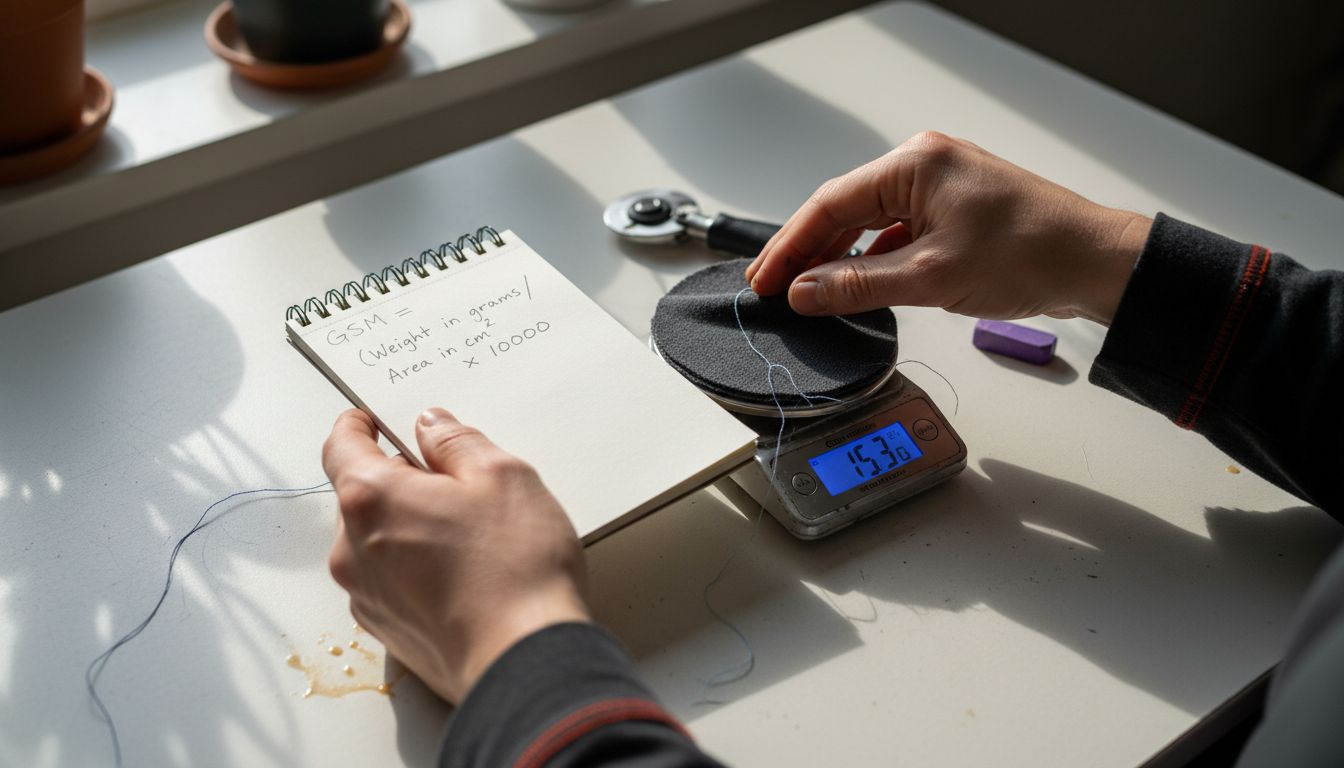
Pro Tip: When measuring GSM at home, condition fabric samples in a standard environment (65% humidity, 20°C) for 24 hours before weighing. Moisture content affects weight, and conditioning ensures repeatable measurements comparable to manufacturer specifications.
Specialized GSM testers used in manufacturing include circular die cutters that produce perfectly consistent sample sizes and eliminate human error in cutting. These tools become essential for businesses needing batch consistency, though hobbyists achieve adequate accuracy with careful manual cutting and quality digital scales.
Understanding GSM measurement techniques helps you verify supplier claims and develop intuition about fabric weight ranges. As you measure different materials, you build a mental database connecting numerical GSM values to physical fabric characteristics.
Fabric weight ranges divide into three primary categories that guide project selection. Each range corresponds to specific crafting applications based on durability needs, drape requirements, and comfort considerations.
| GSM Range | Category | Typical Uses | Example Fabrics |
|---|---|---|---|
| 30-120 | Lightweight | Summer dresses, linings, quilts, scarves | Chiffon, voile, organza |
| 120-200 | Light-Medium | Blouses, lightweight pants, curtains | Poplin, chambray, jersey |
| 200-300 | Medium | General apparel, home décor, bags | Denim, canvas, twill |
| 300-500 | Heavy | Upholstery, structured bags, outerwear | Duck canvas, heavyweight denim |
| 500+ | Extra Heavy | Industrial uses, heavy upholstery | Vinyl-backed fabrics, thick canvas |
Lightweight fabrics (30-120 GSM) excel in projects requiring breathability and fluid drape. These materials suit summer garments, delicate quilts, and layered crafts where bulk becomes problematic. Their low weight makes them comfortable against skin but limits durability for high-wear applications.
Medium weight fabrics (200-300 GSM) offer versatility across the widest range of projects. This category handles everyday clothing, throw pillows, table linens, and craft projects requiring moderate structure. The balance between drape and stability makes medium weights the default choice when project requirements fall between extremes.
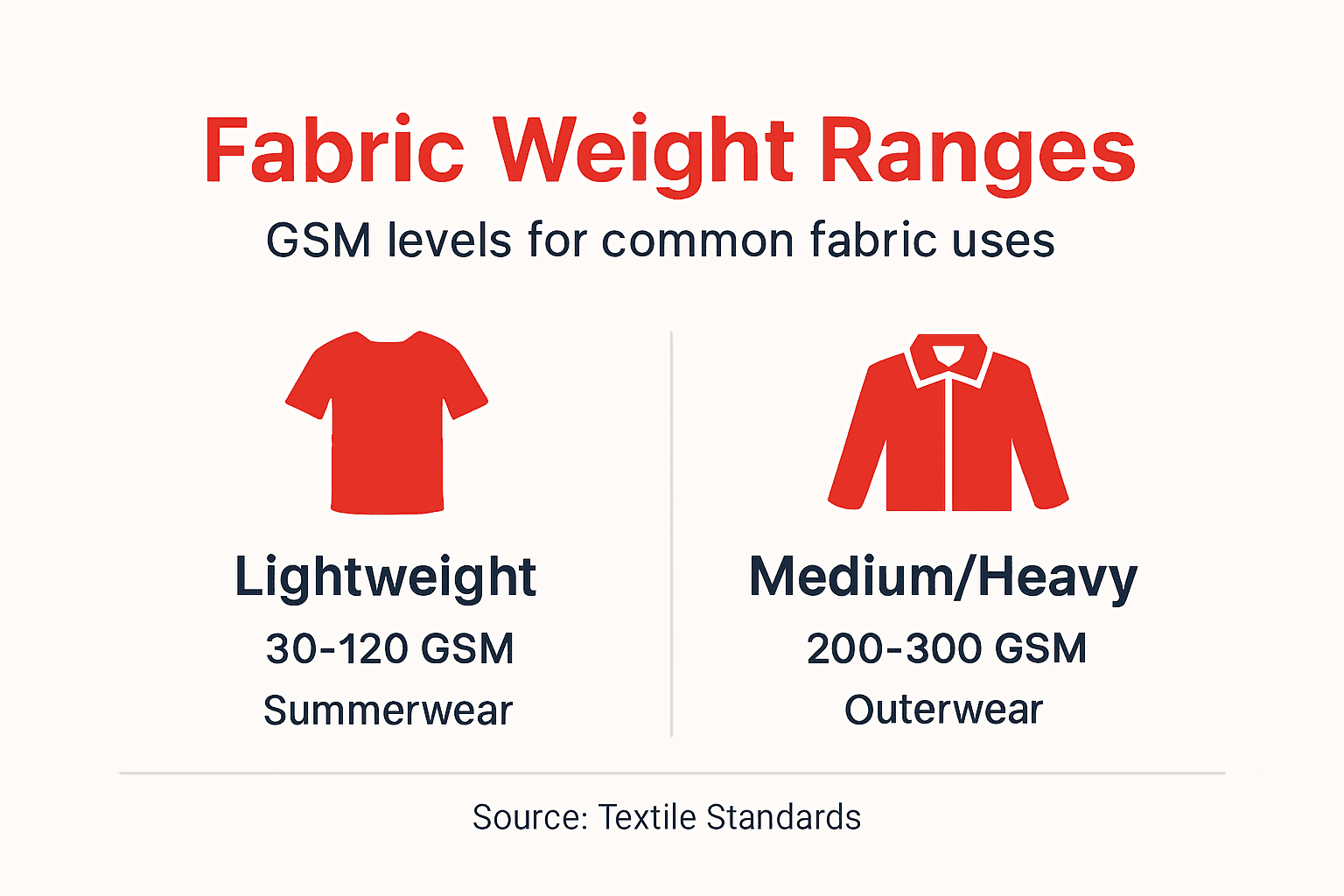
Heavyweight fabric uses include upholstery, durable bags, and outdoor applications where fabric must withstand stress and repeated use. Materials exceeding 300 GSM provide the body and resistance necessary for furniture covering, heavy tote bags, and structured garments like jackets. These fabrics resist tearing and maintain shape under load.
Selecting appropriate GSM prevents common crafting frustrations:
Variations within categories depend on fiber content and weave structure. A 150 GSM silk organza behaves completely differently than 150 GSM cotton poplin despite identical weight per area. Always consider GSM alongside fiber type and construction when matching lightweight fabric examples to your project.
Many crafters mistakenly equate GSM with fabric thickness, leading to poor material choices. GSM measures weight not thickness or warmth; fabric structure and fibers influence these properties independently. Understanding this distinction prevents assumptions that undermine project success.
Consider these examples that illustrate the GSM-thickness disconnect:
Thread count represents threads per square inch, measuring weave density rather than weight. A fabric can have high thread count with low GSM if threads are fine, or low thread count with high GSM if threads are thick. These independent variables combine to create fabric characteristics, but neither predicts the other.
“Understanding that GSM quantifies weight per area, not thickness or insulation value, prevents mismatched fabric selections. A 300 GSM cotton t-shirt feels heavier but not necessarily warmer than a 150 GSM merino wool sweater.”
The myth that lower GSM fabrics always dry faster oversimplifies moisture management. Fiber type dramatically influences drying time independent of weight. Synthetic materials wick moisture and dry rapidly even at higher GSM, while natural fibers retain water longer regardless of weight. Common GSM misconceptions like this lead crafters to select inappropriate materials based on flawed reasoning.
Fabric warmth depends primarily on insulation properties, not GSM. Lofted materials trap air effectively regardless of weight, while dense fabrics block wind. A 200 GSM fleece provides more warmth than 400 GSM canvas because structure matters more than mass for thermal performance.
Avoiding these misconceptions requires evaluating GSM as one specification among several. Successful fabric quality misconceptions include considering fiber content, weave structure, finish treatments, and intended use alongside weight measurements.
Higher GSM fabrics provide durability and structure while lower GSM favors breathability. GSM also affects shipping costs and sourcing decisions, making it a practical consideration beyond just physical properties. Matching GSM to project demands prevents material waste and ensures satisfaction.
Select fabrics using these GSM-based guidelines:
GSM significantly impacts procurement costs in two ways. Heavier fabrics cost more per yard since you purchase more material by weight. Shipping charges increase proportionally with GSM when ordering online, especially for large quantities. Budget-conscious crafters account for these factors when comparing suppliers and planning bulk purchases.
Pro Tip: When sourcing fabric for professional projects, request GSM tolerance specifications from suppliers. Acceptable variation typically ranges ±5% for quality textiles. Batches exceeding this tolerance cause visible inconsistencies in finished projects, particularly in apparel where panels from different bolts meet.
Batch consistency becomes critical for projects requiring multiple fabric cuts. A variance of just 20 GSM between batches creates noticeable differences in drape and appearance. Professional sewers order extra yardage from single dye lots to ensure uniformity, especially for fabric durability and GSM critical applications.
Consider how GSM influences sewing and construction:
Understanding fabric weight and project fit transforms abstract GSM numbers into practical selection criteria. As you complete more projects, you develop intuition connecting GSM ranges to desired outcomes, making future fabric choices faster and more accurate.
Lower GSM fabrics dry faster and allow more airflow while higher GSM fabrics absorb more moisture and dry slower. Knit structure impacts comfort significantly, making GSM just one factor in the complex equation of wearable comfort. Understanding these interactions helps you select materials for projects involving prolonged skin contact.
Moisture management varies dramatically with GSM in predictable ways. Lightweight fabrics (under 150 GSM) promote rapid evaporation because less material holds less water. When you perspire in a low GSM garment, moisture passes through quickly and evaporates from the surface. Heavy fabrics (over 300 GSM) absorb substantial moisture before feeling wet but take much longer to dry completely.
Breathability correlates inversely with GSM when comparing identical weave structures. A 120 GSM plain weave cotton allows significantly more air circulation than 240 GSM plain weave cotton of the same fiber. However, an open-knit 240 GSM fabric can breathe better than a tight-weave 120 GSM material, demonstrating how construction modifies GSM effects.
Knit versus woven construction creates different comfort profiles at identical GSM:
Fiber type interacts with GSM to determine ultimate comfort. Merino wool at 180 GSM regulates temperature better than cotton at the same weight. Synthetic performance fabrics wick moisture effectively at 220 GSM while natural fibers feel clammy. Linen breathes exceptionally well even at moderate GSM due to fiber structure.
Fabric comfort and weight considerations guide selection for garments, bedding, and any textile contacting skin for extended periods. Testing fabric samples in intended conditions reveals how GSM combines with other properties to deliver comfort or discomfort.
Now that you understand how GSM influences fabric performance, you can confidently select materials perfectly matched to your crafting needs. Fabric Fabric offers fabrics across all GSM ranges, from delicate lightweight materials for summer apparel to durable heavy textiles for upholstery and structured projects.

Browse our backdrop fabrics for crafting to find lightweight options ideal for photography and event decoration. Explore home decor fabrics in medium to heavy GSM ranges perfect for curtains, cushions, and upholstery that withstand daily use. Discover technical textile solutions featuring specialized fabrics engineered for specific GSM-performance combinations.
Our detailed product listings include GSM specifications, usage recommendations, and care instructions to help you make informed decisions. Whether you need breathable lightweight cotton for quilting or heavy-duty canvas for bags, understanding GSM empowers you to shop with confidence and achieve professional results in every project.
You need a precision digital scale measuring to 0.01 grams, a rotary cutter, and a cutting mat with grid lines. Cut a precise 10x10 cm fabric square, weigh it carefully, then multiply the gram weight by 100 to calculate GSM. For improved accuracy, measure three samples from different fabric areas and average the results.
Yes, GSM can vary between suppliers and even between batches from the same manufacturer. Acceptable tolerance typically ranges ±5% for quality fabrics. Always request GSM specifications when ordering and consider ordering samples to verify weight before committing to large quantities for professional projects.
Higher GSM fabrics require larger needles (size 16-18), heavier thread, and increased presser foot pressure to penetrate layers effectively. Lower GSM materials need finer needles (size 9-11), reduced tension, and sometimes stabilizers to prevent puckering. Adjust stitch length proportionally, using longer stitches for heavy fabrics.
GSM applies universally to all fabric types, from natural fibers to synthetics and blends. However, interpretation varies because different materials behave differently at identical GSM. A 200 GSM polyester feels lighter and drapes differently than 200 GSM cotton due to fiber density and structure.
GSM correlates with durability but does not guarantee it. Higher GSM generally indicates more material to resist wear, but fiber quality, weave tightness, and finish treatments also significantly impact longevity. A well-constructed 200 GSM fabric can outlast a poorly made 300 GSM material in demanding applications.