

 Canadian Dollars

Types of Fabric Material: A Crafter's Complete Guide
Posted by BLG on 2026 Jun 1st
Posted by BLG on 2026 Jun 1st

TL;DR:
- Fabric types are classified by fiber source and construction, influencing their feel, drape, stretch, breathability, and durability. Natural, synthetic, regenerated, and blended fibers each behave differently and are suited for various applications, while woven, knit, and nonwoven structures determine stretch and shape retention. Understanding both aspects helps select the ideal fabric for a project, ensuring better performance, care, and longevity.
Types of fabric material are classified by two factors: fiber source and fabric construction method. Together, these two dimensions determine how a fabric feels, drapes, stretches, breathes, and holds up over time. According to fabric classification guides, common fibers span natural options like cotton, linen, silk, and wool; synthetics like polyester, nylon, and spandex; and regenerated fibers like rayon, modal, and lyocell. Construction methods include woven, knit, and nonwoven structures. Knowing both categories before you buy fabric is the single most reliable way to avoid costly project mistakes.
Fiber source is the starting point for understanding any fabric. Fabric types fall into four categories: natural, synthetic, regenerated, and blended. Each category behaves differently on the body, under stress, and in the wash.
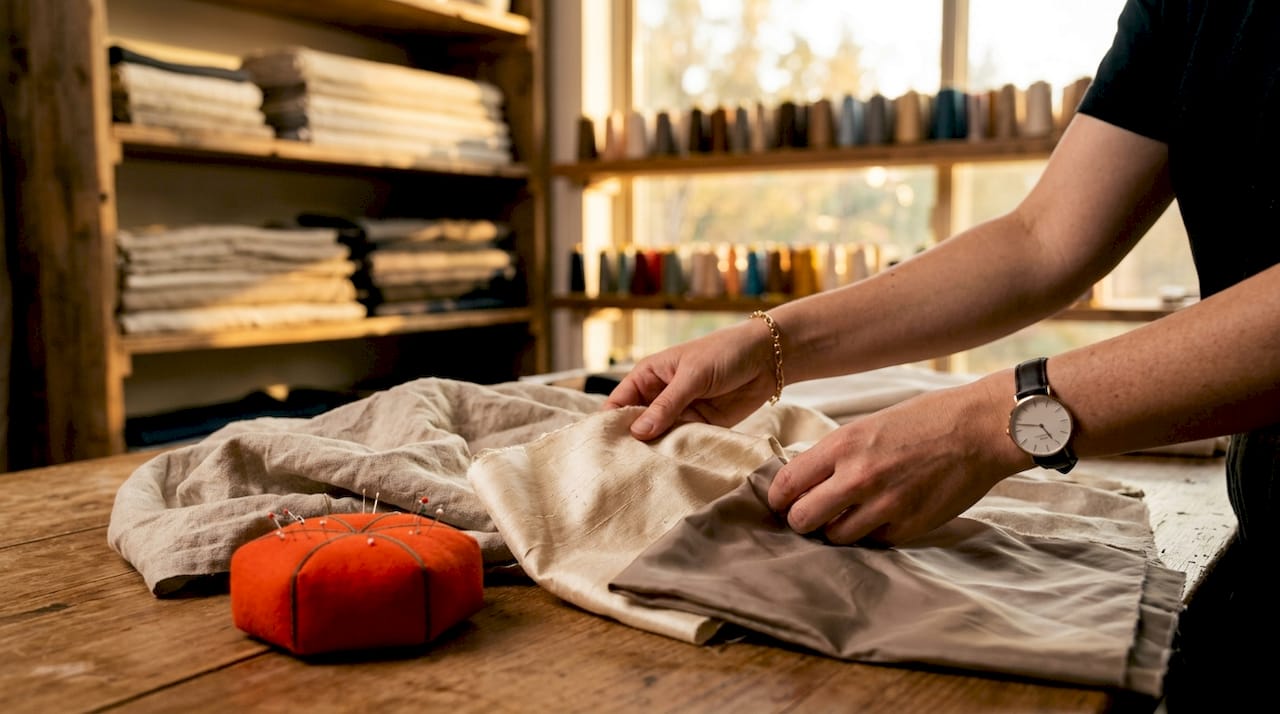
Natural fibers come from plants or animals and are generally breathable and comfortable against the skin. Cotton is the most widely used natural fiber. It absorbs moisture, washes easily, and works for everything from quilting cotton to denim. Linen, made from flax, is stiffer and stronger than cotton, making it ideal for structured garments and home decor like curtains and table linens. Silk is a protein fiber prized for its luster and drape, used in blouses, linings, and evening wear. Wool insulates even when damp, making it the go-to for outerwear and cold-weather knits, though some people find it itchy against bare skin. Cashmere is a finer wool variant, softer and more expensive, used in luxury knitwear.
Synthetic fibers are manufactured from petrochemicals and engineered for specific performance traits. Polyester resists wrinkles and moisture, holds color well, and is the backbone of activewear and budget apparel. Nylon is stronger than polyester and more abrasion-resistant, making it the preferred choice for bags, swimwear, and outerwear linings. Acrylic mimics wool at a lower price point and is common in craft yarn and fleece. Spandex (also called Lycra or elastane) is almost never used alone. It is blended into other fabrics to add stretch and recovery, which is why your jeans move with you.
Regenerated fibers start as natural cellulose (usually wood pulp) and are chemically processed into fiber. Rayon and viscose drape beautifully and feel soft, but they weaken significantly when wet. Modal is a more refined version of rayon with better durability and a silkier hand. Lyocell (sold under the brand name Tencel) is the most environmentally responsible of the group, produced in a closed-loop process that recycles solvents.
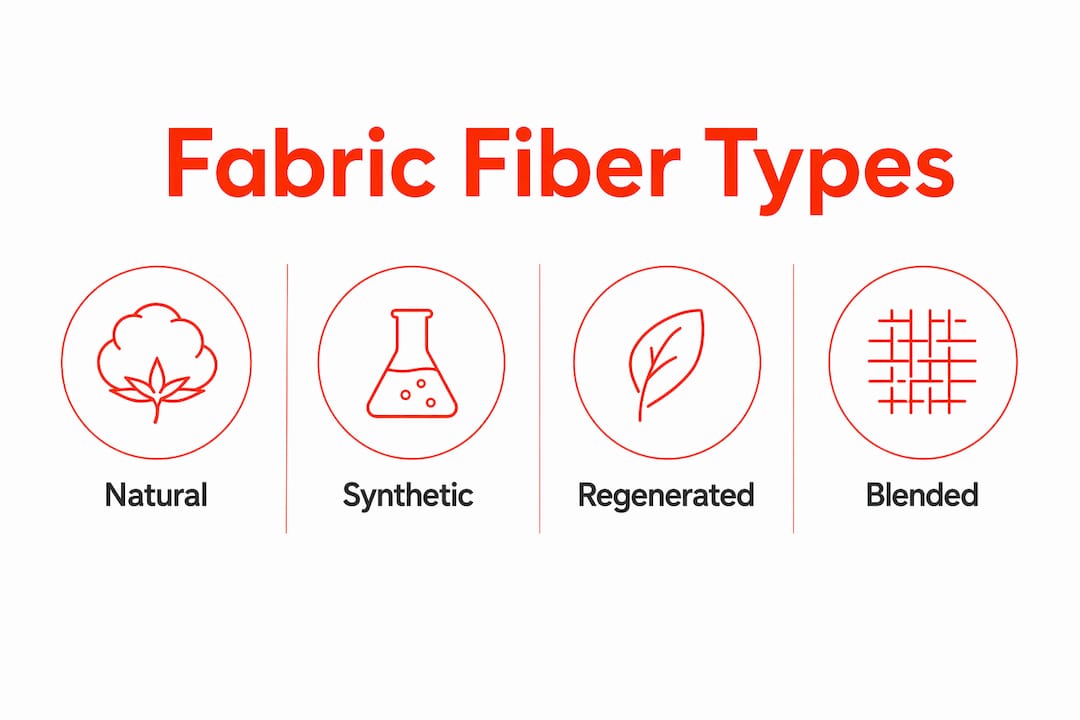
Blended fibers combine the strengths of two or more fiber types. A cotton-polyester blend, for example, keeps cotton’s breathability while reducing wrinkle and shrinkage. A rayon-spandex blend delivers the fluid drape of rayon with enough stretch for fitted garments.
Pro Tip: When reading a fabric label, list the fibers in order of percentage. The first fiber listed dominates the fabric’s behavior. A 60% cotton, 40% polyester blend behaves more like cotton than polyester.
Fiber tells you what a fabric is made of. Construction tells you how those fibers are assembled, and that assembly changes everything about how the fabric performs.
Woven fabrics are made by interlacing two sets of yarns at right angles: the warp (lengthwise) and the weft (crosswise). This structure gives wovens their defining characteristic: shape stability. Woven fabrics do not stretch significantly on the grain, which means garments made from them require darts, seams, and precise fitting to accommodate body curves. Denim, poplin, canvas, twill, and chiffon are all woven fabrics. For home decor projects like drapery, upholstery, and structured pillows, wovens are the standard choice because they hold their shape under tension.
Knit fabrics are constructed from looped yarns, and those loops give knits their built-in stretch and recovery. A T-shirt stretches over your head and snaps back because it is made from jersey, a single knit. Pique, used in polo shirts, is a double knit with more texture and body. Because knits conform to curves without darts or complex seaming, they are the dominant fabric in activewear, casual tops, and fitted dresses. The critical caveat: stretch quality matters. Stretch amount and recovery together determine whether a knit garment holds its shape or bags out at the elbows and knees after a few wears.
Nonwoven fabrics are made by bonding loose fibers together through heat, chemicals, or mechanical pressure rather than weaving or knitting. Production methods include spunbond, hydroentanglement, and airlaid processes. Nonwovens are used for interfacing, stabilizers, craft felt, filters, and disposable medical textiles. They do not ravel at the edges, which makes them useful for craft projects, but they lack the durability of wovens or knits for garment construction.
Pro Tip: Sewing patterns are written for either woven or knit fabrics. Using a woven pattern with a knit fabric (or vice versa) is one of the most common beginner mistakes. Check the pattern envelope for the recommended fabric type before you buy.
Understanding fiber and construction gives you the framework. Knowing specific fabric names lets you apply it. The table below maps widely used fabrics to their fiber source, construction, and best project applications.
| Fabric | Fiber source | Construction | Best uses |
|---|---|---|---|
| Cotton quilting fabric | Natural (cotton) | Woven | Quilting, crafts, children’s clothing |
| Denim | Natural (cotton) | Woven (twill) | Jeans, jackets, bags |
| Jersey | Natural or synthetic blend | Knit | T-shirts, casual dresses, activewear |
| Chiffon | Silk or polyester | Woven | Blouses, overlays, evening wear |
| Velvet | Silk, cotton, or synthetic | Woven (pile) | Upholstery, evening wear, home decor |
| Satin | Silk or polyester | Woven (satin weave) | Linings, bridal wear, home decor |
| Linen | Natural (flax) | Woven | Curtains, table linens, summer garments |
| Modal | Regenerated (wood pulp) | Knit | Underwear, loungewear, soft tees |
| Lyocell (Tencel) | Regenerated (wood pulp) | Woven or knit | Casual wear, bedding, sustainable fashion |
| Spandex blend | Synthetic blend | Knit | Activewear, swimwear, fitted garments |
A few fabrics deserve extra attention for crafters and decorators. Velvet, available at Fabric-fabric in silk and synthetic versions, adds immediate luxury to upholstery and throw pillows. Satin’s reflective surface makes it a go-to for backdrop projects and event decor. Chiffon layers beautifully for window treatments but requires careful handling because it shifts during cutting and sewing.
Wikipedia’s list of fabrics catalogs hundreds of named textiles organized by construction and fiber, which is a useful reference when you encounter an unfamiliar fabric name on a product listing.
Fiber and construction do not operate independently. Their combination produces specific behaviors around shrinkage, durability, and maintenance that you need to anticipate before starting a project.
Fabric shrinkage occurs when fiber tension releases during washing and heat exposure. The mechanism differs by fiber type. Wool felts permanently when agitated in hot water because its scales interlock. Cotton relaxes gradually over multiple washes. Rayon weakens when wet and can distort more easily than almost any other common fiber. Polyester and nylon resist shrinkage reliably, which is one reason they dominate performance apparel.
Construction adds another layer of complexity:
For care decisions, fabric construction dictates performance under stress just as much as fiber type does. Dry cleaning is the safest option for delicate wovens like silk chiffon or wool suiting. Machine washing works for most cotton and polyester wovens and knits. Always check the fabric shrinkage guide before prewashing unfamiliar materials.
Selecting the right fabric comes down to matching fiber properties and construction to what your project actually demands. Here is a practical decision process:
Define the performance requirements. Does the project need stretch? Upholstery fabric needs to resist abrasion, not stretch. A fitted dress needs recovery. A quilt needs washability. Write down the non-negotiables before you shop.
Match construction to pattern or project type. Sewing patterns specify woven or knit. Home decor projects like curtains and slipcovers almost always call for wovens. Garments with fitted silhouettes often work better in knits. The knit vs. woven distinction is the most consequential decision in garment construction.
Consider fiber properties for feel and care. If the finished item will be washed frequently, avoid rayon or dry-clean-only fibers. If breathability matters (summer clothing, bedding), prioritize cotton, linen, or lyocell over polyester.
Prewash before cutting. Cotton and linen shrink. Prewashing before you cut your pattern pieces prevents the finished garment from shrinking out of size after the first wash. Synthetics generally do not need prewashing, but it does not hurt.
Use a reference guide when in doubt. The fabric selection guide at Fabric-fabric covers fiber and construction choices organized by project type, which is useful when you are working with an unfamiliar material.
For home decor projects specifically, durability and cleanability often outweigh drape and softness. Upholstery projects benefit from tightly woven fabrics with high thread counts. A guide to upholstery materials covers the specific performance requirements for DIY furniture projects in detail.
Choosing fabric by both fiber source and construction method produces better project outcomes than selecting by appearance or price alone.
| Point | Details |
|---|---|
| Two classification axes | Every fabric is defined by fiber source (natural, synthetic, regenerated, blend) and construction (woven, knit, nonwoven). |
| Construction determines stretch | Wovens provide stability without stretch; knits offer built-in stretch and recovery for fitted garments. |
| Fiber drives care requirements | Wool felts, rayon weakens when wet, and polyester resists shrinkage. Match fiber to your care tolerance. |
| Prewash natural fibers | Cotton and linen shrink. Always prewash before cutting to prevent size loss after the first wash. |
| Pattern compatibility is non-negotiable | Sewing patterns are written for either woven or knit fabrics. Substituting one for the other produces poor fit. |
Most fabric guides hand you a list of fabric names and call it done. That approach fails the moment you walk into a fabric store or browse an online shop, because the name alone tells you almost nothing useful. “Rayon” does not tell you whether the fabric is woven or knit, how much it will shrink, or whether it will hold up to the project you have in mind.
What actually works is treating fiber and construction as a two-variable equation. I have seen experienced sewers ruin expensive silk charmeuse by not accounting for its woven structure when cutting on the bias. I have seen crafters buy beautiful modal jersey for a structured bag project, only to find it has no body whatsoever. The fabric was not wrong. The match was wrong.
The other thing most guides underplay is recovery in stretch fabrics. A knit with poor recovery bags out at the knees and elbows within a season. Stretch and recovery together determine garment longevity far more than fiber content alone. When I evaluate a stretch fabric, I pull it in both directions and watch how fast it returns. If it returns slowly or not at all, I move on.
The evolving category of blended and hybrid fabrics makes this more complex and more interesting. Lyocell-cotton blends, for example, combine the sustainability profile of lyocell with the familiar washability of cotton. These newer combinations reward buyers who understand the underlying principles rather than just recognizing a label.
— kev
Fabric-fabric carries an extensive selection of fabrics organized by project type, so you can apply everything covered in this guide directly to your shopping decisions. Whether you are sourcing backdrop fabrics for an event or photography setup, or browsing home decor fabric by the yard for curtains, upholstery, or accent pillows, the catalog covers natural, synthetic, and specialty options with clear descriptions and usage guidance. The home decor fabric guide at Fabric-fabric is a strong starting point if you are working on a decorating project and want curated recommendations by room and function.
The three main types of fabrics by construction are woven, knit, and nonwoven. Wovens provide shape stability, knits provide stretch and recovery, and nonwovens are bonded fibers used primarily for interfacing, filters, and disposable applications.
Natural fabrics come from plant or animal fibers like cotton, linen, silk, and wool. Synthetic fabrics are manufactured from petrochemicals, including polyester, nylon, and spandex. Natural fibers generally breathe better; synthetics resist wrinkles and shrinkage more reliably.
Tightly woven fabrics like canvas, linen, velvet, and upholstery-weight cotton are best for most home decor projects because they resist abrasion and hold their shape under tension. For curtains and drapes, linen and polyester blends offer durability with good drape.
Fabric shrinks when fiber tension releases during washing and heat exposure. Cotton relaxes gradually, wool felts permanently when agitated in hot water, and rayon weakens and distorts when wet. Prewashing fabric before cutting prevents shrinkage from affecting finished project dimensions.
A fabric blend combines two or more fiber types in a single yarn or fabric. Common examples include cotton-polyester (breathability plus wrinkle resistance) and rayon-spandex (drape plus stretch). The dominant fiber, listed first on the label, determines most of the fabric’s behavior.