

 US Dollar

Streamline textile procurement: 7-step workflow guide
Posted by BLG on 2026 Apr 1st
Posted by BLG on 2026 Apr 1st


Procurement inefficiency is one of the most expensive problems in the textile industry, and most buyers don’t realize how much it costs until a shipment is late or a collection launch slips. Poor management causes 8-12% shipment delays across the industry, and those delays ripple into markdowns, lost contracts, and strained supplier relationships. Whether you’re sourcing upholstery fabric, apparel textiles, or craft materials, a structured procurement workflow is what separates buyers who hit their deadlines from those who are always scrambling. This guide walks you through every phase, from defining requirements to managing long-term supplier relationships, so you can build a process that actually holds up under pressure.
| Point | Details |
|---|---|
| 7-step workflow matters | Following a structured process minimizes delays and cost overruns in textile sourcing. |
| Sustainability is non-negotiable | Traceability and certified sourcing now drive successful procurement. |
| System integration saves time | Digital platforms can cut procurement lead times by up to 10 days. |
| Choose strategy wisely | Match your procurement approach—forecast, responsive, or hybrid—to your market’s needs. |
Textile procurement is the end-to-end process of identifying, evaluating, contracting, and managing suppliers who provide fabrics and raw materials for your products. It’s not just buying fabric. It’s a coordinated system that connects your design intent to your production timeline, your budget, and your compliance obligations.
A 7-step structured process is the standard framework most professional buyers follow. Here’s how those steps break down:
Each step feeds into the next. Skipping supplier research, for example, leads to weak RFQs. Rushing contracts leads to disputes over delivery terms. The workflow only works when it’s treated as a system, not a checklist.
Key stakeholders in this process include procurement managers, design leads, quality assurance teams, and logistics coordinators. When these roles aren’t aligned, miscommunication fills the gap and delays follow.
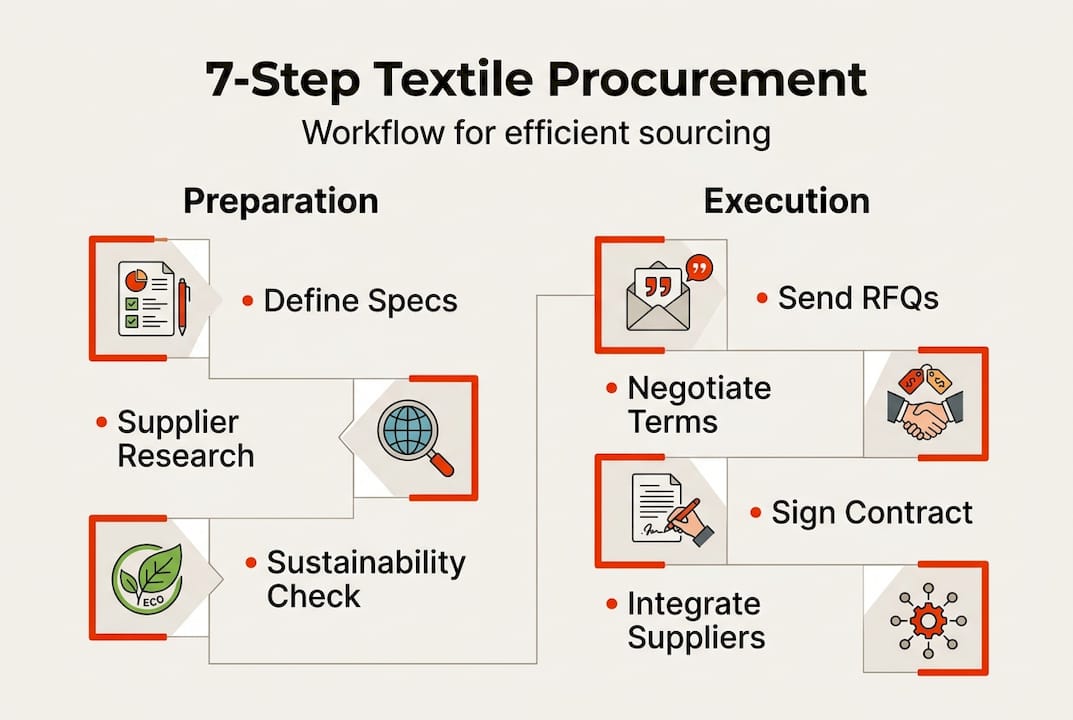
| Workflow phase | Key output | Risk if skipped |
|---|---|---|
| Requirements definition | Spec sheet | Wrong fabric ordered |
| Supplier research | Qualified vendor list | Unreliable suppliers |
| RFI/RFQ | Comparable bids | Overpaying or under-specifying |
| Contracting | Signed agreement | No recourse for delays |
| Relationship management | Ongoing performance data | Repeated issues unresolved |
For a broader view of how sourcing fits into your overall buying strategy, the textile sourcing overview on our blog is a solid starting point.
Pro Tip: Document every supplier communication in a shared system, not just email threads. A single miscommunication about fiber content or lead time can derail an entire production run.
With the workflow map in place, your first step is laying the groundwork with clear requirements. This is where most procurement failures actually begin, not in the negotiation or the contract, but in the vague, incomplete spec sheet that gets handed to a supplier.
Defining precise textile specifications means locking down fiber content, fabric weight (measured in GSM, or grams per square meter), weave or knit structure, color fastness standards, finish requirements, and minimum order quantities (MOQs). Each of these variables affects cost, lead time, and end-use performance. A decorator sourcing fabric selection essentials for upholstery has completely different requirements than a fashion buyer sourcing lightweight wovens for a summer collection.
Here’s a practical breakdown by buyer type:
Once your specs are locked, supplier research begins. This means identifying sourcing regions (Southeast Asia, South Asia, nearshore options in Mexico or Eastern Europe), reviewing trade databases, attending virtual or in-person textile trade shows, and building an initial vendor list of 8-15 candidates before narrowing down.
Sustainability is no longer optional in this phase. Sustainability and traceability are now core expectations, with Digital Product Passport (DPP) and certification verification required by 2027. That means you need to request documentation upfront, including GOTS (Global Organic Textile Standard), OEKO-TEX, Bluesign, or Fair Trade certifications depending on your market.
For guidance on evaluating materials against these standards, the sustainable fabric choices resource walks through what to look for and what to avoid.
Nearshoring is also gaining traction as a resilience strategy. Shorter supply chains reduce exposure to port disruptions and new import compliance requirements, even if the per-unit cost is slightly higher.
Once you’ve researched and pre-qualified suppliers, the next phase is active engagement and finalizing deals. This is where many buyers either win significant value or leave it on the table.

Start with an RFI (Request for Information). This document asks potential suppliers about their production capabilities, certifications, lead times, and capacity. It’s a screening tool, not a pricing exercise. Send it to your full shortlist and use the responses to narrow down to 3-5 serious candidates.
Then issue an RFQ (Request for Quotation). This is where pricing, payment terms, MOQs, and delivery timelines get formalized. A strong RFQ includes your full spec sheet, target volume, delivery destination, and incoterms (the international trade terms that define who handles freight and risk at each stage).
Negotiation tips that actually work:
The decorator selection process offers useful context on how to evaluate supplier proposals when quality and finish matter as much as price.
Different buyers need different sourcing strategies. Here’s how the main models compare:
| Strategy | Lead time | Best for | Risk level |
|---|---|---|---|
| Forecast-based | 90-120 days | Seasonal collections, home decor | Lower cost, higher inventory risk |
| Responsive (fast fashion) | 14-30 days | Trend-driven apparel | Higher cost, lower inventory risk |
| Hybrid with AI support | 30-60 days | Mixed product lines | Balanced, requires system investment |
Contracts should always include delivery milestones, inspection rights, payment schedules, and a force majeure clause. Don’t rely on verbal agreements or email confirmations as substitutes for a signed document.
After contracts are signed, success hinges on ongoing management and system integration. A signed contract is not the finish line. It’s the starting line for a relationship that either compounds value over time or slowly deteriorates.
Supplier Relationship Management (SRM) is the practice of actively monitoring, evaluating, and developing your supplier partnerships. For textile buyers, this means tracking on-time delivery rates, defect rates, responsiveness, and sustainability compliance across every order.
Integrated systems can reduce procurement delays by 5-10 days, and SRM stabilizes costs and improves forecasting accuracy. ERP (Enterprise Resource Planning) and dedicated order management software connect your purchase orders, inventory levels, and supplier communications in one place. Without that integration, you’re managing procurement through spreadsheets and email, which is where errors multiply.
Key practices for strong post-contract management:
For a deeper look at how sourcing relationships shape your overall supply chain, the fabric sourcing role guide covers the strategic side, while ethical sourcing best practices addresses the compliance and audit side.
“The buyers who outperform their peers aren’t just better negotiators. They’re better relationship managers. They know their suppliers’ capacity constraints before those constraints become their problem.”
Pro Tip: Schedule a formal supplier review every six months. Bring data on delivery performance, quality rates, and volume trends. Suppliers respond to buyers who treat them as partners, and that translates into priority capacity and better pricing over time.
Here’s the uncomfortable truth: most procurement failures aren’t caused by bad suppliers. They’re caused by buyers who optimize for the wrong thing at the wrong time.
The most common mistake is treating price as the primary lever. When procurement teams squeeze suppliers on unit cost without investing in the relationship or the systems that support it, they get what they pay for: minimum effort, minimum flexibility, and minimum priority when capacity gets tight. A supplier who barely makes margin on your orders will deprioritize you the moment a better customer shows up.
The second failure point is underinvestment in digital tools. Spreadsheet-based procurement might work at low volume, but it doesn’t scale. It creates blind spots in your order pipeline and makes it nearly impossible to catch problems before they become delays.
Future-proofing your workflow also means building for compliance. The emerging sustainability trends reshaping the industry in 2026 aren’t optional for much longer. Buyers who build traceability and certification verification into their standard process now won’t be scrambling to retrofit it when regulations tighten.
The buyers who consistently outperform their competitors share one trait: they treat procurement as a strategic function, not an administrative one. That mindset shift is what turns a workflow into a competitive advantage.
With a clear workflow in hand, the right sourcing platform becomes your strategic advantage. At fabric-fabric.com, we make it easier to find the fabrics you need without the back-and-forth that slows down traditional sourcing.
Browse our full range of backdrop fabrics for event and display applications, or explore our curated home decor fabric collection for upholstery, drapery, and interior projects. Each product listing includes fiber content, weight, and usage guidance so you can evaluate options against your spec sheet before ordering. For custom volume requests or category-specific sourcing questions, our team is ready to help you find the right fit.
The main steps are defining requirements, conducting market research, issuing RFIs and RFQs, negotiating, contracting, and managing ongoing supplier relationships. Each step builds on the last, so skipping any one of them creates downstream risk.
Sustainability requirements now include traceability documentation, verified certifications like GOTS or OEKO-TEX, and in some cases nearshoring to reduce supply chain exposure. DPP compliance will be mandatory by 2027.
Poor process management can add 8-12% shipment delays, while integrated digital systems reduce lead times by 5-10 days. The biggest culprits are unclear specs, missing contract terms, and no system for tracking shipment milestones.
Forecast-based sourcing plans 90-120 days in advance and works well for seasonal or home decor lines. Responsive procurement focuses on fast, demand-driven orders with lead times as short as two weeks, which suits trend-driven fashion buyers.
Total landed cost includes freight, duties, and handling fees that can effectively double the unit price, so always model the full cost before comparing suppliers. Nearshoring and consolidating shipments are two practical ways to bring that number down.