

 Canadian Dollars

Master the Fabric Selection Process for Decorators Easily
Posted by BLG on 2025 Nov 15th
Posted by BLG on 2025 Nov 15th


Choosing the right fabric can make or break your entire design project. With over 60% of homeowners admitting they feel unsure about which materials work best for their space, the pressure to get it right is real. From defining your needs to testing final swatches, understanding each step will help you avoid common mistakes and create results that last. This guide walks you through smart methods to select fabrics that match your style, durability needs, and unique vision.
| Key Point | Explanation |
|---|---|
| 1. Define project requirements clearly | Establish your project’s scope, budget, timeline, and must-haves to guide your fabric selection effectively. |
| 2. Understand fabric types and features | Familiarize yourself with the properties and applications of various fabrics to match them to your design needs. |
| 3. Assess durability and maintenance needs | Evaluate how fabrics will withstand wear and how easy they are to maintain, based on your lifestyle and project use. |
| 4. Consider colors and patterns strategically | Choose colors and patterns that complement your existing decor while following the 60-30-10 rule for balance. |
| 5. Test fabric samples thoroughly | Request samples and test them in your space under different lighting to ensure they meet your aesthetic and practical criteria. |
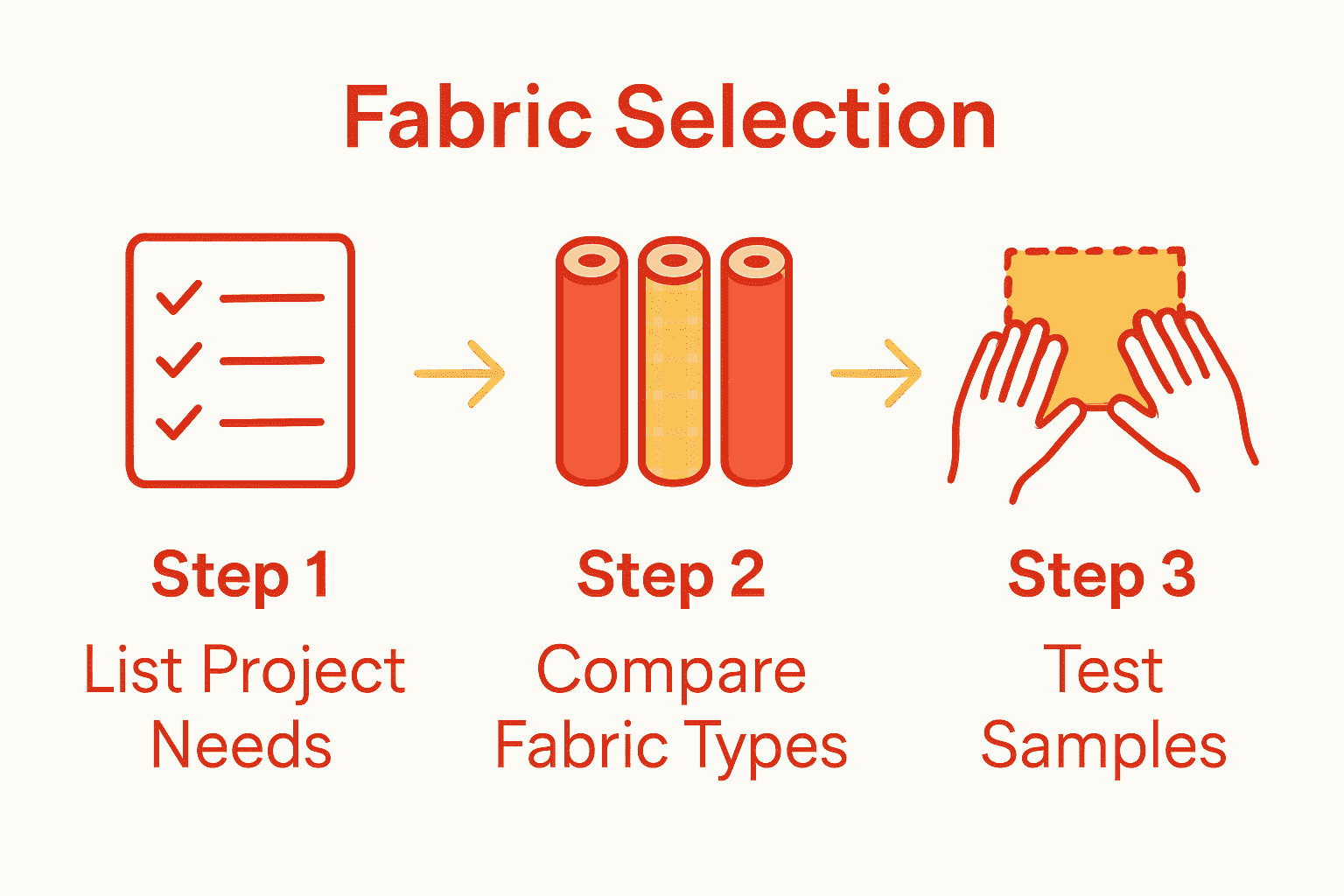
Successfully launching your fabric project starts with crystal clear requirements and design goals. This crucial first step sets the foundation for everything that follows.
According to flexhouse, effective project planning requires specifying key elements like project scope, budget, timeline, style preferences, functionality, and must-have features. Start by grabbing a notebook and asking yourself some targeted questions. What specific purpose will this fabric serve? Are you designing upholstery for a living room chair, creating a quilted bedspread, or crafting custom curtains?
Break down your design goals into practical categories. Consider texture requirements (smooth versus textured), color palette preferences, durability needs, and intended use. For instance, a dining room chair covering requires different fabric characteristics compared to a decorative throw pillow. Measure your space or project dimensions precisely and note any constraints like color schemes or existing furniture styles that will influence your fabric selection.
Pro Tip: Always keep a sample swatch book handy to compare potential fabrics against your existing decor and project requirements.
With your initial requirements documented, you are now ready to move forward to researching potential fabric options that align perfectly with your design vision.
Understanding fabric types is crucial for selecting the perfect material for your design project. This step will help you navigate the diverse world of textiles with confidence and expertise.
According to architecturecourses, various fabric types offer unique characteristics for different applications. Cotton provides breathability and softness perfect for casual settings, while silk adds luxurious elegance to formal spaces. Polyester offers durability and wrinkle resistance ideal for high traffic areas, and leather brings sophisticated texture to upholstery and accent pieces.
As co4h emphasizes, selecting the right textile depends on understanding each material’s specific properties. Consider factors like durability, maintenance requirements, color retention, and aesthetic appeal. Linen works wonderfully for lightweight curtains with a crisp look, whereas nylon provides excellent strength for furniture that endures frequent use. Matching fabric properties to your specific project requirements will ensure both functional and visual success.
Pro Tip: Always request fabric samples before making a final selection to assess texture, color, and quality in your actual space.
With a solid understanding of fabric types, you are now prepared to start narrowing down your options and making informed selections for your design project.
Check out our 7 Types of Wholesale Fabrics Every Designer Should Know guide for more in depth exploration.
Selecting the right fabric goes far beyond aesthetic appeal. Understanding how a fabric performs under real world conditions will ensure your design remains beautiful and functional for years to come.
According to wbdg, fabric selection requires careful assessment of multiple critical factors. Durability should be your first consideration. Ask yourself how much wear and tear the fabric will endure. High traffic areas like living room furniture or dining chairs need more resilient materials that can withstand frequent use, while decorative accent pieces might allow for more delicate fabrics.
Research from files emphasizes evaluating texture and maintenance requirements as key decision points. Different textures create distinct sensory experiences and visual impacts. Smooth silk communicates elegance, while nubby textured linens suggest casual comfort. Consider your lifestyle when examining maintenance needs. Do you have pets? Children? Frequent entertainers? These factors will dramatically influence your fabric selection.
Pro Tip: Perform a simple durability test by rubbing fabric samples between your fingers to assess potential pilling and wear resistance.
With a comprehensive understanding of fabric performance characteristics, you are now ready to make an informed selection that balances beauty and practicality.

For more detailed insights, check out our How to Identify Fabric Quality: Expert Steps for Shoppers guide to refine your selection process.
Transforming your space with fabric requires a strategic approach to color and pattern selection. This step will help you create a cohesive and visually stunning design that reflects your personal style.
According to wbdg, color characteristics play a crucial role in fabric selection. Start by examining your existing decor palette. Look for complementary or analogous colors that will enhance your current design. Consider the room’s natural lighting and how different colors will appear throughout the day. A soft sage green might look serene in morning light but transform dramatically in evening shadows.
Research from architecturecourses emphasizes the importance of pattern scale and compatibility. Large bold patterns can overwhelm a small space, while delicate prints might disappear in expansive rooms. Think of patterns like visual music creating rhythm and harmony. Mix scales thoughtfully a large floral might pair beautifully with small geometric prints or subtle textures. Your goal is creating visual interest without causing design chaos.
Pro Tip: Use the 60 30 10 rule. Choose a dominant color for 60% of the space, a secondary color for 30%, and an accent color for the remaining 10%.
With a nuanced understanding of color and pattern interactions, you are now prepared to select fabrics that will elevate your design from ordinary to extraordinary.
Learn more about creating stunning interiors with our Ultimate Home Decor Fabric Guide for Stylish Spaces.
Your fabric selection journey culminates in this critical validation stage. Testing samples ensures your vision translates perfectly from imagination to reality.
According to 4h, hands-on evaluation is essential in making informed fabric decisions. Request multiple samples and examine them under different lighting conditions. Natural daylight reveals true colors, while artificial evening light can dramatically transform fabric appearance. Bend and stretch the samples to test durability. Feel the texture against your skin. Check how fabrics interact with existing furniture and wall colors.
Research from dsasociety emphasizes collaborative validation of fabric choices. If possible, consult with design professionals or trusted friends who can offer objective perspectives. Take photographs of samples in your actual space. Compare them side by side. Look for subtle details like thread quality, color consistency, and how different fabrics complement each other. Consider creating a mood board to visualize the complete design concept.
Pro Tip: Always order slightly more fabric than your project requires to account for potential variations and future repairs.
With thorough sample testing complete, you are now equipped to make a confident and informed fabric selection that will transform your design vision.
For additional insights, explore our 7 Steps to a Successful Fabric Selection Checklist to refine your approach.
Choosing the perfect fabric can feel overwhelming when you consider durability, texture, color, and pattern compatibility all at once. This article highlights common challenges decorators face such as matching fabric properties to specific needs and testing samples under real conditions. If you want to avoid costly mistakes and ensure your project shines with both beauty and function, it is important to explore trusted fabric options while gaining insightful guidance.
Experience the ease of finding your ideal textile by browsing our extensive collection at Fabric-Fabric.
 Our detailed product listings and fabric guides help you confidently identify quality materials ranging from upholstery essentials to decorative accents that fit your style and practical requirements.
Ready to master fabric selection with hands-on tools and expert support? Visit Fabric-Fabric today to access valuable tips and an unmatched variety of fabrics. Check out our informative blog posts like 7 Types of Wholesale Fabrics Every Designer Should Know and How to Identify Fabric Quality: Expert Steps for Shoppers to gain confidence in your choices. Don’t delay your dream project any longer because quality fabric makes all the difference.
Start by specifying key elements like project scope, budget, timeline, and design goals. Write down what purpose the fabric will serve, such as upholstery or curtains, and categorize your design goals, such as texture and color preferences.
When exploring fabric types, assess their key features, such as durability, maintenance, and aesthetic appeal. For instance, choose cotton for breathability in casual settings or silk for a touch of luxury, ensuring it aligns with your specific project needs.
Evaluate durability based on the fabric’s intended use, particularly in high-traffic areas where more robust materials are needed. Test fabric samples for wear resistance by rubbing them between your fingers and consider your lifestyle factors like pets or children.
Consider your existing decor palette and ensure that selected colors enhance rather than overwhelm your space. Use the 60-30-10 rule for colors and think about pattern scale—large patterns in small spaces can feel cluttered, while small patterns may get lost in larger areas.
Request multiple fabric samples and evaluate them under different lighting conditions to see true colors. Bend and stretch them to assess durability, and take photographs in your space to visualize how they will look with your current decor.
If chosen fabrics don’t fit well, reassess your selections considering texture and color compatibility with existing elements. Create a mood board or compare multiple samples side by side to visualize their integration, ensuring a cohesive design.