

 Canadian Dollars

The Essential Guide to the Role of Fabric Sourcing
Posted by BLG on 2025 Nov 12th
Posted by BLG on 2025 Nov 12th


Choosing the right fabrics can make or break a fashion project, yet more than 45 percent of designers say sourcing materials is their biggest challenge. Every decision, from fiber selection to ethical standards, shapes the final product and its impact. With textile sourcing now tied to quality, cost control, and even global sustainability, understanding this process is essential for anyone aiming to create standout designs with confidence.
| Point | Details |
|---|---|
| Fabric Sourcing Defined | Fabric sourcing is a strategic process linking raw materials to product design, factoring in ethical and sustainability considerations. |
| Key Steps in the Sourcing Process | The process involves material research, supplier evaluation, contract negotiation, and quality control. |
| Factors to Balance | Creators must balance quality, cost, and sustainability in sourcing decisions to support responsible textile procurement. |
| Building Supplier Relationships | Strong supplier relationships are essential, requiring clear communication, mutual trust, and proactive management to avoid common pitfalls. |
Fabric sourcing is a complex and strategic process that involves identifying, selecting, and procuring textile materials for various creative and commercial purposes. At its core, fabric sourcing represents the critical link between raw material availability and the final product design, connecting creators with the essential materials they need to bring their vision to life.
According to enhesa, fabric sourcing goes beyond simple procurement, encompassing a responsible approach that considers multiple critical dimensions. Ethical sourcing involves carefully evaluating environmental impact, labor conditions, and sustainability throughout the entire textile supply chain. This means creators and businesses aren’t just selecting materials based on color or texture, but also considering the broader social and ecological implications of their choices.

The process of fabric sourcing involves several key steps that require careful research and strategic decision making:
As fashion highlights, modern fabric sourcing has evolved to examine systemic structures and theoretical frameworks that promote regenerative practices within the global textile ecosystem. This approach emphasizes not just the immediate needs of a project, but the long-term environmental and social dimensions of textile production.
For those looking to dive deeper into the nuances of this process, our comprehensive guide on textile sourcing offers an in-depth exploration of best practices and strategic considerations for creators across various industries.
Fabric sourcing methods represent diverse strategies for acquiring textile materials, each with unique characteristics and implications for creators and businesses. These approaches range from traditional local procurement to sophisticated global networks that span continents and complex supply chains.
According to fibre2fashion, fabric sourcing methods can be broadly categorized into four primary approaches:
Textileschool highlights that modern textile supply chains have evolved from traditional linear models to sophisticated, digitally integrated networks. This transformation significantly impacts sourcing strategies, enabling more efficient and transparent material procurement processes.
Each sourcing method carries distinct advantages and challenges. Local manufacturing offers faster turnaround and reduced shipping costs, while global sourcing provides access to specialized materials and potentially lower production expenses. Creators must carefully evaluate their specific project requirements, budget constraints, and sustainability goals when selecting an appropriate sourcing approach.
For designers seeking more detailed insights into navigating these complex sourcing landscapes, our guide on selecting fabric suppliers offers comprehensive strategies for making informed procurement decisions.
The fabric sourcing process is a sophisticated journey that transforms creative vision into tangible textile materials. It requires strategic planning, meticulous research, and a comprehensive understanding of market dynamics and supply chain complexities.
Textileschool outlines the critical stages of fabric sourcing, which involve several interconnected steps:
According to fibre2fashion, effective fabric sourcing requires a multifaceted approach that goes beyond simple material procurement. Creators must carefully assess market trends, understand complex cost structures, and evaluate logistical factors that could impact their supply chain efficiency.
Success in fabric sourcing hinges on thorough preparation and strategic decision-making. Creators must balance aesthetic requirements, budget constraints, and sustainability goals while navigating the intricate landscape of textile procurement. For those looking to refine their sourcing strategies, our guide on sourcing bulk fabric provides practical insights into making informed purchasing decisions.
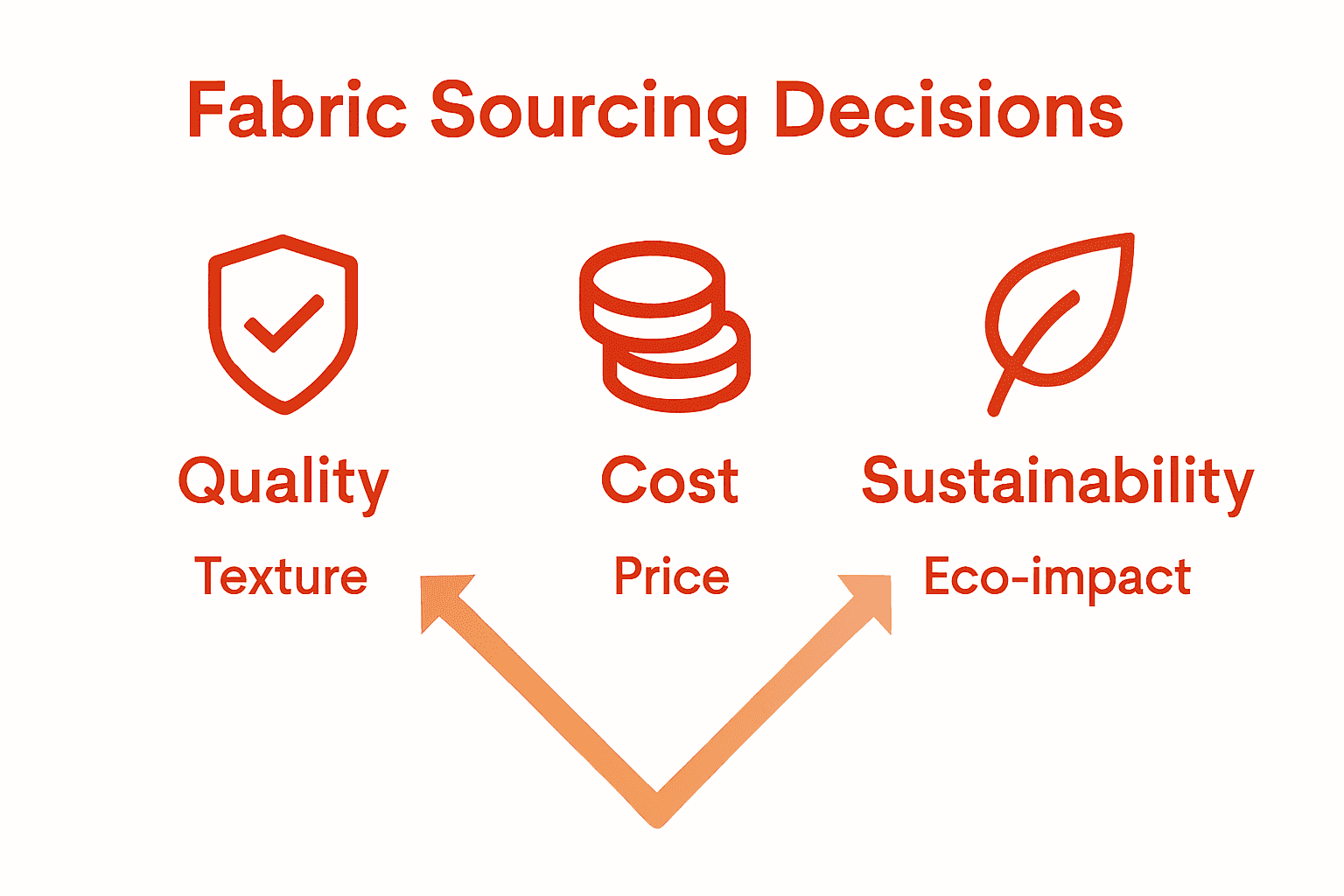
Fabric sourcing demands a delicate balance between three critical dimensions: quality, cost, and sustainability. These interconnected factors require creators to develop a nuanced approach that goes beyond simple material selection.
According to enhesa, evaluating fabric sourcing involves comprehensive considerations that extend far beyond surface-level assessments. Creators must carefully examine:
Fashion emphasizes that truly responsible textile sourcing requires a holistic lifecycle analysis. This means examining not just the immediate material properties, but the entire environmental and social ecosystem surrounding fabric production.
Practical evaluation involves developing a comprehensive scoring system that weights these factors appropriately. Creators must consider trade-offs between aesthetic requirements, budget constraints, and ecological responsibilities.
 For designers seeking deeper insights into navigating these complex decisions, our guide to sustainable fabrics offers practical strategies for making informed, responsible choices that align with both creative and ethical standards.
Supplier relationships form the backbone of successful fabric sourcing, representing far more than simple transactional interactions. These complex partnerships require strategic communication, mutual understanding, and proactive management to navigate the intricate landscape of textile procurement.
According to fibre2fashion, building strong supplier relationships demands careful attention to several critical factors:
Textileschool emphasizes the importance of proactive supplier management through regular audits and transparent practices. Potential pitfalls often emerge from miscommunication, unrealistic expectations, or insufficient due diligence in supplier selection.
Successful creators understand that supplier relationships are dynamic and require ongoing investment. Developing a comprehensive vetting process, maintaining open communication channels, and being prepared to adapt to changing market conditions are essential strategies for mitigating risks. For those seeking more strategic insights into navigating supplier negotiations, our guide on negotiating wholesale fabric provides practical techniques for building robust, mutually beneficial partnerships.
Navigating the complex world of fabric sourcing can feel overwhelming when you need to balance quality, cost, sustainability, and supplier relationships. This guide highlights the challenges many creators face such as evaluating materials thoughtfully and selecting reliable partners that align with their creative and ethical goals. If you are searching for high-quality fabrics like satin, lace, or velvet but want to avoid pitfalls from unclear supplier communication or limited options, there is a smarter way to shop.
Discover an easier path at Fabric-Fabric. Our online store offers a wide variety of carefully sourced textiles with detailed descriptions to help you make informed decisions. Whether you are working on apparel, home decor, or craft projects, tap into our extensive collection with transparent pricing and the convenience of a user-friendly platform. Don’t wait to elevate your sourcing process—explore how to select fabric suppliers and learn practical tips for sourcing bulk fabric all in one place. Take control of your textile choices today by visiting Fabric-Fabric and turn your creative visions into reality with confidence.
Fabric sourcing is the process of identifying, selecting, and procuring textile materials for creative and commercial purposes, linking raw material availability to final product design.
When assessing fabric quality, consider durability, texture, performance characteristics, and how it aligns with the intended use of the material.
Sustainability in fabric sourcing involves evaluating the environmental impact, labor practices, and lifecycle of the materials, ensuring responsible choices that consider both ecological and social implications.
The fabric sourcing process typically includes raw material selection, supplier evaluation, contract negotiation, and quality control to ensure materials meet project specifications.