

 US Dollar

Step-by-Step Guide to Import/Export Fabrics for Small Businesses
Posted by BLG on 2026 Jan 16th
Posted by BLG on 2026 Jan 16th


Finding trustworthy suppliers and mastering fabric trade rules can feel overwhelming for small businesses working across the United States, Canada, and Mexico. Effective inventory management and compliance with intricate North American regulations, like the bold yarn forward rule, set the foundation for smoother importing and exporting. This guide shares practical strategies to help you stay legally compliant, build reliable supply chain partnerships, and protect your business from costly customs or quality issues.
| Key Insight | Explanation |
|---|---|
| 1. Understand Compliance Regulations | Familiarize yourself with textile import/export laws to ensure your business avoids legal issues. |
| 2. Build Reliable Partnerships | Establish trustworthy supplier and logistics relationships to strengthen your supply chain operations. |
| 3. Prepare Accurate Documentation | Create precise documentation for customs to facilitate smooth clearance and minimize delays. |
| 4. Implement Effective Inventory Controls | Use inventory management systems to avoid stockouts and optimize shipping efficiency. |
| 5. Verify Quality Upon Delivery | Consistently inspect fabric quality and verify deliveries to protect your business investment. |
Understanding sourcing and compliance requirements is crucial for small businesses importing and exporting fabrics successfully. This step will help you navigate complex textile trade regulations and ensure your business remains legally compliant.
Start by thoroughly investigating the textile import export regulations that govern international fabric trade. These regulations cover multiple critical aspects including product safety standards, material origin requirements, chemical composition rules, and documentation protocols. Focus on understanding specific rules from countries where you plan to source or sell fabrics.
Particularly for North American businesses, familiarize yourself with NAFTA textile provisions which include intricate origin criteria like the yarn forward rule. This means that for fabrics to qualify for preferential trade rates, the yarn must originate within North America. While exceptions exist for textiles not commonly produced in the region, you will need to carefully document your supply chain and processing steps.
Research national and international standards related to textile imports, paying special attention to labeling requirements, safety certifications, and customs classification codes. Develop a comprehensive checklist of documentation you will need for each fabric type and trading partner. Consider consulting with a trade compliance specialist who can provide personalized guidance for your specific business model.
Here’s a summary of key import/export fabric compliance areas and their business impact:
| Compliance Area | What It Involves | Business Impact |
|---|---|---|
| Product Safety Standards | Ensuring fabric meets safety codes | Reduces liability risk |
| Material Origin Rules | Tracking yarn and fabric sources | Enables lower tariffs |
| Chemical Composition | Disclosing chemical contents | Prevents border rejections |
| Documentation Protocols | Accurate and complete paperwork | Speeds up customs clearance |
| Labeling Requirements | Proper product labeling | Avoids product recalls |
Pro tip: Create a digital compliance tracking system that archives all your import export documentation, making future audits and regulatory checks significantly smoother and more efficient.
Building strong, trustworthy supplier and logistics partnerships is essential for small fabric import and export businesses to navigate complex international trade successfully. This step focuses on identifying, vetting, and developing strategic relationships that will support your supply chain operations.
Start by conducting thorough research on potential suppliers using international import export regulations as your foundational framework. Look for partners who demonstrate not just competitive pricing, but also consistent compliance with labor standards, environmental regulations, and shipping requirements. Prioritize suppliers who can provide comprehensive documentation about their manufacturing processes, material origins, and ethical practices.
When evaluating potential logistics partners, pay close attention to their track record in textile supply chain management. Request detailed information about their experience with fabric transportation, customs clearance capabilities, and understanding of international trade regulations. Consider factors like their network coverage, technological infrastructure for tracking shipments, and ability to handle potential compliance challenges.
Develop a systematic approach to supplier evaluation that includes multiple verification steps such as requesting references, conducting site visits when possible, and performing background checks. Create a scoring system that weighs factors like reliability, compliance history, communication quality, and alignment with your business values. Remember that building these partnerships is an ongoing process that requires continuous communication and periodic reassessment.
Pro tip: Develop a digital supplier management dashboard that tracks performance metrics, compliance documentation, and communication history to streamline your partnership management and quickly identify potential risks.
Compare supplier selection and logistics partner evaluation focus:
| Criteria | Suppliers | Logistics Partners |
|---|---|---|
| Key Focus | Quality and compliance | Shipping efficiency |
| Evaluation Method | Site visits and background checks | Service history and references |
| Documentation Need | Proof of origin, certifications | Customs and shipment paperwork |
| Ongoing Monitoring | Performance tracking dashboard | Delivery speed metrics |
Preparing precise and comprehensive documentation is critical for successfully navigating customs processes when importing or exporting fabrics. Your goal in this step is to create a meticulous documentation package that ensures smooth customs clearance and minimizes potential delays or financial penalties.

Begin by understanding the customs import procedures for textiles which require specific documentation for international fabric trade. You will need to compile a comprehensive set of documents including commercial invoices, bills of lading, import declarations, and any necessary permits or certificates. Each document must be completed with extreme accuracy and attention to detail.
Dive deep into the specific requirements of textile export compliance by carefully classifying your fabrics under the correct Harmonized System codes. This classification is crucial for determining applicable tariffs and ensuring legal compliance. Create a detailed checklist that includes certificates of origin, commercial invoices, packing lists, and shipping manifests. Double check that all measurements, material descriptions, and financial values are precisely documented and match across all paperwork.
Consider working with a customs broker or international trade specialist who can review your documentation before submission. They can help identify potential issues that might cause delays or trigger additional customs scrutiny. Maintain digital and physical copies of all documentation in an organized system that allows for quick retrieval and reference.
Pro tip: Invest in specialized documentation management software that automatically flags potential errors and helps maintain consistent formatting across all your international shipping documents.
Establishing robust shipping and inventory management systems is crucial for small fabric import and export businesses to maintain operational efficiency and minimize financial risks. This step focuses on developing comprehensive strategies that ensure smooth logistics and precise stock tracking.
Start by mastering the fabric import shipping process which involves coordinating complex logistics and understanding regulatory timelines. Develop a systematic approach to tracking shipments that includes real time monitoring, detailed documentation, and proactive communication with logistics partners. Integrate inventory management software that can synchronize your stock levels with incoming shipments, helping you predict and prevent potential stockouts or overstock situations.
Prioritize ISF compliance and export controls to ensure your shipping processes meet US Customs and Border Protection requirements. This means filing accurate Importer Security Filings well in advance, maintaining precise declarations, and keeping comprehensive records of all international fabric movements. Consider implementing a digital tracking system that provides automated alerts for upcoming shipments, regulatory deadlines, and potential compliance issues.
Create a flexible inventory management strategy that accounts for seasonal variations, market demand fluctuations, and potential supply chain disruptions. Develop contingency plans that include alternative sourcing options, buffer stock levels, and rapid response protocols for unexpected shipping delays. Regularly audit your inventory and shipping processes to identify opportunities for optimization and cost reduction.
Pro tip: Invest in cloud based inventory management software that offers real time tracking, automated reorder points, and comprehensive reporting to streamline your shipping and stock control processes.
The final crucial step in your fabric import process involves meticulously verifying fabric quality and ensuring complete delivery. This stage protects your business investment and maintains your reputation with suppliers and customers.
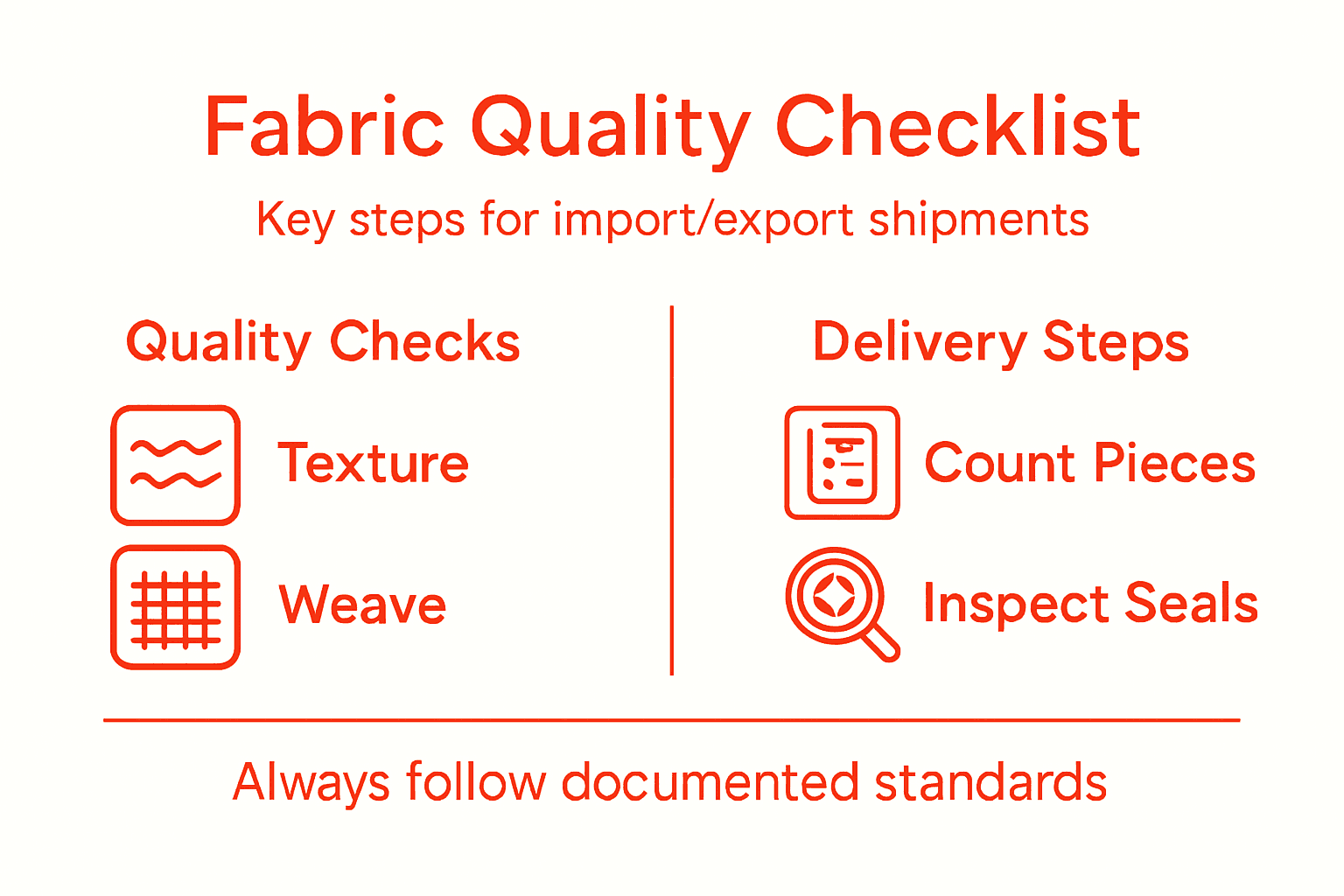
Understand the textile quality standards that govern international fabric imports, particularly the strict requirements for the North American market. These standards include comprehensive assessments of flammability, labeling accuracy, material composition, and overall fabric performance. Develop a systematic inspection protocol that includes visual examination, physical testing, and dimensional verification of each fabric shipment.
When the shipment arrives, conduct a thorough quality identification process that goes beyond surface level inspection. Check fabric weight, weave consistency, color fastness, and potential manufacturing defects. Use both visual and tactile assessments to ensure the fabric meets your specified quality benchmarks. Compare the received materials against original samples and purchase specifications, documenting any discrepancies immediately.
Create a comprehensive delivery completion checklist that covers every aspect of the shipment verification process. This should include confirming exact quantity received, inspecting packaging integrity, verifying accompanying documentation, and cross referencing shipping manifests. Photograph and document your inspection process to protect yourself legally and maintain clear communication channels with your suppliers.
Pro tip: Develop a standardized quality assessment template with precise measurement criteria and scoring mechanisms to create a consistent and objective fabric evaluation process.
Navigating the complexities of fabric import and export involves mastering compliance documentation, reliable supplier relationships, and thorough quality verification. If you are striving to meet strict international standards while maintaining efficient inventory control and shipping processes, your sourcing choices matter more than ever. At fabric-fabric.com, we understand that reliable access to high-quality textiles simplifies many challenges highlighted in your step-by-step fabric trade guide.

Discover a wide selection of fabrics including seersucker, satin, lace, velvet, and sequins that come with clear descriptions and usage suggestions. Whether you are sourcing for apparel, home decor, quilting, or crafts, our user-friendly platform supports your compliance needs by providing detailed product information and transparent pricing. Take advantage of ongoing discounts and free shipping options to optimize your supply chain. Explore the simplicity of securing your next shipment on fabric-fabric.com and enhance your business operations today.
To assess sourcing and compliance requirements, thoroughly investigate textile import and export regulations that apply to your business. Focus on safety standards, material origin rules, and necessary documentation for both the countries you source from and those you sell to.
When selecting suppliers, prioritize those with competitive pricing and consistent compliance with labor and environmental regulations. Develop a systematic evaluation approach that includes site visits and background checks to ensure reliability and ethical practices.
You need to prepare a comprehensive set of documents, including commercial invoices, bills of lading, and import declarations. Ensure that all documentation is accurate and complete, as this will help minimize delays during customs clearance.
To manage shipping and inventory effectively, integrate inventory management software that syncs your stock levels with incoming shipments. Additionally, establish a systematic tracking approach for shipments to enhance logistics efficiency and response times.
Upon receiving fabric shipments, verify compliance with textile quality standards, including assessments of flammability, material composition, and overall performance. Develop a detailed inspection protocol to ensure all received materials match your specifications and quality benchmarks.