

 US Dollar

Woven Fabric Types: What Sewists and Makers Need to Know
Posted by BLG on 2026 Jul 26th
Posted by BLG on 2026 Jul 26th

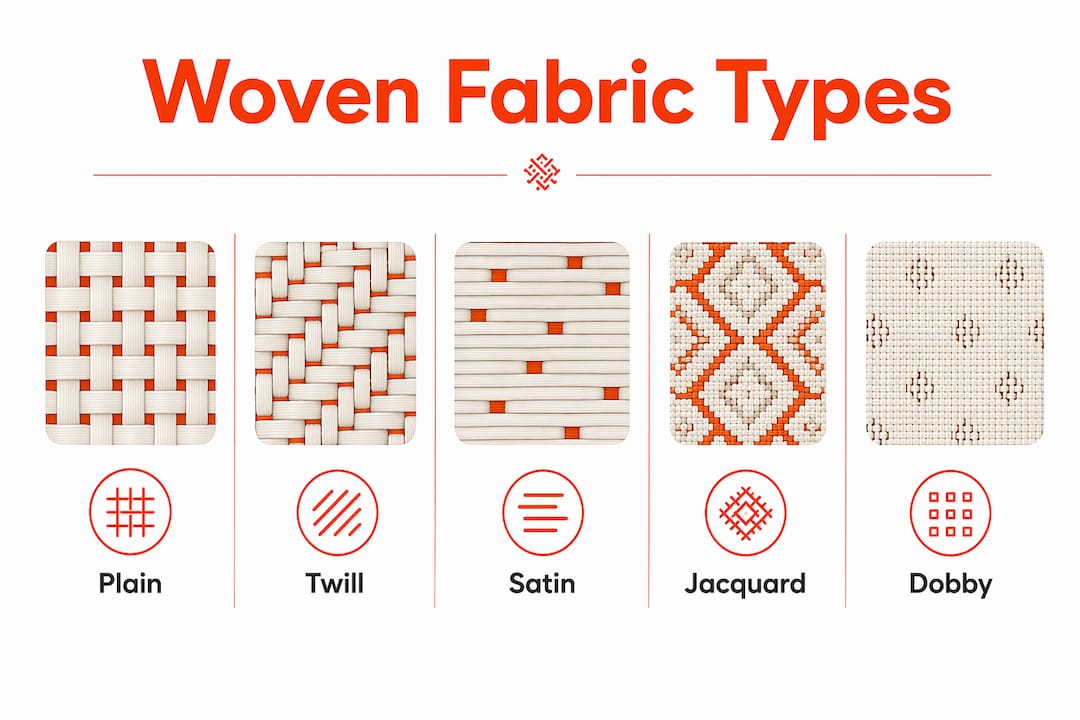
A woven fabric is any textile made by interlacing two perpendicular yarn systems, the warp (lengthwise) and the weft (crosswise), and the family it belongs to predicts almost everything about how it will behave on your cutting table and in the finished piece. The six families you’ll encounter most are:
Knowing the family before you buy saves you from choosing a gorgeous satin for a tote bag that will snag in a week, or a stiff canvas for a bias-cut dress that refuses to move.
Every woven textile starts with two yarn systems locked at right angles. The warp runs lengthwise on the loom; the weft (or filling) crosses it, one pick at a time. How often those yarns cross each other is called the interlacement ratio, written as a fraction like 1/1, 2/1, or 5/1.
That ratio is the single biggest lever on fabric behavior. A 1/1 plain weave locks every yarn at every crossing, producing maximum stability and abrasion resistance. A 5/1 satin skips four warp threads before binding, creating long floats that catch light and slide against each other — which is why satin drapes beautifully but snags on a rough fingernail. Britannica’s textile guide confirms that float length directly maps to drape, luster, and abrasion resistance across all three basic structures.
Two other specs matter when you’re reading a label or asking a supplier: EPI (ends per inch, the warp density) and PPI (picks per inch, the weft density). Higher counts generally mean a finer, smoother hand. Yarn twist and fiber type layer on top of that — a tightly twisted worsted yarn in a plain weave feels crisper than a loosely spun cotton in the same structure.
“Woven fabric performance depends on a mix of weave, fiber type, yarn twist, and finishing; no single factor alone determines end-use suitability.” — Nicola A. Redmore, Chapter 8: Woven Apparel Fabrics
One property beginners consistently miss: bias stretch. Woven cloth is stable on the straight grain but stretches diagonally at 45°. Couture designers exploit that for fluid silhouettes; beginners get distorted necklines. Stay-stitch curved edges immediately after cutting.
Pro Tip: Request EPI/PPI and GSM (grams per square meter) from your supplier before ordering yardage. Those two numbers, combined with fiber content, tell you more about real-world performance than any marketing description.
**
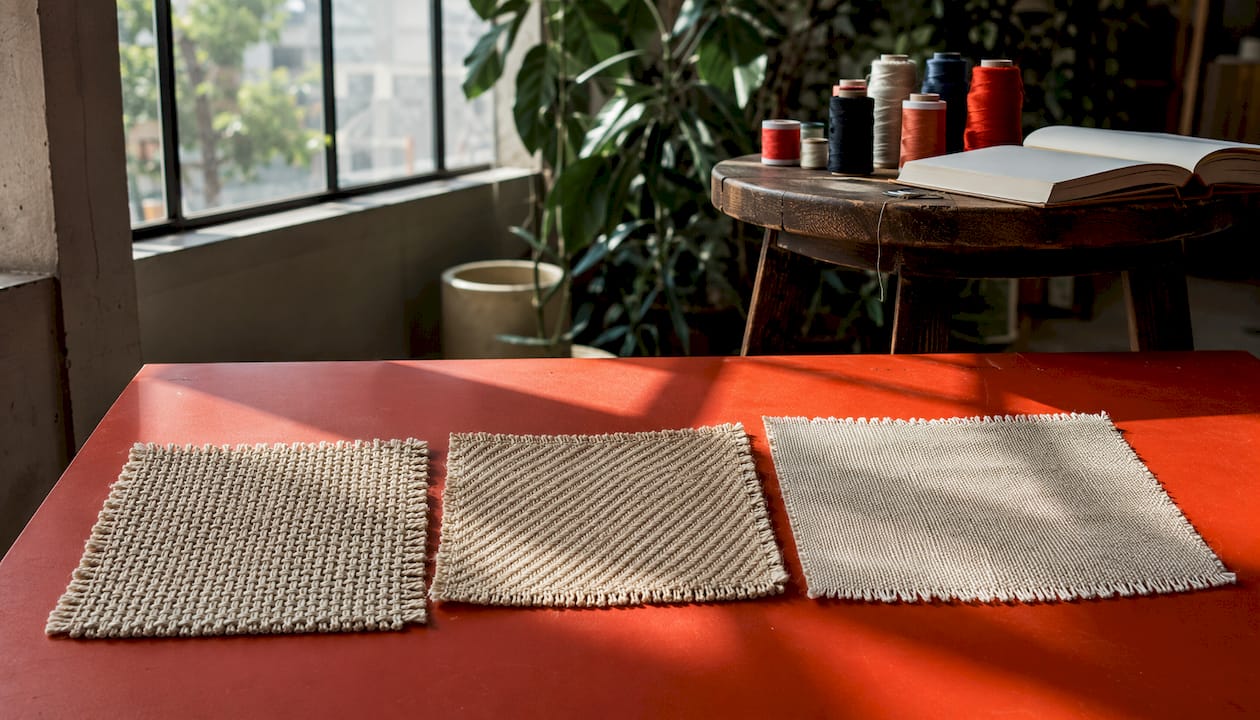
Plain, twill, and satin are the three foundational structures. Dobby, jacquard, pile, and leno build on them.
| Weave Family | Example Fabrics | Best Project Types |
|---|---|---|
| Plain | Poplin, muslin, chiffon, canvas | Shirts, quilts, tote bags, linings |
| Twill | Denim, gabardine, tweed | Jeans, trousers, jackets, workwear |
| Satin | Charmeuse, duchess satin | Eveningwear, linings, decorative pillows |
| Dobby | Waffle cloth, piqué | Polos, towels, textured home decor |
| Jacquard | Brocade, damask, tapestry | Upholstery, formal wear, drapery |
| Pile | Velvet, corduroy, terry | Upholstery, robes, outerwear |
| Leno/Crepe | Georgette, gauze, crepe | Scarves, blouses, sheer curtains |
Many commercial fabric names describe specific goods that differ by yarn weight, fiber, and finishing rather than a unique weave structure. Chiffon, for example, is a plain-weave sheer — the name tells you the weight and hand, not a different interlacement. Keeping that distinction clear prevents expensive selection mistakes.
| Fabric Name | Typical Fiber | Weight/Hand | Fray Tendency | Best Uses |
|---|---|---|---|---|
| Denim | Cotton | Heavy, stiff | Low–moderate | Jeans, jackets, bags |
| Poplin | Cotton, poly-cotton | Light–medium, crisp | Moderate | Shirts, dresses, linings |
| Chiffon | Silk, polyester | Ultralight, sheer | High | Blouses, overlays, scarves |
| Linen | Flax | Medium–heavy, textured | High | Trousers, blazers, table linens |
| Canvas | Cotton, linen | Heavy, stiff | Low | Bags, upholstery, outdoor gear |
| Brocade | Silk, poly, metallic | Medium–heavy, stiff | Moderate–high | Formal wear, upholstery, drapery |
| Velvet | Silk, cotton, poly | Medium–heavy, soft | Low (pile) | Upholstery, eveningwear, cushions |
| Muslin | Cotton | Light–medium, plain | Moderate | Toiles, backdrops, craft |
| Gabardine | Wool, poly | Medium, smooth | Low | Trousers, suits, coats |
| Charmeuse | Silk, polyester | Light, fluid | High | Blouses, lingerie, linings |
Sewing notes by fabric group:
For more woven fabric examples suited to craft projects, Fabric-fabric’s blog covers practical project pairings in detail.
The right fabric starts with the project’s functional demands, not the color. Work through these questions before you order:
For apparel:
For crafts:
For upholstery:
Woven fabric performance depends on weave, fiber, yarn twist, and finishing together. No single spec tells the whole story, which is why swatches matter.
Pro Tip: When a swatch arrives, test it in the light you’ll actually use it in (natural vs. artificial), check drape by holding a corner and letting it fall, and run a fingernail across the surface to check snag resistance. Wet a corner and press it to check for color bleed before committing to yardage. The swatch selection process at Fabric-fabric walks through exactly this.
Woven edges fray because the cut severs the interlacement that holds warp and weft yarns together. Unlike knit fabrics, woven fabrics have no inherent edge stability — the moment you cut, the clock starts. Finish edges immediately after cutting, before the piece goes back on the shelf.
Edge finishing options (in order of durability):
Care by fiber family:
Quick troubleshooting:
The core difference is structural. A printed fabric applies color to the surface; a jacquard or dobby weaves the pattern into the cloth itself using controlled warp-thread selection or extra yarn systems. Woven-in designs do not fade or wear off because the design is structural, not a coating.
When is the premium worth it? For upholstery and drapery that will see years of use, a woven jacquard pattern outlasts any printed equivalent. For a garment worn a handful of times, a high-quality print is often the smarter spend.
Pro Tip: Hold a jacquard up to the light. If the pattern is truly woven, you’ll see it on both faces (even if one side is less defined). A printed fabric will show a faint ghost or be completely blank on the reverse.
| Project | Recommended Fabrics | Why |
|---|---|---|
| Dress shirts | Poplin, broadcloth, chambray | Crisp hand, good printability, easy care |
| Dresses (draped) | Charmeuse, chiffon, crepe | Fluid drape, bias-friendly |
| Jeans/trousers | Denim, gabardine, twill | Diagonal rib improves drape and crease recovery |
| Tote bags | Canvas, duck cloth | Heavy plain weave, low fray, holds shape |
| Upholstery | Jacquard, velvet, canvas | High rub count, pattern durability |
| Curtains/drapery | Linen, brocade, sheer voile | Weight and opacity options across the range |
| Quilting | Quilting cotton, muslin | Stable plain weave, consistent shrinkage |
| Craft projects | Muslin, canvas, cotton twill | Easy to cut, stable, takes dye and paint well |
When you’re genuinely unsure, order a 10×10" swatch and test drape, edge behavior, and color fastness before committing to yardage. That one step prevents most costly mistakes.
Weaving is among the oldest human technologies. Archaeological evidence places simple loom weaving in the Neolithic period, roughly 10,000–7,000 BCE, with fragments of plain-weave linen recovered from sites in the ancient Near East. The backstrap loom, still used across Central America and Southeast Asia, predates the frame loom by thousands of years.
Silk weaving in China dates to at least 3,000 BCE, and the Silk Road carried woven textiles as one of the most valuable traded commodities in the ancient world. In pre-Columbian Mesoamerica and the Andes, weavers developed complex supplementary-weft techniques that rivaled anything produced in the Old World. Andean textiles, in particular, used fiber, color, and pattern as a recording system, encoding social and ceremonial information into cloth.
The Jacquard loom, introduced in France in 1804 by Joseph Marie Jacquard, mechanized the control of individual warp threads using punched cards — a concept that directly influenced early computing. That single invention made complex figured weaves commercially viable and democratized brocade and damask production. The Industrial Revolution then shifted most plain and twill weaving to power looms, dropping fabric costs dramatically and making woven cloth accessible to mass markets for the first time.
Weave family is the single most predictive variable when selecting any woven textile: it determines drape, luster, abrasion resistance, and how the fabric behaves under a needle.
| Point | Details |
|---|---|
| Match weave to project demands | Plain weave for stability and bags; twill for drape and trousers; satin for eveningwear and linings. |
| Float length drives the drape/durability trade-off | Longer floats mean more luster and drape but lower abrasion resistance and snag risk. |
| Stabilize cut edges immediately | Woven fabrics fray from the moment of cutting; serge, French seam, or bind before setting the piece aside. |
| Always test with a swatch | Check drape, color fastness, and edge behavior on a sample before ordering full yardage. |
| Fabric-fabric for samples and yardage | Browse home decor and upholstery fabrics at Fabric-fabric to order swatches and confirm specs before committing. |
Most fabric guides spend their energy on definitions and skip the part that actually costs people money: the gap between what a fabric looks like on screen and what it does in your hands.
Satin is the classic example. Every beginner wants it because it photographs beautifully. What they don’t expect is that a 5-end satin in polyester will snag on a rough thumbnail, slip under the presser foot, and fray aggressively at every cut edge. The weave structure is telling you all of that before you buy — if you know how to read it. Long floats equal low abrasion resistance. Low interlacement equals edge instability. That’s not a flaw; it’s physics. The fabric is doing exactly what its structure promises.
The same logic applies to the plain-weave wrinkle problem. Canvas and poplin are often sold as “durable” without the caveat that high interlacement limits yarn recovery, so they crease harder than a twill at the same weight. For a tailored jacket, that matters. For a tote bag, it doesn’t.
The practical takeaway: learn to read the weave before you fall in love with the color. A swatch in your hands for 60 seconds tells you more than any product description.
Fabric-fabric stocks a broad range of woven textiles across apparel, craft, and home decor categories, with clear fiber content, weight, and usage notes on every listing.
For upholstery and drapery projects, the backdrop fabric collection covers heavier-weight wovens suited to high-use applications, while the home decor fabric range includes jacquards, linens, and canvas options by the yard. Fabric-fabric ships to customers across North America. Before ordering full yardage, request a swatch to verify drape, hand, and color under your actual lighting conditions. Customer support can advise on GSM, fiber content, and edge finishing recommendations for specific projects.