

 Canadian Dollars

What Is Cotton Woven Fabric? Types, Uses, and Benefits
Posted by BLG on 2026 Jun 10th
Posted by BLG on 2026 Jun 10th

TL;DR:
- Cotton woven fabric is created by multiple yarn systems crossing at right angles, providing stability and minimal stretch. Its weave pattern and GSM weight determine its appearance, feel, and suitable applications, from shirts to upholstery. Proper grainline alignment and pre-washing are essential steps for a successful sewing project with woven cotton.
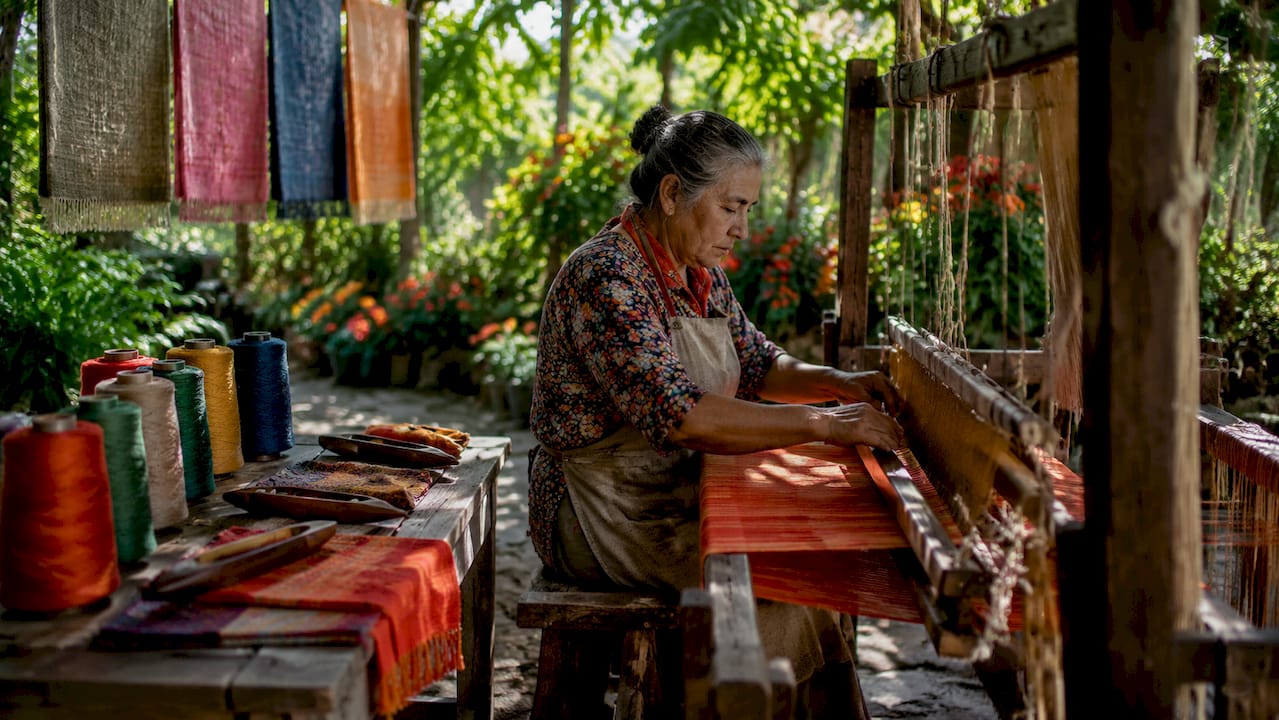
Cotton woven fabric is a textile formed by interlacing two perpendicular sets of cotton yarns, called the warp and the weft, on a loom to create a stable, breathable, and structured material. This construction method produces fabric with minimal stretch and dimensional stability, setting it apart from knit cotton in both feel and function. Whether you’re sewing a tailored shirt, decorating a room, or starting a quilting project, understanding cotton woven fabric helps you choose the right material every time. Key concepts like GSM (grams per square meter), weave patterns such as plain, twill, and satin, and fiber quality all determine how the finished fabric performs.
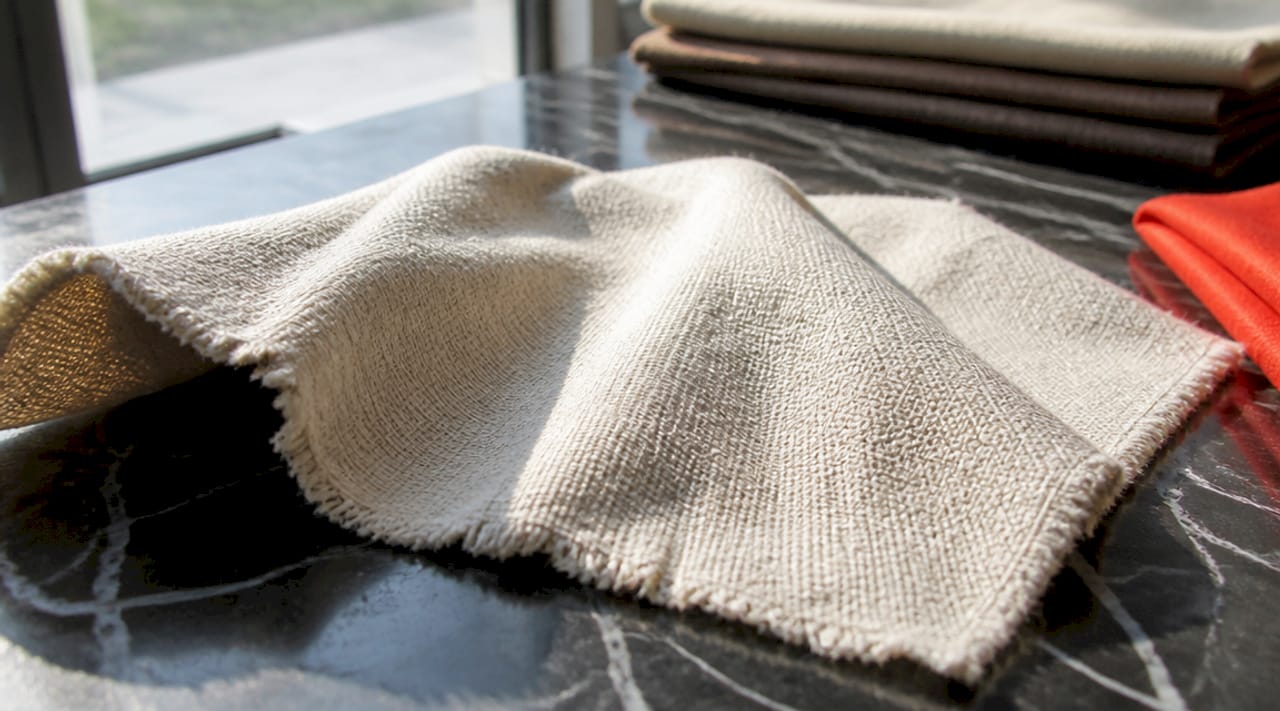
Cotton woven fabric is built on a single repeating principle: two yarn systems cross each other at right angles. The warp yarns run lengthwise along the loom, held under tension, while the weft yarns pass horizontally over and under them in a sequence that locks the structure together. This interlacing is what gives woven cotton its characteristic firmness and low stretch.
The weaving process follows three core steps:
Weaving technology has evolved from handlooms to advanced air-jet and Jacquard machines, but the fundamental warp-weft interlacing principle has not changed. That consistency is why woven cotton has remained a production standard for centuries. Modern air-jet looms can produce fabric at speeds that handlooms could never match, yet the resulting textile structure is mechanically identical.
The difference between woven and knit fabric comes down to yarn behavior. Knit fabric uses a single yarn looped continuously, which creates stretch in multiple directions. Woven fabric uses two distinct yarn systems locked at right angles, which creates stability but very little give. For structured garments like dress shirts, trousers, and home furnishings, that stability is exactly what you need.
Pro Tip: Before cutting any woven cotton, pull gently on both the lengthwise and crosswise grain. If the fabric barely moves, it’s woven. If it stretches noticeably, it’s a knit. Knowing this before you cut saves a ruined project.
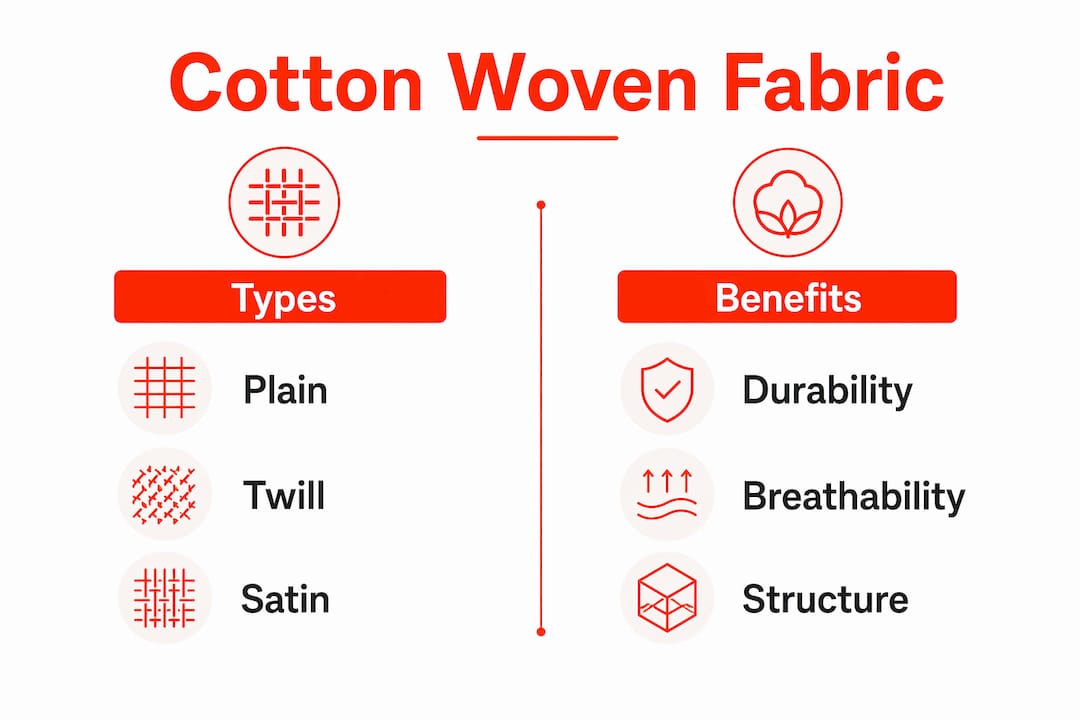
The weave pattern determines almost everything about how a cotton fabric looks, feels, and wears. Three foundational weave structures cover the vast majority of cotton fabric types you’ll encounter: plain, twill, and satin.
Plain weave is the simplest structure, with each weft yarn passing over one warp yarn and under the next in a strict alternating sequence. This produces a crisp, uniform surface with good breathability. Poplin and muslin are both plain-weave cottons. Poplin is tightly woven for a smooth shirting fabric, while muslin is loosely woven and used for pattern testing, backdrops, and lightweight garments.
Twill weave creates a diagonal rib pattern by passing the weft over two or more warp yarns before going under one. This structure is denser and more durable than plain weave. Denim, gabardine, and chino are all twill-weave cottons. Twill’s diagonal structure also hides stains and wear, which explains why denim became the default fabric for workwear and casual clothing worldwide.
Satin weave (called sateen in cotton) floats the weft yarn over four or more warp yarns before interlacing, creating a smooth, lustrous surface. Cotton sateen is used in bedding and linings where a soft, slightly shiny finish is desirable.
| Weave type | Example fabrics | Key characteristic | Best uses |
|---|---|---|---|
| Plain | Poplin, muslin, voile | Crisp, breathable, uniform | Shirts, backdrops, quilting |
| Twill | Denim, gabardine, chino | Diagonal rib, durable | Workwear, trousers, jackets |
| Satin/Sateen | Cotton sateen, percale | Smooth, lustrous surface | Bedding, linings, drapery |
For a deeper look at how twill weave affects fabric performance, the Fabric-fabric guide on cotton twill properties covers the topic in practical detail. Understanding which weave suits your project prevents costly mistakes at the cutting table.
Fabric weight, measured in grams per square meter (GSM), is the most reliable indicator of how a cotton woven fabric will drape, breathe, and hold up over time. Cotton woven fabrics fall into three weight classes: lightweight (under 200 GSM), medium weight (200 to 400 GSM), and heavyweight (above 400 GSM).
| Weight class | GSM range | Example fabrics | Best applications |
|---|---|---|---|
| Lightweight | Under 200 GSM | Voile, muslin, lawn | Summer garments, linings, quilting |
| Medium weight | 200 to 400 GSM | Sheeting, poplin, chambray | Shirts, dresses, home décor |
| Heavyweight | Above 400 GSM | Denim, canvas, duck cloth | Workwear, upholstery, bags |
Lightweight cottons like voile and lawn drape beautifully and breathe well in warm weather, but they show every construction flaw. Medium-weight fabrics like poplin and chambray are the workhorses of apparel sewing. They hold their shape, press cleanly, and tolerate repeated washing. Heavyweight fabrics like canvas and denim provide structure and abrasion resistance, making them the right choice for bags, upholstery, and outerwear.
Using an inappropriate weight is one of the most common project mistakes. Choosing heavyweight canvas for a flowy summer dress produces a garment that stands up on its own rather than draping against the body. Choosing voile for a structured tote bag results in a limp, unusable product. Weight selection is not a secondary consideration. It is a primary one.
Pro Tip: When shopping for cotton woven fabric online, always check the GSM listed in the product description. If GSM is not listed, ask before ordering. A fabric described only as “medium weight” without a number gives you no reliable information.
For quilters specifically, the Fabric-fabric resource on lightweight cotton fabric types explains how GSM ranges affect piecing, pressing, and finished quilt drape.
Woven cotton offers dimensional stability and minimal stretch, making it the right choice for structured garments and home textiles. Knit cotton stretches in multiple directions because its looped yarn structure allows movement. That difference in construction produces fabrics with fundamentally different performance profiles.
Here is how the two compare across the characteristics that matter most for sewing and fabric selection:
The benefits of cotton woven fabric are most apparent in structured applications. Dress shirts, tailored trousers, quilts, curtains, and upholstery all rely on the stability that woven construction provides. For structured apparel like shirts and trousers, woven cotton is the industry standard precisely because it holds its shape through wear and washing.
Fiber quality adds another layer of performance. Extra-Long Staple cottons like Pima and Egyptian produce woven fabrics that resist pilling, maintain shape longer, and feel noticeably softer against the skin. These fibers are preferred for luxury shirting and premium bedding. Standard Upland cotton works well for everyday apparel and craft projects where the premium price of ELS fiber is not justified.
The practical rule is straightforward. Choose woven cotton when your project needs structure, clean seams, and dimensional stability. Choose knit cotton when the design requires stretch or body-conforming fit. The Fabric-fabric article on the difference between knit and woven walks through specific garment scenarios to help you decide.
Cotton woven fabric is the most structurally stable cotton textile available, and selecting the right weave pattern and GSM weight determines whether your project succeeds or fails.
| Point | Details |
|---|---|
| Construction defines performance | Warp and weft interlacing creates stability and minimal stretch, unlike knit cotton. |
| Weave pattern shapes function | Plain, twill, and satin weaves each suit different applications from shirting to workwear to bedding. |
| GSM weight drives project success | Matching fabric weight to project type prevents poor drape and structural failure. |
| Fiber origin affects quality | ELS cottons like Pima and Egyptian produce premium woven fabrics that resist pilling and maintain shape. |
| Fraying requires immediate action | Cut edges of woven cotton fray and need serging or binding before sewing begins. |
Most beginners focus on choosing the right weave or the right weight, and those choices matter. But the single most common mistake I see with woven cotton is ignoring the grainline. Correct grainline orientation is what separates a garment that hangs straight from one that twists after the first wash.
Woven cotton has almost no stretch on the straight grain, which means any misalignment gets locked into the fabric permanently. A shirt cut even slightly off-grain will pull to one side. Trousers cut off-grain will twist at the knee after washing. These are not sewing errors you can press out. They are structural problems baked in at the cutting stage.
The second thing I’d push back on is the idea that fraying is just a minor inconvenience. Woven cotton edges unravel fast, especially lighter weaves like muslin and voile. I’ve seen projects fall apart before they reached the machine because someone cut all their pieces and left them in a pile overnight. Serge or bind your edges immediately after cutting. Not eventually. Immediately.
The last thing worth saying is that handling a fabric sample before buying is not optional for serious projects. The difference between a 120 GSM voile and a 180 GSM lawn is not obvious from a product description, but it is immediately obvious when you hold both. Fabric-fabric carries a range of cotton cloth types worth browsing if you want to compare options before committing to yardage.
— kev
Ready to put this knowledge to work on your next project? Fabric-fabric carries an extensive selection of cotton woven fabrics across all weight classes and weave patterns, from lightweight voile and muslin to medium-weight poplin and chambray to heavyweight canvas and denim.
For home décor projects, the home decor fabric collection includes cotton woven options sold by the yard, with clear descriptions covering weight, weave, and recommended uses. If you need fabric for backdrops, photography sets, or event staging, the backdrop fabric selection includes durable woven cotton options that photograph cleanly and hold up to repeated use. Browse by project type or fabric weight to find exactly what your project requires.
Woven cotton is made by interlacing two yarn systems at right angles, producing a stable fabric with minimal stretch. Knit cotton uses a single looped yarn that stretches in one or more directions, making it better suited for fitted or stretch garments.
Plain weave is the most common structure in cotton woven fabric, used in poplin, muslin, and voile. It produces a uniform, breathable surface suited to shirts, quilting, and lightweight home textiles.
Choose fabrics under 200 GSM for summer garments and quilting, 200 to 400 GSM for shirts and home décor, and above 400 GSM for bags, upholstery, and workwear. Using the wrong weight class produces poor drape or structural failure regardless of weave quality.
Cotton woven fabric does shrink, particularly on the first wash, because the warp and weft yarns relax when exposed to heat and moisture. Pre-washing your fabric before cutting is standard practice to prevent finished garments from shrinking out of size.
Egyptian and Pima cottons are Extra-Long Staple varieties that produce longer, finer fibers than standard Upland cotton. Woven fabrics made from these fibers resist pilling and maintain shape longer, which is why they are used in premium shirting and luxury bedding.