

 US Dollar

Specialty Fabrics Explained: Types, Examples, and Uses
Posted by BLG on 2026 Aug 12th
Posted by BLG on 2026 Aug 12th

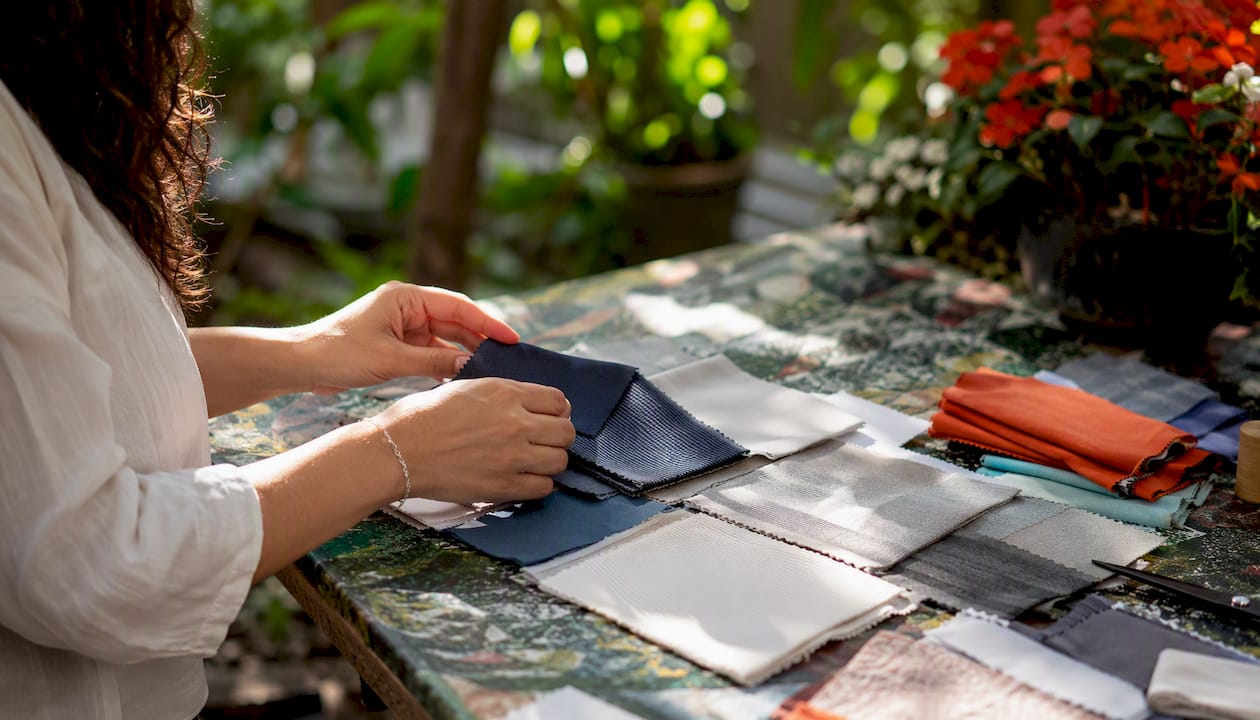
Specialty fabrics are engineered textiles chosen for a specific technical or aesthetic function, not just appearance. PVC-coated polyester holds up on marine covers and outdoor furniture. Aramid resists heat and flame in protective gear. Velvet and silk define luxury interiors. Here is a quick map of the most useful examples:
Each category below expands on these with selection criteria, manufacturing notes, and care guidance.
Specialty fabrics are defined by engineered intent: the right fiber, structure, and finish combination determines whether a textile performs or fails in its target application.
| Point | Details |
|---|---|
| Engineered intent defines specialty | Specialty fabrics are chosen for measurable performance properties, not appearance alone. |
| Five main categories | Performance/outdoor, decorative/luxury, industrial/technical, nonwovens, and sustainable/recycled cover the full range. |
| Always request TDS and test reports | Batch-to-batch consistency is a known failure point; verify specs before bulk ordering. |
| Match fiber and finish to end use | Solution-dyed for UV resistance, aramid for flame/cut, Gore-Tex for breathability, PVC coating for waterproofing. |
| Fabric-fabric for by-the-yard ordering | Browse home decor and specialty fabrics with clear specs, and order swatches to verify before committing. |
Specialty fabrics are defined by engineered intent: they are selected because they can withstand or perform under specific environmental or operational conditions, not primarily because they look good. A commodity cotton shirting is chosen for hand feel and drape. A specialty fabric is chosen because it passes a hydrostatic head test, holds a UV Grade 5 on the AATCC 16 fade scale, or meets a flame-retardancy standard like NFPA 701.
The practical formula is: fiber + yarn + structure + finish = specialty fabric. Change one variable and you can move a textile from commodity to engineered. A plain polyester woven becomes a specialty product the moment it receives a PVC coating and a UV-stabilized topcoat. Industry experts describe this “engineered intent” as the defining feature: the fabric is designed to solve a specific problem.
Certifications matter here. OEKO-TEX Standard 100 covers harmful-substance limits. GOTS applies to organic fiber chains. AATCC test methods cover colorfastness, abrasion, and moisture management. When you buy specialty textiles for technical applications, always request the Technical Data Sheet (TDS) and batch test reports. Batch-to-batch consistency is a known failure point: a fabric that passes spec in one shipment can drift in the next if the supplier’s process control is loose.
These fabrics handle UV exposure, moisture, and mechanical stress. Performance fabrics in this category include:
These are specialty textiles chosen for tactile and visual properties that commodity weaves cannot replicate. The craftsmanship behind luxury textiles is what separates them from mass-market alternatives:
Specialty fibers and textiles in this group include knitted and braided structures, nonwovens, ceramic specialty textiles, and glass-fiber reinforcements used where electrical resistivity, temperature tolerance, or tensile strength is required:
Nonwovens serve both disposable and durable end markets, from single-use medical gowns to long-life geosynthetics. Automotive textiles are among the most valuable industrial markets, covering airbags, trunk liners, and acoustic insulation:
Understanding what a fiber or finish actually does helps you match materials to requirements before you order a single yard.
| Property needed | Typical fiber or finish | Why it matters |
|---|---|---|
| UV resistance | Solution-dyed polyester or acrylic | Pigment is locked in the fiber, not on the surface, so it cannot wash or bleach out |
| Waterproofing | PVC coating or polyurethane laminate | Creates a continuous barrier layer; hydrostatic head rating tells you how much water pressure it resists |
| Breathability | Gore-Tex ePTFE membrane | Microporous structure blocks liquid water while allowing vapor to pass through |
| Flame retardancy | Inherently FR aramid or FR-treated polyester | Aramid does not melt or drip; FR treatments can wash out over time and need re-testing |
| Abrasion resistance | High-tenacity nylon or UHMWPE | Tightly spun, high-denier yarns resist surface wear in upholstery and workwear |
| Antimicrobial | Silver-ion or zinc-based finish | Inhibits bacterial growth on medical textiles and activewear; antimicrobial fabrics require third-party testing to verify efficacy |
| Cut resistance | UHMWPE or para-aramid | Extremely high tensile strength resists blade penetration in PPE gloves and panels |
Solution-dyed vs. piece-dyed: Solution-dyed fibers have pigment added before extrusion, giving them superior colorfastness. Piece-dyed fabrics are colored after weaving and can fade faster under UV or repeated washing. For outdoor applications, solution-dyed is the standard choice. Performance fabrics that carry AATCC 16 ratings of Grade 4 or 5 are considered suitable for prolonged outdoor exposure.
Some advanced finishes, including certain superhydrophobic and antimicrobial treatments, may involve nanomaterials. Research on performance textiles notes that these finishes can cross categories from military to medical to sports, and that careful safety testing is required before use in consumer or medical products.
Specialty textile manufacturing uses processes that fall well outside standard apparel mills, which is why lead times and minimum order quantities tend to be higher:
Processes like meltblown and composite layup require capital-intensive equipment and tight process control. Expect longer lead times, higher minimums, and mandatory sample approval cycles when sourcing from these categories.
Start by writing down your functional priorities before you contact any supplier. Vague briefs produce wrong samples.
Selection checklist:
Supplier questions worth asking:
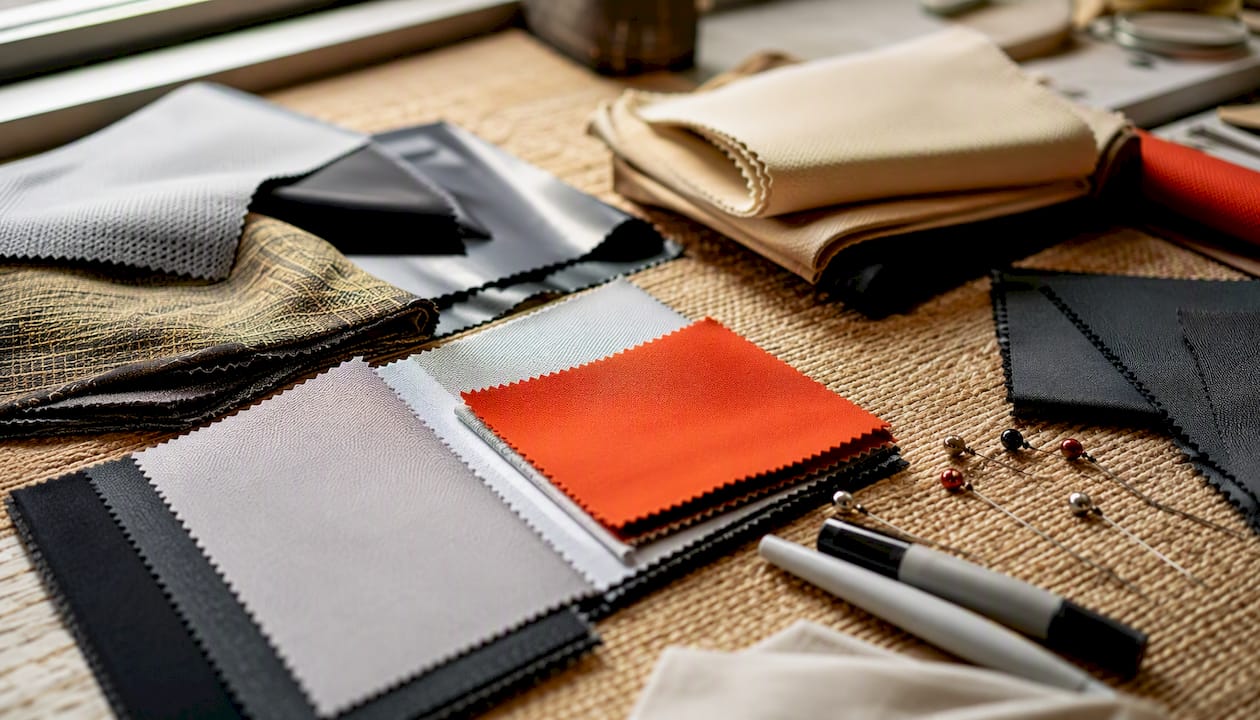
A practical way to source specialty fabrics is to build a small swatch library organized by end use: one section for outdoor/UV-resistant, one for decorative/luxury, one for technical/industrial. That way you can pull comparisons quickly when a new project brief lands.
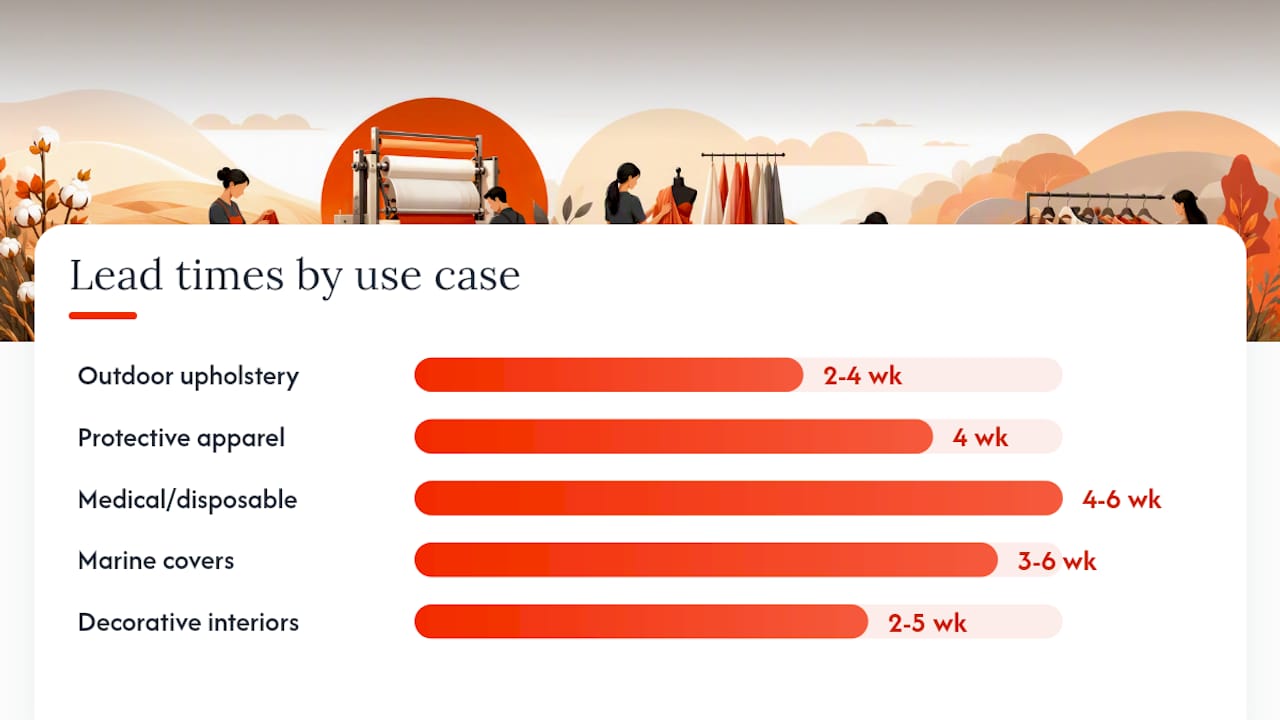
Relative cost and lead time by use case:
| Use case | Top-priority properties | Relative cost | Typical lead time |
|---|---|---|---|
| Outdoor upholstery | UV resistance, abrasion, water repellency | Mid | 2–4 weeks |
| Protective apparel | Flame retardancy, cut resistance, breathability | Premium | 4 weeks |
| Medical/disposable | Barrier performance, sterility, OEKO-TEX | Premium | 4–6 weeks |
| Marine covers | Hydrostatic head, UV, tear strength | Mid–Premium | 3–6 weeks |
| Decorative/luxury interiors | Pile density, colorfastness, hand feel | Mid–Premium | 2–5 weeks |
Most specialty fabric failures in the field come from the wrong cleaner, not from the fabric itself. Follow these rules:
Pro Tip: Before you sew or assemble any specialty fabric, test your needle size, thread type, and stitch length on a scrap of the same material. Some coatings perforate permanently at the needle hole, creating a stress point that fails under load. A walking foot and a larger needle often solve this on coated and laminated fabrics.
The specialty textiles sector spans medical, military, automotive, and outdoor markets, and manufacturers emphasize engineered performance and strict batch-to-batch consistency as the baseline expectation for industrial and medical supply. Requesting TDS and test reports is not optional in these channels; it is standard practice.
One trend worth tracking is the move toward “performance-luxury” textiles: materials that combine technical durability with softer, natural-feeling finishes. Think solution-dyed acrylic with a linen-like texture, or recycled polyester velvet that passes commercial abrasion tests. This convergence creates a real design opportunity for makers and retailers who want to offer products that feel premium but hold up in real use.
On the procurement side, the single most common sourcing mistake is buying by name without verifying the spec. “Nylon” covers a wide range of constructions and finishes with very different performance profiles. Always tie your purchase to a specific test result, not just a fiber name.
Most articles on specialty fabrics stop at naming examples. That is the easy part. The harder, more useful skill is understanding why a specific construction outperforms a cheaper alternative in a given application, and what to ask a supplier to confirm it.
The textile industry has a long history of selling on name recognition. “Gore-Tex” is a brand, not a performance guarantee by itself; the laminate comes in multiple grades with different breathability and durability ratings. The same is true for “neoprene,” which ranges from cheap foam-backed knit to genuine closed-cell polychloroprene. Knowing the difference between a marketing label and a measurable spec is what separates a designer who gets consistent results from one who gets expensive surprises.
The conventional advice is to pick a fabric that “looks right for the application.” The better approach is to define the performance floor first: what is the minimum UV grade, abrasion cycle count, or hydrostatic head this project requires? Then find fabrics that meet it. Anything above the floor is a bonus; anything below it is a liability, regardless of how good it looks in the sample.
Crafters and designers who want to handle samples before committing to a full order can browse Fabric-fabric’s home decor fabric collection, which includes velvet, upholstery-weight textiles, and decorative specialty fabrics available by the yard. Product pages carry clear descriptions of fiber content, weight, and suggested uses, so you can match materials to your project spec without guesswork.
For event, photography, or theatrical applications, the backdrop fabrics category covers specialty options suited to those specific end uses. If you need technical guidance on a particular fabric’s properties or want to request a swatch before ordering, Fabric-fabric’s product support team can help. Browse the collection, pick your candidates, and order swatches to test before you cut.