

 US Dollar

Synthetic Fabric Explained: Types, Uses, Impact
Posted by BLG on 2026 Jan 26th
Posted by BLG on 2026 Jan 26th

Choosing the right textile for your next product can be confusing when shelves brim with unfamiliar fibers. Many North American crafters and small business owners discover that most affordable, versatile fabrics are not from plants or animals, but come from chemicals and petroleum by-products processed into durable, easy-care material. Knowing how synthetic fabrics are created helps you select the best fiber for long-lasting projects and anticipate what customers will appreciate about each material.
| Point | Details |
|---|---|
| Synthetic Fabrics Origin | Synthetic fabrics are man-made from chemicals and petroleum products, differing from natural fibers that come directly from plants or animals. |
| Fiber Properties | Understanding the unique characteristics of synthetic fabrics, such as durability and cost efficiency, is essential for selecting materials for various projects. |
| Environmental Impact | The production and disposal of synthetic fabrics have significant environmental drawbacks, including fossil fuel consumption and microfiber pollution, which should inform purchasing decisions. |
| Care Instructions | Always read fiber content labels to ensure proper maintenance and care for each type of synthetic material, as they can significantly differ. |
Synthetic fabrics start as chemicals and petroleum products that get transformed into wearable material. Unlike cotton or wool that come directly from plants or animals, synthetic fibers are man-made creations engineered in factories. The process begins with raw materials extracted from the ground, then chemically processed into something completely different from what nature provides.
The basic starting materials depend on which synthetic fiber you’re examining. Polyester, the most common synthetic fabric you’ll find at fabric retailers, comes from petroleum. Nylon also derives from petrochemicals, making both fibers inherently plastic-based materials. Acrylic fibers pull from mineral oil and hydrocarbons, creating yet another plastic variant. Each fiber type requires its own chemical recipe and processing method.
The actual manufacturing happens through a surprisingly elegant process. Chemists heat and mix the raw petroleum products until they form a thick, syrupy liquid. This viscous substance gets pushed through tiny holes in a device called a spinneret, creating long thin strands. These strands cool and solidify into fibers that can be spun into thread and woven into fabric. The entire transformation from crude oil to wearable material takes sophisticated chemistry and industrial equipment.
One older synthetic you might encounter is rayon, which represents a different approach. Rather than relying entirely on petroleum, rayon starts with wood pulp and chemicals that break down the cellulose into a spinnable solution. This semi-synthetic process gave manufacturers an affordable option decades before fully petroleum-based synthetics became dominant. Understanding why designers choose polyester helps explain how these material origins influence fabric properties and performance.
When you purchase synthetic fabrics, you’re buying refined petroleum products that have been chemically transformed and engineered for specific uses. This fundamental truth shapes everything about how these materials behave, perform, and eventually break down. For crafters selecting materials, knowing this background helps you understand why synthetics offer such different properties compared to natural fibers.
Pro tip: Read fiber content labels carefully when shopping to identify which synthetic materials you’re working with, since different synthetics require different care instructions and behave distinctly during cutting, sewing, and washing.
When you walk into a fabric store, you’ll encounter several dominant synthetic materials that make up a huge portion of available inventory. Polyester, nylon, acrylic, and spandex represent the main synthetic fibers you’ll work with as a crafter or small business owner. Each one brings different strengths to your projects, which is why understanding their individual characteristics matters for selecting the right material.
Polyester stands out as the most versatile and affordable synthetic on the market. It resists wrinkles exceptionally well, holds color beautifully, and doesn’t shrink when washed. Many home decor projects and apparel pieces rely on polyester because it performs reliably across different climates and care routines. You’ll find it blended with natural fibers or used alone in everything from quilting cottons to upholstery fabric.
Nylon offers incredible strength and elasticity, making it ideal for activewear and garments that need durability. It’s lighter and more flexible than polyester, which explains why outdoor gear and stretchy clothing often feature nylon. The fiber resists abrasion brilliantly, so projects that experience friction hold up longer. However, nylon does have one drawback—it’s vulnerable to damage from direct sunlight over extended periods.
Acrylic fibers mimic wool’s appearance and warmth while costing significantly less. This makes acrylic perfect for crafters seeking wool-like textures without the price tag or care requirements. Acrylic also resists moths and mildew better than natural fibers, offering practical advantages for long-term storage. When blended with wool, it reduces shrinkage and makes garments easier to care for.
Spandex deserves special attention because it’s rarely used alone. This elastic synthetic fiber gets blended with other synthetics or natural fibers to add stretch and recovery. Even small percentages—as little as 2 to 5 percent—dramatically improve how garments fit and move. Fashion designers and activewear brands rely heavily on spandex to create comfortable, form-fitting pieces.
Rayon represents a middle ground between synthetics and natural fibers. Though made chemically from wood pulp, it behaves more like a natural fabric with a gorgeous drape and soft feel. When exploring wholesale fabric options, you’ll notice rayon’s popularity for dresses and flowing garments. It requires slightly different care than fully synthetic fibers, so label reading becomes important.
Here is a quick reference comparing major synthetic fibers and their distinctive uses:
| Fiber Type | Typical Applications | Key Strengths |
|---|---|---|
| Polyester | Apparel, upholstery, home decor | Wrinkle resistance, affordability |
| Nylon | Activewear, outdoor gear, swimwear | High strength, flexibility |
| Acrylic | Sweaters, blankets, faux wool knits | Wool-like warmth, moth resistance |
| Spandex | Athletic wear, stretch garments, underwear | Strong elasticity, comfort |
| Rayon | Dresses, flowing garments, linings | Soft drape, comfort |
Pro tip: Keep a fiber content reference card near your sewing station listing each synthetic’s care requirements, shrinkage potential, and best project applications—this saves time when customers ask questions or you’re selecting materials for new designs.
Synthetic fabric production follows a remarkably consistent process regardless of whether you’re making polyester or nylon. Manufacturers begin by creating polymers through chemical reactions, typically using petrochemicals or natural sources like wood pulp as starting materials. Once the polymer forms, it gets melted or dissolved into a thick, syrupy liquid that’s ready for the next transformation step.
The magic happens at the spinneret stage. Chemical materials combine into viscous substance that gets forced through a spinneret, which looks like a showerhead with thousands of tiny holes. As the liquid pushes through these openings, it creates long, continuous filaments that immediately cool and solidify into fibers. This extrusion process is what transforms gooey polymer into something resembling thread.
Once solidified, these fibers get processed into yarn through spinning. The individual filaments twist together to create yarn with the right thickness and strength for textile production. Some yarns use single continuous filaments, while others combine multiple shorter fibers twisted together. This stage determines how strong, stretchy, and comfortable the final fabric will be.
Weaving or knitting comes next in the production chain. Yarn gets interlocked on looms or knitting machines to create fabric sheets with specific patterns and textures. Woven fabrics offer stability and structure, while knitted fabrics provide stretch and comfort. Your choice of weaving versus knitting significantly affects how your finished project will perform and feel.
Finishing steps complete the process. Manufacturers apply chemicals and treatments to enhance durability, color fastness, wrinkle resistance, and water repellency. These finishing processes explain why some synthetics perform so much better than others. The same polyester fiber can feel dramatically different depending on which finishing treatments a manufacturer applies.
When you understand this production flow, you recognize why sustainable textiles options are gaining attention in the industry. Different manufacturers use varying efficiency levels and chemical treatments that impact both fabric quality and environmental footprint.
Pro tip: Ask fabric suppliers about their finishing processes and polymer sources when ordering in bulk, since these details affect durability, feel, and how the fabric responds to cutting, sewing, and washing.
Synthetic fabrics offer compelling advantages that explain their dominance in the textile industry. Durability, affordability, and wrinkle resistance make synthetics ideal for projects requiring low maintenance and long-lasting performance. You can wash synthetic garments repeatedly without worrying about shrinkage, and they maintain their color and shape better than many natural fibers. For busy crafters and small business owners, this reliability translates to fewer customer complaints and higher satisfaction rates.
Cost efficiency stands out as the biggest practical benefit. Synthetic fabrics cost significantly less than comparable natural alternatives like wool or silk. This affordability allows you to offer competitive pricing while maintaining healthy profit margins on finished projects. You can also experiment with designs and techniques without the financial pressure that comes with expensive materials.
The ease of care matters more than many crafters realize. Synthetics dry quickly, resist mildew and moth damage, and require minimal ironing. Customers appreciate garments they can toss in the washing machine without special instructions. This convenience factor drives repeat purchases and positive word-of-mouth recommendations for your business.
However, synthetics carry serious environmental drawbacks. Production requires significant fossil fuel use and greenhouse gas emissions that contribute to climate change. More immediately concerning, synthetic fabrics shed microfibers during washing that accumulate in aquatic environments and food chains. Unlike wool or cotton, synthetics biodegrade extremely slowly, persisting in landfills for decades.
Worker safety presents another hidden cost. Synthetic fiber manufacturing involves toxic chemicals that pose health risks to factory workers and nearby communities. As someone buying and selling these materials, you’re connected to these supply chain realities whether you acknowledge them or not.
Blended fabrics create recycling challenges. When synthetics mix with natural fibers, the resulting material becomes nearly impossible to recycle effectively. This matters if you’re considering offering sustainable options to environmentally conscious customers looking for alternatives to fully synthetic pieces.
The tension between benefits and drawbacks is real. You gain performance and affordability but lose environmental responsibility. Many successful North American textile businesses are now balancing this equation by offering sustainable textile options alongside traditional synthetics.
Pro tip: Start tracking customer questions about fabric sustainability and consider offering at least one synthetic blend option that uses recycled content or bio-based fibers to capture the growing segment of eco-conscious buyers.
The fundamental difference between synthetic and natural fabrics comes down to their origin. Natural fibers like cotton, wool, and silk come directly from plants and animals, while synthetics are engineered from chemical substances derived from petrochemicals. This basic distinction ripples through every other property you’ll encounter when working with these materials.
Water absorption creates one of the most practical differences between the two. Natural fibers are hydrophilic, meaning they absorb moisture readily and feel comfortable against skin. Synthetic fibers are hydrophobic, repelling water instead of absorbing it. This explains why cotton feels breathable and cool while polyester can feel sticky in humid conditions. For projects requiring comfort, natural fibers have a clear advantage.
Durability tells a different story. Synthetic fibers outperform natural ones when it comes to longevity and resistance to wear. They withstand repeated washing, resist shrinkage, and maintain their shape better over time. Natural fibers, particularly delicate ones like silk, require more careful handling and can deteriorate faster with regular use. This durability advantage makes synthetics ideal for everyday garments and home goods.
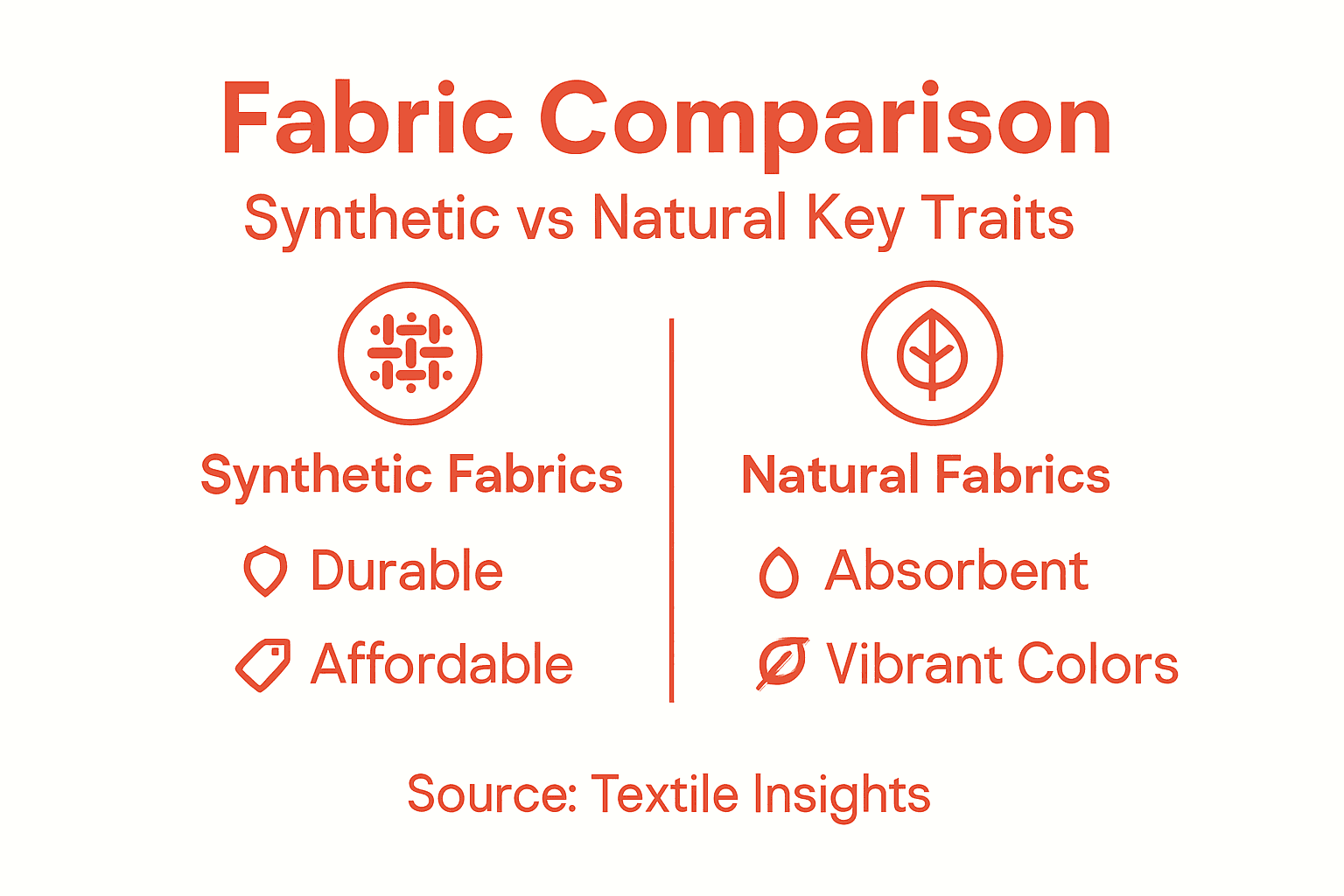
Dyeing behavior separates the two dramatically. Natural fibers accept dyes readily and produce rich, vibrant colors that feel integral to the fabric. Synthetics resist dyes and often require special dyeing processes to achieve color depth. This means natural fabrics offer more color possibilities and often achieve more saturated hues. If you’re working on projects where color matters, this distinction becomes significant.
Fineness and length control matter for manufacturing. Natural fibers have fixed lengths and thicknesses determined by nature. Synthetics allow manufacturers to engineer controlled fiber length and fineness, creating consistency impossible with natural materials. This precision explains why synthetic fabrics can be produced at lower costs.
Cost and availability clearly favor synthetics. You’ll pay substantially less for synthetic fabrics compared to natural alternatives of similar quality. Synthetics are also available year-round regardless of growing seasons or supply chain disruptions. However, natural fibers offer distinct advantages for specific projects where comfort and biodegradability matter.
Many successful textile businesses now blend synthetics and natural fibers to capture benefits from both. A 70 percent cotton, 30 percent polyester blend, for example, combines natural comfort with synthetic durability and affordability.
The following table contrasts synthetic and natural fabrics on critical performance and business factors:
| Factor | Synthetic Fabrics | Natural Fabrics |
|---|---|---|
| Water Absorption | Repel moisture, quick drying | Absorb moisture, breathable |
| Durability | Withstand wear and frequent washing | Shorter lifespan, careful handling |
| Dyeing | Require special dyes, colorfast | Readily absorb vibrant colors |
| Cost | Low price, stable supply | Higher price, seasonal limits |
Pro tip: Create a simple comparison chart for your sewing station or sales team showing fiber properties side-by-side so you can quickly match project requirements to the right fabric type.
Understanding the origins and properties of synthetic fabrics can be challenging, especially when you want durability, affordability, and style all in one place. Whether you are searching for polyester with excellent wrinkle resistance, stretchy spandex blends, or breathable nylon for activewear, knowing the differences is key to success. At Fabric-Fabric, we recognize the pain points of selecting the right synthetic material that matches your project needs while balancing ease of care and performance.
Explore our extensive collection of synthetic fabrics tailored for everything from apparel and home decor to quilting and crafts. Take advantage of detailed product descriptions and usage tips that help you make informed choices. Don’t wait to elevate your creations with high-quality textiles engineered to last. Visit our online store now and find the perfect synthetic fabric to bring your vision to life.
Synthetic fabrics are made from man-made fibers derived from chemical processes, primarily using petrochemicals and petroleum products. They are engineered in factories and transformed into wearable materials, unlike natural fibers sourced directly from plants or animals.
The major types of synthetic fabrics include polyester, nylon, acrylic, spandex, and rayon. Each fabric has distinct characteristics suited for various applications, such as polyester being versatile and affordable, while nylon is known for its strength and flexibility.
The production of synthetic fabrics involves creating polymers from chemical reactions, melting or dissolving them into a thick liquid, and then extruding the liquid through a spinneret to form continuous filaments. These filaments are then spun into yarn, woven or knitted into fabric, and finished with various treatments for enhanced properties.
Synthetic fabrics offer durability, affordability, and ease of care, making them ideal for low-maintenance projects. However, they also have environmental drawbacks, such as being derived from fossil fuels and contributing to pollution through microfiber shedding. Understanding these benefits and drawbacks can help in making informed decisions when selecting materials.