

 US Dollar

Role of Specialty Fabrics in Unique Quilt Design
Posted by BLG on 2026 Jan 23rd
Posted by BLG on 2026 Jan 23rd

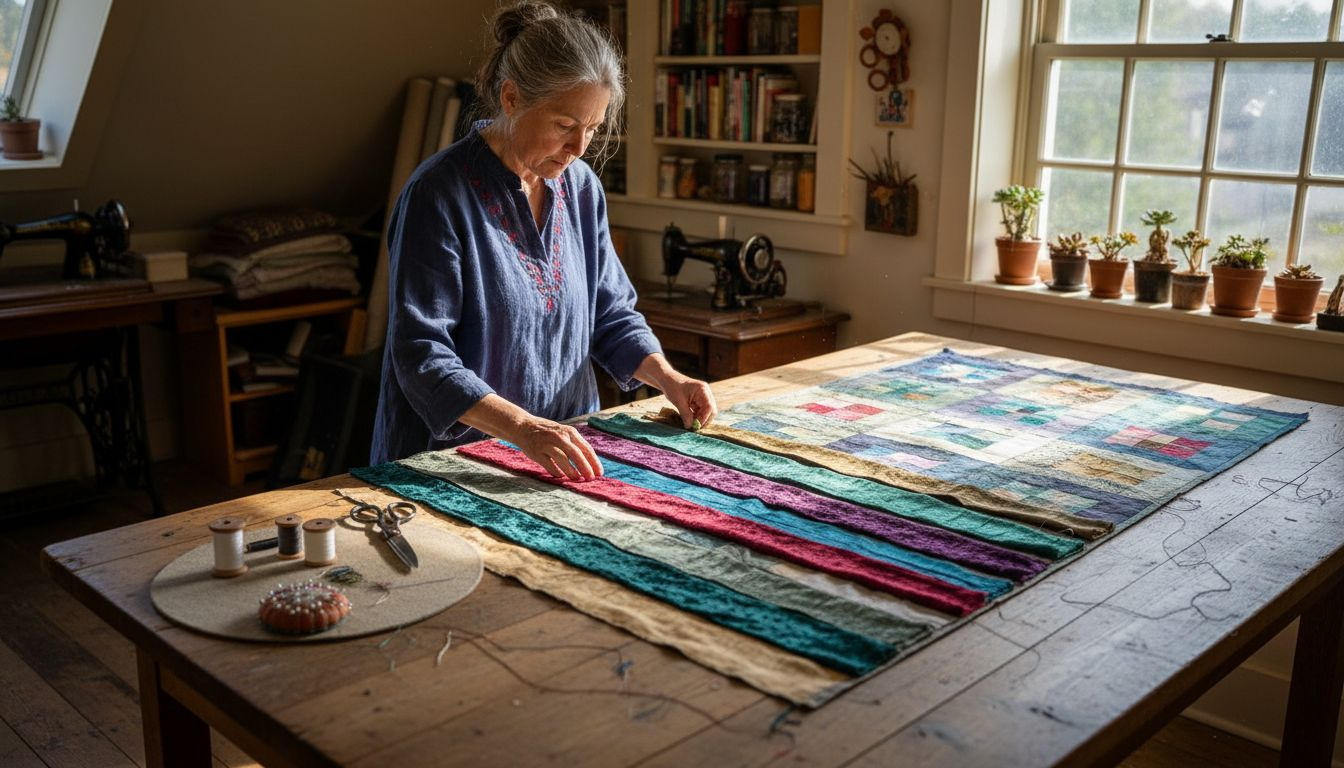
Choosing fabric for a quilt can feel routine when every shelf holds the same trusted cotton, but specialty fabrics open the door to textures and colors you simply cannot achieve otherwise. For many quilters, the search for something different is what transforms their project from practical to expressive. This guide shares how unique choices like silk, velvet, wool, and recycled materials from places such as Gee’s Bend, Alabama, add creative depth, showing you practical tips for selecting and working with these distinct options.
| Point | Details |
|---|---|
| Understanding Specialty Fabrics | Specialty fabrics, such as silk and velvet, offer unique textures and visual depth, allowing for more artistic quilt designs. |
| Handling Techniques | Specialty fabrics require specific handling techniques to avoid issues like shifting and damage during quilting. |
| Combining Fabrics | Use standard cottons for structural elements and specialty fabrics for accents to balance visual impact with practical handling. |
| Care Considerations | Pre-wash and store specialty fabrics carefully to prolong the lifespan of your quilts and maintain their appearance. |
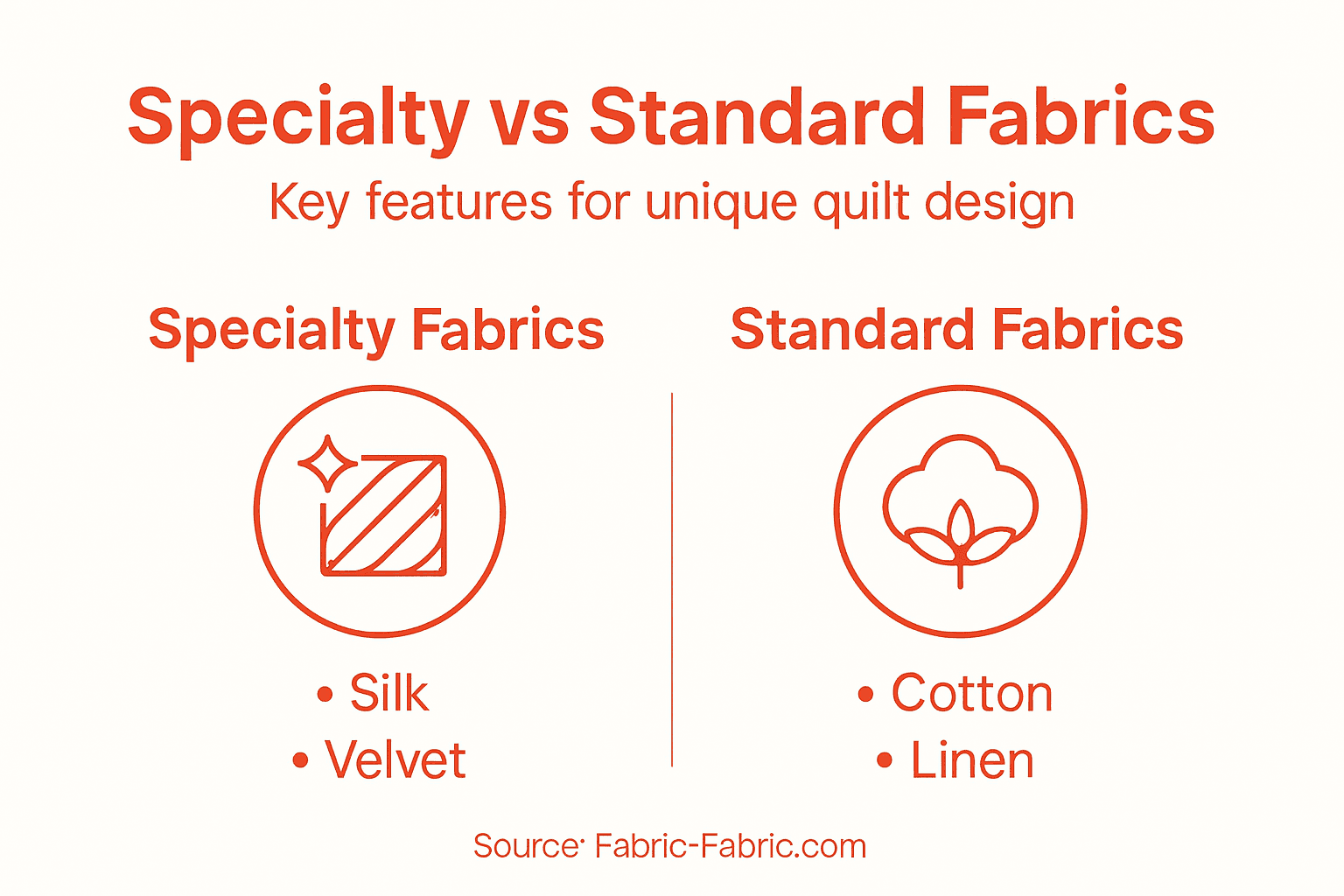
When you walk into most quilt shops, you’ll see rows of 100% cotton quilting fabric in every pattern imaginable. These are the workhorses of quilting, reliable and predictable. But specialty fabrics are different. They’re the materials that let you break free from convention and create something genuinely unique on your design wall. A specialty fabric is any material that goes beyond traditional cotton to introduce unexpected textures, weights, sheens, or compositions into your quilt design. Think silk with its lustrous drape, velvet with its dimensional pile, wool with its warmth and body, or even metallic blends that catch the light in ways cotton never will. Quilting tradition has historically centered on three layers—the quilt top, batting, and backing—but specialty fabrics expand what you can use on that top layer to create visual and tactile depth that elevates your work from functional to artistic.
What distinguishes a specialty fabric from regular quilting cotton comes down to purpose and versatility. Standard quilting cottons are engineered for predictability: they have consistent weave structures, standard widths, and behave the same way when pieced, pressed, and quilted. Specialty fabrics, by contrast, demand that you adapt your techniques to their unique properties. A silk dupioni won’t behave like cotton when you’re trying to piece a seam. Velvet requires different handling to avoid nap shift. Synthetics and blends bring their own pressing challenges and stitch responses. This isn’t a limitation; it’s an opportunity. The creative potential expands dramatically when you acknowledge that different materials respond differently to your needle, your rotary cutter, and your pressing iron. You gain access to visual effects, color depths, and textural combinations that pure cotton quilts simply cannot achieve.
Historically, quilters have understood this principle of material resourcefulness. In places like Gee’s Bend, Alabama, quilters created iconic improvisational designs using recycled work clothes and fabric remnants as their specialty materials. Those quilts became cultural treasures not despite using mixed materials, but because of how those materials expressed personal stories and creative vision. Today’s specialty fabric landscape has expanded exponentially beyond recycled materials. You can source hand-dyed silks, metallics, jacquards, brocades, and experimental combinations that offer unlimited design possibilities. The fabric choice itself becomes part of your artistic statement.
Pro tip: Start by adding just one specialty fabric element to a traditionally pieced quilt design—perhaps a silk border or velvet focal blocks—rather than reimagining your entire project with new materials. This approach lets you learn how specialty fabrics behave in your workflow while maintaining the structure and familiarity of a design you already understand.
Specialty fabrics come in a diverse range of materials, each bringing distinct characteristics to your quilt design. Silk stands out for its luminous sheen and fluid drape, making it ideal for adding elegance and visual interest to focal areas or borders. Fine silks catch light differently than cotton, creating depth that changes appearance depending on viewing angle. Velvet offers rich texture and dimensional quality, with its characteristic pile creating shadows and highlights that add sophistication. Wool brings warmth and body to designs, working beautifully for appliqué work and dimensional piecing. Beyond these classics, you can incorporate metallics and blends that introduce reflective elements, jacquards with woven patterns, and brocades featuring ornamental designs. Early American quilters understood this diversity well, combining homemade and industrially produced fabrics including imported silks and dye-printed calicoes to create heirloom pieces that reflected both craft skill and cultural sophistication.
The practical challenge with specialty fabrics lies in understanding how they differ from standard quilting cotton in terms of handling and behavior. Silk requires careful pressing to avoid water spots and can shift easily during piecing if not stabilized. Velvet demands attention to nap direction so the pile runs consistently throughout your quilt, preventing color variation across blocks. Wool felts at certain temperatures, so your pressing iron temperature becomes critical. Metallics can be brittle and break when stressed, requiring reinforcement with stabilizer during piecing. Blended fabrics respond unpredictably depending on their fiber content. These challenges aren’t reasons to avoid specialty fabrics but rather reasons to approach them with intention. Many experienced quilters use specialty fabrics combined with standard cottons to balance visual impact with structural stability, creating intricate designs where the specialty material becomes the statement while cotton provides reliable support.
Signature quilts and commemorative pieces historically leveraged specialty fabrics to embed personal and cultural meaning. Silk ribbons featured prominently in Victorian and early twentieth-century quilts, often inscribed with names or dates. Printed fabrics with significant personal connections—a beloved dress fabric, commemorative textiles, or regionally specific patterns—transformed quilts into repositories of memory and identity. Today’s specialty fabric selection extends far beyond what historical quilters could access. Hand-dyed silks, art fabrics, and experimental textiles offer unlimited creative possibilities. The key is recognizing that specialty fabrics excel in specific roles: as focal points, borders, accents, and embellishment areas rather than as entire quilt constructions.
Pro tip: Before committing your specialty fabric to a major quilt project, test it with scraps using your standard pressing temperature, piecing technique, and stitch length on a practice block to understand exactly how it will behave in your workflow.
Here’s a quick comparison of popular specialty fabrics used in quilting:
| Fabric Type | Notable Qualities | Handling Challenges | Best Uses |
|---|---|---|---|
| Silk | Shiny, smooth drape | Slippery when piecing | Borders, focal blocks |
| Velvet | Rich, plush texture | Sensitive to nap direction | Appliqué, accents |
| Wool | Warm, textured body | Shrinks, may felt | Appliqué, dimensional work |
| Metallic Blends | Reflective, eye-catching | Brittle, may fray | Borders, embellishments |
| Jacquard/Brocade | Woven patterns, ornate | Unpredictable fraying | Focal areas, decorative blocks |
Texture is perhaps the most immediately noticeable benefit of incorporating specialty fabrics into your quilts. When you run your hand across a quilt featuring velvet blocks next to cotton piecing, you feel the difference instantly. Silk creates a smooth, cool sensation. Wool offers warmth and subtle nubby characteristics. Metallics catch light and create shimmer. These textural qualities enhance visual richness that flat cotton alone cannot replicate, transforming your quilt from a two-dimensional composition into something that invites tactile exploration. Texture also adds depth to color choices. A burgundy velvet appears richer and more saturated than burgundy cotton because light behaves differently on the pile surface. This creates visual interest that keeps viewers engaged, whether your quilt hangs on a wall or drapes across furniture.
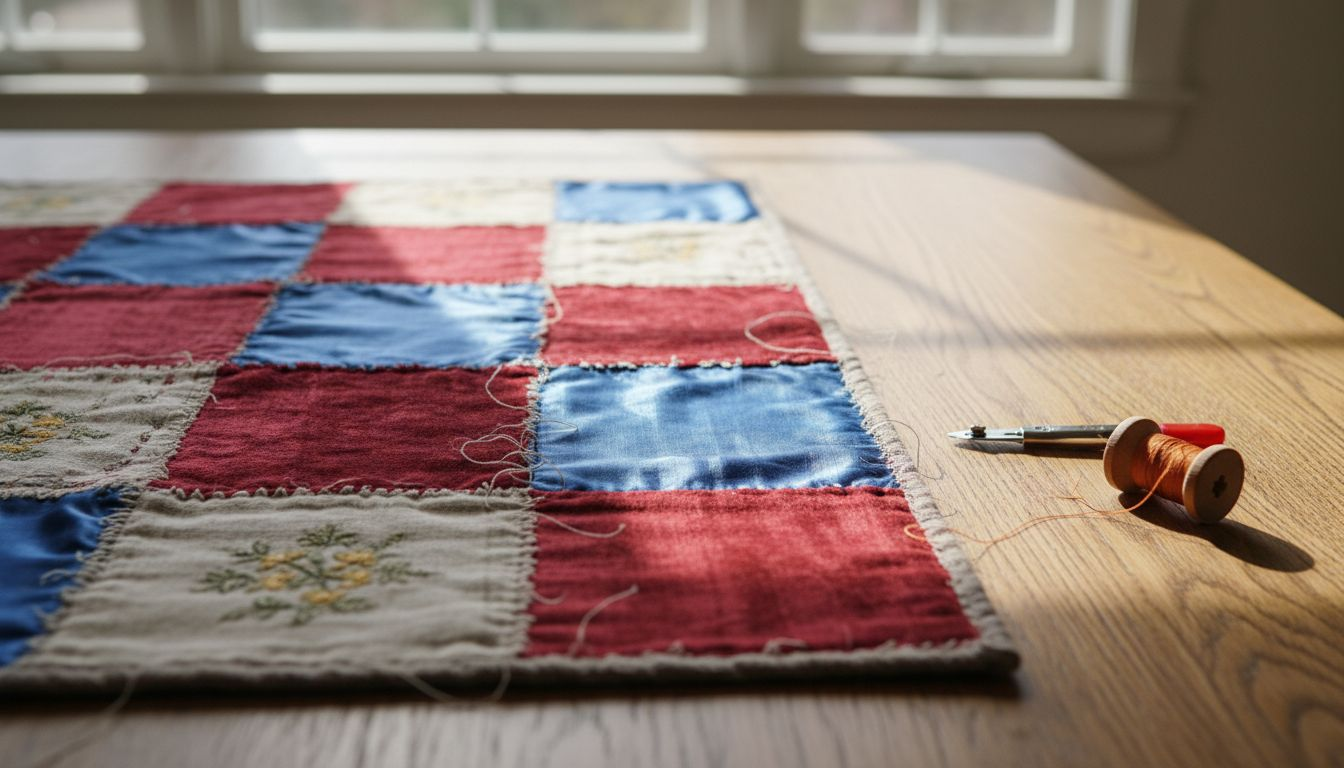
Durability considerations with specialty fabrics require honest assessment because different materials age differently. Wool proves remarkably resilient, resisting pilling and maintaining its shape even with regular use and washing. Cotton blends with polyester or other synthetics offer durability advantages over pure fiber, though purists may question aesthetic trade-offs. Silk, conversely, demands respect and gentle care. While silk can last generations if properly stored and handled, it cannot tolerate the casual washing and sunlight exposure that standard cotton quilts endure. Metallics and laminated fabrics may degrade over time as adhesives break down or metallic coatings flake. This doesn’t mean avoiding these materials but rather understanding their appropriate applications. A silk accent border in a wall quilt differs fundamentally from silk fabric used throughout a baby quilt that requires frequent washing. The key is matching material choice to intended use and care commitment.
Visual impact represents perhaps the most compelling reason quilters turn to specialty fabrics. Quilts made entirely from standard cotton quilting prints can be charming, but they blend into a familiar visual landscape. Adding even small quantities of specialty fabric creates focal points that command attention. A metallic border catches light in ways that frame the entire composition. Velvet appliqué shapes appear to float above the quilt surface. Hand-dyed silk creates color depth impossible with printed cottons. These visual transformations elevate quilts from functional objects to pieces worthy of art appreciation, whether displayed in quilting circles or fine art galleries. The aesthetic and functional properties work together: the visual richness draws the eye while the tactile qualities reward closer inspection.
Pro tip: Reserve your most delicate specialty fabrics for wall quilts or decorative pieces with limited handling, and channel more durable blends and textured cottons into projects destined for regular use and washing.
The most successful quilts that incorporate specialty fabrics treat them as intentional accents rather than the foundation of the entire design. Think of standard quilting cotton as your structural backbone and specialty fabrics as your visual storytellers. Use standard cottons for large background areas, borders, and pieced blocks that form the quilt’s geometric structure. These dependable fabrics handle piecing predictably, press cleanly, and tolerate the machine quilting required to hold everything together. Standard fabrics also provide a cost-effective way to fill space without overwhelming your budget. Reserve specialty fabrics for strategic placement: focal point blocks, accent borders, appliqué shapes, or embellishment areas where their unique qualities become the design’s statement. This approach balances visual impact with practical workability. When combining materials, pay attention to fabric weight compatibility. Pairing a lightweight silk with heavy upholstery-weight fabric creates handling challenges during piecing because the materials feed inconsistently through your machine. Similarly, carefully planning fabric placement with color and texture contrasts ensures that your specialty fabrics enhance rather than distract from the overall composition.
Technical execution matters significantly when blending fabric types. Delicate specialty fabrics benefit from stabilization during piecing. Adding lightweight fusible interfacing to the back of silk or delicate blends gives them the body they need to piece cleanly alongside cotton. You’ll also want to adjust your stitch length and thread tension when moving between materials. Standard cotton piecing typically uses a 2.5 stitch length; delicate fabrics may require slightly tighter tension and a longer stitch length to avoid puckering or fabric distortion. Pre-washing specialty fabrics that you’re uncertain about prevents color bleeding or shrinkage surprises during the final quilt wash. When basting your quilt sandwich, extra care with specialty fabrics prevents slippage during quilting. Consider using layering techniques and careful basting with spray baste or spray adhesive instead of traditional pin basting when specialty fabrics are involved, particularly with slippery silks or metallics that resist holding pins.
Composition strategy determines how effectively your mixed fabrics work together. A rule of thumb is the 80/20 principle: approximately 80 percent standard fabric and 20 percent specialty fabric. This ratio ensures visual interest without creating a design that feels chaotic or becomes difficult to piece. Distribute specialty fabrics throughout the quilt rather than concentrating them in one area. A single focal block with specialty fabric might feel isolated, but the same amount of specialty fabric scattered across multiple accent areas creates unified visual flow. Consider the viewing distance too. A quilt destined for a wall display can handle fine detail and subtle texture contrasts visible from a distance. A quilt used on a bed might benefit from bolder specialty fabric placement that makes visual impact even when partially covered.
Pro tip: Create a mockup using photos or printed images of your specialty and standard fabric selections before cutting anything, arranging them in your intended layout to evaluate color balance and texture distribution.
Compare these quilt structure strategies to find what fits your project goals:
| Approach | Visual Complexity | Longevity | Effort Required |
|---|---|---|---|
| All Standard Cotton | Consistent, traditional look | High durability | Lower difficulty |
| Mixed with Specialty Accents | Unique texture, high impact | Variable, depends on materials | More planning needed |
| Mainly Specialty Fabric | Maximum uniqueness | May need special care | Advanced skill required |
When working with specialty fabrics, precision becomes even more critical than with standard cottons. The most common mistake quilters make is treating specialty fabrics the same way they treat everyday quilting cotton. Inconsistent seam allowances, which might be forgivable with stable cotton, become disastrous with slippery silks or stretchy blends. A specialty fabric that shifts just slightly during piecing compounds the problem across multiple seams, resulting in blocks that don’t square up and edges that don’t align. Similarly, improper pressing causes permanent damage to delicate materials. Pressing a velvet block with a hot iron flattens the pile permanently. Pressing silk without a pressing cloth invites water spots that won’t wash out. The foundation of quality quilting with specialty fabrics relies on consistent seam allowances and proper pressing techniques, using accurate cutting tools like rotary cutters and rulers, and maintaining thread and needle quality throughout assembly.
Fabric care before and after quilting determines whether your finished piece lasts for generations or deteriorates within years. Pre-washing specialty fabrics is non-negotiable for any fabric you’re uncertain about. Silk dyes sometimes bleed. Wool can shrink. Metallic blends may release particles. A test piece thrown in warm water reveals problems before those problems destroy your entire quilt. Store finished quilts away from direct sunlight, which fades colors dramatically in specialty fabrics. Humidity and temperature fluctuations stress fibers, so avoid attics and basements. When washing a completed quilt with specialty fabrics, use cool water, gentle soap, and flat drying. Never machine wash a quilt featuring silks or velvets. Your finished quilt deserves the same care you invested in creating it.
Beyond fabric handling, quilters often overlook the physical demands of their craft. Quilting requires repetitive motions, sustained posture, and eye strain that accumulate over hours at the design table or machine. Maintain good posture by ensuring your work surface height supports your arms at a 90-degree angle. Take frequent breaks every 30 minutes to stretch and rest your eyes. Use ergonomic tools such as comfortable cutting devices and cushioned thimbles to reduce strain on hands and wrists. Ensure adequate lighting to eliminate eye fatigue. Pay attention to your body’s signals. Pain that develops during quilting indicates you need to adjust your technique or equipment. Listen to these warning signs before they develop into chronic injuries that interfere with your ability to quilt.
Pro tip: Invest in a quality seam ripper and accept that specialty fabrics sometimes require seam removal and re-piecing to maintain precision; fighting with unstable fabrics wastes more time than ripping and correcting.
Creating quilts that stand out means embracing the unique challenges and rewards of specialty fabrics like silk, velvet, and wool. If you have struggled with handling slippery silks or maintaining consistent seams when combining diverse materials, you are not alone. This article highlights how mastering specialty fabrics adds incredible texture, visual impact, and personal meaning to your quilts but also calls for careful technique and material knowledge to achieve professional results.
Discover a wide selection of premium specialty fabrics at Fabric-Fabric.com designed to inspire your creative vision and meet your technical needs. Whether you want to add elegant silk borders, rich velvet appliqués, or metallic accents, our detailed product descriptions and usage tips help you choose the perfect textiles. Shop now to take advantage of seasonal sales and free shipping offers that make upgrading your quilting stash both affordable and exciting. Start turning your quilt ideas into heirloom-quality works of art today by exploring our curated fabric collections and expert guidance.
Find exactly what you need for your next project at Fabric-Fabric.com and overcome specialty fabric challenges with confidence.
Specialty fabrics are materials that go beyond traditional quilting cotton, offering unique textures, weights, and compositions, such as silk, velvet, wool, and metallics. They allow for creative designs and artistic expression.
To effectively combine them, use standard cotton for the quilt’s structural elements, such as large background areas and borders, while reserving specialty fabrics for focal points, accent blocks, or embellishments to maintain visual interest and practical workability.
Specialty fabrics may require different handling techniques compared to standard cotton. For instance, silk can be slippery during piecing, velvet needs attention to nap direction, and metallic fabrics may fray under stress. Understanding these behaviors is crucial for successful quilting.
For quilts made with specialty fabrics, pre-wash all materials to prevent issues like bleeding or shrinking. Store finished quilts away from direct sunlight, and when washing, use cool water and gentle soap. Flat dry to preserve their unique qualities.