

 US Dollar

Best types of home decor fabrics for every space
Posted by BLG on 2026 Apr 7th
Posted by BLG on 2026 Apr 7th

TL;DR:
- Choosing the right fabric depends on durability, fiber content, and intended use.
- Natural fabrics like cotton, linen, and wool offer comfort and aesthetic appeal.
- Synthetics and blends excel in performance, stain resistance, and outdoor durability.
Fabric is one of the most powerful tools in any decorator’s kit, yet it’s also one of the most misunderstood. Walk into any fabric store or browse online and you’re instantly met with hundreds of options: weights, weaves, fibers, finishes. The sheer volume of choices can stop a project before it starts. But here’s what experienced decorators know: the right fabric doesn’t just look good, it performs. It holds up to daily life, resists fading, cleans easily, and sets the tone for an entire room. This guide breaks down the key fabric types for home decor, what separates them, and how to match each one to your specific project with confidence.
| Point | Details |
|---|---|
| Fabric choice impacts results | Selecting the right type of fabric is essential for durability, style, and overall satisfaction in home decor. |
| Know your options | Understanding both natural and synthetic fabrics helps you match materials to your project’s unique needs. |
| Consider use and upkeep | Factor in room function, traffic, and care requirements before making a final fabric decision. |
| Test before you buy | Swatch testing in your space uncovers how fabric feels and performs in real conditions. |
Before you fall in love with a pattern or color, you need to understand what you’re actually buying. Home decor fabrics are wider and heavier than apparel fabrics, engineered for wear and tear with built-in stain and fade resistance. That extra width, typically 54 to 60 inches compared to the 44 to 45 inches of clothing fabric, matters a lot when you’re covering a sofa or sewing curtain panels.
One of the most important specs to understand is the Wyzenbeek double rubs test. This measures how many times a fabric can be rubbed back and forth before it shows wear. Durability ratings break down like this: under 15,000 double rubs is considered light duty, 15,000 to 30,000 is heavy duty for most households, and over 30,000 is commercial grade. Knowing this number tells you far more than a vague label like “durable” ever could.
Other fundamentals to check before buying:
For a deeper look at how to evaluate your options before purchasing, the complete home decor fabric guide and fabric selection essentials are great starting points. You can also explore understanding durability specifications for outdoor and performance contexts.
Pro Tip: Always ask for the Wyzenbeek rating before buying upholstery fabric. If a retailer can’t provide it, that’s a red flag worth noting.
With the fundamentals in mind, let’s look at the most beloved natural fabric options and what makes them stand out.
Cotton is the workhorse of home decor. It’s soft, breathable, and takes dye beautifully, which is why it shows up in everything from throw pillows to curtain panels. Cotton is versatile and ideal for curtains, cushions, and upholstery, though it’s prone to wrinkling and staining without a protective finish. It works best in bedrooms and living rooms where traffic is moderate.
Linen has a texture that no synthetic can truly replicate. It brings a relaxed, organic quality to a space that feels both casual and refined. Linen provides natural texture and breathability and suits relaxed, airy spaces beautifully, though it wrinkles easily and benefits from blending with other fibers for added durability. Think linen curtains in a sun-drenched reading nook or linen pillow covers in a coastal-inspired bedroom.
Wool is often overlooked in home decor, but it’s a powerhouse. Wool offers warmth, durability, and stain resistance, making it ideal for cool climates and rooms that need insulation. It’s naturally flame-resistant and resists soil better than most people expect.
Here’s a quick breakdown of natural fiber strengths:
For more project inspiration using these materials, the comprehensive DIY fabric list covers a wide range of natural and specialty options.
Pro Tip: If you love the look of linen but need durability, look for a linen-cotton blend. You get the texture and breathability of linen with the added strength of cotton fibers.
While natural fabrics have their charm, modern lifestyles often demand more. Here’s where synthetics and blends make an impact.
Polyester is the most widely used synthetic in home decor. It’s colorfast, wrinkle-resistant, and holds up to heavy use without losing its shape. Synthetics like polyester and microfiber offer exceptional durability with 15,000 to 30,000 or more double rubs, plus strong stain resistance and colorfastness. That makes them the go-to choice for families with kids or pets.
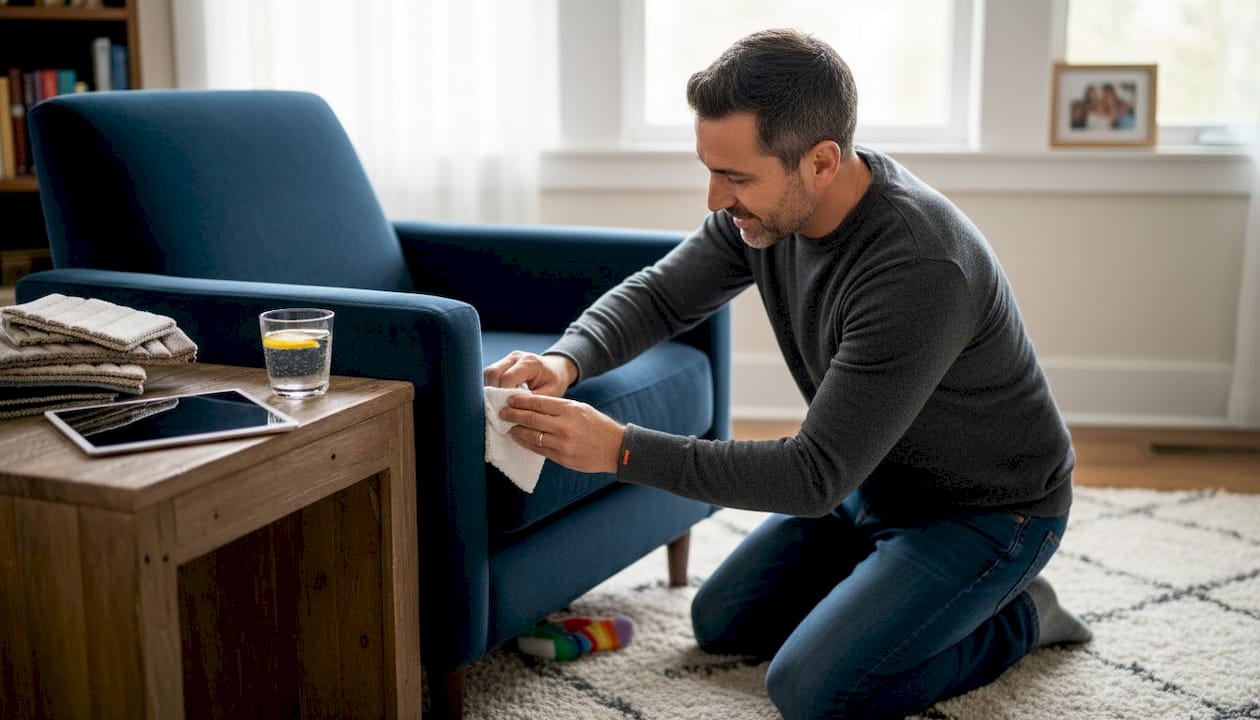
Microfiber is a tightly woven polyester that feels surprisingly soft. It resists spills because liquid beads on the surface rather than soaking in, and it’s easy to clean with just a damp cloth. It’s one of the most practical choices for sofas and dining chairs in active households.
Acrylic is the outdoor champion. It mimics the look of wool but resists moisture, mildew, and UV fading far better. If you’re furnishing a sunroom or a covered patio, acrylic-based fabrics are your best friend.
Blended fabrics combine the best of both worlds. Natural fabrics often need blends or treatments to perform well in high-use areas, and synthetics prioritize performance over feel. A cotton-polyester blend, for example, gives you the softness of cotton with the durability of polyester.
Key advantages of synthetics and blends:
For rooms with direct sunlight, explore fade-resistant upholstery options to find fabrics built to handle UV exposure without losing vibrancy.
Pro Tip: Microfiber labeled “W” on its cleaning code can be cleaned with water-based solutions. Codes “S” or “X” require dry cleaning or vacuuming only. Always check before you buy.
To make the decision easier, here’s a quick summarized look at both categories and where they shine.
Natural fabrics excel in breathability and aesthetics while synthetics focus on performance and durability. Neither category is universally better. The right choice depends on your room, your lifestyle, and your priorities.
| Attribute | Natural (cotton, linen, wool) | Synthetic (polyester, microfiber, acrylic) |
|---|---|---|
| Feel | Soft, breathable, organic | Smooth, consistent, sometimes less natural |
| Durability | Moderate (varies by fiber) | High (15,000 to 30,000+ double rubs) |
| Care | Often dry clean or gentle wash | Usually machine washable |
| Fade resistance | Lower without treatment | High, especially acrylic and polyester |
| Cost | Moderate to high | Low to moderate |
| Best uses | Curtains, pillows, low-traffic upholstery | Sofas, dining chairs, outdoor, kids’ rooms |
For allergy-sensitive households, tightly woven synthetics like microfiber trap fewer allergens than loosely woven natural fabrics. For sun-drenched rooms, acrylic or treated polyester will outlast cotton or linen by years. For a formal living room with light use, linen or wool brings a richness that synthetics struggle to match.
Quick recommendations by situation:
For a detailed breakdown of the best options for sofas and chairs, the upholstery fabric comparison covers current top performers.
Pro Tip: Order swatches before committing to any fabric. Colors look different under natural light versus artificial light, and texture is impossible to judge from a photo alone.
With all the options laid out, here’s how to match the perfect fabric type to your project and lifestyle.
Durability ratings tell the real story: under 15,000 Wyzenbeek double rubs suits light-duty use like silk or linen decorative pillows, 15,000 to 30,000 handles heavy household use like polyester and microfiber sofas, and 30,000 or more is built for commercial-grade performance fabrics in the highest-traffic spaces.
Here’s a project-by-project guide:
The biggest mistake decorators make is choosing fabric based on looks alone and ignoring performance specs. A stunning silk pillow on a family sofa will look worn within months. Match the fabric to the reality of how the space is used, not just how you want it to look.
For visual inspiration matched to specific rooms and styles, browse inspiring fabric ideas and follow the step-by-step fabric guide to build your selection process from the ground up.
Most fabric guides spend all their time on categories and comparisons, which is useful, but they rarely tell you the thing that actually changes outcomes: most buyers focus too much on pattern and color and not nearly enough on performance.
We’ve seen it repeatedly. Someone falls in love with a gorgeous printed linen, puts it on a family room sofa, and within a year it’s faded, stained, and pilling. The pattern was perfect. The performance was not.
The honest truth is that the best fabric for your space is often not the trendiest one. It’s the one that fits your actual life. A household with two dogs and three kids needs microfiber or a performance blend, full stop. No amount of beautiful pattern justifies a fabric that won’t survive the year.
Our advice: before you commit to any fabric, order a swatch and live with it for a few days. Tape it to your sofa. Spill a little water on it. See how it looks in morning light versus evening lamplight. That small test will tell you more than any spec sheet. The fabric selection process for decorators walks through exactly how to do this step by step.
Ready to find the perfect fabric for your unique space? Explore these curated collections and start your project with confidence.
At fabric-fabric.com, we carry a wide range of home decor fabric selections designed for real-life use, from performance upholstery fabrics to elegant drapery options. Whether you’re reupholstering a beloved armchair, sewing custom curtains, or creating a statement headboard, we have the fabric weight, fiber, and finish you need. We also offer backdrop fabric options for creative projects that go beyond traditional decorating. With regular promotions, free shipping thresholds, and detailed product descriptions that include care and usage guidance, shopping for the right fabric has never been easier.
Home decor fabrics are wider (54 to 60 inches) and heavier than standard apparel fabrics, built to handle wear and tear with stain and fade resistance built in.
Polyester offers more durability and stain resistance while cotton breathes better but is vulnerable to wear and stains in high-traffic areas. Cotton suits medium-traffic areas while polyester delivers 15,000 to 30,000+ double rubs for heavy use.
Check the Wyzenbeek double rubs rating. Look for 15,000 or more for heavy household use and 30,000 or more for commercial-grade durability.
Synthetic fabrics like acrylic and polyester hold color longest in sun-exposed rooms. Synthetics provide excellent fade resistance and are the top choice for windows and outdoor spaces.