

 US Dollar

What is taffeta? A crafter's guide to this unique fabric
Posted by BLG on 2026 Apr 23rd
Posted by BLG on 2026 Apr 23rd

TL;DR:
- Taffeta is a crisp, plain-weave fabric known for its rustling sound and subtle sheen.
- Silk taffeta offers luxury and delicate handling, while polyester taffeta is more durable and budget-friendly.
- It differs from satin and sateen in weave structure, drape, and surface appearance, requiring specific sewing techniques.
Many crafters pick up a shiny fabric at the store, assume it’s satin, and only realize their mistake halfway through a project. Taffeta is one of the most misidentified materials in the fabric world, often confused with satin, organza, or even charmeuse. But once you understand what taffeta actually is, how it behaves, and what it can do for your DIY projects, you’ll never mix it up again. This guide walks through everything you need to know: its origins, how it compares to similar fabrics, how to sew and handle it, and how to care for it once your creation is complete.
| Point | Details |
|---|---|
| Crisp, lustrous fabric | Taffeta stands out for its tightly woven texture, shine, and signature rustle. |
| Many modern blends | Today’s taffeta is made from both silk and synthetics, affecting feel, cost, and care. |
| Handle with care | Pins and water can damage taffeta, so careful sewing and storage are essential. |
| Best for structured projects | Taffeta’s firmness is ideal for formalwear, decorative accents, and DIY crafts needing shape. |
| Distinct from satin | Though both fabrics shine, taffeta’s plain weave makes it act and feel different than satin. |
Taffeta has been around for centuries, originating in Persia before becoming a staple in European fashion from the Renaissance onward. The word itself is believed to come from the Persian word taftan, meaning “to spin” or “to weave.” That etymology makes sense, because taffeta’s identity is built entirely around its construction.
At its core, taffeta is a crisp, plain-weave fabric known for its smooth, lustrous surface and the characteristic rustling sound it makes when it moves. That sound even has a name: scroop. It’s the auditory signature of taffeta, and it’s one of the easiest ways to identify the fabric without any technical knowledge.
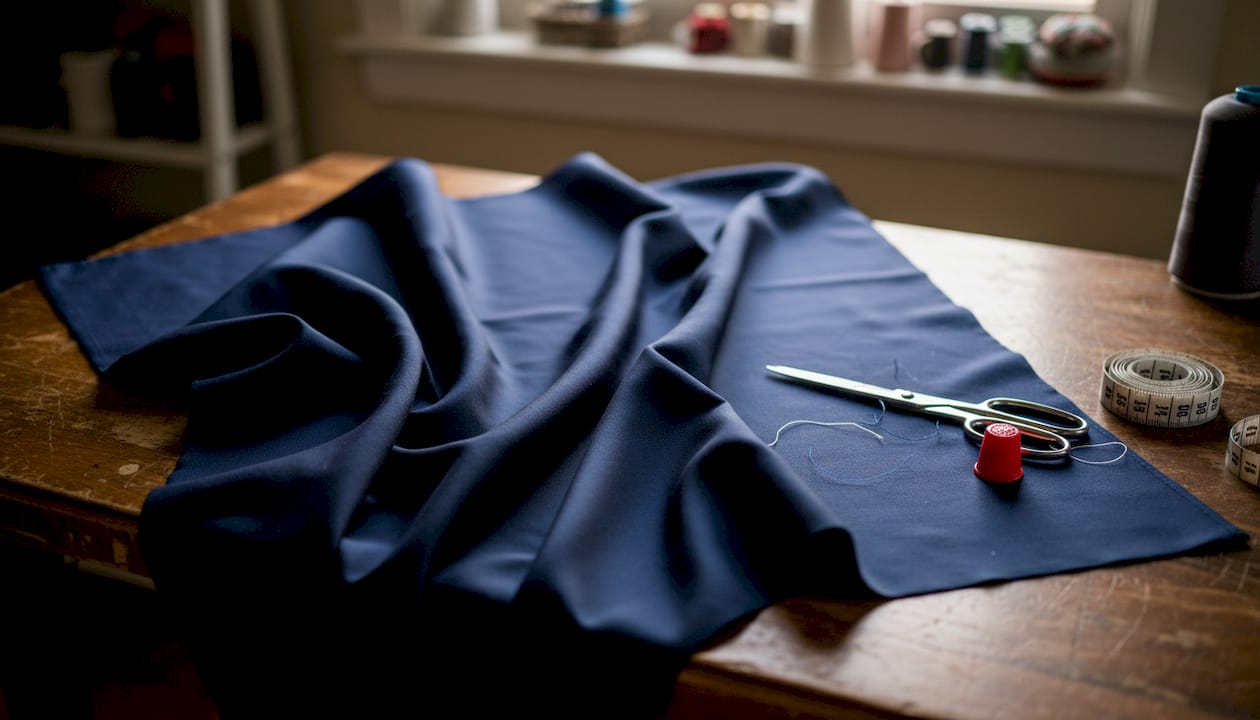
The plain weave structure means the threads interlace in a simple over-under pattern, which creates a firm, stable body. This gives taffeta its stiffness and allows it to hold shape beautifully, which is why it’s so popular for structured skirts, ballgowns, and formal wear. Unlike softer fabrics that drape and cling, taffeta stands away from the body and creates volume on its own.
The sheen of taffeta comes from the tightly packed threads and the way they reflect light. It’s not the liquid-mirror gloss of satin, but rather a subtle, refined luster that catches light differently depending on the angle. This effect is even more dramatic in shot taffeta, where the warp and weft threads are different colors, creating an iridescent, almost magical color shift when the fabric moves.
Here are the key identifiers every crafter should know when evaluating a fabric:
“Taffeta is a crisp, tightly woven plain-weave fabric known for its smooth, lustrous surface and characteristic rustling sound (‘scroop’) when moved.” — Britannica, Basic Weaves
You can explore the full range of taffeta fabric uses to see exactly how this distinctive material shows up in everything from couture gowns to event draping. For a broader picture of how taffeta fits among other materials, check out this overview of essential dress fabrics for designers and sewists alike.
Not all taffeta is created equal. The fiber content changes everything: the feel, the sheen, the care requirements, and the price tag. Traditional taffeta was made from silk, but modern versions are commonly produced from synthetic fibers like polyester, nylon, and acetate, and the structural look depends heavily on the weave and finishing process applied to whichever fiber is used.
Silk taffeta is the original, and it’s still considered the gold standard. It has an unmatched hand feel, a natural sheen that photographs beautifully, and a depth of color that synthetics rarely replicate. It’s breathable, lightweight, and carries that authentic scroop sound in a way that polyester versions can only approximate. The trade-off? Silk taffeta is expensive, fragile, sensitive to water, and almost always requires dry cleaning. It’s the choice for heirloom garments, couture work, and special occasion pieces where quality justifies the investment.
Polyester taffeta, on the other hand, is the workhorse of the taffeta family. It’s affordable, widely available, and far more forgiving in both sewing and care. It’s also more colorfast, meaning it holds dye better and resists fading over time. For home decor projects, costumes, event decorations, and practice garments, polyester taffeta delivers the visual impact of the real thing at a fraction of the cost.
Understanding the benefits of polyester as a fiber is useful for any crafter making decisions about long-term projects, especially when durability and budget both matter.
Here’s a side-by-side look at how silk and synthetic taffeta compare across the most relevant factors for DIY crafters:
| Feature | Silk taffeta | Polyester taffeta |
|---|---|---|
| Appearance | Rich, deep sheen | Bright, consistent sheen |
| Hand feel | Smooth, cool, refined | Slightly stiffer, uniform |
| Cost | High | Budget-friendly |
| Care | Dry clean only | Machine or hand washable |
| Durability | Delicate | More resilient |
| Best for | Formalwear, couture | Costumes, decor, practice |
| Scroop | Authentic, soft rustle | Present but less nuanced |
Pro Tip: If you’re new to working with taffeta, start with a polyester version. You’ll get comfortable with the fabric’s behavior, cutting quirks, and sewing challenges without the stress of working with expensive silk that punishes every mistake.
Walk into any fabric store and you’ll find taffeta, satin, and sateen sitting near each other on the shelf, all gleaming under the fluorescent lights. They look similar at a glance, but they behave very differently once you get them home.
The key difference starts with the weave structure. Plain weave fabrics like taffeta interlace threads in a strict over-under pattern, while satin weave is characterized by long floats that allow more thread surface to show on the face of the fabric. Those floats create satin’s signature ultra-smooth gloss, but they also make the fabric snag more easily and behave very differently under a needle. This is why both satin and taffeta can be shiny, but feel and perform so differently at the sewing machine.
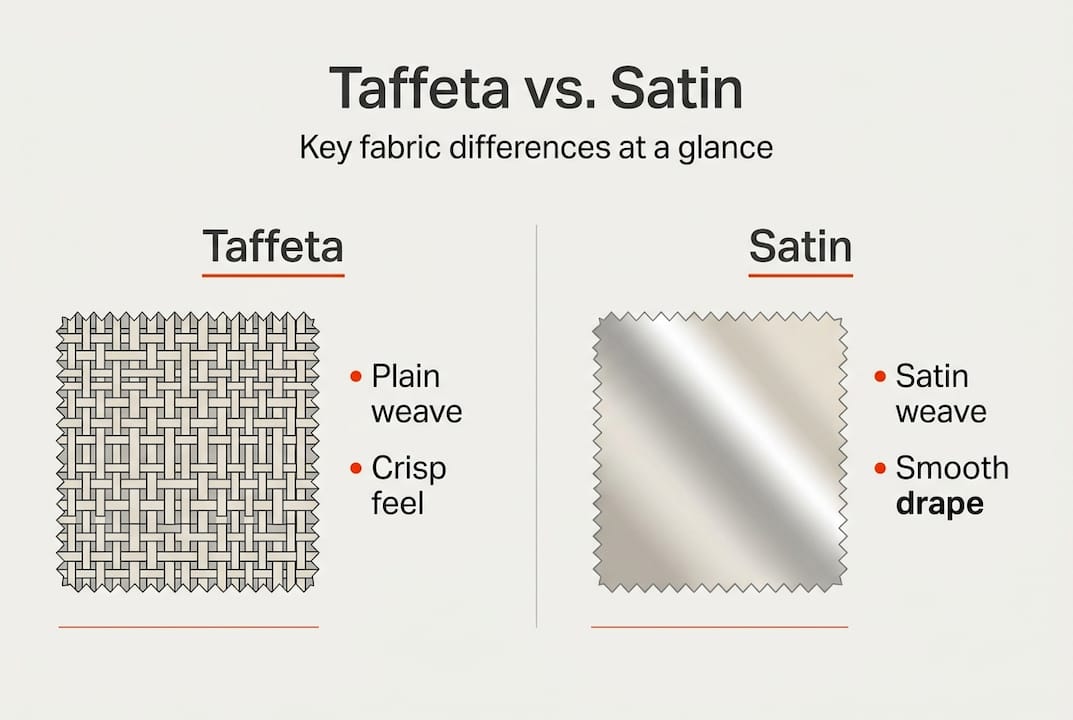
Sateen adds another layer of complexity. It uses the same float-based construction as satin but is typically woven from cotton rather than silk or synthetics. This gives it a softer hand feel and a matte-ish sheen compared to satin’s liquid gloss. For a deeper look at how these two fabrics relate, this guide to sateen vs taffeta covers the differences in practical detail.
Here’s a comparison that will help you choose the right fabric for your specific project:
| Feature | Taffeta | Satin | Sateen |
|---|---|---|---|
| Weave type | Plain weave | Satin weave (floats) | Satin weave (cotton) |
| Hand feel | Crisp, firm | Slippery, smooth | Soft, slightly matte |
| Sheen | Subtle luster | High gloss | Medium sheen |
| Drape | Structured, holds shape | Fluid, flowing | Moderate drape |
| Snag risk | Low | Higher | Moderate |
| Best use | Formal dresses, decor | Lingerie, linings | Bedding, soft apparel |
For a complete overview of how these fabrics fit into different garment categories, the guide to fabric types comparison is a helpful reference when you’re at the planning stage of a project.
When you’re at the store, here’s a quick checklist for identifying taffeta on the spot:
Taffeta rewards crafters who respect its quirks. The good news is that those quirks are manageable once you know what you’re working with. The best practices for sewing taffeta include using sharp, fine needles, preferring weights and clips over pins, working with straight stitches at the appropriate stitch length, and pressing very carefully to protect the surface.
Here’s a step-by-step approach for working with taffeta from start to finish:
For a broader overview of how these steps fit into a full garment-making workflow, this guide to apparel sewing steps walks through the complete process. If you’re working with silk taffeta specifically, the tips in this article about sewing silk will also apply.
Pro Tip: For curved seams and sleeves where taffeta refuses to ease smoothly, try stay-stitching the curved edge just inside the seam allowance before joining pieces. It gives you control without distorting the fabric.
Finishing a taffeta project is a satisfying moment. Keeping it looking great afterward takes just as much intention. Many taffetas are dry-clean only and are sensitive to water spots and unwanted creasing, so storage also needs to minimize crushing and contact damage.
Silk taffeta is the most sensitive. Even a single water drop can leave a visible mark once it dries. Heat warps it. Folding under pressure creates creases that may not fully recover. Polyester taffeta is more forgiving, but it still deserves careful handling.
Here’s what proper taffeta care looks like in practice:
“Many taffetas are dry-clean only and are sensitive to water spots and unwanted creasing; storage should minimize crushing and creasing.” — Threads Magazine
Cleaning:
Drying and ironing:
Storage:
For a full overview of how these principles apply across different fabric types, the guide to caring for fabrics is a practical resource worth bookmarking.
Most guides treat taffeta’s quirks as problems to solve. We’d argue the opposite: taffeta’s firmness, its scroop, its tendency to hold dramatic shapes are exactly what make it extraordinary for projects where you want maximum visual impact with minimal internal structure.
A full circle skirt in taffeta needs no crinoline. A backdrop for an event needs no stiffening spray. A decorative bow or sash in taffeta holds its shape for hours without a single stitch of support. That’s not a limitation. That’s a superpower.
The crafters who get the most out of taffeta for creative projects are the ones who stop fighting the fabric and start designing around its nature. Let it be stiff. Let it rustle. Let it catch the light in ways that softer fabrics simply can’t. When you embrace those qualities intentionally, the results look expensive and intentional rather than accidental.
Our honest take: taffeta has a steeper learning curve than cotton or chiffon, but it pays back every minute of that investment with results that genuinely turn heads.
You now have the knowledge to choose, sew, and care for taffeta with real confidence. The next step is finding quality fabric that makes your projects shine.
At fabric-fabric.com, we carry a curated selection of taffeta and other specialty fabrics suited for everything from structured gowns to stunning backdrop fabrics for events and photography. If you’re working on home decor fabric projects like drapery, table runners, or decorative pillows, our collections are organized by end use so you can find exactly what you need without digging through irrelevant options. Our team understands what DIY crafters and passionate sewists actually need, and the product descriptions are written to help you make the right call before you buy.
Most taffetas, especially silk taffeta, should be dry cleaned because water causes spots and creases that are difficult to reverse. Some synthetic versions may tolerate careful hand washing in cool water, but always check the care label first.
Taffeta works beautifully for formalwear, structured dresses, costumes, and linings, and it’s equally impressive for home decor applications. Its firm body and shimmer make it ideal for drapery, event backdrops, and decorative accessories that need to hold their shape.
Taffeta can be tricky at first because it is slippery, frays quickly, and is easily damaged by pins and needles. With the right tools and techniques, beginners can absolutely succeed, but starting with a less expensive polyester version is a smart move.
Taffeta has a crisp, firm body and produces a distinctive rustling sound called scroop when you handle it. That combination of stiffness and audible rustle sets it apart from virtually every other shiny fabric you’ll encounter.
Absolutely. The fiber determines price, care requirements, sheen depth, and overall feel. Silk taffeta is luxurious and delicate, while polyester versions offer durability, easier care, and a more accessible price point for everyday crafting.