

 Canadian Dollars

What is chintz? Guide to glazed cotton fabric for home decor
Posted by BLG on 2026 Apr 13th
Posted by BLG on 2026 Apr 13th

TL;DR:
- Chintz is a glossy, patterned cotton fabric with historical roots and modern interior appeal.
- Its sheen is created through calendering and it is versatile for curtains, upholstery, and crafts.
- Proper care involves gentle cleaning to preserve the glaze, with chintz often used as an accent in decor.
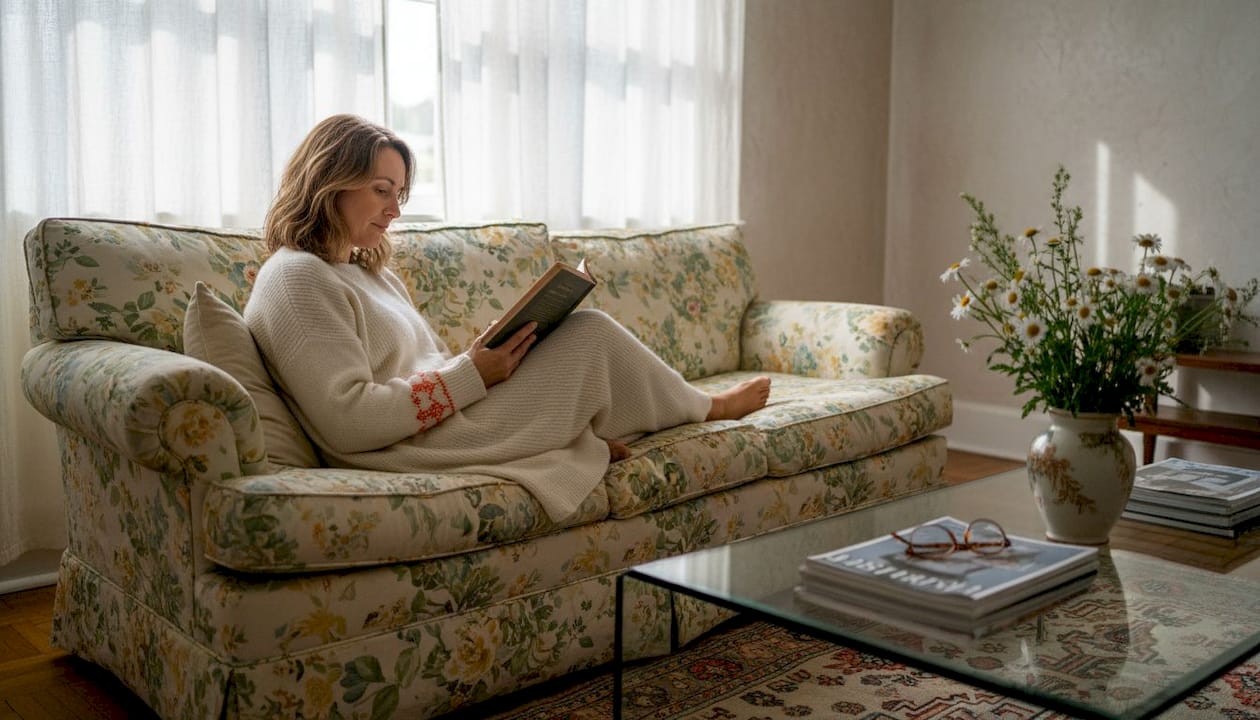
Chintz has a reputation problem. Many people hear the word and picture a dusty grandmother’s parlor or cheap, faded floral curtains. But that picture is wrong. Chintz is a plain-woven cotton fabric with a glazed, shiny finish and bold patterns that have decorated homes for centuries. Far from outdated, chintz is showing up in some of the most stylish interiors of 2026. This guide walks you through what chintz is, how it’s made, how to use it, and how to care for it so you can decide whether it belongs in your next project.
| Point | Details |
|---|---|
| Glazed cotton fabric | Chintz stands out for its shiny glazed finish, setting it apart from other cottons. |
| Decor options | It’s ideal for stylish furniture, curtains, and craft accents in home decor. |
| Handle with care | To preserve its sheen and durability, avoid washing chintz harshly and opt for dry cleaning. |
| Modern design use | Mixing patterns and scales lets you use chintz in fresh, updated ways beyond retro looks. |
At its core, chintz is a cotton fabric with a glossy surface finish. That shine is what sets it apart from every other floral or printed cotton on the market. Chintz features a glazed finish achieved through a process called calendering, where the fabric is pressed between heavy rollers to create that signature sheen. The patterns are typically bold florals, paisleys, or multicolored prints on a light background.
Here’s a quick look at chintz’s core features:
| Feature | Detail |
|---|---|
| Base material | Plain-woven cotton (sometimes polyester blend) |
| Finish | Glazed, shiny surface via calendering |
| Common patterns | Florals, paisleys, multicolored prints |
| Weight | Medium to heavy (150–300 gsm) |
| Primary uses | Curtains, upholstery, cushions, crafts |
Chintz has roots that go back centuries. It originated in India, where artisans produced hand-painted and block-printed cotton fabrics prized across Asia and Europe. Traditional Indian chintz was valued for its colorfastness, achieved using mordants (chemical fixatives) that were not available in Europe at the time. European demand was so intense that France and England actually banned chintz imports in the early 1700s to protect their own textile industries.
That ban didn’t kill the love for chintz. It pushed European manufacturers to develop their own versions using copperplate printing, which allowed for finer, more detailed patterns. By the 18th and 19th centuries, chintz was everywhere in European interiors, from grand country houses to middle-class parlors.
“Chintz became one of the most politically charged fabrics in history. Entire trade laws were written because of it.”
The word “chintzy” eventually entered the English language as a slang term for something cheap or gaudy, which unfairly tarnished the fabric’s reputation. But the actual textile has always been a quality product. Understanding that history helps you appreciate why chintz is worth a second look today.
Knowing how chintz is made helps you shop smarter and care for it better. The production process is what gives chintz its unique look and performance.
Here’s how plain cotton becomes glazed chintz:
The calendering step is the magic. Those heated rollers essentially polish the fabric surface, flattening the fibers and creating a smooth, light-reflecting finish. The coating also reduces wrinkling, which is a genuine practical benefit for home projects.
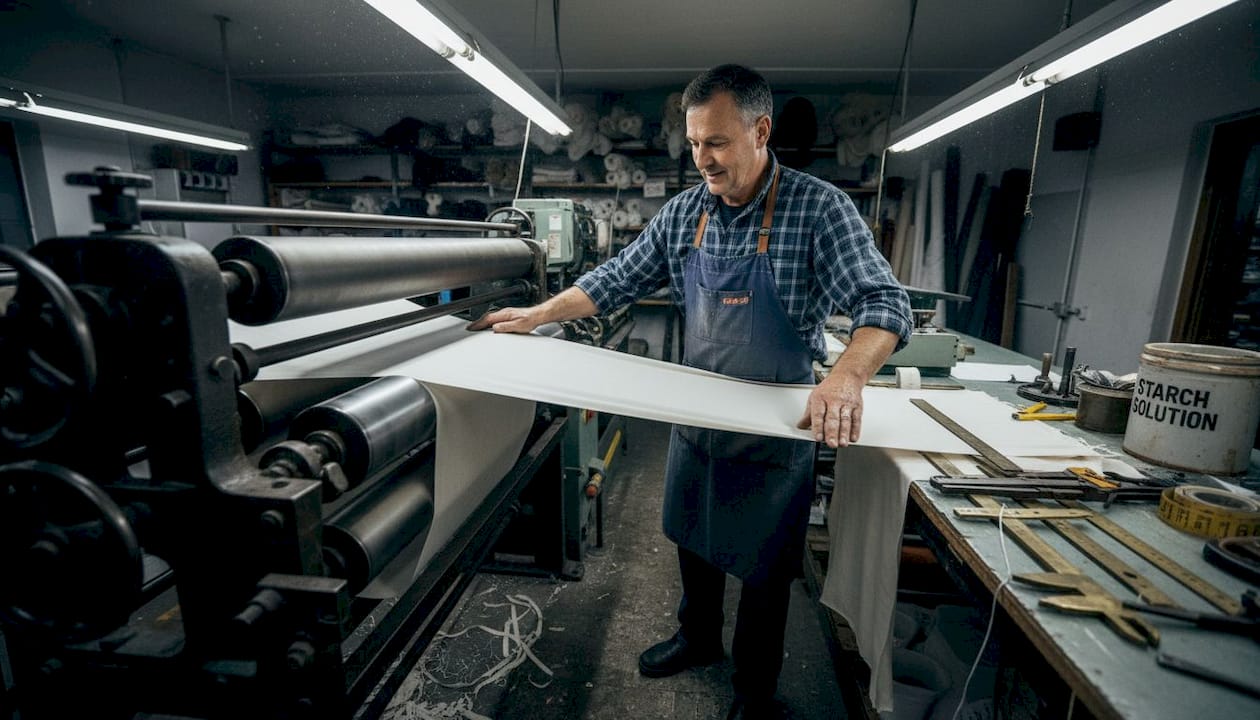
Statistic to know: Chintz typically weighs 150 to 300 gsm, placing it in the medium-heavy category. That weight makes it sturdy enough for upholstery and structured curtains without being stiff or hard to work with.
Modern chintz often includes polyester blends, which improve durability and help the glaze last longer through light use. Pure cotton chintz has a softer, more natural drape, while blended versions hold their shape better over time. When you’re choosing upholstery fabric, knowing whether you’re working with pure cotton or a blend affects everything from cutting to cleaning.
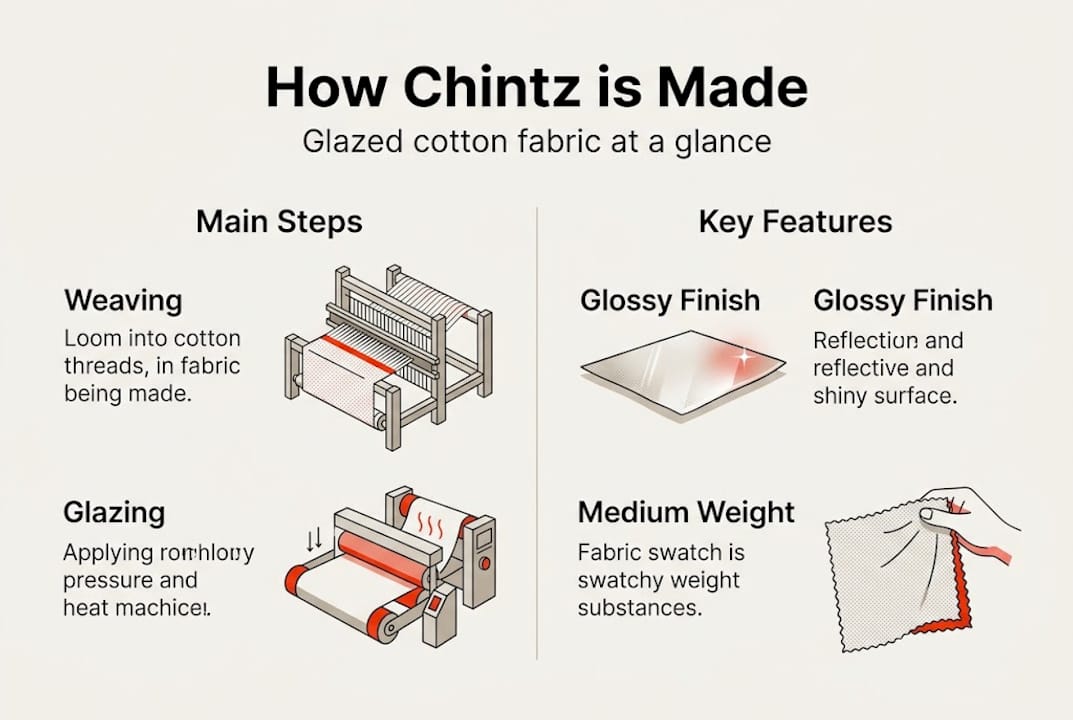
Pro Tip: To spot true glazed chintz, hold the fabric up to a light source. Genuine chintz will reflect light evenly across the surface with a smooth, almost satin-like sheen. A printed cotton without glazing will look flat and matte by comparison. If you’re unsure, check the fabric selection tips before buying.
Chintz is one of the most versatile decorative fabrics you can work with. Its combination of pattern, sheen, and weight makes it a natural fit for a wide range of home projects.
Top uses for chintz fabric:
Here’s how chintz compares to other popular decorative fabrics:
| Fabric | Sheen | Durability | Best use | Care |
|---|---|---|---|---|
| Chintz | High | Medium-high | Curtains, cushions, upholstery | Dry clean or gentle wash |
| Linen | None | High | Slipcovers, casual curtains | Machine washable |
| Velvet | Medium | Medium | Formal upholstery | Dry clean |
| Sateen | High | Medium | Bedding, light drapes | Machine washable |
For styling advice, chintz works best when it’s balanced. Pair a floral chintz cushion with solid-colored linen or a simple stripe. If you’re upholstering a sofa, check the sofa fabric guide and consider using chintz for accent chairs rather than the main sofa for a curated, not overwhelming, effect. Soft neutrals, warm creams, and sage greens tend to work well as companion colors.
Chintz requires dry cleaning or gentle care to preserve the glaze, so factor that into your project planning before you commit to large upholstered pieces.
Pro Tip: Avoid using chintz on every surface in a room. One or two chintz pieces create a focal point. More than that tips into pattern overload, which is exactly the “granny chic gone wrong” look that gives chintz a bad name. For more ideas on mixing fabrics, explore sofa fabric names to find complementary options.
The glaze on chintz is beautiful, but it needs protection. Understanding why the finish wears off helps you make smarter choices about cleaning and storage.
The glaze is applied as a coating, not woven into the fabric itself. Heat, friction, and water all break down that coating over time. Machine washing is the fastest way to strip the finish, because the agitation and hot water dissolve the starch or resin layer. Starch-based glazes wear off with washing, which is why proper care extends the life of your chintz pieces significantly.
Here’s how to clean and maintain chintz correctly:
For a thorough overview of handling different fabric types, the fabric care guide covers everything from pre-washing to storage.
Dealing with stains: Blot stains immediately with a clean, dry cloth. Never rub, as rubbing spreads the stain and damages the glaze. For stubborn spots, a small amount of mild dish soap diluted in cool water applied gently with a soft cloth works well on most surface stains.
Pro Tip: If your chintz has lost some of its sheen after cleaning, a light spray starch applied before ironing can partially restore the finish. It won’t replicate the original calendered glaze, but it refreshes the surface enough to extend the fabric’s life. Check textile care basics for more tips on restoring fabric finishes.
Storage tips:
For more detailed guidance, fabric care basics is a useful resource before starting any new project.
Here’s the honest truth about chintz: it never actually went out of style. It just got associated with excess. The 1980s saw chintz layered on every surface in sight, and the backlash was inevitable. The word “chintzy” dates to George Eliot in 1851, meaning cheap or tasteless, and that shadow never fully lifted.
But the grandmillennial design trend of the 2020s has done something smart. It brought chintz back not as a room-filling wallpaper-and-curtains-and-sofa statement, but as a single, intentional accent. One chintz armchair in a room of clean lines and neutral walls reads as confident and eclectic, not cluttered.
The mistake most people make is treating chintz as an all-or-nothing fabric. Pairing chintz with antiques or modern contrasts avoids the dated look entirely. Mix pattern scales too: a large-scale floral chintz cushion pairs well with a small geometric print throw, not another large floral. That contrast is what makes a room feel designed rather than decorated.
Our take: chintz rewards restraint. Use it as the exclamation point in a room, not the whole sentence.
Ready to bring some chintz into your home? Whether you’re planning a full upholstery project or just want to experiment with a few cushion covers, having the right fabric makes all the difference.
At fabric-fabric.com, you’ll find a wide selection of home decor fabrics sold by the yard, including classic and contemporary chintz options that work for curtains, upholstery, and crafts. Browse the full home decor fabric selection to find patterns and weights that match your project. If you’re looking for something beyond chintz for a backdrop or event project, the backdrop fabrics collection offers even more options. Whatever your vision, the right fabric is waiting.
Chintz is a plain-woven cotton fabric with a glazed, shiny finish. Modern versions may include polyester for added durability and a longer-lasting glaze.
The sheen comes from calendering, where the fabric is coated with starch, wax, or resin and then pressed between heated rollers to create a smooth, light-reflecting surface.
Machine washing strips the glaze, so dry cleaning or gentle hand washing is recommended for most chintz fabrics, especially upholstered pieces and formal curtains.
Yes. Chintz weighs 150 to 300 gsm and is colorfast, making it a solid choice for upholstery when properly maintained and dry cleaned as needed.