

 Canadian Dollars

How to Choose Upholstery Fabric: A Practical Guide
Posted by BLG on 2025 Sep 21st
Posted by BLG on 2025 Sep 21st


Choosing upholstery fabric might sound simple. After all, there are thousands of colors and textures out there vying for your attention. But most people are shocked to learn that the right fabric in a busy family room should withstand over 20,000 abrasion cycles according to industry durability standards. It turns out, picking the perfect material is less about what looks good on a swatch and more about matching it to real life demands you never even thought about.
| Key Point | Explanation |
|---|---|
| 1. Define your project requirements first | Assess practical and aesthetic needs to guide fabric selection effectively. |
| 2. Evaluate fabric types and durability | Compare natural and synthetic fabrics based on their performance and suitability for your project. |
| 3. Consider color and pattern strategically | Choose colors and patterns that enhance your interior design and convey the desired mood. |
| 4. Test fabric samples for comfort | Evaluate the tactile qualities of fabric to ensure a pleasant user experience, considering stretch and warmth. |
| 5. Make informed final selection | Score fabric samples against original requirements, considering long-term maintenance and costs. |
Choosing the right upholstery fabric starts with a clear understanding of your specific project requirements. This crucial first step determines the success of your entire fabric selection process. Before diving into color swatches and textile samples, you need to assess the practical and aesthetic demands of your upholstery project.
Project Context Matters
Begin by examining the specific environment where the upholstered item will be used. A living room sofa experiences different wear patterns compared to a dining room chair or a home office armchair. Consider factors like frequency of use, potential exposure to sunlight, risk of spills, and the presence of children or pets. According to New Mexico State University’s fabric selection guide, understanding the intended use helps narrow down fabric choices significantly.
Carefully evaluate the functional requirements for your upholstery project. Will the fabric need to withstand heavy daily use, or is it for a more decorative piece? Some areas require higher durability ratings. For instance, a family room sofa needs more robust fabric than a rarely used guest room chair. This assessment helps you prioritize fabric characteristics like abrasion resistance, stain repellency, and cleaning ease.
Visually imagine how the fabric will integrate with your existing interior design. Color, texture, and pattern play critical roles in creating a cohesive aesthetic. Take time to consider your current room color palette, furniture style, and overall design theme. The fabric you choose should complement rather than clash with your existing decor.
Don’t forget practical considerations like budget and maintenance. Some high performance fabrics cost significantly more but offer longer lifespan and easier cleaning. Others might require professional cleaning or have specific care instructions. Your budget and willingness to maintain the fabric will influence your final selection.
To successfully complete this step, you should have a clear document or mental checklist that outlines:
By thoroughly defining your project requirements upfront, you create a strategic framework that guides your fabric selection process, ensuring you choose a textile that is both beautiful and functional.
After defining your project requirements, the next critical step is evaluating fabric types and their durability. Understanding the characteristics of different upholstery fabrics will help you make an informed decision that balances aesthetic appeal with practical performance.
Natural vs. Synthetic Fabrics
Upholstery fabrics broadly fall into two primary categories: natural and synthetic materials. Natural fabrics like cotton, wool, and linen offer unique textures and breathability but often require more maintenance. Cotton provides soft comfort but can wrinkle and stain easily. Wool delivers exceptional durability and natural stain resistance, making it ideal for high traffic areas. Leather represents another natural option that ages beautifully and develops a rich patina over time.
Synthetic fabrics, including polyester, nylon, and microfiber, bring remarkable durability and practical advantages. These materials resist staining, fading, and wear much better than many natural alternatives. Microfiber, in particular, stands out for its incredible resistance to spills and ease of cleaning. Polyester blends offer strength and color retention, making them excellent choices for furniture exposed to sunlight or frequent use.
Measuring Fabric Performance
To truly understand a fabric’s suitability, look beyond surface appearances and examine its technical performance ratings. According to research analyzing upholstery material properties, professional textile evaluations typically measure several key durability indicators. Martindale rub count represents one critical metric, indicating how many abrasion cycles a fabric can withstand before showing wear. Fabrics with higher Martindale ratings (typically above 20,000 cycles) perform better in high traffic environments.
Other important performance factors include colorfastness, pilling resistance, and tear strength. Colorfastness measures how well a fabric maintains its color under different conditions. Pilling resistance determines whether the fabric develops those annoying small balls of fiber with use. Tear strength indicates the fabric’s ability to resist ripping or tearing under stress.
For comprehensive fabric evaluation, consider requesting samples and conducting simple tests. Stretch the fabric sample to check its recovery, rub it against a contrasting surface to test color transfer, and observe how it responds to simulated spills. These hands on assessments provide insights no technical rating can fully capture.
Below is a comparison table summarizing the key characteristics, advantages, and limitations of natural and synthetic upholstery fabrics as discussed in the article.
| Fabric Type | Notable Materials | Advantages | Limitations |
|---|---|---|---|
| Natural | Cotton, Wool, Linen | Unique textures, breathability, natural feel | Higher maintenance, prone to staining/wrinkling |
| Leather | Leather | Ages beautifully, develops patina, durable | Expensive, requires special care |
| Synthetic | Polyester, Nylon | Strong, colorfast, durable, resists fading | May lack breathability, sometimes less natural feel |
| Microfiber | Microfiber | High stain resistance, easy to clean, durable | May hold heat, can appear less luxurious |
| Polyester Blends | Polyester blends | Good strength, color retention, versatile | Prone to pilling in lower grade blends |
To successfully complete this step, verify that you have:
By methodically evaluating fabric types and durability, you transform fabric selection from a guessing game into a strategic decision.
Color and pattern selection represent more than just aesthetic choices they are powerful design tools that can transform the entire mood and perception of a space. After evaluating fabric durability, this step focuses on finding a textile that not only performs well but also beautifully complements your existing interior design.
Understanding Color Psychology
Colors communicate emotions and set the tone for your living space. Warm colors like reds, oranges, and yellows create energy and intimacy, making them perfect for social spaces like living rooms. Cool colors such as blues, greens, and purples evoke calmness and can make rooms feel more spacious and serene. Neutral tones provide flexibility and serve as excellent foundational colors that can adapt to changing decor styles.
When selecting colors, consider the visual weight and light interaction of your chosen fabric. Darker colors tend to make spaces feel smaller and more intimate, while lighter shades can create an illusion of openness. Textured fabrics in neutral tones can add depth and interest without overwhelming the room. Pay attention to how natural and artificial light interacts with different fabric colors throughout the day.
Pattern selection requires equally thoughtful consideration. According to University of Kentucky’s design guidance, patterns can dramatically influence a room’s visual dynamics. Large, bold patterns make strong statements and work best in spacious rooms with minimal competing design elements. Smaller, more intricate patterns create visual texture and can help camouflage minor wear and tear. Geometric patterns offer a modern, structured look, while organic or floral designs introduce softness and natural movement.
When mixing patterns, follow the rule of thirds. Select one dominant large scale pattern, one medium scale pattern, and one small scale pattern. This approach creates visual harmony without overwhelming the space. Solid colors can serve as neutralizing elements that help balance more complex patterns.
Consider the existing color palette and design style of your room. Your upholstery fabric should complement rather than compete with other design elements. Take color swatches and fabric samples home, and observe them in your actual space under different lighting conditions. Natural daylight and evening artificial light can significantly alter how colors appear.
To successfully complete this step, ensure you have:
By approaching color and pattern selection strategically, you transform upholstery fabric from a mere covering into a powerful design statement.
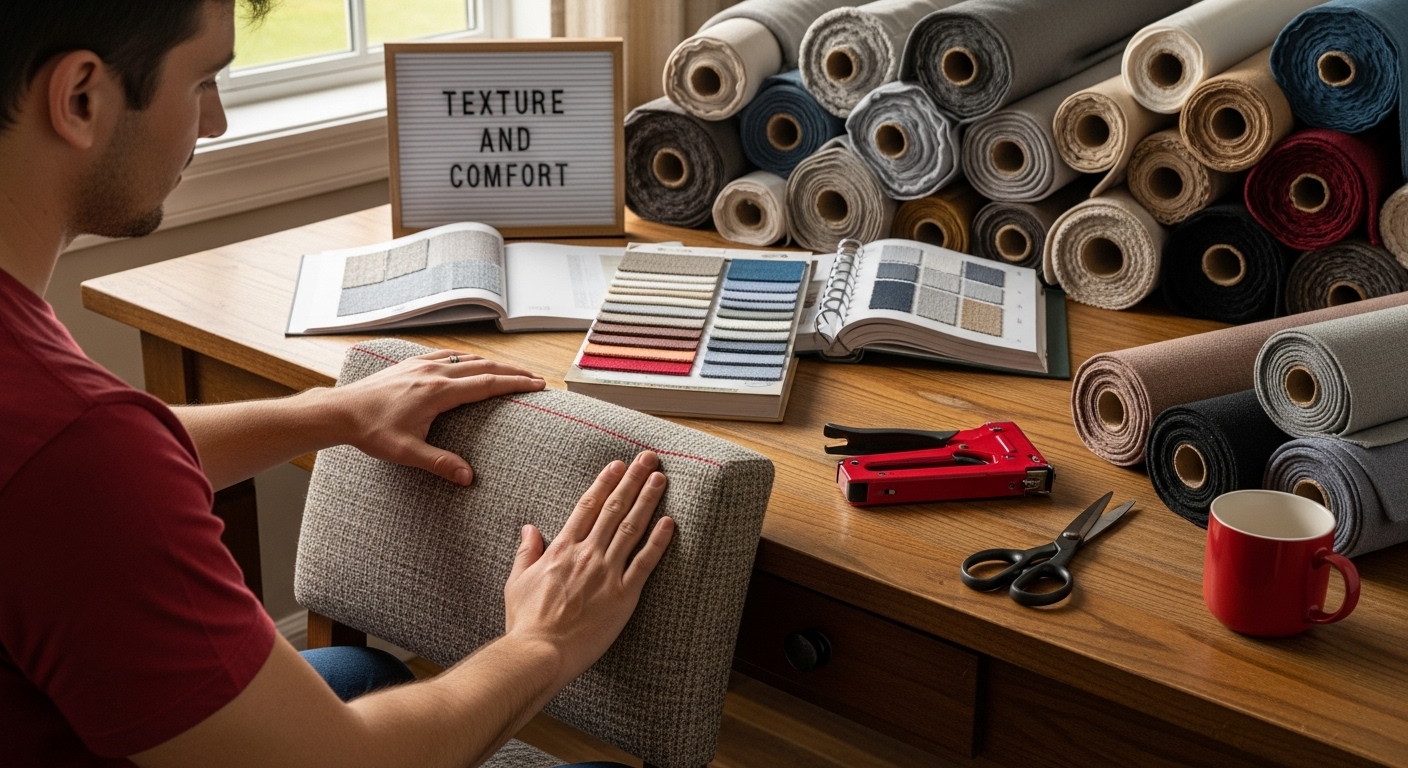
Texture and comfort are critical yet often overlooked aspects of upholstery fabric selection. While durability and appearance matter, the tactile experience of your fabric ultimately determines how enjoyable and functional your furniture will be. This step moves beyond visual assessment to explore the sensory qualities of your potential fabric choices.
Sensory Evaluation Techniques
Begin your fabric testing by engaging multiple senses. Touch is your primary tool for understanding fabric comfort. Run your hands across different fabric samples, paying attention to how they feel against your skin. Softness, smoothness, and flexibility are key indicators of comfort. Some fabrics might look beautiful but feel scratchy or stiff, making them uncomfortable for prolonged contact.
Consider the fabric’s thermal properties. How does it feel in different temperatures? Some materials like wool and velvet provide warmth, while others like lightweight cotton or linen feel cooler. According to research from the Textile Protection and Comfort Center, subjective evaluation of fabric hand involves assessing qualities like warmth, dryness, and overall tactile sensation.
Stretch and recovery represent another crucial comfort factor. Gently pull the fabric sample and observe how it responds. High quality upholstery fabrics should have good elasticity, returning to their original shape without significant distortion. This characteristic ensures the fabric maintains its appearance and comfort over time. Fabrics that easily stretch out of shape or fail to recover will look worn and feel less supportive.
Simulate real world interactions during your testing. Sit on fabric samples, drape them over furniture, and observe how they behave. Some fabrics might look stunning on a sample card but feel entirely different when actually used. Pay attention to how the fabric moves and responds to body weight and movement. Does it bunch up? Does it create uncomfortable pressure points?
Consider potential sensitivities and practical concerns. Some individuals have allergies or skin reactions to certain fabric types. Wool, for instance, can feel itchy to sensitive skin. Synthetic fabrics might cause sweating or feel less breathable compared to natural fibers. If you or frequent users of the furniture have specific sensitivities, factor these into your evaluation.
To successfully complete this step, verify that you have:
By thoroughly testing fabric samples for texture and comfort, you ensure that your final selection looks beautiful and feels wonderful to use.
After meticulously evaluating fabric types, durability, color, pattern, and comfort, you’ve reached the pivotal moment of making your final upholstery fabric selection. This step transforms your careful research into a tangible purchase that will define your interior space for years to come.
Comparative Assessment
Review all the fabric samples you’ve collected through previous steps. Lay them out side by side in the actual space where they will be used. Natural and artificial lighting can dramatically alter how fabrics appear, so observe your top choices at different times of day. Comparative evaluation allows you to see how each fabric interacts with your existing furniture, wall colors, and overall room aesthetic.
Prioritize your initial project requirements. Revisit the checklist you created in the first step and objectively score each fabric sample against those criteria. Which fabric best meets your durability needs? Which one most effectively balances aesthetic appeal with practical performance? Some fabrics might excel in one area but fall short in another, so careful weighing of priorities is crucial.
Consider the long term investment. While budget is important, the cheapest option is rarely the most economical. A slightly more expensive fabric with superior durability and stain resistance might save you money on replacements and professional cleaning in the future. Look beyond the initial price tag and evaluate the fabric’s total cost of ownership.
Before making a final purchase, request additional information from the fabric supplier. Ask about specific care instructions, recommended cleaning methods, and any warranties or guarantees. Some manufacturers offer performance guarantees or can provide detailed maintenance guidelines that might influence your decision.
If possible, purchase a small extra quantity of your chosen fabric. This provides insurance for future repairs or allows you to create complementary throw pillows or additional accessories. Professional upholsterers recommend purchasing 10 15% more fabric than your initial measurements to account for pattern matching and potential mistakes during installation.
To successfully complete this step, ensure you have:
By approaching your final selection with a strategic and comprehensive mindset, you transform fabric shopping from a potentially overwhelming task into a confident, informed decision.
Use the checklist below to confirm you have completed each recommended step during your upholstery fabric selection process, as outlined in the guide.
| Step | Completion Criteria |
|---|---|
| Define Project Requirements | Usage, wear, aesthetics, budget, and maintenance clearly documented |
| Evaluate Fabric Types | Natural/synthetic properties, ratings, and sample testing reviewed |
| Consider Color & Pattern | Color psychology, lighting impact, room harmony, and sample placement done |
| Test Texture & Comfort | Tactile testing, stretch, warmth, and real-world simulation performed |
| Final Selection & Purchase | Comparative scoring, care info checked, extra fabric ordered |
Choosing upholstery fabric can feel overwhelming when you are balancing style, durability, comfort, and maintenance. As explained in our practical guide, matching the right textile to your unique home or project is about more than just picking a color. You need a trustworthy source that helps you meet functional requirements like abrasion resistance and fabric care while inspiring you with a wide range of patterns and textures.
Stop guessing and start selecting with confidence. Explore hundreds of upholstery and home decor fabrics—each with clear descriptions, practical recommendations, and up-front pricing—directly at Fabric-Fabric’s Home.
Do not let indecision delay your project any longer. Discover the ideal fabric for your sofa, chair, or creative vision among our curated collection. Enjoy helpful resources, regular exclusive offers and discounts, and an easy, secure shopping experience. Visit Fabric-Fabric now and bring your next upholstery project to life with confidence. Act now and take advantage of our current promotions before they end.
You should consider the usage environment, wear and tear, desired aesthetic characteristics, budget constraints, and maintenance capabilities. Each of these factors will guide you in selecting the most suitable fabric for your project.
Natural fabrics, such as cotton and wool, offer unique textures and breathability but may require more maintenance. Synthetic fabrics, like polyester and microfiber, are typically more durable, resist stains, and are easier to clean, making them ideal for high-traffic areas.
To evaluate durability, check technical performance ratings like Martindale rub count, which indicates how many abrasion cycles the fabric can withstand before showing wear. Look for high ratings (above 20,000 cycles) and also consider factors such as colorfastness and pilling resistance.
Color and pattern selection can dramatically affect the mood and vibe of a space. Colors can evoke different emotions, while patterns contribute to the visual dynamics of a room. A well-chosen fabric can enhance or transform the overall aesthetic of your interior design.