

 US Dollar

What is chiffon fabric? Uses, care, and expert tips
Posted by BLG on 2026 Apr 2nd
Posted by BLG on 2026 Apr 2nd

TL;DR:
- Chiffon is a lightweight, sheer fabric with a soft drape and subtle puckered texture.
- It differs from georgette and organza in weight, texture, and drape, suited to different projects.
- Proper techniques and tools are essential for sewing chiffon successfully and maintaining its delicate quality.
Not all sheer fabrics are created equal. Walk into any fabric store and you’ll find airy, lightweight textiles that look similar at first glance, but behave completely differently once you start cutting and sewing. Chiffon stands apart from the crowd with a unique weave structure, a fluid drape that catches the light, and a slightly textured surface that gives finished garments an unmistakable elegance. Whether you’re planning a bridal gown, a flowing blouse, or a dreamy event backdrop, understanding what chiffon actually is will save you time, money, and frustration. This guide covers everything: what chiffon is, how it compares to similar fabrics, where it shines, and how to sew and care for it.
| Point | Details |
|---|---|
| Chiffon defined | Chiffon is a sheer, lightweight fabric known for its soft drape and slight texture. |
| Major differences | Chiffon stands out from organza and georgette by its fluid movement and semi-transparency. |
| Practical uses | Chiffon is popular in fashion, event décor, and creative DIY projects because of its versatility. |
| Sewing essentials | Fine needles, sharp cutting tools, and gentle handling are crucial for working with chiffon. |
| Care tips | Hand-washing and low-heat ironing help preserve chiffon’s delicate structure. |
Chiffon is one of those fabrics that looks deceptively simple but is technically fascinating. It is a lightweight, sheer, plain-woven fabric characterized by its soft drape, slightly puckered crepe-like texture, and transparency, created using alternating S-twist and Z-twist yarns that partially untwist during weaving. That alternating twist is the secret behind chiffon’s subtle texture and its ability to move so gracefully.
The physical result is a fabric that feels almost weightless in your hands. It is sheer enough to see through, yet it has enough body to hold soft folds and flowing silhouettes. The slight puckering on the surface catches light differently than a flat weave, giving chiffon that signature luminous quality you notice on red carpets and in bridal boutiques.
Chiffon comes in several fiber varieties, each with its own personality:
Historically, chiffon originated in France (the word means “rag” or “cloth” in French) and was originally made exclusively from silk. It became a staple of haute couture in the early 20th century. When synthetic fibers arrived in the mid-1900s, polyester chiffon made the fabric accessible to everyday sewers and crafters worldwide.
Pro Tip: To visually identify authentic chiffon, hold the fabric up to light. Real chiffon will be sheer with a subtle, even texture across the surface. If it looks completely flat and glassy, it is more likely organza. If it feels heavier and more crinkled, it is probably georgette. Explore different dress fabric types to sharpen your eye for telling them apart.
Once you know what chiffon is, the next challenge is knowing when to choose it over similar fabrics. Georgette and organza are the two most common look-alikes, and picking the wrong one can completely change how a finished project looks and feels.
Here is a direct comparison to make the decision easier:
| Property | Chiffon | Georgette | Organza |
|---|---|---|---|
| Weight | Very light | Medium light | Very light |
| Texture | Slight puckered crepe | More crinkled, matte | Smooth, crisp |
| Sheen | Soft, subtle | Low sheen | Crisp, matte |
| Drape | Fluid, flowing | Moderate drape | Stiff, structured |
| Best uses | Dresses, overlays, scarves | Blouses, full skirts | Structured bodices, collars |
As a general rule, chiffon excels in fluid movement, while georgette is heavier with less sheer quality and more crinkle, and organza is stiffer with a crisp, matte finish designed for structure rather than flow.
“Chiffon’s defining advantage is its ability to move with the body rather than against it. No other sheer fabric achieves that same balance of transparency and graceful motion.”
Here is a quick guide to matching each fabric to the right project:
If you are working on a layered project, chiffon and organza fabric can actually complement each other beautifully. Use organza as an underlayer for structure and chiffon on top for that dreamy, flowing finish.
Chiffon’s combination of sheerness, movement, and elegance makes it one of the most versatile fabrics in both fashion and home décor. It is not just for ball gowns. Once you start working with it, you will find it showing up everywhere.
In fashion, chiffon is a go-to for:
Beyond apparel, chiffon is widely used in creative and décor projects. Chiffon fabric uses extend well into home décor and event styling, including sheer curtains, table runners, ceiling drapes, and photo booth backdrops for weddings and parties.
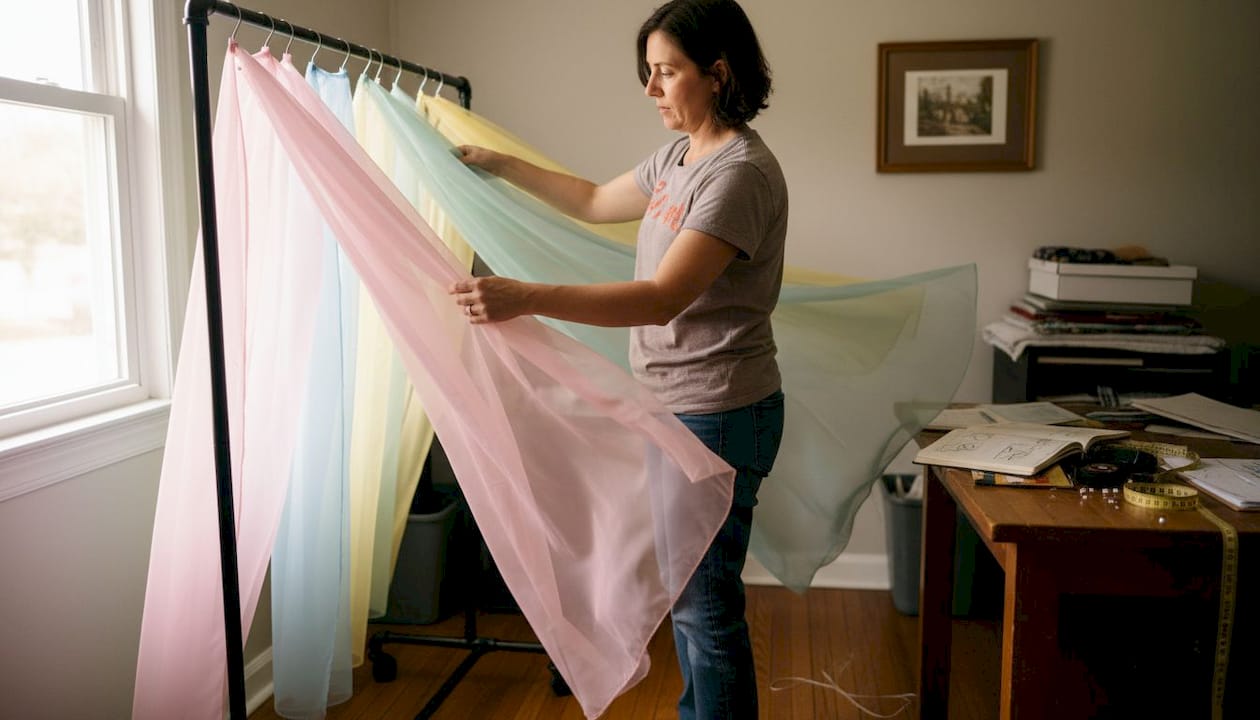
The reasons crafters keep reaching for chiffon come down to three things: movement, layering potential, and sheerness. You can layer multiple colors of chiffon to create an ombre effect without adding bulk. You can use it as a single layer for a subtle, romantic look. It responds to dye beautifully, making it a favorite for hand-dyeing and tie-dye projects.
Pro Tip: For event backdrops and ceiling installations, polyester chiffon is your best friend. It is lightweight enough to drape in long swags without pulling on fixtures, and it catches ambient lighting in a way that creates a genuinely magical atmosphere. Buy a few extra yards to experiment with swag depths before committing to your final installation.
Chiffon’s beauty comes with a real learning curve. It is slippery, it frays, and it shifts under the presser foot at the worst possible moments. But with the right tools and techniques, it is absolutely manageable.
Here are the most common sewing hurdles and how to solve them:
For tools and settings, this table gives you a quick reference:
| Setting | Recommendation |
|---|---|
| Needle size | 60/8 to 70/10 |
| Needle type | Sharp or microtex |
| Stitch length | 1.5 to 2mm |
| Presser foot | Standard or walking foot |
| Seam finish | French seam or rolled hem |
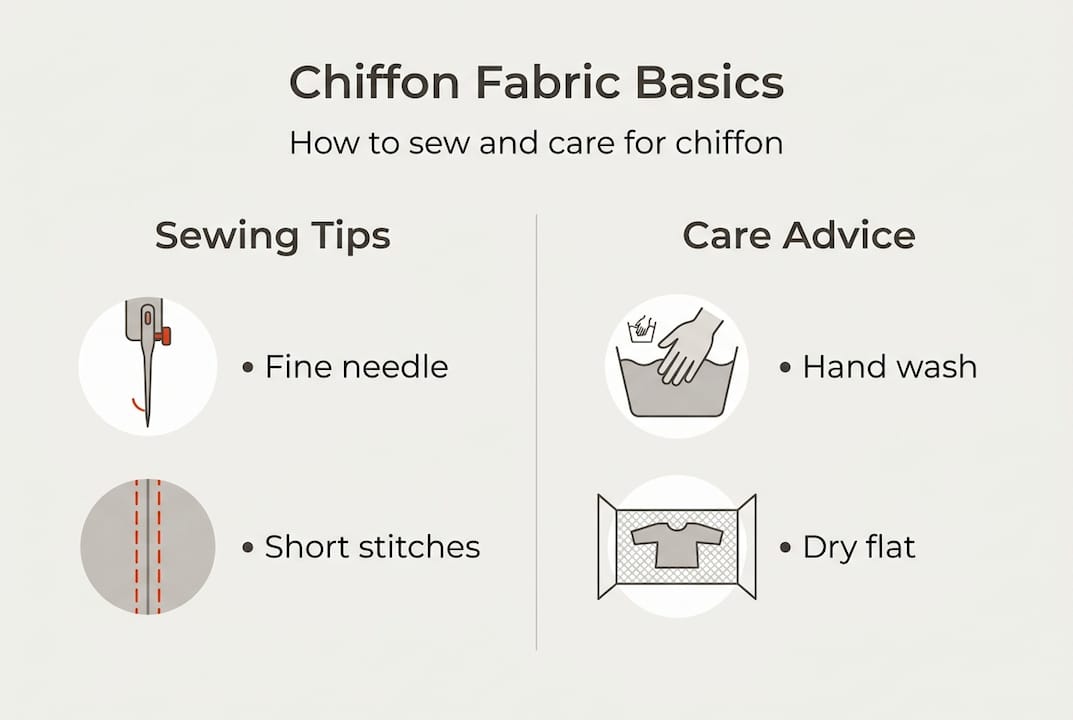
For sewing silk and chiffon, the principles overlap significantly. Stay-stitching around necklines and armholes before construction prevents stretching. Always cut single layer with sharp shears or a rotary cutter, using weights instead of pins to avoid distortion. Solid fabric cutting tips make a real difference with slippery fabrics like this.
For care, follow these guidelines:
Pro Tip: Pre-hang cut chiffon pieces for at least 24 hours before hemming. Chiffon has a natural “drop” on the bias grain, and skipping this step leads to uneven hems that no amount of pressing will fix. Always test stitch tension on a scrap first, and use a pressing cloth with low heat to avoid melts or shines. Good fabric care habits extend the life of your finished pieces significantly.
After working with dozens of fabric types, we keep coming back to chiffon for one simple reason: it rewards patience. Most fabrics are forgiving. Chiffon is not. It will show every skipped step, every rushed cut, every ignored tension setting. But when you slow down and give it the attention it asks for, the results are genuinely stunning in a way that flat, predictable fabrics simply cannot match.
There is a reason chiffon is considered a rite of passage for serious fashion crafters. Mastering it builds skills that transfer to every other delicate fabric you will ever touch. The precision you develop cutting chiffon single-layer on tissue paper makes you better at cutting velvet, silk, and lace.
Chiffon also gives you creative freedom that other sheers do not. Layering two or three colors creates depth and dimension. Gathering it creates volume without weight. Dyeing it produces soft, watercolor-like results. Following a solid apparel sewing workflow when working with chiffon turns what feels like a struggle into a satisfying, repeatable process. We genuinely believe that crafters who invest time in learning chiffon elevate everything else they make.
Now that you understand what makes chiffon special, it is time to put that knowledge to work on your next project.
At fabric-fabric.com, you will find a curated selection of chiffon and complementary fabrics perfect for apparel, accessories, and event styling. Browse our backdrop fabrics for stunning event and photography setups, or explore our full range of home decor fabric for interior projects that call for soft, flowing texture. Whether you are a first-time sewer or a seasoned designer, our chiffon fabric selection has the colors, weights, and fiber options to bring your vision to life. Shop now and let your next creation flow.
Chiffon is challenging but manageable. Using a fine needle (60/8 to 70/10), tissue paper stabilization, and practicing on scraps first makes the process much more approachable for beginners.
Chiffon is ideal for elegant dresses, blouses, scarves, overlays, and ruffles in fashion, and works beautifully for event backdrops and home décor projects that need soft, flowing texture.
Prevent fraying by finishing seams with French seams or rolled hems, and use tissue paper under the fabric during cutting to stabilize the edges and reduce distortion.
Most chiffon can be gently hand-washed in cool water with mild detergent. Always test a small swatch first, and lay the fabric flat to dry rather than wringing or machine drying.
Chiffon is softer and more fluid than organza (crisp and structured) or georgette, which is heavier with more texture and less transparency. Chiffon is the best choice when flowing movement is the priority.