

 US Dollar

5 Smart Ways to Handle and Cut Down on Returns
Posted by BLG on 2026 Apr 22nd
Posted by BLG on 2026 Apr 22nd


TL;DR:
- Most fabric returns originate from color inaccuracies, quality issues, and vague measurements.
- Implementing clear workflows and proper inspection reduces return delays and errors.
- Preventative strategies like detailed listings and swatch offerings lower return rates and promote sustainability.
Managing fabric returns is one of the most underrated challenges in the textile business. Whether you run a boutique shop or sew at home for clients, a single bad return experience can cost you time, money, and customer trust. Return rates for textile e-commerce average 24 to 40%, driven by color mismatches, poor product descriptions, and quality surprises. That’s not just a logistical headache. It’s a profitability problem. This guide walks you through diagnosing what’s driving your returns, building smarter workflows, processing returned fabric efficiently, and putting prevention systems in place that protect both your margins and the environment.
| Point | Details |
|---|---|
| Track return data | Analyzing reasons for returns helps find and fix recurring issues before they impact profit. |
| Automate your workflow | Using inventory or order management software can cut fabric return handling time by more than 50 percent. |
| Prevent, don’t just process | Clear listings, AR sizing, and quality control significantly reduce future returns and boost customer satisfaction. |
| Reduce textile waste | Resell, upcycle, or donate returned fabric to keep valuable materials out of landfills. |
Before you can fix your return problem, you need to know what’s actually causing it. Most sellers jump straight to refund policies without ever asking why returns are happening in the first place. That’s a missed opportunity.
The most common causes of fabric returns fall into three buckets:
Here’s the key insight that most shops overlook: 60 to 70% of returns stem from fit and color issues, which means most of your return problem is fixable before the package ever ships.
Using your returns data is one of the smartest moves you can make. Create a simple tracking table like this one and fill it in every time a return comes in:
| Return reason | Number of returns | % of total | Action taken | Date resolved | Notes/patterns noticed |
|---|---|---|---|---|---|
| Color mismatch | 12 | 35% | Updated photos | Jan 2026 | Several velvet SKUs affected |
| Wrong yardage | 8 | 24% | Added calc tool | Feb 2026 | New customers mostly |
| Quality concern | 6 | 18% | Added swatch program | Feb 2026 | One supplier issue |
| Changed mind | 5 | 15% | None yet | — | May need restocking fee |
| Other | 3 | 9% | Under review | — | — |
This kind of log turns vague frustration into concrete action items. Once you know that 35% of your returns come from color mismatch, you know exactly where to invest your time. Technology helps too. AR-powered previews can cut return rates by 20 to 30% by letting shoppers visualize fabric before they buy, which is worth considering if you sell online.
If you want to get ahead of return spikes, it also helps to plan fabric inventory more strategically so you’re not overstocked on problem SKUs.
Pro tip: Set up a shared returns tracking spreadsheet your whole team can access in real time. Even a Google Sheet beats trying to reconstruct return patterns from memory or email threads.
Once you understand what’s driving returns, you need the right infrastructure to handle them without chaos. A return-ready workflow saves you hours every week and prevents costly mistakes like restocking damaged fabric.
Here’s a numbered process to set up your basic return handling system:
Your biggest workflow decision will be whether to manage returns manually or with software. Here’s a quick comparison:
| Feature | Manual process | OMS/POS system |
|---|---|---|
| Processing speed | 15 to 30 min per return | 5 to 8 min per return |
| Error rate | Higher, human-dependent | Lower, automated checks |
| Cost | Low upfront | Monthly subscription |
| Real-time inventory updates | Works for low volume | Essential for scaling |
| Return trend reporting | Manual spreadsheet | Built-in analytics |
| Best for | Solo sellers or micro-shops | Growing small businesses |
OMS and POS systems can cut return processing time by 55%, which adds up quickly if you’re handling more than a handful of returns per week.
If you buy in volume, managing returns gets more complex. Understanding the logic behind bulk fabric buying can help you build smarter purchase decisions that reduce the risk of bulk returns in the first place.
Pro tip: Even if you’re not ready for full OMS software, designate a physical “returns zone” in your workspace. A labeled shelf or corner bin prevents returned fabric from accidentally mixing with new inventory, which is a small step that prevents big problems.
With your workflow in place, here’s how to actually handle a return from the moment it lands at your door.
Warning: Never mix uninspected returns with new stock. This is one of the most common and costly mistakes in small fabric businesses. A single contaminated return in your “ready to ship” pile can damage customer trust and create a chain of secondary returns.
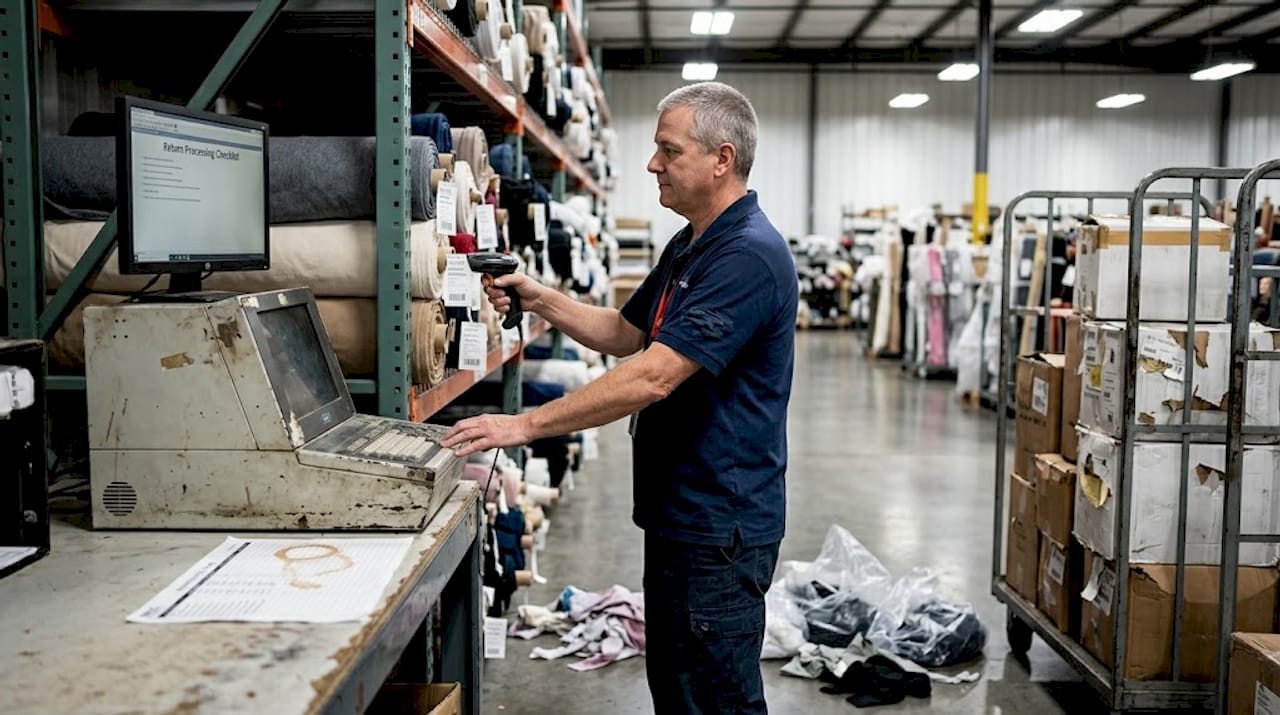
Verifying fabric condition deserves its own checklist. When you open a return, physically check for: original fold lines still intact, no visible odor or staining, no fraying beyond the selvedge edge, and original tags or labels attached.
Return handling automation can cut processing time by half and reduce costs, so don’t feel like you need to reinvent the wheel manually if your volume justifies the investment.
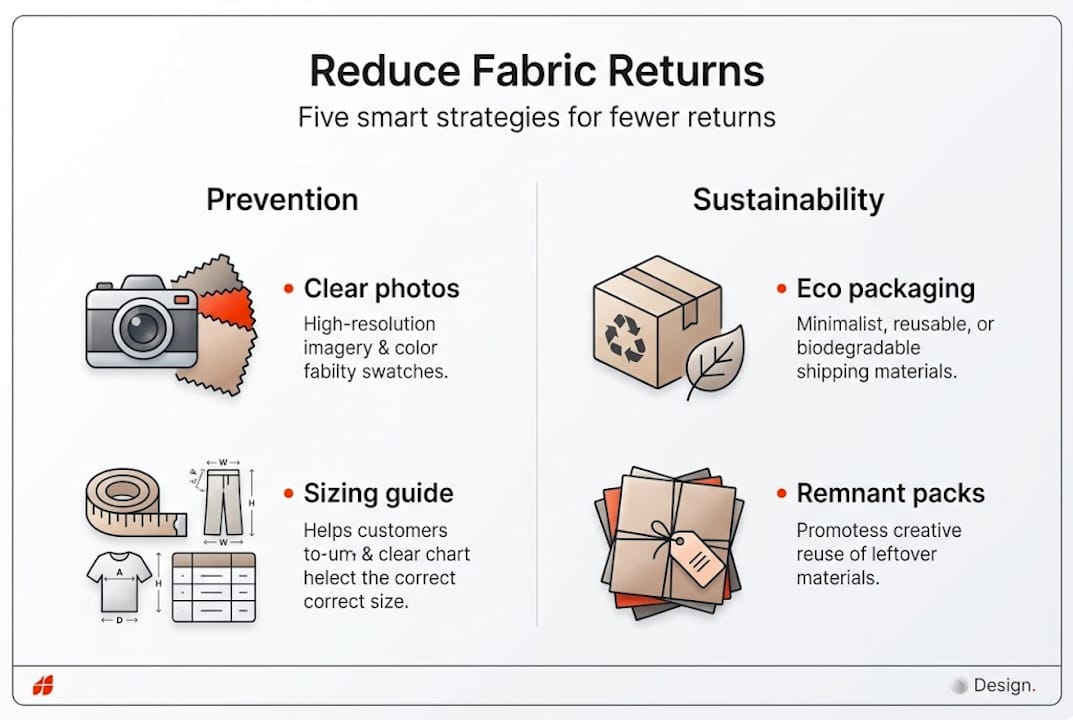
For fabric that can’t be restocked as new, think creatively. Bundle small remnants into value packs. Many crafters and quilters love a good remnant deal. You can also donate to schools, community theater groups, or local maker spaces. Use your inventory efficiency tips to minimize the number of pieces that end up in this limbo state.
Processing returns efficiently is important, but preventing them from happening is even better. Prevention pays double: it saves handling costs and builds customer confidence.
Start with your product listings. High-quality photos from multiple angles, accurate color descriptions, and detailed fabric specs make a measurable difference. State the weight in grams per square meter, include stretch percentage for knits, and mention whether colors run on first wash. These small details head off a lot of returns before they start.
Here’s a quick action list you can implement this week:
On the sustainability side, the stakes are real. High return volumes contribute to 92 million tons of textile waste every year. That’s not a number any responsible seller should ignore. When returns do happen, keeping fabric out of landfills through secondary markets, bundles, or creative upcycling fabric waste programs is both good ethics and good business.
Being transparent about your sustainability commitments also builds loyalty. More buyers in 2026 are actively choosing sellers who align with their values. You can explore current fabric sustainability trends to stay ahead of what eco-conscious customers expect.
Pro tip: Add a short message in your packaging that explains your eco-friendly return options, like remnant donation or swatch trade-in. It signals that you care, and it gives customers a reason to choose you again.
Most small fabric businesses treat returns as a problem to survive rather than a system to learn from. We get it. When a return hits your inbox, the instinct is to resolve it fast and move on. But that reactive mindset keeps you stuck in a loop.
The shops that consistently grow are the ones that treat their return data as a resource. Every returned yard of satin or velvet is a data point. It tells you something about your photos, your descriptions, your supplier, or your customer communication. When you start reading that data instead of just processing it, everything changes.
Sustainability is another underused lever. Creative fabric upcycling strategies don’t just reduce waste. They create new revenue streams and marketing stories that attract exactly the kind of customers who stay loyal long-term.
The uncomfortable truth is that fast return processing without root cause analysis is just expensive efficiency. You’re getting faster at solving the same problem over and over again. A strategic approach means solving it once and watching returns drop month over month. That’s the difference between managing a problem and actually eliminating it.
Building a smarter return system starts with buying smarter. When you source fabrics that are accurately described, easy to evaluate, and consistently high quality, you reduce return risk from the very first click.
At fabric-fabric.com, we make it easier for DIY enthusiasts and small textile businesses to shop with confidence. Our backdrop fabric selection and wide range of home decor fabric deals come with detailed specifications, so you know exactly what you’re getting. Clear descriptions, competitive pricing, and a curated product range mean fewer surprises, fewer returns, and more time doing what you love. Browse our collections today and build a stash that works for your projects the first time around.
Return rates for textiles average 24 to 40% for e-commerce sellers, with color mismatches and quality surprises being the leading causes. Small businesses tend to sit at the lower end when they invest in accurate product descriptions.
Improving product photos, adding measurement guides, and offering physical swatches are the fastest wins. AR sizing tools can cut return rates by 20 to 30% for online sellers willing to invest in the technology.
Bundle remnants into value packs for quilters and crafters, or donate to local maker spaces and schools. Secondary markets and liquidation keep fabric out of landfills while recovering some of your cost.
OMS and POS platforms can reduce return processing time by more than half, making them a smart investment for any shop handling more than 10 to 15 returns per month.