

 Canadian Dollars

How to Negotiate Wholesale Fabric for Best Results
Posted by BLG on 2025 Oct 16th
Posted by BLG on 2025 Oct 16th


Did you know that buying fabric wholesale can slash your costs by up to 60 percent compared to retail? Whether you are designing custom clothing or tackling a large home project, understanding how to source fabric in bulk makes a real difference for your budget and your results. Planning each step carefully offers access to better prices, reliable suppliers, and higher quality material so your creative vision stays on track without surprise expenses.
| Key Point | Explanation |
|---|---|
| 1. Assess Your Needs Precisely | Map out specific project requirements and calculate exact fabric yardage to avoid shortages or surpluses. |
| 2. Conduct Thorough Supplier Research | Explore various suppliers, compare prices, and check for credentials to secure the best deals. |
| 3. Personalize Initial Communications | Craft detailed, customized messages to suppliers, outlining your needs and making strong first impressions. |
| 4. Negotiate for Better Terms | Leverage volume potential to negotiate not only prices but also additional services such as free samples or expedited shipping. |
| 5. Verify Samples Before Ordering | Always request and evaluate fabric samples to ensure they meet your quality standards before finalizing a large order. |
Before diving into wholesale fabric negotiations, you need a crystal clear understanding of exactly what you want and how much you actually need. Think of this like a fabric shopping mission where precision saves you money and prevents costly mistakes.
Start by mapping out your specific project requirements. Are you creating clothing designs? Planning home decor accents? Preparing for a large quilting project? Each goal demands different fabric quantities and qualities. Sketch out rough designs or project outlines to visualize your total fabric requirements.
Measure everything meticulously. For clothing, calculate pattern piece dimensions and add 10% extra for potential adjustments. Home decor projects like curtains or upholstery need precise measurements including seam allowances and potential pattern matching. Quilters will want to calculate exact block sizes and total quilt dimensions.
Pro Tip: Always round up your measurements. Fabric shortages can derail entire projects.
Create a detailed inventory spreadsheet tracking:
Here’s a summary of key factors to track in your fabric needs assessment:
| Factor | Why It Matters | How to Measure |
|---|---|---|
| Fabric Type | Determines suitability & feel | Specify: Cotton, Silk, etc. |
| Required Yardage | Prevents shortages/overbuying | Exact yards/meters needed |
| Color Specifications | Ensures project consistency | List desired colors codes |
| Texture Preferences | Impacts style/function | Smooth, textured, etc. |
| Budget per Yard | Guides supplier negotiation | Set maximum price point |
Realistic quantity planning prevents overbuying or underbuying. Remember wholesale vendors typically require minimum purchase amounts. Knowing your precise needs gives you negotiating power and helps you make smart purchasing decisions.
Once you have your comprehensive fabric needs assessment complete, you are ready to start exploring wholesale fabric sources and preparing for productive negotiations.

Now that you know exactly what fabrics you need, it is time to hunt down the right wholesale suppliers who can meet your specific requirements. Smart research transforms your fabric purchasing from a shot in the dark to a strategic mission.
According to Accio Wholesale Fabric Research, wholesale pricing can reduce fabric costs by 40 to 60% compared to retail rates. This makes thorough supplier research absolutely critical for budget conscious crafters and designers.
Start by creating a comprehensive list of potential wholesale fabric suppliers. Look beyond local options and explore online marketplaces. Trade websites like Alibaba, specialty textile forums, and industry networking platforms can reveal hidden gems in fabric sourcing.
Compare pricing across multiple sources. As the research indicates, fabric prices vary dramatically. Cotton wholesale prices average around $2.50 per meter at volume levels, while silk bolts can range from $300 to $800. Understanding these price ranges helps you identify genuine deals versus inflated quotes.
Pro Tip: Always request samples before committing to large wholesale purchases. Quality can vary significantly between suppliers.
Check supplier credentials carefully. Look for:
Dont just focus on price. Reliability reputation and consistent quality matter more than saving a few pennies per yard. Read customer reviews check industry references and if possible get recommendations from fellow designers or crafters.
With your supplier research complete you are now ready to start making initial supplier contacts and preparing for negotiation conversations.
With your research complete, you are now ready to reach out to potential wholesale fabric suppliers. This initial contact is your chance to make a strong first impression and set the stage for successful negotiations.
According to Leeline Custom Manufacturing Guide, introducing yourself clearly is crucial. Your initial communication should provide a comprehensive snapshot of who you are and what you need.
Craft a professional introductory email or message that includes:
Be transparent about your project goals. Suppliers appreciate customers who understand their own needs and can communicate them effectively. If you are developing clothing lines fashion collections or home decor products give a brief context that helps the supplier understand your vision.
Pro Tip: Personalize your initial contact. Generic messages often get overlooked.
Include specific questions that demonstrate you have done your homework. Ask about their expertise in your required fabric types their minimum order quantities and potential volume discounts. This shows you are a serious buyer who values their specialized knowledge.
Prepare a concise yet comprehensive offer document. This should outline your exact requirements including fabric type weight color and estimated annual purchase volume. The more precise you are the more likely suppliers will take you seriously.
Remember communication is a two way street. Listen carefully to their responses and be open to their suggestions. Some suppliers might offer insights that improve your original fabric selection or help you optimize your purchasing strategy.
With your initial contact made you are now positioned to move toward more detailed price negotiations and potential sample requests.
Negotiation is where your preparation transforms into real savings. This is your opportunity to turn fabric purchasing from a simple transaction into a strategic partnership that benefits both you and your supplier.
According to Clothing Factory Sourcing Insights, wholesale pricing involves multiple complex cost drivers including materials labor margins customization and certification requirements.
Understand that volume equals leverage. Suppliers are more likely to offer significant discounts when they see potential for consistent future business. If you cannot commit to large immediate orders consider proposing a staged purchasing approach that demonstrates your long term commitment.
Break down negotiation into strategic components:
Pro Tip: Always calculate the total cost of ownership not just the per yard price.
Be prepared to discuss Incoterms which determine shipping responsibilities and potential additional costs. Some suppliers might offer more attractive pricing if you are willing to handle certain transportation or import logistics.
Dont be afraid to ask for additional value. Many suppliers will include extras like free samples color matching services or expedited shipping if you demonstrate you are a serious professional buyer.
Remember negotiation is about creating mutual benefit. Approach conversations with respect transparency and a clear understanding of both your needs and the suppliers business constraints.
With terms negotiated you are now ready to finalize your wholesale fabric purchase and bring your creative project one step closer to reality.
You have negotiated terms and now comes the critical moment of verifying everything before making a significant fabric investment. This stage is about protecting your creative vision and ensuring the fabric meets your exact specifications.
Review your negotiated agreement meticulously. Document every single detail from pricing and quantities to delivery timelines and quality expectations. Create a written contract or comprehensive email summary that both you and the supplier can reference.
Request physical fabric samples before committing to a large order. These samples will help you evaluate:
Pro Tip: Inspect samples under different lighting conditions to truly understand fabric characteristics.
When reviewing samples check for:
Dont hesitate to request multiple samples or ask for specific testing if needed. Professional suppliers understand that quality verification is a standard part of the wholesale purchasing process.
Prepare a detailed feedback document for the supplier. If samples do not meet your exact specifications communicate clearly and professionally. Good suppliers will be willing to adjust or provide alternative options.
Once you have confirmed sample quality and all agreement terms you are ready to place your final wholesale fabric order and begin your exciting creative project.
Struggling to secure quality fabrics at the right price and worried about unreliable suppliers, unpredictable quality, or overwhelming selection? Our guide showed you how precise planning, supplier research, and strong negotiation can help you avoid costly mistakes. At fabric-fabric.com, we deliver trusted solutions to these same challenges—offering detailed fabric descriptions, reliable sourcing, transparent pricing, and an easy-to-use shopping platform so you never need to compromise on your next project.

Take control of your creative vision by shopping at fabric-fabric.com, where you can:
To assess your fabric needs, calculate the exact yardage required for your project, including allowances for adjustments. Create a detailed inventory that lists fabric type, color specifications, and budget. Start by measuring all dimensions accurately and rounding up to avoid shortages.
In your initial contact, include your name, brand identity, specific fabric preferences, and anticipated order quantities. Clearly outline your project goals to help the supplier understand your vision better. This sets the tone for a serious negotiation and helps in establishing trust.
To negotiate discounts, be prepared to discuss base prices, volume discounts, shipping costs, and payment terms. Present a clear picture of your purchasing potential and negotiate a staged purchasing approach to show commitment. Aim to reduce costs by approximately 10-20% through effective negotiation techniques.
After negotiating terms, review your agreement thoroughly before making an order. Request fabric samples to verify quality, color accuracy, and texture. Ensure all details are documented, and prepare feedback to communicate any discrepancies in the samples provided.
Requesting fabric samples is crucial to ensuring that the material meets your exact specifications in color, texture, and durability. This reduces the risk of receiving unsatisfactory products that could derail your project. Inspect samples under various lighting conditions to make informed decisions before placing your order.
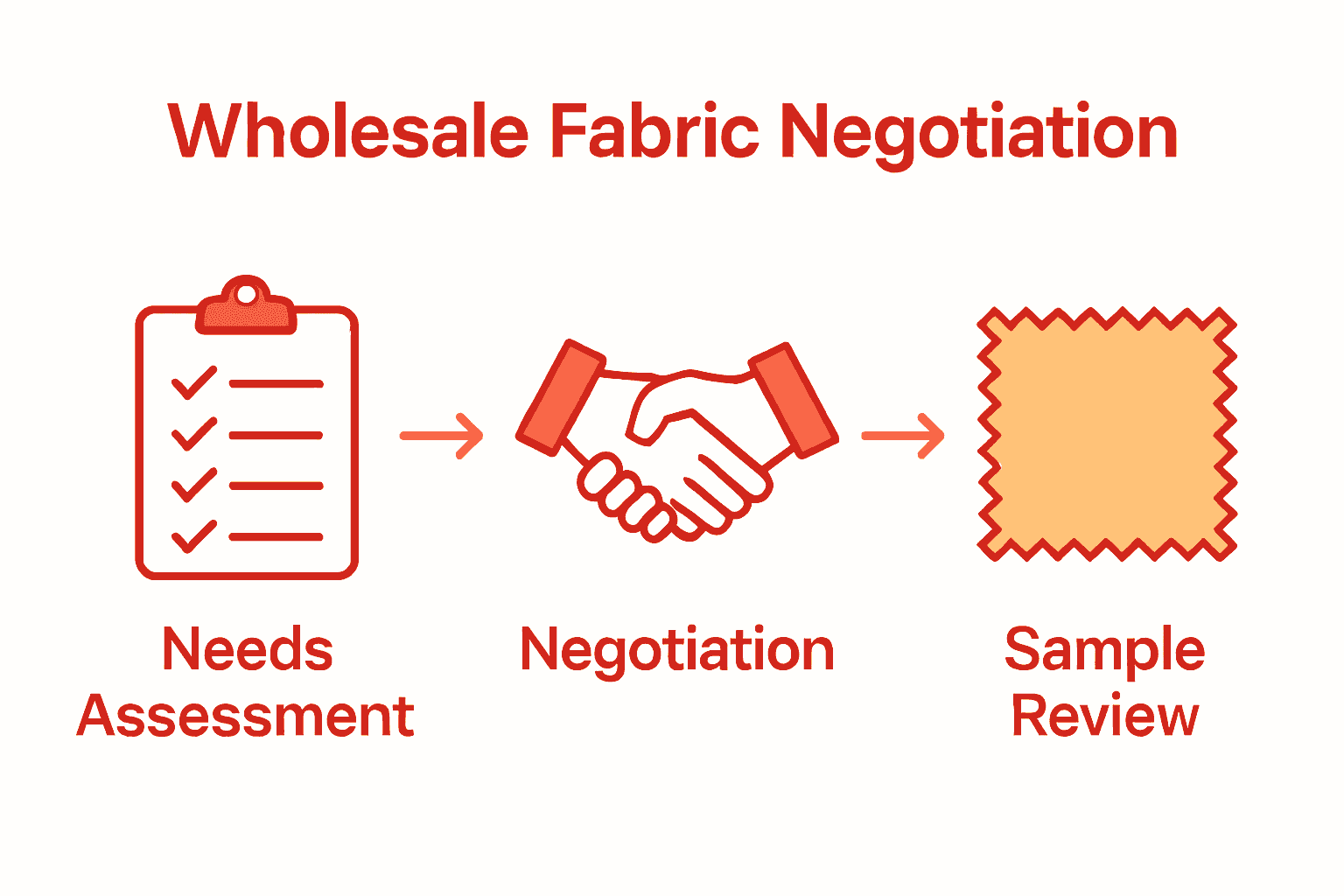
If the fabric samples do not meet your requirements, communicate your feedback to the supplier professionally. Request adjustments or alternative options, as trustworthy suppliers are generally willing to accommodate reasonable requests. It’s important to clarify your needs to ensure satisfaction with the final order.