

 Canadian Dollars

How to Read Fabric Labels: A Practical Sewing Guide
Posted by BLG on 2026 Aug 2nd
Posted by BLG on 2026 Aug 2nd

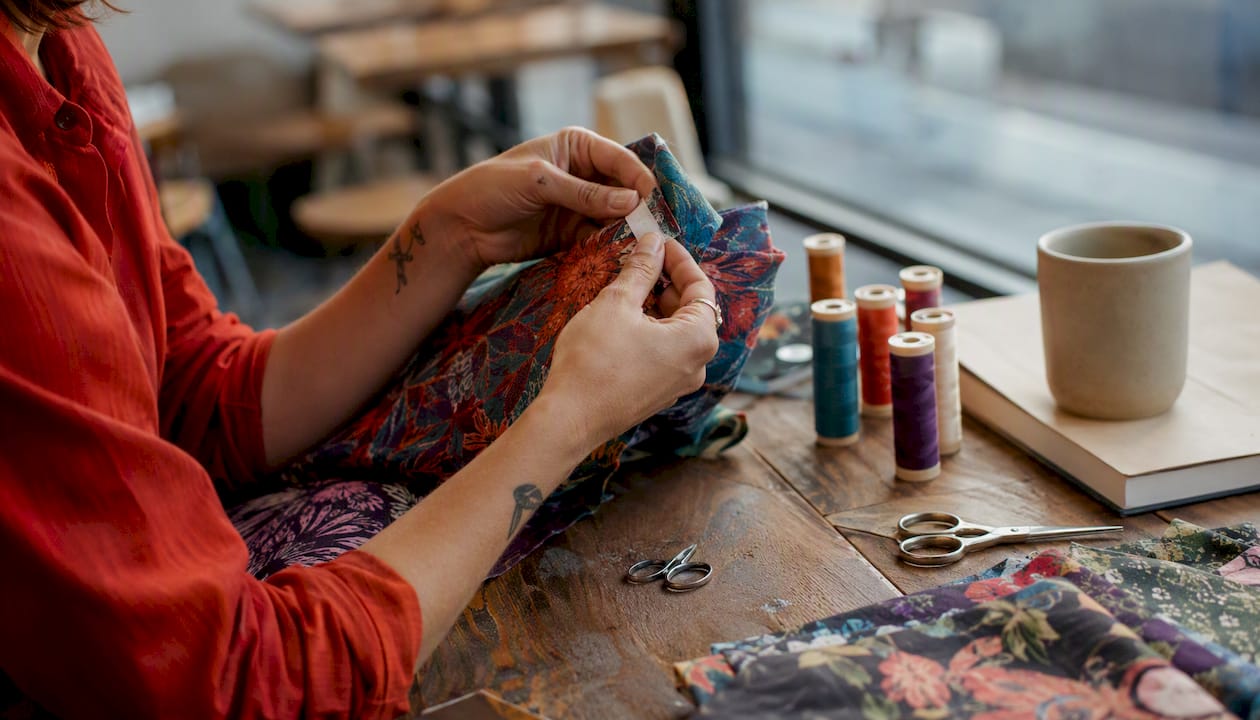
A fabric label tells you three things, in this order: the fiber content, a safe cleaning method, and the seller’s identity. Read those in that order. If any of the three is missing or illegible, don’t cut the fabric yet. Request a labeled swatch, check the product page online, or run a conservative test before committing.
The U.S. Federal Trade Commission requires manufacturers to include at least one safe cleaning method on a permanent, legible care label for textile wearing apparel. In Canada, the Competition Bureau enforces bilingual fiber content disclosure and a CA Identification Number or dealer identity. Both rules exist to protect you as a buyer, and understanding them makes you a sharper shopper. Fabric-fabric.com’s author kev has built a practical label-reading habit around exactly these three checkpoints, and this guide walks you through the full system.
A standard North American fabric label carries up to five distinct pieces of information. Fiber content comes first, listed as percentages from largest to smallest. Care instructions follow, either as written words, symbols, or both. Country of origin appears when required by law. Dealer identification, a company name or a Canadian CA number, rounds out the required elements.
Each piece affects your project differently. Fiber mix determines drape, shrinkage potential, and how the fabric takes dye. The care method tells you what laundering your finished piece can survive. Dealer ID matters if you need to trace a warranty claim or request documentation for a custom order. Care labels influence purchase decisions for many consumers, yet imported fabrics sometimes carry symbol sets that differ from North American standards, which is exactly why a cheat-sheet matters.
Short examples worth knowing: “100% cotton” means a single fiber with no blends. “80% polyester / 20% rayon” signals a blend where the polyester dominates the hand and the rayon adds drape. “Dry clean only” is a single-method disclosure, not a suggestion.
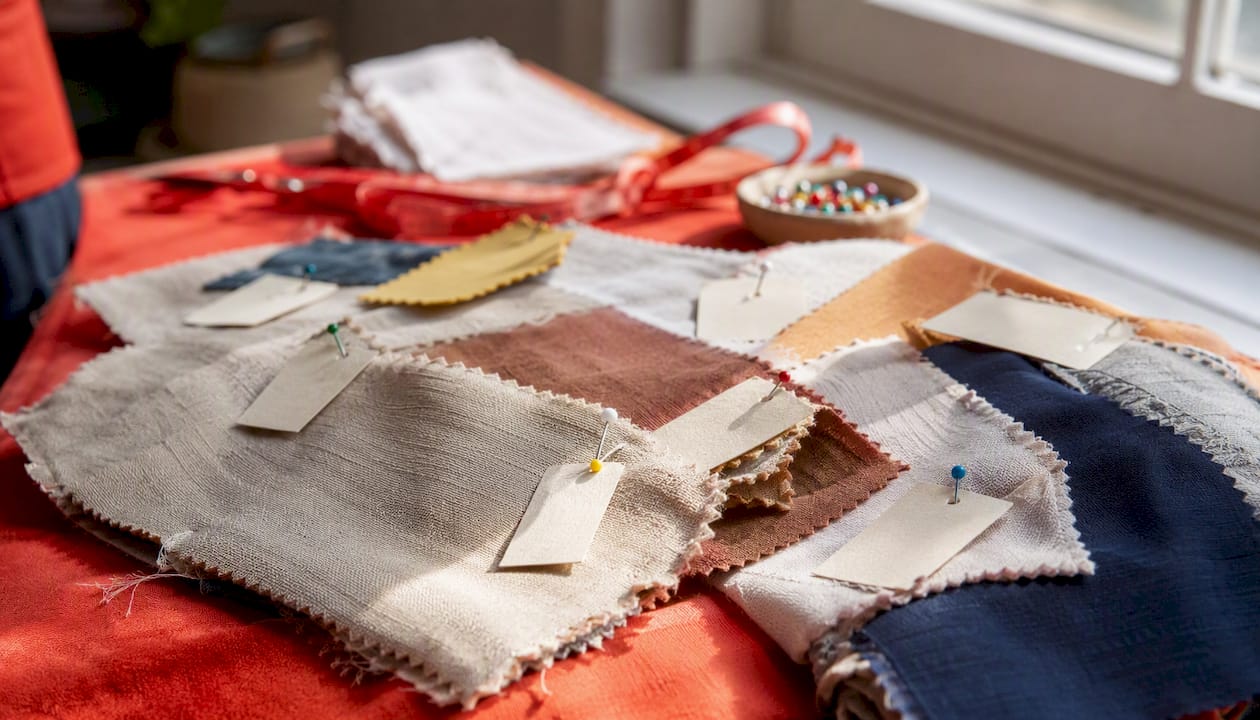
Percentages on a label run from the dominant fiber down to the smallest. A label reading “55% linen / 45% cotton” tells you linen controls the texture and the shrinkage risk, while cotton softens the hand slightly. For identifying fiber types and synonyms, a few names trip people up consistently.
| Label term | Common synonym | Project implication |
|---|---|---|
| Rayon | Viscose | Soft drape, dye-friendly, shrinks easily |
| Modal | Beechwood viscose | Silky hand, moderate shrink, colorfast |
| Acrylic | — | Wool-like, low shrink, resists dye |
| Polyester | Poly | Durable, low shrink, resists most dyes |
| Nylon | Polyamide | Strong, abrasion-resistant, low absorbency |
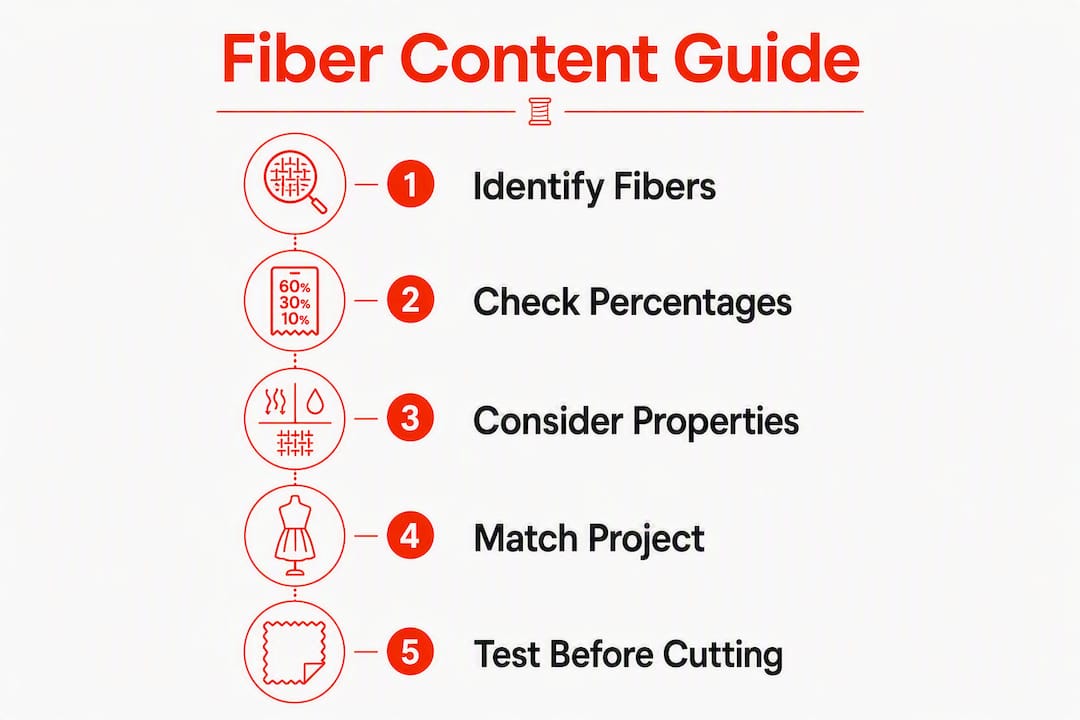
The 5% rule under Canadian regulations requires that any fiber making up 5% or more of total mass be named on the label. Fibers below that threshold can be grouped as “other fiber.” A tolerance of 5% applies to blend disclosures, but single-fiber fabrics get no tolerance at all.
When a label says “all cotton” or “pure cotton,” that means one fiber is present. Under Canadian rules, the words “all” or “pure” substitute for “100%”, and small amounts of elastic or ornamentation under 5% can be excluded from that declaration without violating the rule.
Sectional disclosures appear when different parts of a garment or textile use different fibers. A jacket might read “Shell: 100% wool / Lining: 100% polyester.” That split matters for pressing temperature and for dry-cleaning decisions.
Pro Tip: When a label lists a fiber you don’t recognize, search the name alongside “shrinkage” and “dye” before you cut. Two minutes of research can save an entire project.
Care symbols cover five operations: washing, bleaching, drying, ironing, and professional textile care. In the U.S., the FTC recognizes the ASTM D5489-96c symbol set; if a manufacturer uses symbols only, those specific symbols are required. Newer symbol guides like ASTM D5489-18 may be used alongside full written instructions.
| Symbol category | Common variant | What it means in practice |
|---|---|---|
| Wash tub | Hand in tub | Hand wash only; no machine agitation |
| Wash tub | Crossed out | Do not wash with water |
| Triangle | Plain | Any bleach is safe |
| Triangle | Crossed out | No bleach at all |
| Square | Circle inside | Tumble dry |
| Square / circle | Low dot | Tumble dry low heat |
| Iron | One dot | Cool iron |
| Iron | Crossed out | Do not iron |
| Circle | “P” inside | Dry clean, any solvent except trichloroethylene |
The FTC’s Care Labeling Rule requires only one safe method, not a complete list of everything that’s safe. A label reading “tumble dry low” does not mean high heat is safe. It means low heat is verified. Anything beyond that is untested territory.
“Washable” is one of the most misread words on a label. It guarantees one safe washing method, nothing more. A label that says “machine wash warm” does not confirm that hot water, chlorine bleach, or high-heat drying are safe. Labels must warn about any step that could harm the item, using clear language like “Do not wring” or “Wash with like colors.”
For sewing projects specifically, “tumble dry low” versus “line dry” changes how you handle seams, interfacing, and fusibles. A fusible that’s been line-dried behaves differently under a press cloth than one that’s been tumble-dried, and knowing that before you construct the garment saves a lot of frustration.
The main care label governs the base fabric or the finished article as a whole. It does not automatically cover every added component. Sequins, buttons, specialty linings, and decorative appliqués can have entirely different care profiles, and the label may not flag that.
When a trim or lining exceeds regulatory thresholds by area or weight, it must be disclosed separately. For anything below that threshold, the seller isn’t required to list it. For selecting lining fabrics that match the care profile of your shell, always check both components before you commit to a construction method.
For custom orders in Canada, fibre content and dealer identity can appear on the invoice or bill of sale instead of on the item itself, provided labeled swatches were available at the point of sale. That means you can legitimately receive a custom drapery with no permanent label, as long as you got a labeled swatch before purchase.
Matching fiber traits to the job is the fastest way to use a label. For garments, breathability and drape matter most: cotton, rayon, and linen move well and accept dye. For upholstery, durability and abrasion resistance take priority, which points toward polyester blends and tightly woven fabrics. Quilts need low shrink and colorfast fibers so blocks don’t distort after washing.
A fabric selection guide for designers breaks this down further, but the label gives you the shortcut. Higher natural-fiber content usually means more shrinkage on first wash. Synthetic blends reduce that risk and add strength, which matters for structured pieces. For quilting projects, look for 100% cotton or cotton-rich blends with a colorfast rating and a machine-wash instruction.
For backdrops and home decor, polyester and polyester-blend fabrics hold color under lighting, resist wrinkles, and rarely need ironing. For apparel, a rayon or modal blend gives you the drape of silk at a fraction of the cost, but budget for hand-washing or a delicate cycle. Understanding fabric blends and their behavior in home textiles follows the same logic: the fiber percentage predicts the outcome.
A care label that lists a safe method acts as a care warranty of sorts: if you follow the instructions and the item is damaged, responsibility generally falls to the manufacturer. That’s a strong reason to follow the label exactly during your test wash, not to improvise.
Start conservative. If there’s no label, treat the fabric as delicate: cool water, gentle cycle or hand wash, air dry flat. Avoid high heat until you’ve tested a sample.
For online purchases, check the product page for fiber content and care specs before ordering. If the listing is vague, contact the seller and ask for documentation or a labeled swatch. The fabric sourcing checklist at Fabric-fabric covers exactly what to request when buying project-critical materials.
For items that will contact sensitive skin or be used by children, only use fully labeled, certified materials. An unlabeled fabric from an unknown source is not worth the risk for a child’s garment or a baby quilt.
The FTC’s Care Labeling Rule applies to textile wearing apparel sold in the U.S. Manufacturers must attach a permanent, legible label showing at least one safe cleaning method. Symbols are allowed under the recognized ASTM D5489-96c guide. If a manufacturer uses symbols only, those specific symbols are required by law.
The FTC’s Care Labeling Rule states that care labels must be permanent, legible, and attached so they can be seen or easily found when the product is offered for sale. If the product is packaged so the label is hidden, the care information must also appear on the outside of the package or on a hang tag.
In Canada, the Competition Bureau requires fiber content disclosure for any fiber at 5% or more of total mass, bilingual labeling in English and French, and either a CA Identification Number or the dealer’s full name and address. When buying in Canada, ask for bilingual fiber content or a CA number if you don’t see one. When buying in the U.S., confirm there’s a stated safe cleaning method and that the care symbols match a recognized guide.
Care symbols at a glance:
| Symbol | Meaning |
|---|---|
| Tub with water | Machine wash |
| Hand in tub | Hand wash only |
| Tub crossed out | Do not wash |
| Plain triangle | Any bleach safe |
| Triangle crossed out | No bleach |
| Square with circle | Tumble dry |
| Square with circle, one dot | Tumble dry low |
| Square with lines | Line dry |
| Iron, one dot | Cool iron |
| Iron crossed out | Do not iron |
| Circle with letter | Dry clean (letter = solvent type) |
Common fibers quick lookup:
| Fiber | Project hint |
|---|---|
| Cotton | Prewash always; shrinks on first wash |
| Linen | Shrinks and softens; prewash before cutting |
| Silk | Hand wash or dry clean; test dye transfer |
| Wool | Dry clean or cool hand wash; felts in heat |
| Polyester | Low shrink; resists dye; durable |
| Rayon / Viscose | Drapes beautifully; shrinks; handle gently wet |
| Acrylic | Wool-like; low shrink; resists fiber-reactive dye |
Prewash checklist:
Fiber content, the safe cleaning method, and dealer identification are the three label elements that drive every project decision.
| Point | Details |
|---|---|
| Read fiber content first | Percentages run largest to smallest; they predict shrinkage, drape, and dye response. |
| One safe method only | “Washable” guarantees one tested method; test before trying any other wash or dry approach. |
| Symbols follow ASTM D5489 | U.S. labels using symbols only must use the FTC-recognized D5489-96c set; Canada uses a bilingual system. |
| Labels may not cover trims | Sequins, linings, and hardware can need different care; always check added components separately. |
| Fabric-fabric lists fiber specs | Fabric-fabric product pages include fiber content and care details, so you can verify before ordering. |
Most hobbyists glance at a label and move on. The ones who rarely ruin a project do something different: they read the fiber percentage, note the care method, and then run a quick colorfastness check on any fabric with saturated color before cutting a single inch.
The shrink test is the most underused tool in a home sewing room. A 6-inch sample costs almost nothing and takes 30 minutes. Skipping it on a linen-cotton blend and then watching a finished dress shrink two sizes on first wash costs a lot more than that. The label gives you the starting point; the test confirms it.
There’s also a practical reason to follow the label exactly, not just approximately. When you follow the stated care instructions and the fabric still fails, the manufacturer is generally on the hook for the damage. That’s a real protection, and it disappears the moment you deviate from the label and improvise.
For interfacing and fusibles, the label on the outer fabric is only half the story. Always test the fusible separately with the same heat and steam you plan to use on the shell. A fusible that bubbles under a wool-setting iron will ruin a jacket front that took hours to cut and construct.
Choosing fabric with full fiber and care disclosures isn’t just good practice. It’s the difference between a project that finishes cleanly and one that unravels at the first wash.
Fabric-fabric carries project-ready fabrics with fiber content and care details listed directly on product pages, so you know what you’re getting before you order. Whether you’re sourcing material for a dress, a quilt, or a backdrop, you can verify the fiber mix and the care method without guessing. For backdrops specifically, the backdrop fabric collection includes clearly specified polyester and poly-blend options built for color retention and easy care.
Browse the full range at fabric-fabric.com and order a swatch before committing to a full cut.
The sources below are the primary references for the rules and symbol guidance in this article. When you need the exact regulatory language for your situation, go directly to these.
The FTC’s Care Labeling Rule is the governing U.S. standard for care label requirements on textile wearing apparel. The Canadian Competition Bureau’s textile labelling pages cover fiber content disclosure, bilingual requirements, and CA Identification Numbers. ASTM D5489 is the symbol guide recognized by both the FTC and Canadian care labelling programs.