

 US Dollar

How to Select Lining Fabric for Perfect Sewing Results
Posted by BLG on 2026 Jan 14th
Posted by BLG on 2026 Jan 14th

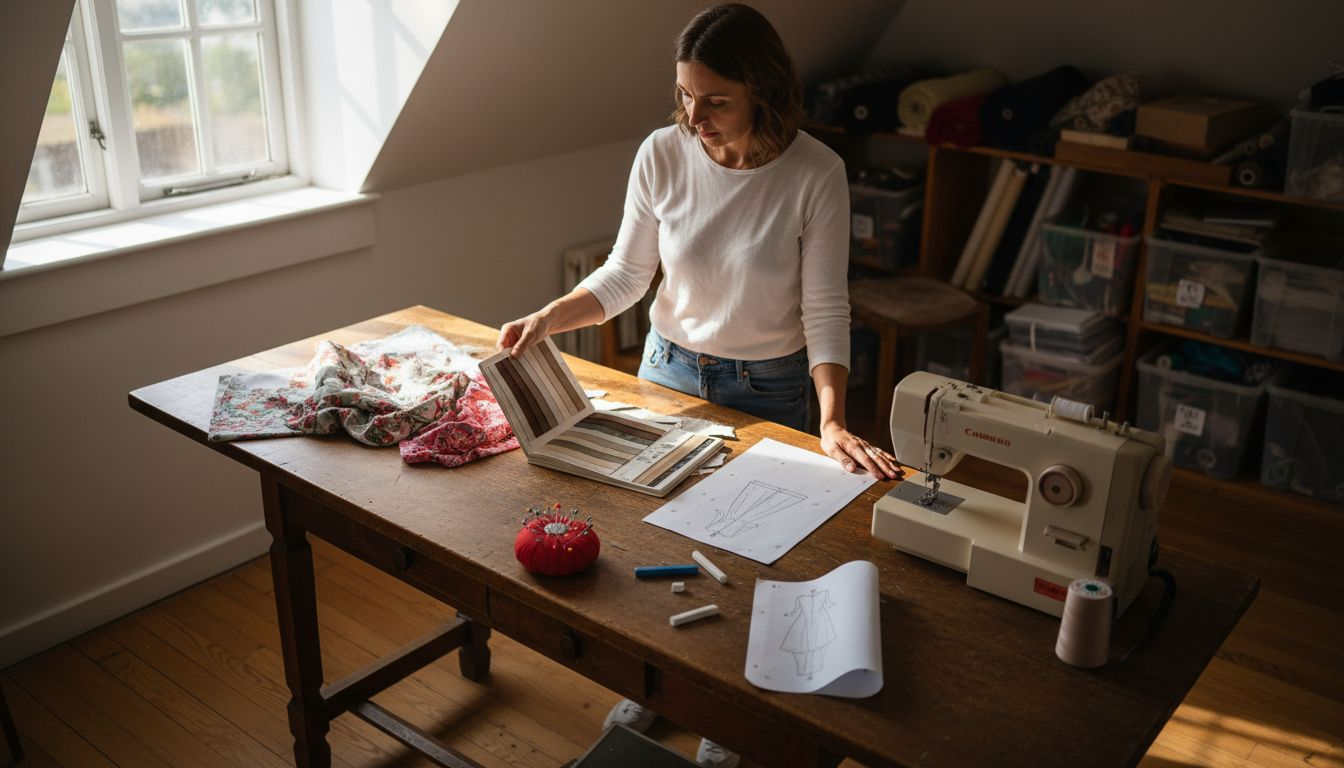
Most American home sewists quickly discover that choosing the wrong lining fabric can ruin months of careful work. Whether you quilt or craft garments for your family, the liner’s quality directly affects comfort, shape, and durability. With so many options from cotton to silk, it can be confusing to match the right materials for each project. This guide brings together proven advice and practical tips so your American sewing projects look and feel professional every time.
| Essential Insight | Explanation |
|---|---|
| 1. Assess Project Needs First | Evaluate intended use, environment, and fabric characteristics to inform your material choice for optimal performance and aesthetics. |
| 2. Match Lining with Main Fabric | Ensure compatibility between the main fabric and lining for best structure and comfort, tailored to the garment’s needs. |
| 3. Compare Fabric Qualities | Understand the properties of both natural and synthetic linings to choose one that enhances comfort and durability according to garment type. |
| 4. Test Compatibility through Samples | Create sample seams to check how the main fabric interacts with the lining under stress for a flawless finish. |
| 5. Plan Your Purchase Strategically | Measure fabric requirements accurately, account for errors, compare prices, and confirm care instructions before buying. |
Successfully selecting the right lining fabric starts with a strategic assessment of your specific project requirements. Understanding how different fabric characteristics impact performance will help you make an informed choice that ensures your final product meets both functional and aesthetic goals.
Begin by carefully evaluating the project’s intended use and environmental demands. Fabric properties vary significantly based on factors like breathability, durability, and stretch. For instance, a summer dress demands lightweight and breathable materials that allow air circulation, while a winter jacket requires insulating and water-resistant fabrics. Consider the garment’s structure, anticipated movement, and potential stress points when matching fabric types.
Next, analyze your personal sewing skill level and the fabric’s technical requirements. Some delicate fabrics like silk or chiffon demand advanced handling techniques, whereas cotton and polyester blends are more forgiving for beginners. Examine fabric weight, drape, and stretch percentage to ensure compatibility with your pattern and sewing capabilities.
Pro Tip: Always purchase a small fabric sample and perform a test run before committing to your entire project to validate performance and handling characteristics.
Perfect garment construction requires strategic coordination between your main fabric and its lining, ensuring both aesthetic appeal and functional performance. Understanding how to harmonize these two layers will elevate your sewing project from good to exceptional.
Lining fabric selection involves carefully analyzing the compatibility between your outer material and interior layer. Different fabrics demand specific lining characteristics to maintain structure and comfort. For lightweight summer dresses, opt for breathable silk habotai or soft cotton blends that complement the main fabric’s weight and drape. Conversely, structured jackets and tailored suits require more robust linings like polyester or cupro that provide additional support and smooth interior finish.
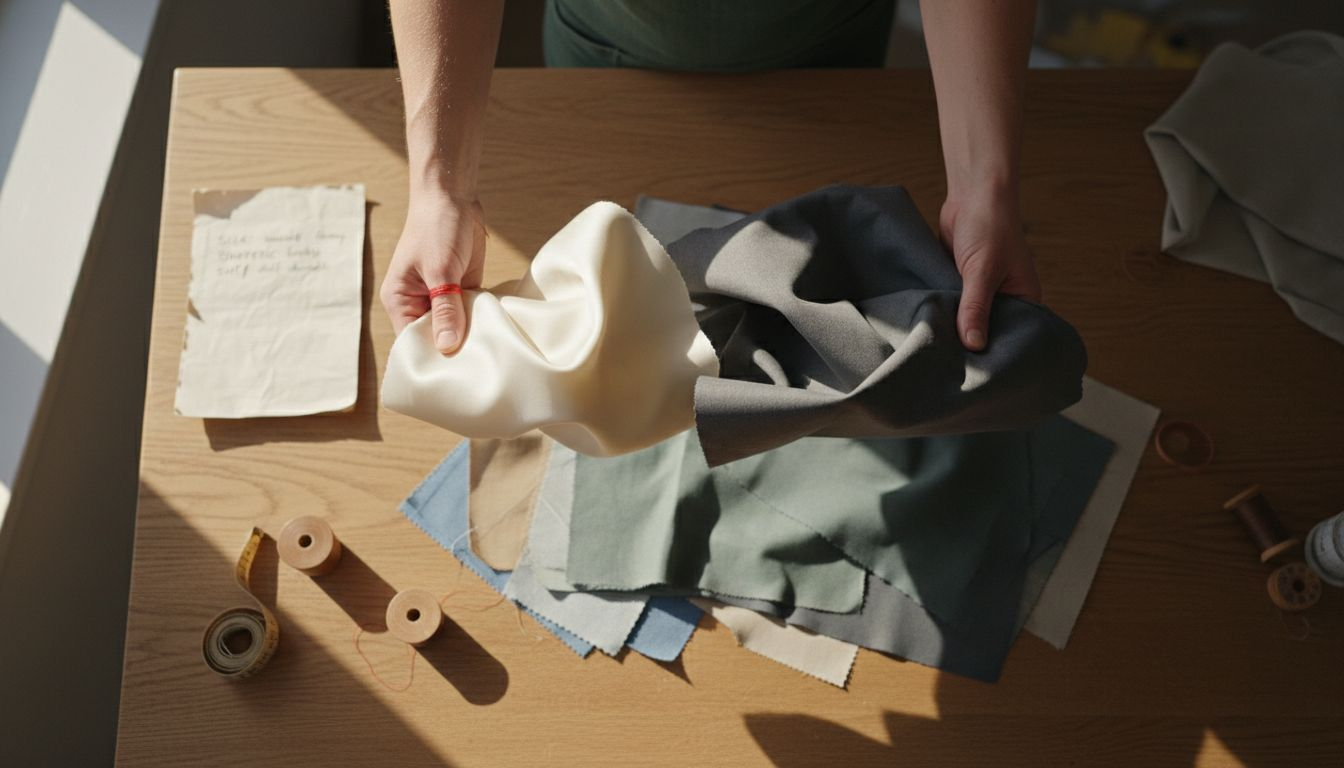
When matching linings, pay close attention to fabric stretch and movement properties. Non stretch woven fabrics pair best with similarly stable linings, while knit garments need linings that can flex and move with the outer material. Consider the garment’s intended use movement patterns to ensure your lining enhances rather than restricts the clothing’s functionality.
Pro Tip: Always test your lining and main fabric combination by creating a small sample seam to evaluate how they interact and move together before committing to your full project.
Selecting the ideal lining fabric requires a nuanced understanding of material properties and performance characteristics that can dramatically impact your garment’s overall quality and wearability. Your goal is to find a lining that not only complements your main fabric but enhances its inherent strengths.
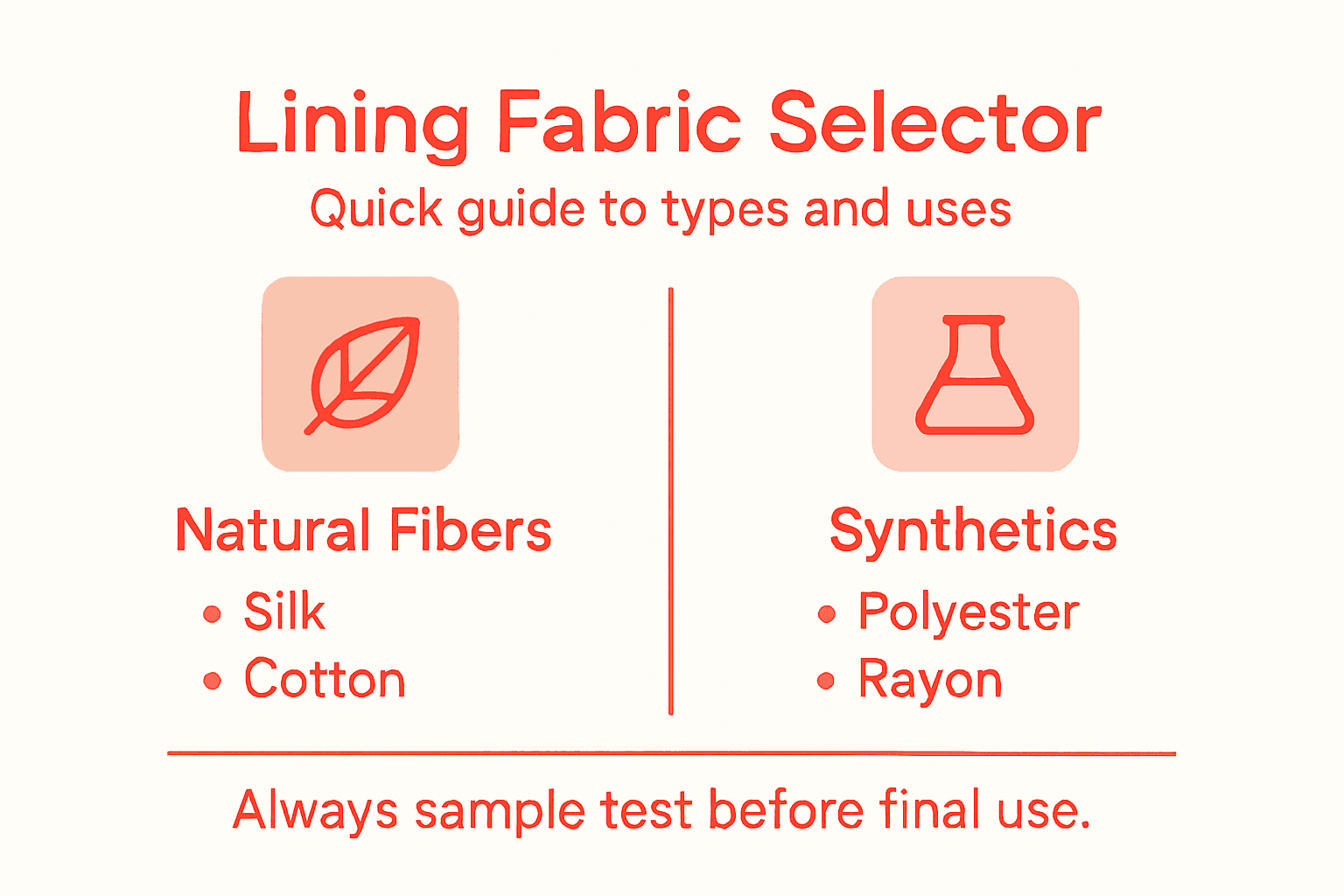
Lining fabric qualities encompass a complex range of attributes including weight, texture, breathability, and durability. Silk linings represent the luxury end of the spectrum, offering unparalleled softness and a smooth interior finish but demanding delicate handling. Synthetic options like polyester and nylon provide more practical benefits such as wrinkle resistance, lower cost, and easier maintenance. Consider your garment type when evaluating these qualities synthetic linings work brilliantly for structured jackets and outerwear, while natural fibers shine in delicate dresses and lightweight summer clothing.
When comparing options, evaluate each fabric’s unique performance characteristics. Breathability matters for summer garments, while thermal properties become crucial for winter wear. Moisture wicking capabilities can transform a good garment into an exceptional one. Synthetic linings typically offer superior durability and easier care, whereas natural fibers provide better temperature regulation and a more premium feel against the skin.
Pro Tip: Perform a simple stretch and recovery test on potential lining fabrics by gently pulling a small sample to understand its elasticity and how it might interact with your main fabric.
Use this side-by-side comparison to help prioritize fabric selection criteria:
| Factor | Natural Fiber Linings | Synthetic Linings |
|---|---|---|
| Comfort Against Skin | Very soft, breathable | Smooth, less breathable |
| Maintenance | Requires delicate care | Easy machine wash |
| Durability | Lower, may wear faster | Higher, long-lasting |
| Cost | More expensive | Generally less expensive |
| Environmental Impact | Biodegradable, renewable | Petroleum-based, non-renewable |
Here’s a quick reference to lining fabric types and their ideal uses:
| Lining Fabric Type | Best For | Key Benefits |
|---|---|---|
| Silk Habotai | Summer dresses, blouses | Lightweight, breathable, smooth |
| Cotton Blend | Casual wear, children’s clothes | Easy care, comfortable, affordable |
| Polyester | Structured jackets, outerwear | Durable, wrinkle-resistant, low-maintenance |
| Cupro | Tailored suits, formalwear | Smooth finish, breathable, luxurious feel |
| Nylon | Sportswear, raincoats | Moisture-wicking, strong, quick-dry |
| Acetate | Skirts, dresses | Crisp drape, anti-static, cost-effective |
Successfully matching your lining to the main fabric requires a meticulous approach that goes beyond simple visual compatibility. Your goal is to create a harmonious internal environment that supports the garment’s overall performance and comfort.
Fabric compatibility testing involves several critical evaluations to prevent potential sewing and wear challenges. Check for matching stretch properties first ensuring that both fabrics move similarly when worn. Mismatched stretch can lead to unsightly puckering uneven seams and uncomfortable garment movement. Examine shrinkage rates carefully most fabrics contract differently during washing and pressing so select linings with similar thermal and moisture responses to your main material.
Beyond technical characteristics consider the fabric’s structural integrity and interaction. The lining should complement the main fabric’s weight and drape without adding unnecessary bulk or stiffness. A lightweight silk dress requires a different approach compared to a structured wool blazer your lining should enhance not compromise the garment’s intended silhouette. Pay attention to color coordination and transparency ensuring the lining provides a clean professional finish that remains invisible from the exterior.
Pro Tip: Create a small sample sandwich with your main fabric and potential lining fabric to test how they behave together under stress and movement before committing to your entire project.
Reaching the final stage of lining fabric selection requires careful planning and strategic decision making. Your goal is to transform all your research and testing into a confident purchasing strategy that ensures project success.
Fabric purchasing strategies involve more than simply selecting a beautiful material. Calculate your exact fabric requirements by measuring your pattern pieces and adding an extra 10 to 15 percent for potential mistakes or pattern matching. Review the fabric care instructions thoroughly ensuring the lining can withstand the same washing and pressing conditions as your main fabric. Consider purchasing from suppliers with transparent return policies and high quality fabric samples to minimize potential risks.
Before making your final purchase take time to compare prices across multiple vendors and evaluate shipping costs. Request color swatches or small samples to verify the exact shade and texture matches your project needs. Consider the fabric weight thickness and performance characteristics one final time. If possible order slightly more fabric than your initial calculations suggest this provides a safety margin for unexpected adjustments or minor errors during your sewing process.
Pro Tip: Always keep your fabric receipt and sample swatches for future reference and potential return or exchange scenarios.
Choosing the right lining fabric can feel overwhelming when you want your garment to look professional and wear comfortably. You need a fabric that matches stretch, breathability, and durability requirements while enhancing your main material’s qualities. Avoid common pitfalls like mismatched fabric behavior or maintenance issues by selecting from carefully curated textiles designed for optimal compatibility and style.
Discover a wide range of lining fabrics and related textiles at Fabric-Fabric crafted to meet the demands highlighted in “How to Select Lining Fabric for Perfect Sewing Results.” From lightweight silks to durable polyesters, our selection includes detailed descriptions and usage suggestions so you can test, compare, and confidently buy. Take advantage of seasonal discounts and enjoy free shipping when you stock up now. Start building your flawless garment foundation by visiting our website and browse the fabrics that bring your sewing vision to life.
To assess your project needs, consider the intended use of the garment along with environmental demands, such as breathability and durability. Evaluate each fabric’s properties to ensure they align with your project’s goals, then compare samples to see how they perform together.
Pair breathable summer dresses with light linings like silk habotai, while structured winter jackets benefit from robust options like polyester. Always consider the characteristics of both layers to ensure they enhance the overall garment performance.
Verify compatibility by comparing stretch properties and testing how the fabrics move together. Create a small sample seam to see if they behave well under stress and maintain the desired shape without puckering.
When comparing lining fabrics, prioritize qualities like weight, breathability, and durability. Assess how these factors affect both the comfort and functionality of your garment to ensure a perfect match.
Calculate your fabric requirements by measuring your pattern pieces and adding an extra 10 to 15 percent for mistakes and pattern matching needs. Ensure you have enough fabric to account for unforeseen adjustments during the sewing process.
Testing a fabric sample helps you assess its performance and handling characteristics, ensuring it meets your project’s specific needs. Always perform a test run to confirm compatibility with your main fabric before committing to a purchase.