

 US Dollar

Understanding the Role of Fabric Care Labels Explained
Posted by BLG on 2025 Oct 7th
Posted by BLG on 2025 Oct 7th


Every piece of clothing you own comes with a tiny tag hiding important secrets about keeping your favorite outfits looking new. Most people think of fabric care labels as just a clutter of strange symbols and instructions. Yet, not following these labels can cut a garment’s lifespan by up to 50 percent and drain your wallet quicker than you think. The real story behind these labels is how they silently guard your clothes from fading, shrinking, and falling apart.
| Takeaway | Explanation |
|---|---|
| Read care labels before cleaning | Always check care labels to understand the specific washing instructions for each fabric type. |
| Different fabrics need different care | Natural fibers like silk require gentler cleaning than synthetic materials like polyester. |
| Ignoring labels can damage fabrics | Not following care instructions can lead to irreversible shrinkage, color fading, and reduced lifespan. |
| Understanding symbols is essential | Familiarize yourself with standard care symbols for effective maintenance of textiles. |
| Correct care saves money | Proper maintenance extends the life of garments, reducing the need for premature replacements and costs. |
Fabric care labels are small information tags attached to clothing, textiles, and other fabric products that provide critical guidance about proper maintenance, washing, drying, ironing, and treatment. These seemingly simple symbols serve as essential communication tools between manufacturers and consumers, ensuring that garments and fabrics remain in optimal condition throughout their lifecycle.
The primary role of fabric care labels is to offer precise instructions for maintaining textile quality. These standardized symbols translate complex cleaning and preservation recommendations into universal visual language that anyone can understand. Consumer Product Safety Commission notes that care labels help prevent accidental damage during cleaning processes by providing specific guidance tailored to each fabric’s unique characteristics.
Key functions of fabric care labels include:
Care labels typically feature internationally recognized symbols representing different maintenance procedures. These symbols communicate specific actions like water temperature, bleaching instructions, ironing settings, and professional cleaning recommendations. The symbols follow standardized design principles, making them comprehensible across different languages and cultural contexts.
For textile professionals and home crafters, understanding these symbols is crucial. Textile Research Journal emphasizes that accurate interpretation of care labels can significantly impact fabric performance and longevity. Whether you are working with delicate silk, robust denim, or intricate quilting fabrics, these labels provide essential guidance for preserving your textile investments.
This table summarizes key care label symbols and what they represent, offering readers a handy reference to decode common instructions found on fabric tags.
| Symbol or Term | Meaning | Typical Instruction Example |
|---|---|---|
| Washtub | Washing method (machine or hand) | Machine wash, hand wash |
| Dot(s) inside tub | Recommended water temperature | One dot: cold, two dots: warm |
| Triangle | Bleaching instructions | Use bleach, do not bleach |
| Square with circle | Tumble drying method and settings | Low heat, high heat, no tumble dry |
| Iron with dots | Ironing temperature | Low, medium, or high |
| Circle | Professional cleaning (dry clean only) | Dry clean, special chemicals |
Fabric care labels play a crucial role in preserving the unique characteristics of various textile materials. Each fabric type possesses distinct properties that require specialized maintenance strategies to maintain its quality, appearance, and structural integrity.
 Understanding how care labels differ across materials helps prevent potential damage and extends the lifespan of textile products.
The following table highlights the differences in care requirements for natural fibers, synthetic materials, and blended fabrics, helping readers quickly compare how each type should be maintained.
| Fabric Type | Typical Care Needs | Sensitivity to Cleaning | Common Risks if Improperly Cared For |
|---|---|---|---|
| Natural Fibers | Gentle washing, temperature control, minimal agitation | High | Shrinkage, color fading, fiber breakdown |
| Synthetic Materials | Can withstand harsher cleaning, less temperature sensitivity | Moderate | Melting, static buildup, loss of shape |
| Blended Fabrics | Balanced care based on composition | Varies | Uneven wear, mixed damage outcomes |
International Textile Research Center highlights that different fabrics react uniquely to cleaning processes. Natural fibers like wool and silk demand significantly different care compared to synthetic materials such as polyester or nylon. Delicate fabrics require gentler treatment, while more robust textiles can withstand more aggressive cleaning techniques.
Consider the unique care needs for various material types:
Improper cleaning can dramatically alter a fabric’s fundamental properties. Textile Conservation Journal emphasizes that incorrect maintenance can lead to permanent damage such as fiber breakdown, color fading, and structural deformation. Professionals in textile design and home crafting must pay close attention to specific care instructions to preserve material quality.
Specific risks associated with neglecting care label instructions include:
Fabric care labels serve as critical guides for both professional textile handlers and home users. Whether you are managing a professional wardrobe, creating intricate quilting projects, or maintaining home textiles, understanding material-specific care requirements ensures optimal preservation. National Textile Conservation Center recommends treating each fabric as a unique entity with its own maintenance protocol, guided by the informative symbols on care labels.
Fabric care labels communicate complex maintenance instructions through a sophisticated system of standardized symbols and text. These compact information carriers translate intricate textile preservation techniques into easily comprehensible visual guides that help consumers and professionals protect their fabrics effectively.
Washing symbols provide critical guidance about cleaning techniques, revealing specific details about water temperature, machine settings, and handling requirements. American Association of Textile Chemists and Colorists explains that these universal symbols transcend language barriers, offering precise instructions for maintaining fabric quality.
Key washing symbol categories include:
Beyond washing guidance, fabric care labels provide comprehensive instructions about drying and ironing processes. These symbols communicate critical information about heat tolerance, recommended drying methods, and appropriate ironing temperatures. Precise interpretation prevents potential fabric damage during post-washing treatment.
Drying and ironing symbols typically address:
Textile Conservation Society emphasizes that care labels also indicate professional maintenance recommendations. These specialized symbols guide consumers about professional cleaning services, chemical treatments, and advanced preservation techniques. For textile professionals, home crafters, and designers, understanding these nuanced instructions is essential for maintaining fabric integrity and extending product lifespan.
Fabric care labels utilize a complex system of internationally standardized symbols that communicate precise maintenance instructions for textiles. These visual representations provide critical guidance about cleaning, drying, ironing, and chemical treatment processes, enabling users to maintain fabric quality effectively.
Washing symbols form the foundation of fabric care communication. These graphical representations translate intricate cleaning instructions into universal visual language. International Organization for Standardization establishes comprehensive guidelines for these symbols, ensuring consistent interpretation across different cultures and languages.
Key categories of basic fabric care symbols include:
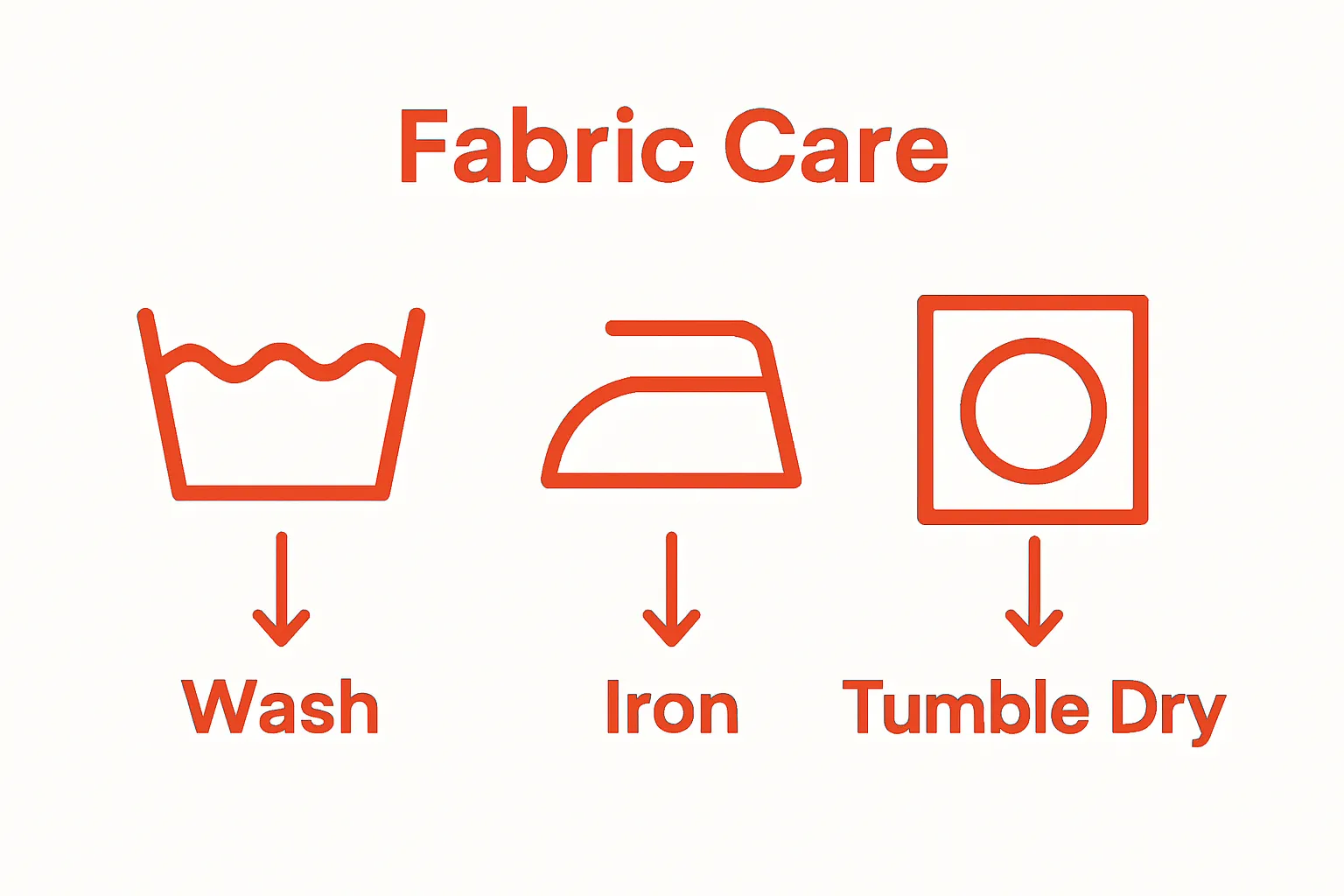
Beyond basic washing instructions, fabric care labels include sophisticated symbols representing complex maintenance procedures. These advanced indicators provide nuanced guidance for specialized textile treatment. Symbols representing drying techniques, ironing temperatures, and professional cleaning requirements communicate intricate preservation strategies without relying on written text.
Advanced symbol categories encompass:
Textile Research Institute emphasizes that understanding fabric care terminology is crucial for proper textile maintenance. Professionals and home crafters must interpret these symbols accurately to preserve fabric integrity. The symbols represent a complex technical language that translates scientific textile preservation knowledge into practical, actionable instructions for consumers and industry professionals.
Neglecting fabric care labels can result in significant financial losses, aesthetic degradation, and potential complete destruction of textile investments. Understanding the consequences of disregarding these crucial maintenance guidelines helps consumers and professionals make informed decisions about textile preservation.
Improper fabric care leads to premature garment replacement, creating unnecessary financial burden for consumers. Consumer Reports indicates that inappropriate cleaning techniques can reduce clothing lifespan by up to 50%, forcing individuals to replace items far more frequently than necessary. Textile maintenance becomes a critical economic consideration beyond simple aesthetic preservation.
Key economic risks of ignoring care labels include:
Improper cleaning techniques can fundamentally alter textile structure and appearance. Incorrect washing, drying, or ironing methods cause irreversible damage that compromises fabric integrity. Materials like wool, silk, and delicate synthetics are particularly vulnerable to inappropriate maintenance practices.
Specific fabric damage risks encompass:
National Textile Conservation Center emphasizes that understanding care label instructions is crucial for both professional textile handlers and individual consumers. Proper maintenance extends beyond aesthetic concerns, representing a sophisticated approach to preserving textile investments across various contexts, from high-end fashion to specialized craft materials.
It is stressful to invest time and money into garments or home crafts only to see them ruined by shrinkage, fading, or breakdown because of unclear or ignored fabric care instructions. You already know how vital it is to follow fabric care labels to prevent irreversible damage, extend the lifespan of your textiles, and maintain their beauty and structure. Now, you can shop with confidence, knowing every fabric at https://fabric-fabric.com has a detailed product description so you never have to guess about maintenance needs.

Do not risk another damaged project. Explore our wide range of fabrics—from seersucker and lace to velvet and satin—each paired with specific usage and care tips. Visit https://fabric-fabric.com now to find the right materials for your next creation and enjoy peace of mind through easy, informed fabric shopping. Empower your passion with fabrics designed for lasting results.
Fabric care labels are small tags attached to clothing and textiles that provide important information about how to properly maintain, wash, dry, and iron the fabrics to ensure their longevity and quality.
Fabric care labels help prevent accidental damage to fabrics by providing specific maintenance instructions tailored to each type of material, thus extending the life of the garments and preserving their appearance.
You can decode fabric care symbols by familiarizing yourself with the internationally recognized icons that indicate washing, drying, and ironing instructions, as well as bleaching and professional cleaning guidelines. These symbols communicate essential maintenance procedures without language barriers.
Ignoring fabric care labels can lead to significant consequences such as irreversible fabric damage, premature garment replacement, and overall reduced performance of textile products, resulting in increased costs and aesthetic degradation.