

 US Dollar

Quilting Fabric Guide: How to Choose the Best Materials
Posted by BLG on 2026 Apr 20th
Posted by BLG on 2026 Apr 20th

TL;DR:
- Selecting quilting fabric involves evaluating weight, weave tightness, colorfastness, and shrinkage.
- Different fabric types suit specific projects, from quilting cotton and batiks to linen blends and flannel.
- Trusted brands like Moda and Robert Kaufman ensure consistent quality for successful quilting outcomes.
Picking the right fabric for a quilt is harder than it looks. Walk into any fabric shop or browse an online store and you’ll face thousands of options, each promising something different. Even quilters with years of experience can freeze when faced with too many choices. The good news is that fabric selection follows a clear logic once you know what to look for. This guide breaks down the key criteria, compares the most popular fabric types, walks through top brands, and gives you project-specific recommendations so you can shop with confidence every single time.
| Point | Details |
|---|---|
| Fabric weight matters | Quilting cotton should be 3.5-4.5 oz/yd² (120-150 GSM) for best results. |
| Top brands offer reliability | Moda, Robert Kaufman, and others consistently deliver high-quality fabrics. |
| Match fabric to your project | Different quilts call for different fabrics—choose what suits your project’s purpose. |
| Check key criteria | Factor in weight, weave, colorfastness, and intended use when selecting fabric. |
| Experiment for creativity | Don’t be afraid to try unconventional combinations for unique results. |
Now that we’ve set the stage, let’s break down the most important fabric qualities to evaluate before you buy a single yard.
Fabric weight is your first checkpoint. Weight is measured in GSM (grams per square meter) or ounces per square yard, and it tells you a lot about how a fabric will perform. Quilting cotton weight sits ideally between 3.5 and 4.5 oz per square yard, or 120 to 150 GSM, giving you a balance of durability and drape. Understanding choosing the right GSM helps you avoid fabrics that are too stiff to quilt or too flimsy to hold seams.
Weave quality matters just as much as weight. A tighter weave gives you cleaner edges when you cut and more accurate piecing, which is critical for geometric blocks. Loosely woven fabrics fray more, stretch out of shape, and make matching seams frustrating.
Here are the key criteria to check before purchasing any quilting fabric:
Colorfastness is something beginners often overlook. A fabric that bleeds can ruin an entire quilt top after one wash. Always test a small swatch in warm water before committing to a full project.
Pro Tip: Check the manufacturer’s label for fiber content and washing instructions before you buy. If the label is missing, ask the retailer or skip that fabric entirely.
With your selection criteria in mind, let’s look at the fabrics you’ll encounter most and what makes each of them unique.
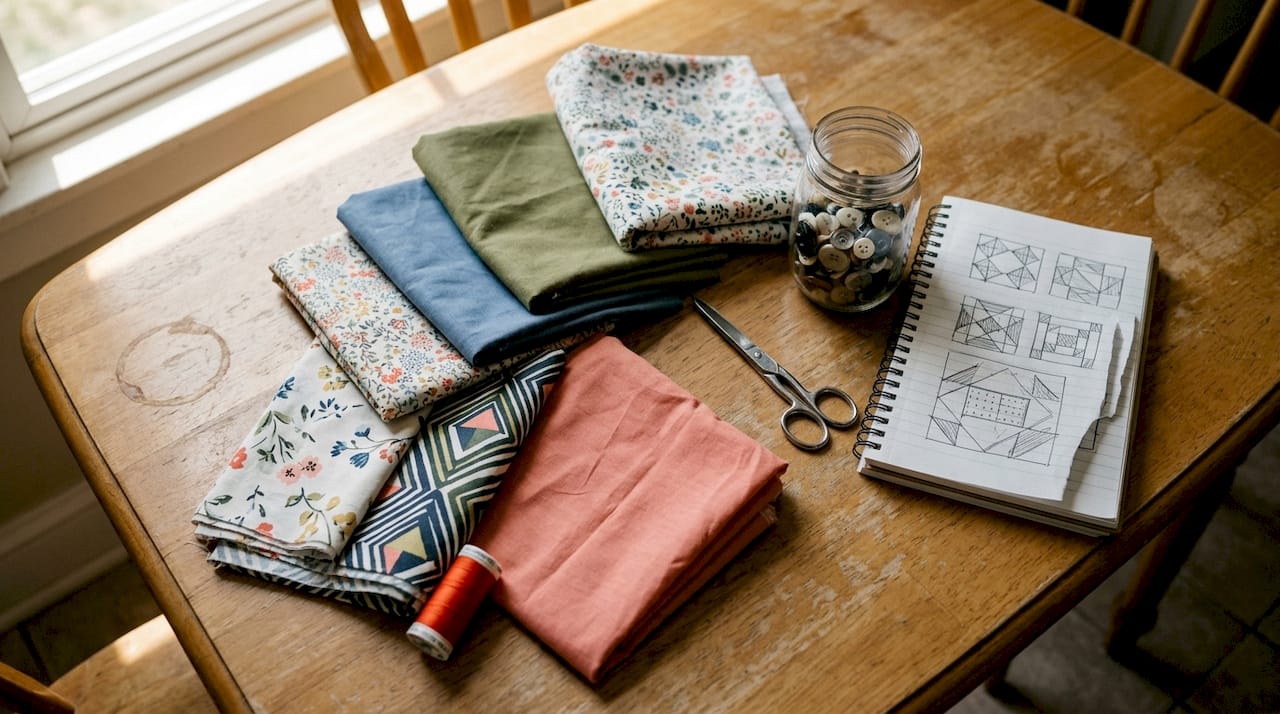
Quilting cotton is the gold standard. It’s easy to cut, press, and sew, and it holds its shape well over time. Exploring cotton types for quilting shows just how much variety exists within this one category alone. Most beginner projects start here for good reason.
Batiks are hand-dyed Indonesian cottons with tight weaves and intricate patterns. They’re slightly stiffer than regular quilting cotton, which actually helps with precision cutting. The color variation in batiks adds visual depth that printed fabrics can’t always match.
Linen blends bring a natural texture and subtle sheen that works beautifully in art quilts and wall hangings. They wrinkle more easily and can shift during sewing, so they’re better suited for experienced quilters.
Flannel is soft, warm, and perfect for baby quilts and cozy throws. It does shrink more than cotton, sometimes up to 6 percent, so prewashing is essential.
Specialty fabrics like voile, double gauze, and lawn offer creative options for lightweight summer quilts or delicate heirloom pieces. Browse quilting fabric basics to see a wider range of what’s available.
| Fabric type | Hand feel | Shrinkage | Best for | Relative cost |
|---|---|---|---|---|
| Quilting cotton | Crisp, smooth | 3 to 5% | All-purpose quilts | Low to medium |
| Batik | Firm, smooth | 2 to 4% | Statement blocks | Medium |
| Linen blend | Textured, soft | 4 to 6% | Art quilts, wall hangings | Medium to high |
| Flannel | Soft, fuzzy | 5 to 6% | Baby quilts, throws | Low to medium |
| Specialty (voile, lawn) | Lightweight, delicate | 2 to 3% | Heirloom, summer quilts | Medium to high |
Pro Tip: For heirloom projects meant to last generations, use high-thread-count cotton with a tight weave. It holds up to repeated washing and keeps its color far longer than standard quilting cotton.
Once you know the types you like, the next question is which brand will deliver the quality you want consistently across different colorways and collections.
Brand consistency is what separates a frustrating project from a smooth one. When fabric weight and dye saturation vary from bolt to bolt, your finished quilt shows it. Top quilting brands like Moda, Robert Kaufman Kona Solids, Riley Blake, Free Spirit, and Art Gallery Fabrics have earned their reputations through reliable quality.
Here’s a quick breakdown of what each brand does best:
For a deeper breakdown, the brand comparison for quilters covers how these brands stack up across real projects.
| Brand | Specialty | Price range | Best use | Availability |
|---|---|---|---|---|
| Moda | Coordinated collections | Medium | Scrappy and planned quilts | Widely available |
| Robert Kaufman Kona | Solid colors | Medium | Color-blocked, modern quilts | Widely available |
| Riley Blake | Novelty prints | Low to medium | Fun and themed quilts | Widely available |
| Free Spirit | Designer prints | Medium to high | Statement and art quilts | Specialty shops |
| Art Gallery Fabrics | Fine weave, soft hand | Medium to high | Heirloom, delicate projects | Specialty shops |
“Investing in reputable brands pays off in the long run. Consistent weave quality means fewer frustrations at the cutting table and a more polished finished quilt.” — Experienced quilting educator
The expert quilting fabric picks can help you narrow down your choices if you’re still unsure where to start.
Not all quilts serve the same purpose, and the best fabric varies depending on what you’re actually making and who it’s for.
Each quilt type has different demands. A baby quilt needs to survive endless washing cycles. A show quilt needs to impress at ten feet and twenty inches. A memory quilt carries emotional weight that demands careful material choices. Getting this match right from the start saves you from regret later.
The recommended weight range of 3.5 to 4.5 oz per square yard applies broadly, but how you apply that knowledge shifts based on the project.
Here are specific recommendations by quilt type:
Pro Tip: When making a memory quilt from old clothing, test-wash a small piece of each fabric before you cut. Vintage fabrics and modern quilting cottons often behave very differently in the wash, and knowing this ahead of time prevents disasters.
Structured advice gives you a solid foundation, but real quilting knowledge builds through touch, trial, and the occasional mistake.
Even the most experienced quilters sometimes break every rule in the book on purpose. A loosely woven linen that should never survive piecing becomes the most stunning focal fabric in an art quilt. A poly-cotton blend that every expert would reject turns out to be exactly the right choice for a specific texture effect. Rules exist because they work most of the time, not all of the time.
The real secret is handling fabric before you commit. Rub it between your fingers. Hold it up to light. Wash a swatch. The label tells you the basics, but your hands tell you the truth. Building a personal fabric journal where you tape swatches and record how each one behaved is one of the most underrated habits in quilting.
We’d encourage you to explore unique quilting treasures and try at least one unexpected combination on your next project. The unexpected choices often become the most memorable ones. Trust the data, but trust your instincts too.
Ready to translate your newfound knowledge into your next quilt? Finding the right fabric becomes much easier when you have a well-organized, high-quality selection to browse through.
At fabric-fabric.com, you’ll find a curated range of quilting fabrics spanning hundreds of colors, patterns, and textures, from classic solid cottons to bold specialty prints. Whether you’re a first-time quilter looking for beginner-friendly options or an experienced crafter hunting for something unexpected, the collections are organized to make your search simple and enjoyable. You can also explore home decor fabrics and even backdrop fabric selection for projects that go beyond the quilt frame. Start browsing and let the fabric do the talking.
Most experts recommend quilting cotton with a weight of 3.5 to 4.5 oz per square yard, or 120 to 150 GSM, for optimal performance across most project types.
Moda, Robert Kaufman, Riley Blake, Free Spirit, and Art Gallery Fabrics are consistently recognized for delivering reliable weave quality and color accuracy.
Prewashing removes excess dye and reduces shrinkage before you sew, but some quilters prefer unwashed fabric because it’s crisper and easier to handle accurately at the cutting stage.
Look for soft, tightly woven 100% cotton that’s labeled colorfast and free of harmful chemical finishes, and always verify it’s machine washable on warm.
Not at all. Linen blends, flannel, and specialty fabrics all have their place, but quilting cotton remains the easiest and most forgiving option, especially for complex pieced designs.