

 US Dollar

How to Care for Velvet: Keep It Plush and Beautiful
Posted by BLG on 2026 Jul 24th
Posted by BLG on 2026 Jul 24th

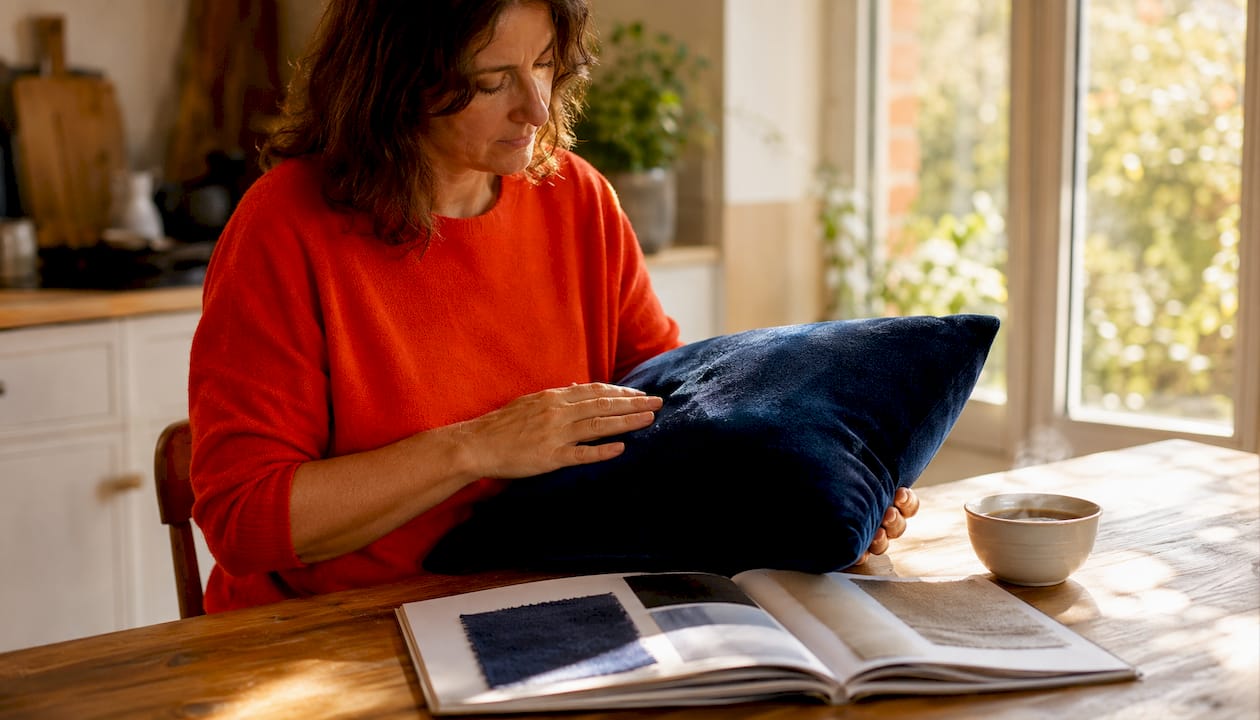
Velvet rewards careful handling and punishes shortcuts. The core rules: always check the care label before touching a stain, blot spills immediately rather than rubbing, and never apply heat directly to the pile. Most velvet damage at home comes from three mistakes: too much water, too much friction, and ignoring the fiber content. Get those three things right, and velvet is genuinely manageable.
Quick velvet care do’s and don’ts:
Pro Tip: Stroke the fabric with your hand to feel which direction the pile lies flat. That’s the nap direction. Every brush stroke, vacuum pass, and cleaning motion should follow it.
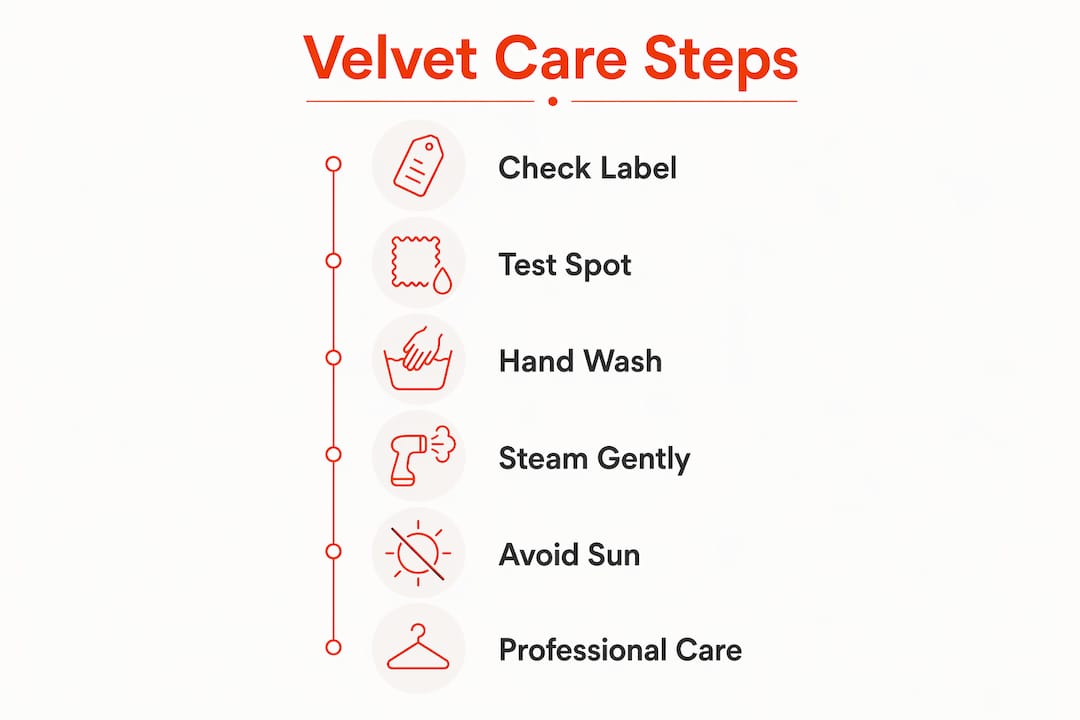
The fiber content determines everything. Polyester or crushed velvet can often handle a gentle machine wash; pure silk or cotton velvet cannot. Before anything else, find the care tag.
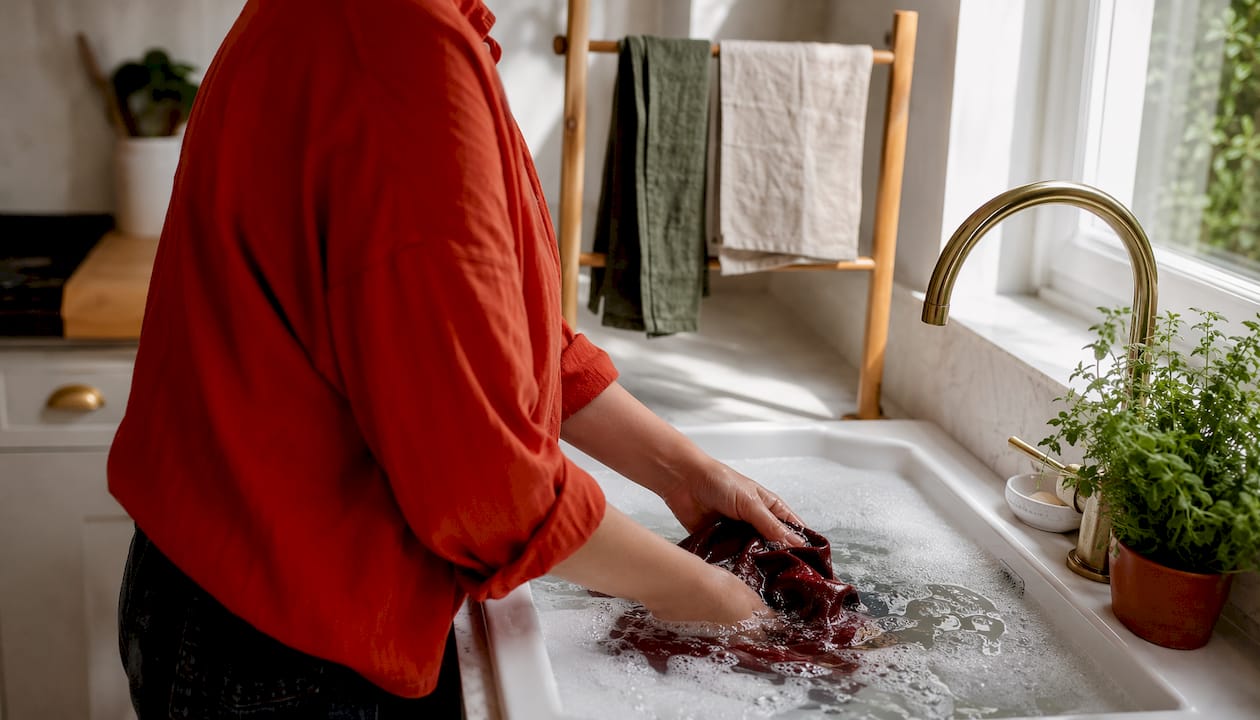
Hand washing works for most cotton and synthetic velvets when the label permits. Fill a basin with cold water and a small amount of mild detergent. Agitate gently with your hands, never wringing or twisting. Rinse by pressing the fabric in fresh cold water until it runs clear, then roll it in a clean towel to press out moisture. Lay flat to dry away from heat and direct sunlight.
Machine washing applies only to polyester or crushed velvet: cold water, delicate cycle, mesh laundry bag. Skip the fabric softener entirely; it leaves residue that dulls the pile.
For stain removal, mix 3–4 drops of clear, pH-neutral dish soap into one cup of cool water. Apply the solution to a clean white cloth first, never directly onto the fabric. Blot from outside inward, lifting the soil rather than pushing it deeper. For water-sensitive velvets, a dry-cleaning solvent is the safer choice.
Cleaning codes tell you exactly what’s allowed:
Pro Tip: Always test any cleaning solution on a hidden seam or back panel first. Wait for it to dry completely, then check for color transfer, texture change, or rings before touching the main surface.
Never iron velvet from the front. The weight of the iron crushes the pile flat, and that damage doesn’t reverse. If you must press a velvet garment, place it pile-side down on a thick towel and use steam only.
Routine upkeep prevents the kind of buildup that forces a deep clean. Weekly vacuuming with a soft brush attachment removes surface dust before it works into the pile. The key technique: wrap the nozzle with mesh or pantyhose to prevent the suction from pulling individual threads, then glide along the nap direction at the lowest suction setting.
Monthly brushing with a soft-bristled upholstery brush lifts flattened pile and restores the fabric’s sheen. Follow the nap direction on every stroke.
Low-temperature steaming is the most effective way to revive compressed areas without any cleaning product. Hold the steamer a few inches from the surface and follow immediately with a soft brush stroke in the nap direction.
Pro Tip: Directional consistency matters more than most people realize. Brushing or vacuuming against the velvet nap causes permanent crushed patches that look like stains but won’t clean out.
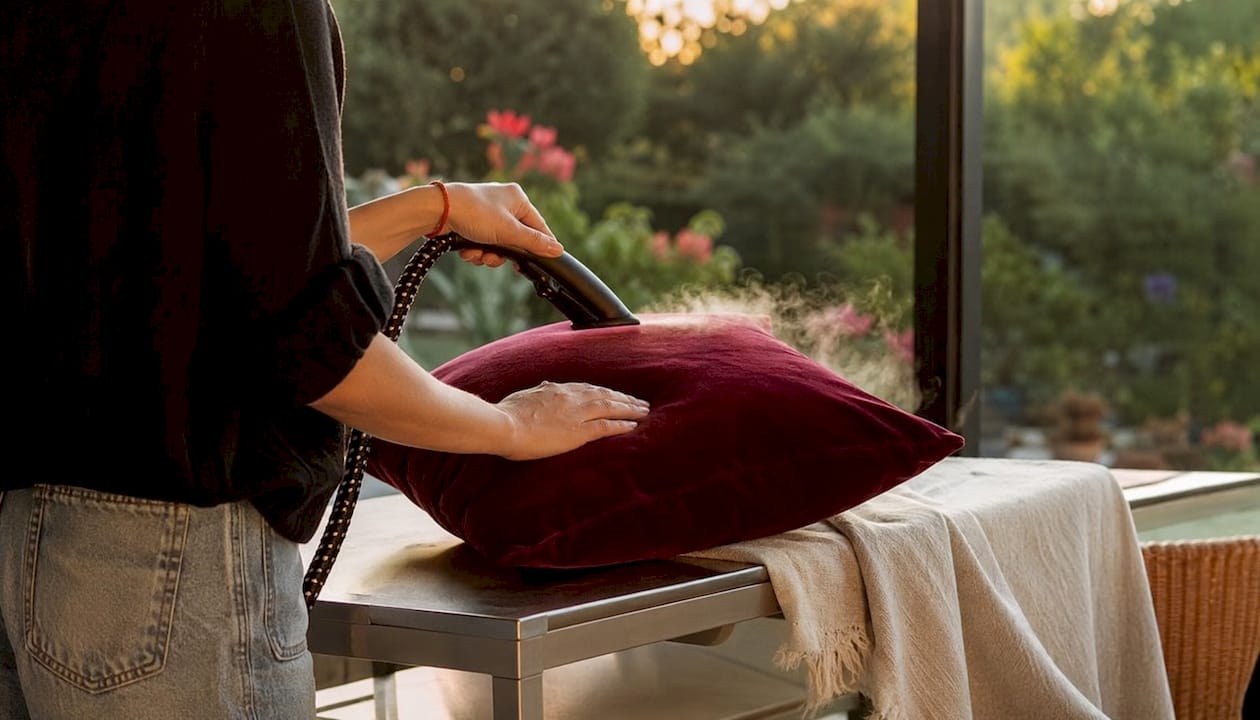
Pile crushing is the most frequent complaint, and it’s usually not a stain. Sitting in the same spot repeatedly compresses the fibers. Gentle steaming and brushing restore most crushed areas; some light bruising even recovers on its own with time and natural humidity. Persistent bruising that doesn’t self-correct can be treated with minimal steaming followed by brushing with the grain.
Color fading from UV exposure is permanent. Sunlight degrades velvet faster than most upholstery fabrics. Position pieces away from south-facing windows, use blackout curtains or blinds during peak daylight hours, or consider window films that block UV rays without blocking the view.
Water rings form when moisture spreads outward as it dries, drawing fiber residue to the edges. On cotton velvet especially, even a small amount of water applied directly creates a ring more visible than the original stain.
For storage, hang velvet garments on padded hangers inside breathable fabric bags. Never use plastic, which traps humidity and encourages mold. If folding is unavoidable, roll rather than crease, and store in a canvas bag in a dry, ventilated space.
When to call a professional: silk velvet, antique pieces, unknown fiber content, and any item labeled “S” or “Dry Clean Only” all warrant professional handling. Deeply set stains, widespread soiling, or any situation where home methods have already been tried and failed are also clear signals to stop and call an expert.
Pro Tip: Recognize the difference between a bruised pile and a stain before reaching for a cleaner. Steaming a bruised area costs nothing and risks nothing; applying water to an “S”-coded fabric can ruin it permanently.
Professional fabric care starts with fiber identification, not the stain itself. The best cleaning strategy always begins with identifying fiber content and testing cleaning agents discreetly to avoid damage.
Professionals avoid saturation and heat that cause watermarking and shrinkage, preferring low-moisture or foam-only cleaning for upholstery velvet. The most common amateur mistakes are over-wetting, applying heat, and rubbing rather than blotting.
For anyone sourcing quality velvet fabric, Fabric-fabric offers a wide selection of velvet for upholstery and home projects, with detailed product descriptions to help match fiber type to intended use.
Pro Tip: Spot test every cleaning agent, including plain water, on a hidden seam before touching the main surface. Apply a small amount, let it dry completely, and check for color transfer, texture change, or rings.
Velvet stays beautiful when you match the cleaning method to the fiber type, follow the nap direction every time, and treat spills with blotting rather than rubbing.
| Point | Details |
|---|---|
| Check fiber content first | Silk and cotton velvet need dry cleaning or hand washing; polyester or crushed velvet is safe for a cold delicate machine wash with a mesh laundry bag. |
| Cleaning codes are binding | An “S” code means solvent only; water on that fabric causes permanent watermarking. |
| Blot, never rub | Apply cleaning solution to a cloth first, then blot from outside inward to lift soil without matting the pile. |
| Steam revives crushed pile | Low-temperature steaming followed by brushing with the nap restores most compressed areas without any cleaner. |
| Sun fading is irreversible | Position velvet away from direct light or use window treatments to block UV exposure. |