

 Canadian Dollars

Best Velvet Fabric for Upholstery: A Designer's Guide
Posted by BLG on 2026 Jul 12th
Posted by BLG on 2026 Jul 12th

TL;DR:
- Performance velvet is the best upholstery fabric because it combines high durability, stain resistance, and colorfastness. Its engineered fibers withstand years of daily use, spills, and pet activity, making it ideal for both residential and commercial furniture. Proper selection, pile orientation, and gentle maintenance extend its attractive appearance for many years.
Performance velvet is the best velvet fabric for upholstery, combining exceptional durability, stain resistance, and a luxurious feel that traditional velvet types cannot match for everyday furniture use. Unlike silk or cotton velvet, performance velvet uses engineered synthetic fibers and high pile density to withstand years of daily compression, spills, and pet activity. Two key metrics define its superiority: the double rub rating and fiber construction. Understanding both will help you choose the right fabric for any upholstery project, whether you are refreshing a family sofa or specifying fabric for a commercial lounge chair.
Performance velvet is defined as a category of upholstery velvet engineered for durability, stain resistance, and colorfastness rather than softness alone. The fiber composition typically combines polyester, nylon, or a polyester-nylon blend, woven into a dense, short pile that holds its shape under repeated use.
The double rub rating is the industry standard for measuring upholstery fabric durability. Performance velvet ratings often exceed 100,000 double rubs, roughly ten times the durability of standard upholstery fabrics. That number translates directly into 15–20 years of residential or commercial use before visible wear appears.
Stain resistance is built into the fiber itself, not applied as a surface coating. Performance velvet repels moisture, resists stains, and recovers well from compression, placing it firmly in the everyday upholstery category. A surface coating wears off over time; engineered fiber resistance does not.
Colorfastness is the third pillar. Solution-dyed velvet is recommended for furniture near windows because the dye is locked into the fiber during manufacturing, not applied afterward. The result is consistent color even after years of sun exposure.
Pro Tip: Ask your fabric supplier for the Wyzenbeek or Martindale test result before purchasing any velvet for upholstery. A rating below 30,000 double rubs is not suitable for daily-use furniture.
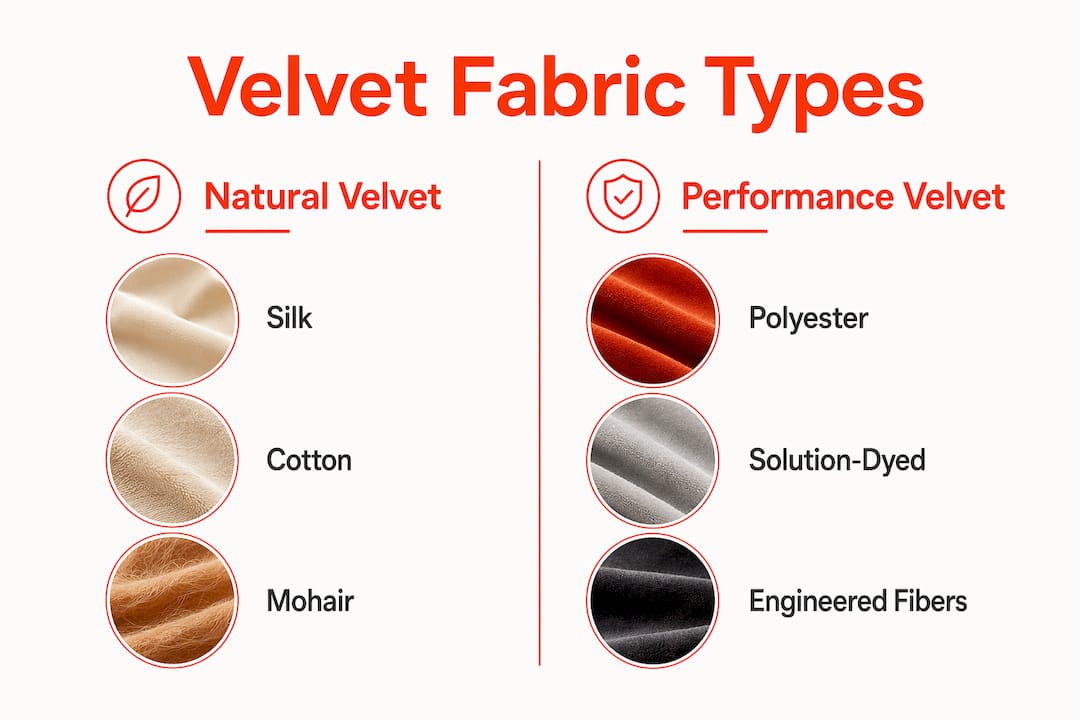
The upholstery fabric comparison between velvet types reveals clear trade-offs across softness, durability, maintenance, and price. Each fiber type serves a different purpose, and choosing the wrong one for a high-traffic piece is a costly mistake.
Silk velvet offers the greatest sheen and the softest hand feel of any velvet type. The trade-off is significant: silk velvet is fragile, expensive, and unsuitable for everyday upholstery. It belongs on decorative accent pieces or low-use formal chairs, not family room sofas.
Cotton velvet sits in the middle ground. It has a natural, matte finish and a softer feel than synthetic options, but its abrasion resistance is moderate. Cotton velvet performs well on occasional-use furniture but shows wear faster than performance or mohair velvet under daily use.
Mohair velvet, made from Angora goat fiber, and polyester velvet both outperform silk and cotton in abrasion resistance and longevity. Mohair has a distinctive luster and a springy pile that resists crushing naturally. Polyester performance velvet delivers similar durability at a lower price point, making it the most practical choice for most homeowners.
| Velvet type | Softness | Durability | Maintenance | Price range |
|---|---|---|---|---|
| Silk velvet | Highest | Low | High effort | Premium |
| Cotton velvet | High | Moderate | Moderate effort | Mid-range |
| Mohair velvet | High | High | Moderate effort | Premium |
| Polyester performance velvet | High | Very high | Low effort | Mid-range |
| Nylon blend performance velvet | Moderate | Highest | Lowest effort | Mid-range |
The table makes one pattern clear: performance velvet delivers the best balance of durability and maintenance for the price. Silk and mohair serve specific aesthetic goals but require more careful handling and a higher budget.
Choosing the right velvet starts with matching the fabric’s performance rating to the actual demands of the furniture piece. A dining chair used twice a week has very different requirements than a sectional sofa used daily by a family with children and pets.
For daily-use sofas and chairs, a Martindale or Wyzenbeek rating of 40,000–50,000 double rubs is the minimum. For heavy-duty or commercial applications, fabrics should exceed 70,000–80,000 double rubs. Occasional-use pieces like bedroom benches or accent chairs can work with ratings as low as 25,000–30,000.
Sun exposure degrades color faster than physical wear in many rooms. Specifying solution-dyed velvet is the correct call for any furniture placed near windows or in sun-filled rooms. Standard piece-dyed velvet will show uneven fading within a few years in direct sunlight. You can learn more about protecting your investment by reading about fade-resistant fabric choices before you buy.
Pet owners face a specific challenge with velvet: pile naturally attracts hair. Tightly woven, short-pile performance velvet reduces hair attraction and makes cleanup far easier than long-pile or loosely woven options. The tight weave allows hair to release with a lint roller or damp cloth rather than embedding deep into the pile.
Proper pile direction reduces unsightly shading and enhances the overall fabric look as the pile recovers from use. This is one of the most overlooked details in DIY upholstery projects.
Pro Tip: Always request a fabric sample and stroke it in both directions under natural light before committing to a full order. What looks uniform in a product photo may show strong directional shading in your actual room.
Velvet upholstery rewards consistent, gentle maintenance over occasional deep cleaning. The pile structure that gives velvet its visual depth is also what makes it susceptible to crushing and shading if neglected.
Visual shading is a natural characteristic of pile textiles, not a defect. Choosing high-density, tight-pile velvet and using proper upholstery techniques helps maintain a uniform look over time. Setting realistic expectations before purchase prevents disappointment later.
Regular maintenance habits that protect velvet:
Professional upholstery cleaning is the right call once a year for heavily used pieces. A professional uses dry-cleaning solvents or low-moisture methods that clean without saturating the pile. DIY wet cleaning carries a real risk of permanent pile damage, especially on cotton or silk velvet. For guidance on working with velvet’s specific handling requirements, the velvet sewing and handling tips at Fabric-fabric are worth reviewing before any upholstery project.
Performance velvet is the best velvet fabric for upholstery because it combines engineered fiber durability, built-in stain resistance, and colorfastness that traditional velvet types cannot deliver for everyday furniture use.
| Point | Details |
|---|---|
| Performance velvet leads in durability | Ratings of 50,000–100,000+ double rubs make it suitable for 15–20 years of use. |
| Match rating to furniture use | Daily-use sofas need 40,000–50,000 double rubs minimum; commercial pieces need 70,000+. |
| Solution-dyed velvet resists fading | Specify solution-dyed options for furniture near windows to maintain consistent color. |
| Pile direction affects appearance | Install with pile running down on vertical surfaces and toward the sitter on horizontal ones. |
| Gentle, consistent care extends life | Weekly brushing and immediate blotting preserve pile texture and prevent permanent crushing. |
For a long time, I steered clients away from velvet for anything other than accent pieces. The reputation for fragility was hard to shake, and I had seen enough crushed, faded velvet sofas to be skeptical. Performance velvet changed that position entirely.
The biggest misconception I encounter is that velvet is inherently delicate. That is true of silk velvet. It is not true of a well-engineered polyester or nylon blend with a 100,000 double rub rating. Prioritizing softness alone over pile density and fiber composition leads to durability failures. The clients who complain about velvet wearing out quickly almost always chose fabric based on how it felt in the store, not on its technical specifications.
The other thing most articles skip is shading. Velvet will always show pressure marks and directional light variation. That is not a flaw. It is how pile textiles work. Clients who understand this before purchase appreciate the living, shifting quality of velvet. Those who do not understand it call it damage. Setting that expectation upfront is the most useful thing you can do before any velvet upholstery project.
— kev
Fabric-fabric carries a curated range of upholstery-grade velvet fabrics, including Holland velvet and performance options built for daily residential and commercial use. Every listing includes clear descriptions of fiber content, pile type, and recommended applications so you can match the fabric to your project before ordering.
Samples are available so you can check pile direction, color accuracy, and hand feel in your actual space before committing to yardage. The full velvet fabric collection at Fabric-fabric covers a wide range of colors and constructions, from rich jewel tones to neutral performance velvets suited for high-traffic pieces. If you have questions about which velvet is right for a specific project, the Fabric-fabric team is available to help you narrow it down.
Daily-use sofas and chairs require a minimum of 40,000–50,000 double rubs. Commercial or heavy-use applications should exceed 70,000–80,000 double rubs for adequate longevity.
Yes, if you choose tightly woven, short-pile performance velvet. The tight weave allows pet hair to release easily and makes the surface simpler to clean than long-pile or loosely woven velvet.
Performance velvet uses engineered synthetic fibers with built-in stain resistance and high abrasion ratings. Regular velvet, such as silk or cotton velvet, prioritizes softness and appearance over durability and is not suited for everyday upholstery use.
Standard velvet fades unevenly with prolonged sun exposure. Solution-dyed performance velvet locks color into the fiber during manufacturing, making it the correct choice for furniture placed near windows or in sun-filled rooms.
Shading and pressure marks are natural characteristics of pile textiles, not defects. Selecting high-density velvet and brushing the pile regularly in one direction minimizes the effect and keeps the surface looking uniform.