

 US Dollar

Georgette Fabric Explained: Properties, Uses, and Expert Tips
Posted by BLG on 2026 Apr 25th
Posted by BLG on 2026 Apr 25th

TL;DR:
- Georgette is a lightweight, semi-sheer fabric with a textured surface and fluid drape.
- It offers durability through twisted yarns but snags on rough surfaces and needs proper care.
- Ideal for flowing dresses, overlays, and layered projects, with lining required for some light colors.
Georgette is one of those fabrics that confuses people at first glance. It looks almost too delicate to use, yet fashion designers from Paris to New York have relied on it for over a century. The truth is, georgette strikes a rare balance: it floats and drapes like a dream while holding up far better than its gossamer appearance suggests. Whether you’re planning a flowing evening gown, a layered scarf, or a dramatic backdrop, understanding what georgette actually is and how it behaves will save you time, money, and frustration at the cutting table.
| Point | Details |
|---|---|
| Distinct structure | Georgette features a unique twisted weave that balances delicacy with surprising strength. |
| Versatile uses | Georgette excels in fashion, craft, and decor projects where drape and texture matter. |
| Careful handling | Avoid snags and always consider lining for light colors to maintain garment quality. |
| Smart selection | Compare georgette with chiffon and other fabrics to match the right material to your project. |
Georgette fabric takes its name from early 20th-century French dressmaker Georgette de la Plante, who popularized this distinctive crepe-like textile in the fashion world. From Paris couture houses to global textile mills, the fabric quickly became a staple for its unique combination of movement and structure. Most crafters and sewists encounter georgette without fully understanding what makes it different from other sheer fabrics on the market.
At its core, georgette is a plain weave fabric made from tightly twisted yarns. Traditionally, it was woven from pure silk, but modern versions are equally common in polyester, rayon, and blended fibers. What sets it apart structurally is the alternating S-twist and Z-twist yarns woven in both the warp and weft directions. This opposing twist creates the fabric’s signature pebbled, slightly rough surface texture, which gives georgette its wonderful elasticity and volume.
Here’s what defines georgette’s tactile experience:
“Georgette snags on jewelry and rough surfaces despite its durability, and its semi-sheer finish requires lining for opacity in light colors.”
Compared to chiffon, georgette is denser and slightly stiffer. Compared to crepe, it’s much lighter and more fluid. This middle-ground position is exactly what makes georgette so flexible as a design material. Silk georgette commands premium pricing and a softer hand, while polyester georgette offers durability and easy care at a fraction of the cost. For most sewing and design projects, both versions perform excellently when chosen for the right application.
Having established georgette’s foundation, let’s see how it measures up to other popular lightweight fabrics that crafters and sewists frequently encounter.
The confusion between georgette and chiffon is real and understandable. Both are lightweight, semi-sheer, and suited to flowing garments. But their differences matter enormously when you’re choosing fabric for a specific project.
| Fabric | Fiber content | Texture | Opacity | Best uses |
|---|---|---|---|---|
| Georgette | Silk or polyester | Slightly rough, pebbled | Semi-sheer | Dresses, overlays, scarves |
| Chiffon | Silk or polyester | Smooth, slippery | Very sheer | Evening wear, layering |
| Crepe | Silk, wool, or polyester | Matte, textured | More opaque | Tailored garments, blouses |
| Organza | Silk or polyester | Crisp, stiff | Semi-sheer | Structured overlays, bridal |
The key differences come down to texture and body. Chiffon is smoother and drapier, which makes it popular for lightweight summer fabrics and flowy evening wear. Georgette, however, has more body and recovers better after wearing, which means it holds pleats and gathers with more intention.
Crepe is georgette’s closest structural relative, but crepe is heavier and more opaque. Crepe suits tailored blazers and structured blouses, while georgette is better for romantic, fluid silhouettes. If you’re already familiar with lightweight cotton fabrics, note that georgette behaves very differently: it has no absorbency and moves in an entirely different way under a needle.
Common mistakes sewists make when substituting fabrics:
Pro Tip: When switching between georgette and chiffon for a pattern, test your seam allowances first. Georgette’s slight body means seams behave differently than chiffon’s fluid, slippery nature. A rolled hem works beautifully on both, but georgette tolerates French seams and narrow flat-felled seams much more cooperatively. Read more in our detailed chiffon fabric guide for a side-by-side comparison on technique.
Now that you can differentiate georgette from comparable fabrics, let’s explore its defining strengths, quirks, and best care practices.
Georgette surprises most first-time users with its resilience. For a fabric that looks like it could fall apart in a stiff breeze, it resists tearing remarkably well. The tightly twisted yarn structure distributes tension across the weave, preventing individual threads from bearing too much stress at once. This makes georgette a practical choice for garments that need to look delicate but endure repeated wear, like wrap dresses, bridal overlays, and layered separates.
That said, georgette is not indestructible. Here are the most important properties and care practices to know:
Pro Tip: Before cutting your full project, wash and press a 10-inch test swatch of georgette. This tells you exactly how much the fabric shrinks, how it responds to your iron’s heat, and whether colors bleed. Many sewists skip this step and regret it after their finished garment comes out several sizes smaller than planned.
For broader guidance, our fabric care tips and detailed fabric care guide walk through best practices for delicate fabrics like georgette in much greater depth.
With the essentials covered, let’s get creative and see how georgette shines in a variety of practical and decorative settings.
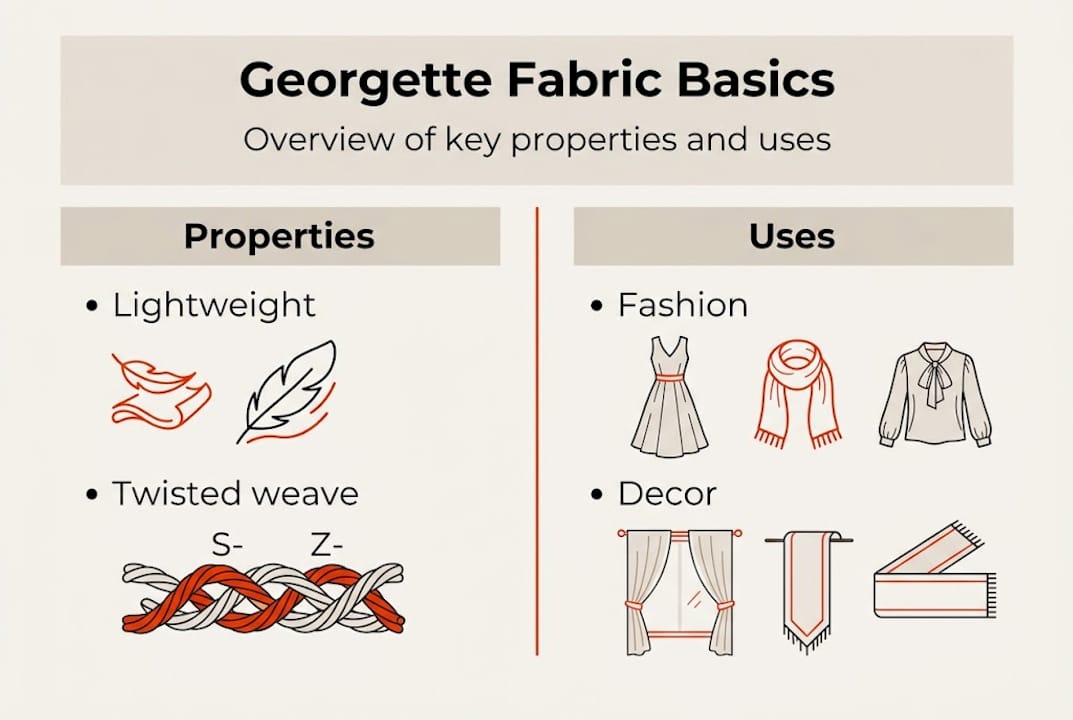
Georgette’s combination of fluid drape, slight body, and semi-sheer quality makes it one of the most versatile fabrics in both fashion and décor. Its behavior under light, especially in layers, creates stunning visual depth that solid opaque fabrics simply cannot replicate.
In apparel, georgette excels in:
Beyond fashion, crafters and decorators have found equally compelling uses for georgette. Event decorators use it for shop backdrop georgette panels that photograph beautifully under both natural and studio lighting. The fabric’s semi-sheer quality creates romantic, layered looks on photo backdrops without the harsh flatness of fully opaque materials.
Here’s a quick reference for matching georgette to specific project types:
| Project type | Georgette weight | Fiber recommendation | Lining needed? |
|---|---|---|---|
| Maxi dress | Medium weight | Polyester or silk | Yes for pale colors |
| Scarf or wrap | Lightweight | Silk georgette | No |
| Bridal overlay | Lightweight | Silk or poly blend | Yes |
| Photo backdrop | Medium weight | Polyester | No |
| Ruffled blouse | Lightweight | Polyester georgette | Partial |
The semi-sheer finish also opens up exciting possibilities for layered crafts. Quilters sometimes incorporate georgette panels into art quilts for translucent, dimensional effects, pairing it with geometric quilting options to create visual texture through color-on-color layering.
Pattern selection matters significantly when working with georgette. Simple, flowing silhouettes with minimal internal structure work best. Avoid designs that rely on sharp pleats, heavy topstitching, or structured facings. Use your needle size wisely: a fine 70/10 or 75/11 needle prevents snagging and produces clean stitch lines. Reading a reliable fabric selection guide before starting your pattern search will help you avoid mismatches between your design goals and the fabric’s natural behavior.
Inspired? Before you buy, here’s how to make sure georgette is the perfect fit for your next project.
Choosing the right fabric is half the battle in any sewing or design project. Georgette is not always the correct answer, even when a flowing fabric seems called for. Asking yourself the right questions before purchasing saves both money and frustration.
Key questions to ask before choosing georgette:
Quality checks when sourcing georgette:
Before buying, hold the fabric up to light. Good-quality georgette has an even, consistent weave with no visible slubs or irregular threads. Rub the fabric between your fingers: it should feel slightly textured (that characteristic pebbled hand) and spring back gently. If it feels completely limp or has zero recovery, it may be a lower-quality blend marketed as georgette.
Check for colorfastness by pressing a damp white cloth against the fabric for 30 seconds. Any color transfer means you’ll need to pre-wash carefully before cutting. Our designer fabric selection tips cover these and other practical sourcing checks in more detail.
Quick selection checklist:
For event designers and decorators working on large-scale installations, exploring backdrop fabric ideas before committing to georgette for a backdrop project is worthwhile. There may be georgette-adjacent options that offer better performance for high-traffic or outdoor settings.
When georgette matches your project requirements, it delivers results that few other fabrics can rival. The key is knowing what you’re working with before the scissors touch the cloth.
Most fabric guides treat georgette as simply a “lightweight dressy fabric.” That undersells it significantly. What genuinely sets georgette apart is its structural paradox: it looks fragile but sews like a fabric with real backbone. First-time users are often surprised to discover that georgette is far easier to work with than chiffon, despite both fabrics appearing similar on the bolt.
The real challenge and the real reward of georgette is understanding its behavior in layers. A single layer looks lovely; two or three layers become genuinely stunning. This layering quality is something that many makers discover only after their first project. It’s also what makes georgette so popular for bridal and formalwear design.
The tradeoffs are real, though. As fabric specialists consistently point out, snagging remains a genuine concern for georgette users, particularly those who work near jewelry or textured surfaces. And the lining requirement for pale colors adds both cost and complexity to a project.
Comparing georgette to heavier structured fabrics like those covered in our gabardine vs georgette breakdown reveals how dramatically different fabric choices affect both the making process and the final result. Georgette rewards makers who work with its nature rather than against it.
Ready to get hands-on with georgette or other specialty fabrics? Here’s where to start.

At fabric-fabric.com, you’ll find a curated selection of georgette and related fabrics suited to every project level, from beginner blouses to professional bridal overlays. Browse elegant options in our shop backdrop georgette collection for event design and photography backdrops, or explore our range of home decor fabrics for decorative panel and layering applications. Whether you need silk georgette for a luxury garment or durable polyester georgette for repeated use, our product listings include detailed descriptions and usage suggestions to help you match fabric to project with confidence. Our team is always available to help you find exactly what you need.
Georgette’s tightly twisted yarn structure resists tears and distributes tension across the weave, yet its fine individual fibers can snag on rough surfaces or jewelry, creating that paradox of strength and vulnerability.
Lining is typically necessary when georgette is light-colored or semi-sheer in direct light, and also recommended for fitted silhouettes where transparency near the body would otherwise be visible.
Hand wash gently in cold water using a mild detergent, press between towels rather than wringing, and iron on low heat with a pressing cloth to avoid scorching the fibers.
Yes, georgette’s light weight and open weave structure allow airflow, making it a comfortable and stylish choice for warm-weather dresses, blouses, and accessories.