

 US Dollar

Fabric Finishes Explained: Boosting Quality And Use
Posted by BLG on 2026 Jan 6th
Posted by BLG on 2026 Jan 6th

Over 60 percent of American designers report that fabric finishes can make or break a project’s success. For those working to set their collections apart, understanding these advanced textile treatments is more than a technical detail. Whether you are crafting runway pieces or perfecting home decor, the right finish can bring greater durability, comfort, and signature flair to every creation.
| Point | Details |
|---|---|
| Purpose of Fabric Finishes | Fabric finishes enhance textile performance, aesthetics, and durability, meeting specific consumer needs and design requirements. |
| Types of Treatments | Finishes can be protective, aesthetic, or functional, each serving distinct roles in modifying fabric properties. |
| Caring for Finished Fabrics | Proper maintenance is crucial; specific care guidelines should be followed to preserve the integrity and performance of treated textiles. |
| Strategic Application in Design | Designers should apply targeted fabric finishes to transform ordinary textiles into high-performance materials tailored for various applications. |
Fabric finishes are specialized treatments applied to textiles to enhance their performance, functionality, and aesthetic qualities. These transformative processes modify fabric properties to meet specific design requirements and consumer needs. Textile performance improvements range from increasing durability and comfort to providing protective characteristics for various applications.
At their core, fabric finishes serve multiple critical purposes. They can modify fabric appearance, improve tactile qualities, increase resistance to environmental challenges, and extend the overall lifespan of textile products. Designers and manufacturers strategically apply these treatments to customize fabrics for specific uses like apparel, upholstery, industrial applications, and protective gear. Fabric finish treatments can transform ordinary textiles into high-performance materials with enhanced functional properties.
Some primary objectives of fabric finishes include:
These treatments represent a sophisticated intersection of textile science and design innovation, allowing manufacturers to create fabrics that go far beyond basic material characteristics. By understanding and applying targeted fabric finishes, designers can significantly elevate the quality and versatility of their textile products.
Pro Tip: Always test fabric finishes on a small sample before full application to ensure the desired performance and aesthetic outcomes.
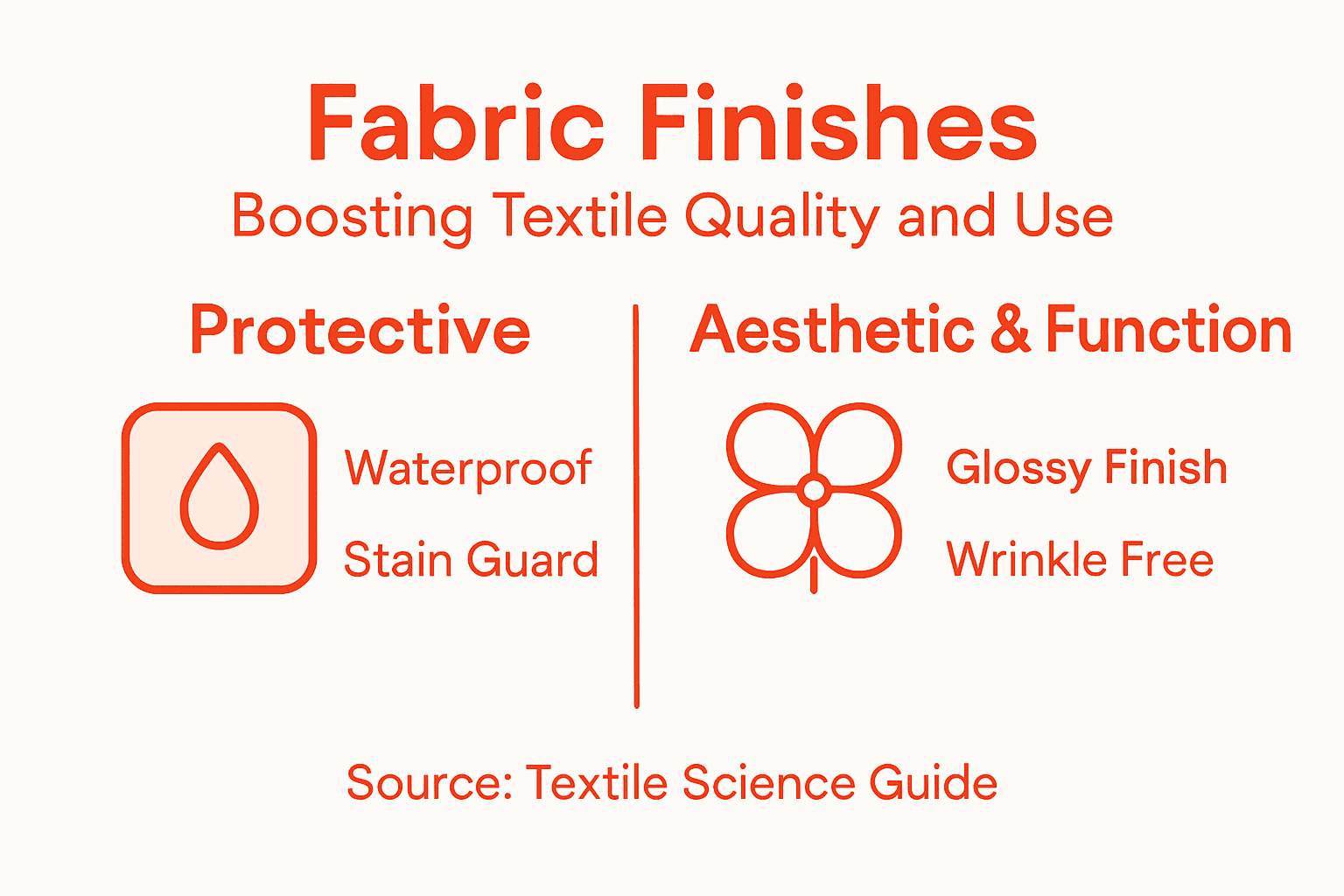
Fabric finishes represent a sophisticated range of treatments designed to enhance textile performance across multiple dimensions. Textile performance modifications encompass various specialized techniques that transform basic fabric characteristics to meet specific design and functional requirements. These finishes can be broadly categorized into protective, aesthetic, and functional types, each serving unique purposes in textile engineering.
Protective finishes focus on improving fabric durability and resistance. These treatments include water repellent finishes that prevent liquid absorption, flame retardant coatings for safety-critical applications, and antimicrobial treatments that inhibit bacterial growth. Aesthetic finishes, by contrast, modify the fabric’s visual and tactile qualities. Techniques like mercerization can enhance fabric luster, while calendering processes can create smoother surfaces or add unique textures to textiles.
Functional finishes represent the most advanced category of fabric treatments. These specialized processes can:
Designers working with textured fabric must understand how different finish types can dramatically transform a fabric’s performance and aesthetic appeal. The strategic application of these treatments allows manufacturers to create high-performance textiles tailored to specific end-user requirements.
Pro Tip: Always consult textile engineering specifications to understand the precise performance characteristics of different fabric finishes before final product development.
Here’s a comparison of major categories of fabric finishes and how they impact textiles:
| Finish Category | Typical Treatments | Main Impact on Fabrics |
|---|---|---|
| Protective | Water repellent, flame retardant | Boosts durability and safety |
| Aesthetic | Mercerization, calendering | Enhances surface appearance |
| Functional | Wrinkle resistance, UV protection | Elevates performance features |
Fabric finishing represents a transformative scientific approach to modifying textile properties at the molecular level. Textile performance modifications involve complex chemical and mechanical treatments that fundamentally alter a fabric’s inherent characteristics. These sophisticated processes can dramatically reshape a textile’s functionality, appearance, and performance potential, turning basic materials into highly specialized products tailored for specific applications.
The mechanism of fabric transformation occurs through multiple strategic interventions. Chemical agents and mechanical techniques penetrate fabric structures, modifying surface interactions and internal molecular arrangements. Water repellent finishes, for instance, create microscopic barriers that prevent liquid absorption, while antimicrobial treatments introduce compounds that inhibit bacterial growth. Fabric treatment processes can enhance textiles in ways that go far beyond their original manufacturing limitations.
Key transformative processes include:
Designers working with garment durability must understand how these intricate finishing techniques can fundamentally alter a fabric’s core characteristics. The strategic application of these treatments allows manufacturers to engineer textiles with precisely targeted performance attributes, bridging the gap between raw material potential and advanced functional requirements.
Pro Tip: Consult textile engineering experts to understand the specific molecular interactions happening during fabric finishing processes to optimize your material selection strategy.
Fashion design techniques leverage fabric finishes as critical tools for transforming textiles into innovative and functional garments. These specialized treatments enable designers to create clothing that goes beyond aesthetic appeal, incorporating performance-enhancing properties that meet contemporary consumer demands. From haute couture runways to everyday wear, fabric finishes provide designers with a sophisticated palette of functional and decorative options.
In fashion applications, fabric finishes serve multiple strategic purposes. Performance-oriented treatments like water repellency, stain resistance, and wrinkle control allow designers to create garments that maintain their appearance and functionality under diverse conditions. Aesthetic finishes enable visual and tactile transformations, allowing designers to manipulate fabric texture, sheen, and drape to achieve specific design visions. These treatments can elevate a basic textile into a sophisticated, high-performance material with unique sensory qualities.
Craft applications of fabric finishes demonstrate remarkable versatility across various creative domains:
Crafters exploring decorative trim ideas can leverage fabric finishes to expand their creative possibilities. By understanding and strategically applying these treatments, designers and crafters can transform ordinary textiles into extraordinary, high-performance materials that meet both functional and aesthetic requirements.
Pro Tip: Experiment with small fabric samples and different finish treatments to understand their unique transformative potential before committing to a full project.
Maintaining the quality of finished fabrics requires strategic care tailored to specific treatments and fiber compositions. Fabric treatment maintenance involves understanding the unique characteristics of each textile and its specialized finish. Different fabric treatments demand precise handling to preserve their enhanced performance properties and extend their functional lifespan.
Common pitfalls in fabric care can dramatically compromise the effectiveness of specialized finishes. High heat, incorrect washing techniques, and harsh chemicals can quickly degrade performance-enhancing treatments. For instance, flame-retardant finishes may lose their protective qualities if not laundered according to specific guidelines. Flammable fabric regulations underscore the critical importance of following manufacturer care instructions to maintain both safety and fabric integrity.
Key considerations for preserving finished fabrics include:
Crafters and designers can optimize fabric care by developing a nuanced understanding of textile maintenance. Recognizing the delicate nature of specialized fabric finishes allows for more intelligent preservation strategies that maintain both the functional and aesthetic qualities of treated textiles.
For quick reference, below are common care mistakes and their effects on treated fabrics:
| Care Mistake | Consequence for Finished Fabrics | Recommended Solution |
|---|---|---|
| High-temperature washing | Degrades special performance coatings | Use cold or lukewarm water |
| Harsh chemicals | Damages protective or aesthetic finish | Opt for gentle, fabric-safe cleaners |
| Excessive friction | Reduces lifespan of surface treatments | Minimize agitation, air dry |
Pro Tip: Create a dedicated care guide for each specialized fabric in your collection, documenting specific maintenance requirements to ensure long-lasting performance.
Understanding how fabric finishes transform textiles is key to achieving long-lasting durability and stunning appearance in your creations. Whether you face challenges like maintaining water resistance, enhancing texture, or ensuring wrinkle control, applying the right treatments can feel overwhelming. Now you can simplify your process by choosing from a vast selection of premium fabrics designed for optimal finishing and tailored performance.
Explore the wide variety of fabrics at Fabric-Fabric where each product comes with detailed descriptions to help you pick the perfect base for your needs. From elegant satin and textured velvet to versatile quilting cottons, these fabrics are ready for your creative finishing touches. Dive into crafting with confidence knowing you have access to quality textiles that respond beautifully to finishing treatments like water repellents and antimicrobial coatings. Start transforming your projects today by visiting Fabric-Fabric Online Store and experience the difference that premium fabric choices make for your fashion, home decor, and craft endeavors.
Fabric finishes are specialized treatments applied to textiles to enhance their performance, functionality, and aesthetic qualities, ranging from durability to comfort and protective characteristics.
Fabric finishes can be broadly categorized into protective, aesthetic, and functional types, each designed to improve different aspects of textile performance like durability, appearance, and specific functionalities.
Fabric finishes modify the inherent properties of fabrics at the molecular level, enhancing qualities like water resistance, stain repellent features, and even adding antimicrobial properties for improved functionality in various applications.
To maintain finished fabrics, it’s crucial to wash them according to specific care labels, avoid high heat and harsh chemicals, and protect them from excessive friction to preserve their enhanced performance and quality.