

 US Dollar

Double Knit Cotton Fabric: What to Buy and How to Choose
Posted by BLG on 2026 Jul 27th
Posted by BLG on 2026 Jul 27th

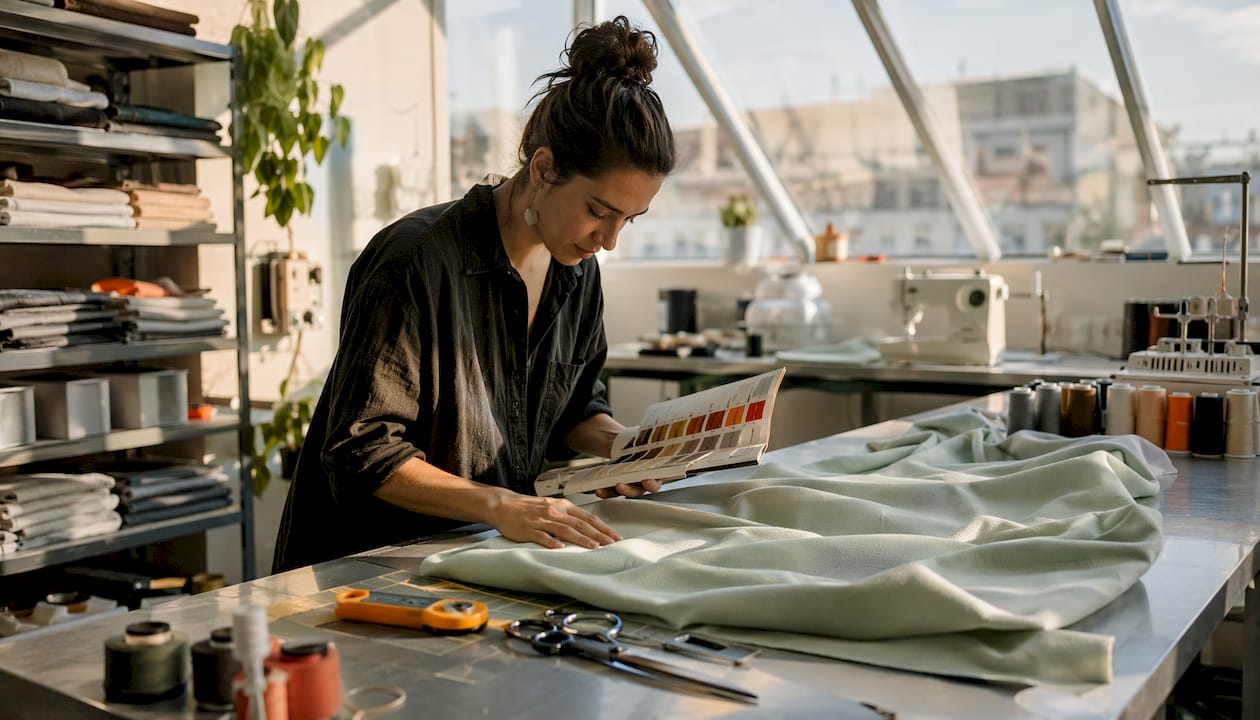
Double knit cotton fabric is a stable, reversible knit built from two interlocked layers, giving you knit comfort with woven-like structure. For most structured apparel, mid-weight cotton knit fabric handles dresses, skirts, and tailored tops well. Heavier weights are better for jackets and ponte-style suiting. Before committing to full yardage, order a 10–20 inch swatch from Fabric-fabric and check the weight spec, fiber content, and stretch direction on the listing.
Double knit is produced on a machine with two needle beds, creating two layers of fabric that are knit simultaneously and interlocked. The result reads the same on both sides, which is why it’s called reversible. Double jersey fabric shrinks less than single jersey because the loops are balanced on both faces.
Single jersey, by contrast, uses one needle bed. It’s lighter, curls at cut edges, and shows a distinct face and back. Double knit eliminates all three of those problems.
Quick comparison:
Common types include interlock, Ponte di Roma, rib double knit, and double-knit jacquard. Each has slightly different stretch and hand, but all share the core two-layer construction.
The fiber content on a listing tells you more than just what the fabric is made of — it predicts how the finished garment will behave on a body.
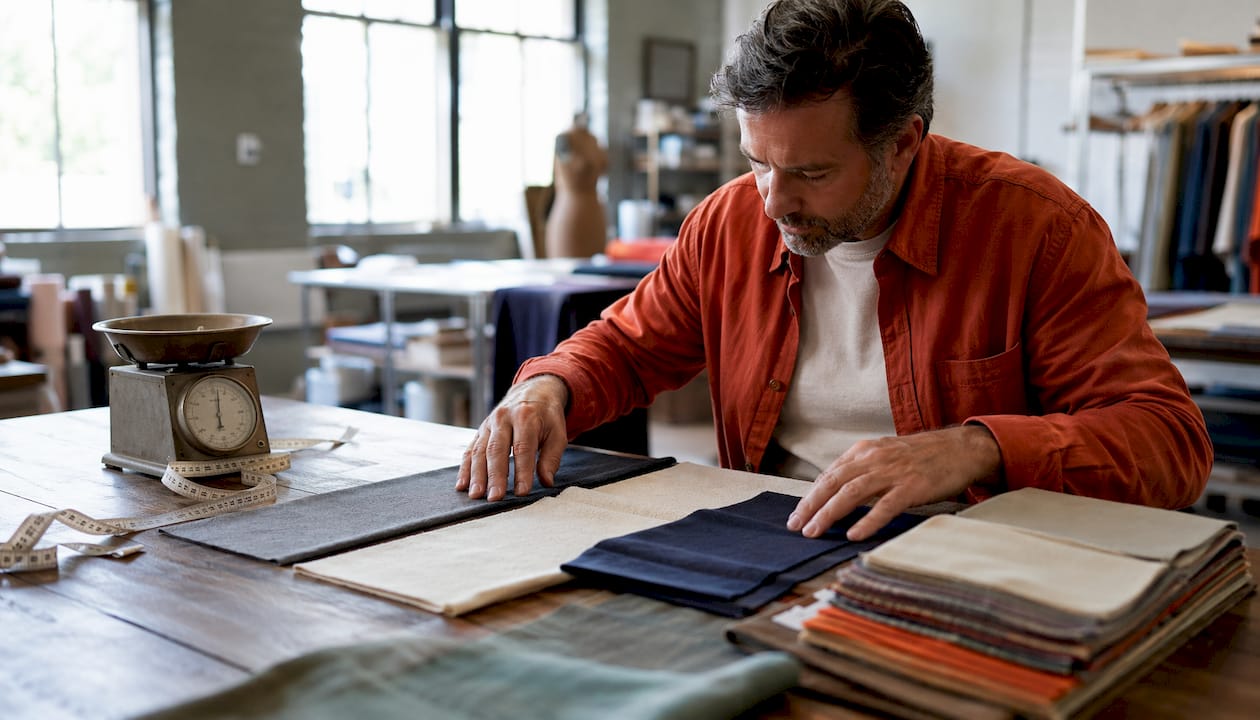
100% cotton interlock is soft, breathable, and absorbent, making it the go-to for babywear, underwear, and everyday tops where skin contact matters most. It has no synthetic memory, so it relaxes with wear. If you’re sewing for sensitive skin or want a natural-fiber garment, this is the straightforward choice.
Cotton/polyester blends (common ratios: 80/20 or 82/18) add wrinkle resistance and durability without sacrificing much breathability. The polyester content helps the fabric recover its shape after washing and reduces pilling over time. Good for workwear and garments that see heavy laundering.
Cotton with spandex (1–5%) gives crosswise recovery that pure cotton lacks. A small spandex percentage makes a real difference for fitted silhouettes — leggings, bodycon dresses, and anything that needs to snap back after stretching. Check the listing for stretch percentage if it’s available.
Pro Tip: If skin sensitivity or sustainability matters to you, look for OEKO-TEX Standard 100 certification or a GOTS organic cotton label on the listing. These certifications mean the fabric has been tested for harmful substances — a detail worth checking for children’s clothing especially. Ethical sourcing practices in fabric selection are increasingly easy to verify through these labels.
Mercerized cotton double knits add a subtle sheen and improved tensile strength — worth considering for dressier garments where appearance matters as much as comfort.
GSM (grams per square meter) is the number to look for on any listing. It tells you how dense and heavy the fabric is, which directly affects drape, warmth, and structure. Some listings use oz/yd² instead: 1 oz/yd² equals roughly 34 GSM.
Interlock and double knit fabrics span a wide range, typically 150–450 GSM, which is why weight is the single most important spec to check before buying.
| Weight Band | GSM Range | Best Projects | Hand & Stretch |
|---|---|---|---|
| Lightweight | 150–200 GSM | Soft tops, babywear, layering pieces | Soft, moderate crosswise stretch |
| Mid-weight | 200–300 GSM | Sheath dresses, skirts, turtlenecks, fitted tops | Firm but drapey, minimal stretch |
| Heavy | 300–450 GSM | Jackets, ponte suiting, structured blazers | Dense, firm, very little stretch |
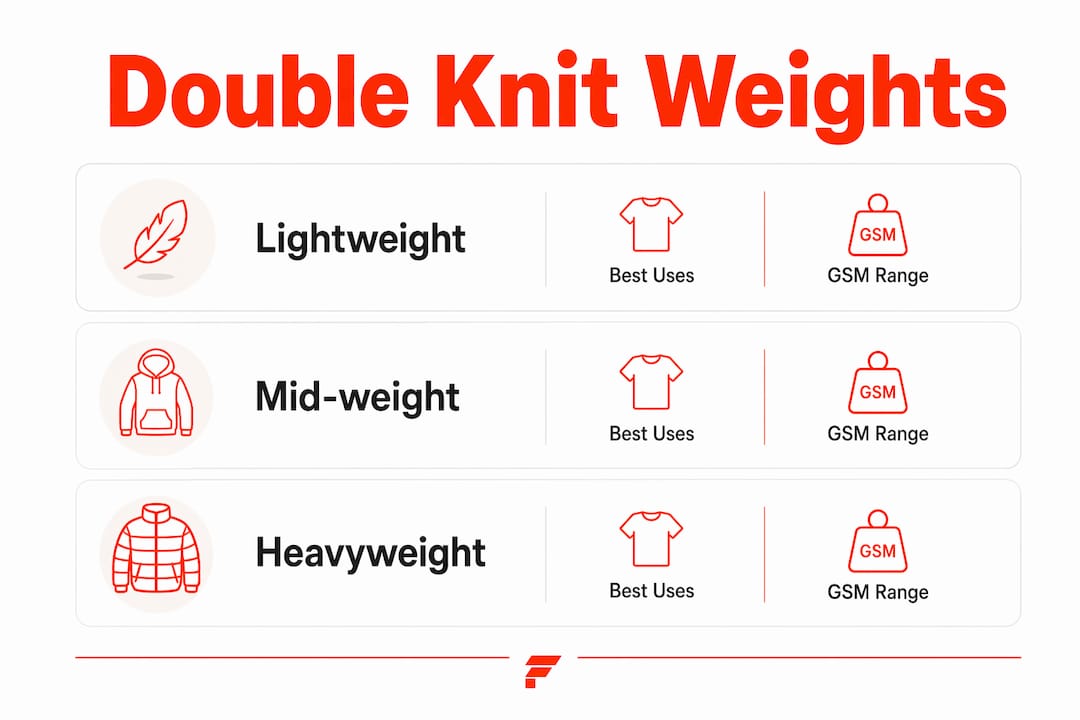
For a sheath dress, mid-weight (220–260 GSM) gives you the structure to hold a silhouette without feeling stiff. Leggings with a spandex blend work best at 180–220 GSM. A ponte-style blazer needs 300 GSM or above to hold its shape at the shoulder and lapel.
Brushed or sheared finishes change the hand noticeably. A brushed double knit feels softer and warmer — good for fall/winter pieces — but the nap direction matters when cutting pattern pieces, so treat it like a directional print.
Double knit fabrics are dense and stable enough to replace wovens in many tailored patterns, which is exactly why they show up in so many structured garment categories.
For vintage patterns originally drafted for woven fabrics, double knit is often the closest modern substitute that still allows machine washing. Check the pattern’s recommended fabric and compare the stretch percentage — if the pattern calls for a stable knit with 25% or less stretch, double knit fits.
Interfacing is usually needed only at waistbands and shoulder seams. The fabric’s own density handles most structural needs.
Don’t skip this checklist at checkout. A few minutes of spec-checking prevents a lot of frustrating returns.
Reading product photos: Look for a closeup of the cut edge (does it curl?), a drape shot, and ideally a scale reference like a ruler or coin. Red flags: obvious synthetic sheen on a listing claiming 100% cotton, no weight spec at all, or no swatch option for a fabric over $12/yard.
Yardage example for a fitted dress: A standard fitted dress pattern uses roughly 2–2.5 yards at 60-inch width. Add 10% for shrinkage pre-wash and another 0.25 yards if the fabric has a directional print or nap. For a size 16+ or a pattern with many pieces, budget 3 yards to be safe.
Threads Magazine notes that if crosswise stretch exists in your double knit, pattern adjustments may be necessary — another reason to test a swatch before cutting into full yardage.
Double knit cotton is genuinely easier to sew than most knits, but a few technique choices make the difference between a polished garment and a frustrating one.
Needles and stitches:
Seam finishing: You don’t need a serger for most double knit projects. The fabric doesn’t fray, so raw seams are acceptable inside a garment. Many sewists treat it like a woven and use a medium straight stitch. Add stay tape or twill tape at shoulder seams and waistlines to prevent stretch-out over time.
Pro Tip: Press with a clapper and a press cloth. Dense double knit retains heat and can develop permanent shine marks from a hot iron applied directly. Test your iron temperature on a scrap before pressing any visible seam.
Care:
Good fabric care habits extend garment life significantly, especially for knits that see regular wear.
“Double knits are increasingly used by designers instead of single jersey because they combine knit comfort with woven-like structural integrity, reducing sampling hours and making fittings more predictable.” — CottonWorks
The practical implication for small-scale makers: fewer fitting iterations. Because double knit holds its shape predictably, a muslin in double knit behaves much closer to the finished garment than a muslin in single jersey would. That’s time and fabric saved on every project.
Interlock and Ponte-type double knits provide repeatable drape and recovery, which matters when you’re producing even a small run of the same style. The fit you get in sample one is the fit you get in sample ten.
For indie designers, the no-curl, no-fray edges also mean fewer finishing steps per unit. That adds up fast when you’re sewing a dozen pieces.
Most double knit cotton fabric is sold at 58–60 inches wide, though some specialty or imported fabrics run 54 inches. Width affects how much you need to buy, so always check the listing before calculating yardage.
Price varies by fiber content, weight, and sourcing. Conventional cotton double knit typically runs $8–$15 per yard at retail. Organic or OEKO-TEX certified options usually start around $12–$18 per yard. Heavier ponte-weight fabrics and specialty jacquards can go higher. Shipping weight matters too: a 3-yard cut of 400 GSM fabric costs noticeably more to ship than the same cut at 200 GSM.
For yardage planning, use the pattern envelope’s knit fabric recommendation as your baseline, then add 10% for pre-wash shrinkage. If you’re matching a print or working with a nap, add another quarter yard minimum.
Two certifications do real work on a fabric listing: OEKO-TEX Standard 100 and GOTS (Global Organic Textile Standard). OEKO-TEX means every component of the fabric has been tested for harmful substances. GOTS covers the entire supply chain from fiber to finished fabric, including dyes and processing chemicals.
For everyday apparel, OEKO-TEX Standard 100 is the more common and accessible certification. For babywear, underwear, or garments worn by people with chemical sensitivities, GOTS-certified organic cotton is worth the price premium.
Beyond certifications, look for: clear weight specs (GSM listed, not just “medium weight”), a stated fiber content percentage (not just “cotton blend”), and a return or swatch policy. Listings that omit weight and stretch specs are harder to evaluate and carry more risk.
A reliable double knit supplier lists weight, width, fiber content, and care instructions on every product page. That’s the baseline. Beyond specs, check:
Fabric-fabric lists product specs, usage suggestions, and care details on its product pages, and the site’s search makes it straightforward to filter by fabric type. For questions about specific double knit listings or yardage for a particular pattern, the support team handles those directly.
Conventional cotton double knit at retail: roughly $8–$15 per yard. Organic or certified options: $12–$18 per yard and up. Imported specialty fabrics (Italian ponte, Japanese interlock) can reach $20–$30 per yard. Local or domestic production typically costs more than imported, though lead times are shorter and minimum order quantities are lower.
The cost factors that move the price most: organic vs. conventional cotton, GSM (heavier fabric uses more yarn), certification overhead, and whether the fabric is a solid or a print/jacquard. A plain mid-weight cotton interlock is almost always the most affordable entry point.
Cut fabric is almost universally non-returnable once it leaves the bolt. That makes swatch ordering the single most important step before a large purchase. A 10–20 inch swatch lets you wash it, check for shrinkage and color bleeding, sew a test seam, and confirm the hand matches what the listing described.
When reviewing a return policy, look for: whether uncut yardage can be returned, the return window, and who pays return shipping. For fabric over $10/yard, a retailer that offers swatches is worth the extra step even if it adds a few days to your timeline.
Double knit cotton fabric gives you the most predictable results when you match GSM to your garment type and verify fiber content before ordering.
| Point | Details |
|---|---|
| Match weight to project | Use 200–300 GSM for dresses and skirts; 300–450 GSM for jackets and ponte suiting. |
| Check fiber content | 100% cotton for breathability and babywear; add spandex (1–5%) for fitted recovery. |
| Order swatches first | Test wash, stretch, and seam behavior on a swatch before cutting full yardage. |
| Look for certifications | OEKO-TEX Standard 100 or GOTS organic cotton label for sensitive skin or sustainability needs. |
| Fabric-fabric listings | Fabric-fabric provides weight specs, fiber content, and usage notes on product pages for double knit options. |
Most people shopping for soft double knit focus on color and price. The spec they skip is GSM, and that’s the one that actually determines whether the finished garment works. A sheath dress cut from 180 GSM cotton interlock will drape beautifully but won’t hold a structured silhouette. The same pattern in 260 GSM will. The number on the listing is doing a lot of work.
There’s also a tendency to over-engineer the sewing process. Double knit doesn’t need a serger, doesn’t need special interfacing in most areas, and doesn’t need aggressive pressing. The fabric is forgiving precisely because of its construction. The sewists who struggle with it are usually the ones treating it like single jersey (chasing stretch, fighting curl) rather than recognizing it as the stable, almost-woven material it actually is.
One more thing: the reversible finish is genuinely underused. A double knit garment with a clean interior doesn’t need a lining, which saves time and reduces bulk. For structured dresses and skirts especially, that’s a real construction advantage that single jersey can’t offer.
Fabric-fabric stocks a range of knit fabrics with full product specs, including fiber content, weight, and usage suggestions, so you’re not guessing at what you’re buying. The product pages are built for sewists who need the details upfront.

For double knit cotton and knit fabric options, start with the fabric listings to browse by type and weight. Swatch cuts are available so you can test before committing to full yardage. Fabric-fabric ships across North America, and the site’s search makes it easy to filter down to the weight and content you need. If you have a specific pattern and need help matching yardage or weight, reach out to the support team directly through the site.