

 Canadian Dollars

Digital Fabric Printing: Transforming Upholstery Design
Posted by BLG on 2026 Jan 2nd
Posted by BLG on 2026 Jan 2nd

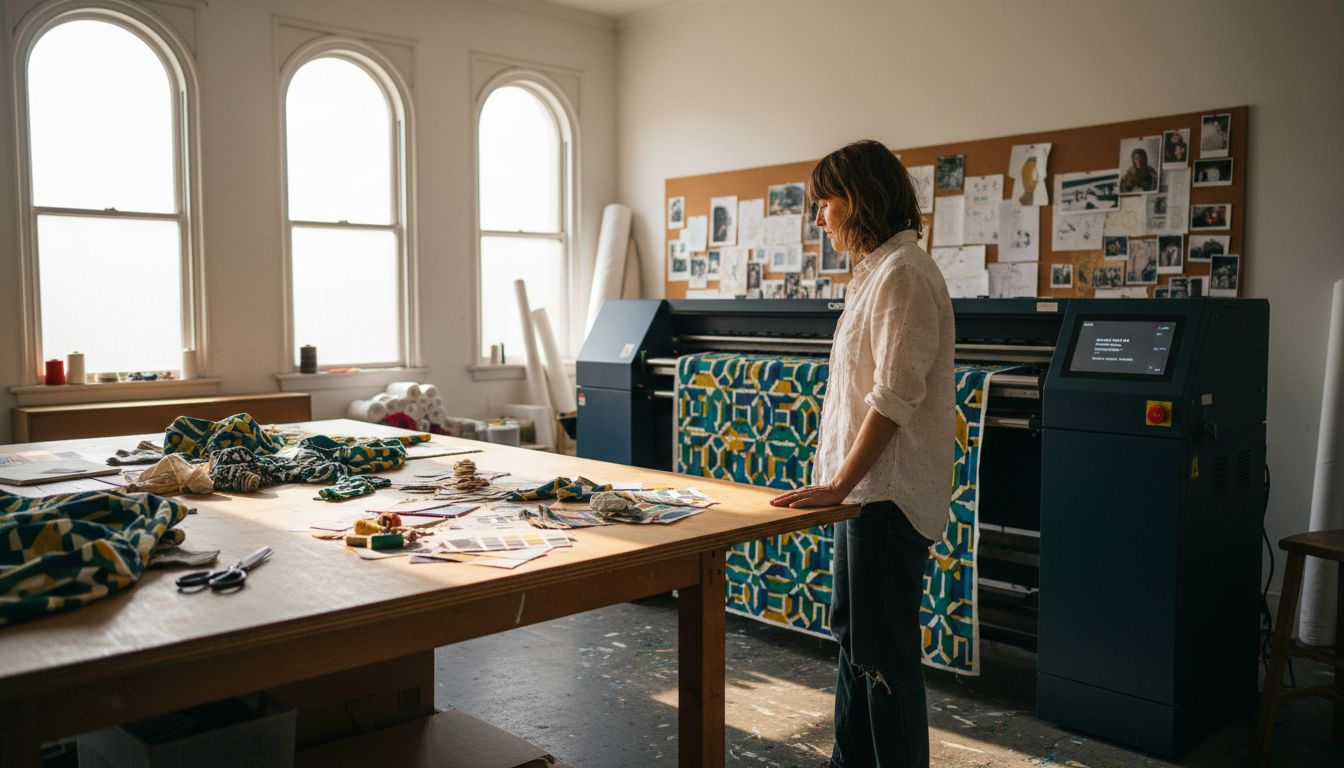
Over 60 percent of American small businesses in textiles now use digital printing to create unique upholstery and craft projects. Understanding these innovative techniques is essential for anyone who wants to personalize home decor or launch a creative startup. This guide breaks down the fundamentals of digital fabric printing, making it easier to transform ordinary material into stunning, custom designs for every space and budget.
| Point | Details |
|---|---|
| Digital Fabric Printing Advantages | This method allows for high-resolution, intricate designs on various fabrics, reducing waste and setup costs for small runs. |
| Technique Variety | Multiple digital printing techniques cater to different fabric types and desired effects, enhancing customization options. |
| Safety Considerations | Proper ventilation and PPE are essential to mitigate health risks associated with printing processes. |
| Business Viability | Digital fabric printing lowers entry barriers for small businesses but requires understanding of technical and safety protocols to succeed. |
Digital fabric printing represents a revolutionary technique transforming textile design by enabling precise, high-resolution graphics directly onto fabric surfaces. This advanced printing method utilizes digital inkjet technologies to apply colorants onto textiles, providing unprecedented flexibility for designers and manufacturers.
The core process involves specialized inkjet printers that can reproduce intricate patterns with remarkable accuracy. Unlike traditional screen printing methods, digital fabric printing allows for complex, multi-color designs without requiring separate screens for each color. Designers can now create photorealistic images, detailed illustrations, and custom graphics that were previously impossible or prohibitively expensive to produce.
Modern digital fabric printing supports multiple fabric types, including polyester, cotton, silk, and nylon. Ink chemistry has evolved to adapt to different textile surfaces, enabling vibrant, long-lasting prints across various materials. The technology is particularly transformative for small production runs and custom designs, allowing textile professionals to reduce waste, minimize setup costs, and experiment with more creative approaches.
Expert Tip: When selecting fabrics for digital printing, choose tightly woven, smooth surfaces to achieve the most crisp and detailed graphic reproduction.
Fabric printing encompasses several sophisticated techniques, with digital methods revolutionizing traditional approaches. Digital textile printing includes multiple specialized print types, ranging from direct print to discharge, resist, pigment, reactive, acid, and disperse printing methods. Each technique offers unique characteristics tailored to specific fabric compositions and design requirements.
The printing process varies significantly based on fabric type and desired outcome. Screen printing remains a classic method, while digital inkjet technologies provide unprecedented precision and customization. Modern printers are categorized into low-volume dye-sublimation, mid-volume wide format, and high-volume industrial systems, each designed to accommodate different production scales and creative needs.
Professional fabric printing requires careful consideration of ink chemistry, fabric compatibility, and desired visual effects. Industrial printing methods follow strict safety and health standards to ensure worker protection and product quality. Designers and manufacturers must select printing techniques that balance artistic vision with technical feasibility, considering factors like color vibrancy, fabric durability, and production efficiency.
Expert Tip: Always test print a small fabric sample first to verify color accuracy and ink penetration before committing to a full production run.
Here’s a quick comparison of common digital fabric printing methods and their best-use scenarios:
| Printing Method | Best for Fabric Types | Visual Effects | Production Scale |
|---|---|---|---|
| Dye-Sublimation | Polyester | Vivid colors, gradients | Low to mid volume |
| Reactive Printing | Cotton, silk | Sharp detail, rich hues | Mid to high volume |
| Pigment Printing | Wide range, mainly cotton | Soft finish, solid color | Small runs |
| Disperse Printing | Synthetic fibers | High durability, strong shades | Large batches |
Digital printing transforms image transfer by directly reproducing designs onto fabric, eliminating traditional plate-based methods and enabling unprecedented customization. The process begins with digital file preparation, where designers create or select high-resolution graphics optimized for textile reproduction. These digital files must be carefully formatted to ensure color accuracy, resolution, and precise pattern placement.
The actual printing mechanism involves specialized inkjet or laser printers that deposit ink directly onto fabric surfaces with remarkable precision. Each printer requires meticulous calibration, including selecting appropriate ink types, adjusting color profiles, and configuring print parameters to match specific fabric characteristics. Technicians must carefully balance ink density, temperature, and substrate compatibility to achieve optimal results.
Safety protocols are critical throughout the digital printing workflow, particularly in small production environments. Proper ventilation, personal protective equipment, and careful management of chemical exposure help mitigate potential health risks associated with printing processes. The final stage involves post-processing techniques like heat curing or UV treatment to set the ink and ensure durability of the printed design.
Expert Tip: Invest in color calibration tools and regularly test print small samples to maintain consistent print quality across different fabric types.
Digital fabric printing revolutionizes home decor by enabling unprecedented customization of textiles, transforming how people approach interior design and craft projects. Homeowners and designers can now create personalized curtains, upholstery, cushions, and wall hangings with intricate patterns and vibrant colors that were previously impossible or prohibitively expensive to produce.

The technology offers remarkable versatility for craft enthusiasts, allowing individuals to design unique fabric pieces that reflect their personal aesthetic. From creating custom throw pillows to designing one-of-a-kind quilts, digital printing empowers makers to translate their creative visions directly onto fabric. Crafters can now experiment with complex designs, photographic imagery, and intricate color gradients that traditional printing methods could never achieve.
Modern digital printing techniques beautifully integrate traditional craft inspirations with contemporary technologies, bridging historical artistic techniques with cutting-edge production methods. This fusion enables artisans to honor traditional design elements while leveraging the precision and flexibility of digital printing. Small-batch production becomes economically viable, supporting both hobbyist crafters and professional designers in creating highly personalized home decor items.
Expert Tip: Always choose high-quality, color-compatible fabrics and perform a test print to ensure your digital design translates accurately onto your chosen textile.
Digital fabric printing offers transformative opportunities for small businesses, enabling unprecedented flexibility in product development and market responsiveness. The technology dramatically reduces traditional barriers to entry, allowing entrepreneurs to produce small production runs with minimal upfront investment. Small craft businesses and home decor designers can now create customized products without purchasing expensive screen printing equipment or maintaining large inventory stocks.
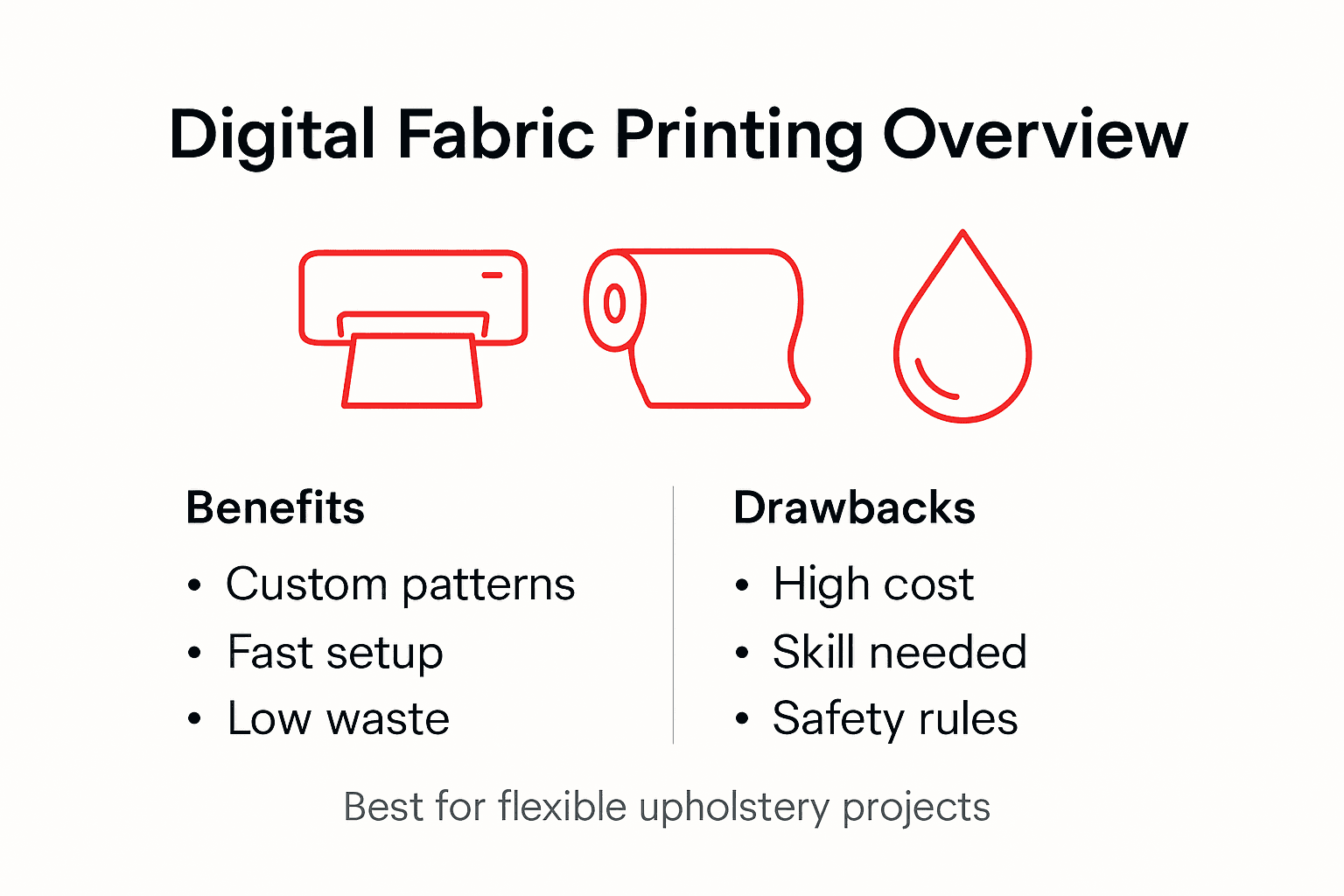
However, the technology is not without its challenges. Digital fabric printing requires significant technical expertise and initial equipment investment, which can be prohibitive for some small businesses. Per-unit costs remain higher compared to traditional bulk printing methods, particularly for large volume orders. Entrepreneurs must carefully balance the creative freedom of digital printing against economic constraints, considering factors like ink compatibility, fabric selection, and production efficiency.
Small business owners must also navigate complex workplace safety regulations related to printing technologies, ensuring proper ventilation, chemical handling, and worker protection. Understanding and implementing appropriate safety protocols becomes crucial, particularly when working with specialized inks and printing equipment. Successful implementation requires a comprehensive approach that balances technological innovation with regulatory compliance and workplace safety standards.
Expert Tip: Develop a comprehensive business plan that includes a detailed cost-benefit analysis of digital fabric printing equipment and potential market opportunities before making significant investments.
Here is a summary of key challenges and solutions for small businesses entering digital fabric printing:
| Challenge | Potential Impact | Solution Approach |
|---|---|---|
| High initial equipment cost | Limits entry, strains finances | Lease or buy refurbished gear |
| Ink-fabric compatibility | Print failure, wasted material | Rigorous sample testing |
| Safety compliance | Health risks, legal issues | Invest in training, PPE |
| Color management | Inconsistent results | Use calibration tools |
Digital fabric printing introduces significant health and safety considerations for businesses, particularly regarding workplace exposure to ultrafine particles and volatile organic compounds. Entrepreneurs must invest in robust ventilation systems and personal protective equipment to mitigate potential respiratory risks associated with printing processes. The initial equipment and safety compliance costs can range from $5,000 to $50,000, depending on the scale and sophistication of the printing setup.
Critical mistakes in digital fabric printing often stem from inadequate technical preparation and poor risk management. Common errors include neglecting fabric pre-treatment, which can dramatically reduce print quality, and failing to calibrate color management systems. Ink compatibility with different fabric types represents another potential pitfall, as inappropriate ink selection can lead to poor color retention, fabric degradation, and significant financial losses.
Workplace safety protocols are essential for sustainable digital fabric printing operations, requiring comprehensive training and continuous monitoring of potential hazards. Small businesses must develop rigorous safety documentation, implement regular equipment maintenance schedules, and create clear operational guidelines. Ergonomic considerations, chemical handling procedures, and systematic risk assessments become crucial elements in preventing workplace injuries and maintaining long-term operational efficiency.
Expert Tip: Conduct a comprehensive risk assessment and invest in professional safety training before launching your digital fabric printing operation to minimize potential financial and health-related setbacks.
Digital fabric printing is transforming upholstery design by allowing precise, vibrant, and customizable patterns on fabric that truly bring your creative vision to life. However, selecting the right fabric that supports detailed digital prints while ensuring durability and color retention can be challenging. Many designers and small business owners struggle with fabric compatibility and ink adhesion, which can affect the final product’s look and feel.
At Fabric-Fabric, we understand these pain points and offer an extensive selection of quality textiles ideal for digital printing applications. From soft velvets to tightly woven cotton blends, our fabrics are carefully described to help you find the perfect match for your upholstery, crafting, or home decor needs. We make it easier to experiment with your designs by providing reliable materials that reduce waste and enhance print vibrancy.
Are you ready to transform your upholstery designs with fabrics built for digital printing success
Explore our diverse fabric collection today at Fabric-Fabric and take advantage of our detailed product listings and seasonal promotions. Don’t wait to bring precision and creativity into every project. Your next standout upholstery piece is just a click away.
Digital fabric printing is a method that uses digital inkjet technologies to apply colorants directly onto fabric surfaces. It allows for high-resolution graphics and intricate designs without the need for screens, offering flexibility for designers.
Digital fabric printing supports various fabric types including polyester, cotton, silk, and nylon. The ink chemistry used has evolved to adapt to different textiles, enabling vibrant and long-lasting prints.
Digital fabric printing allows for customized designs, reduces waste, and minimizes setup costs compared to traditional methods. It is ideal for small production runs, which is beneficial for designers and manufacturers looking to experiment creatively.
Common mistakes include neglecting fabric pre-treatment, failing to calibrate color management systems, and selecting the wrong ink for specific fabric types. These errors can lead to poor print quality and significant financial losses.