

 Canadian Dollars

Cotton: What It Is and Why It Dominates Fabric
Posted by BLG on 2026 Aug 17th
Posted by BLG on 2026 Aug 17th

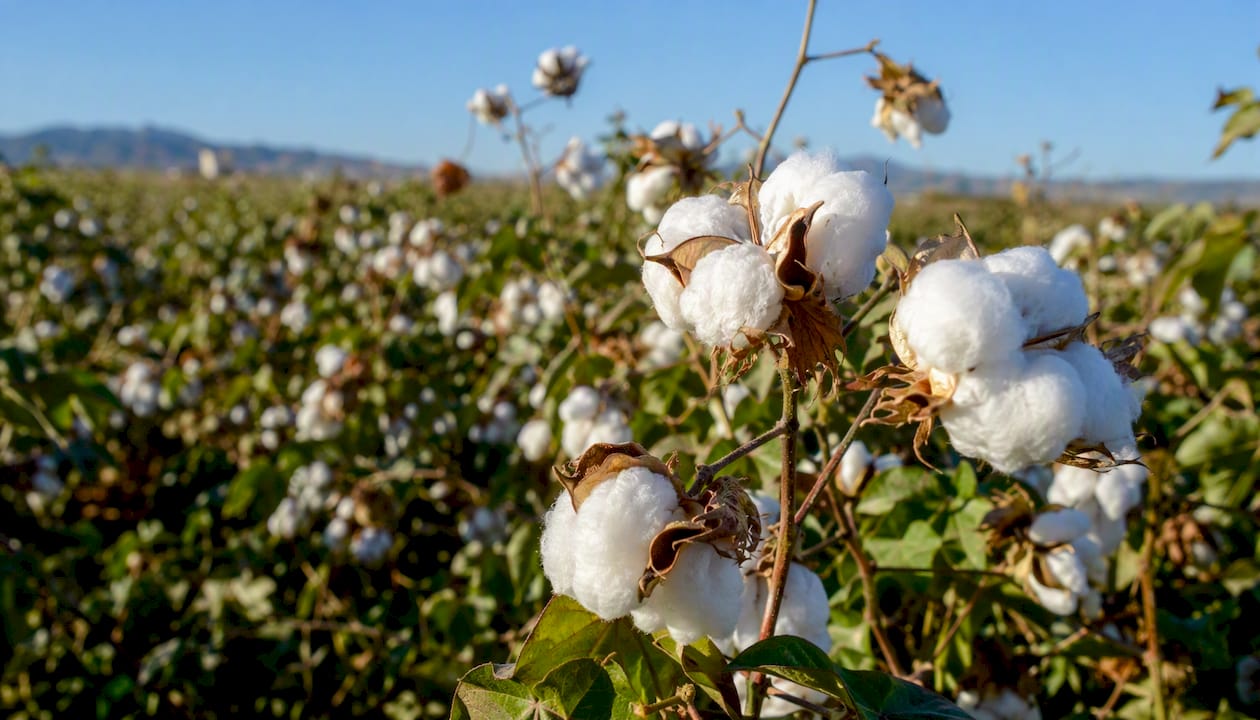
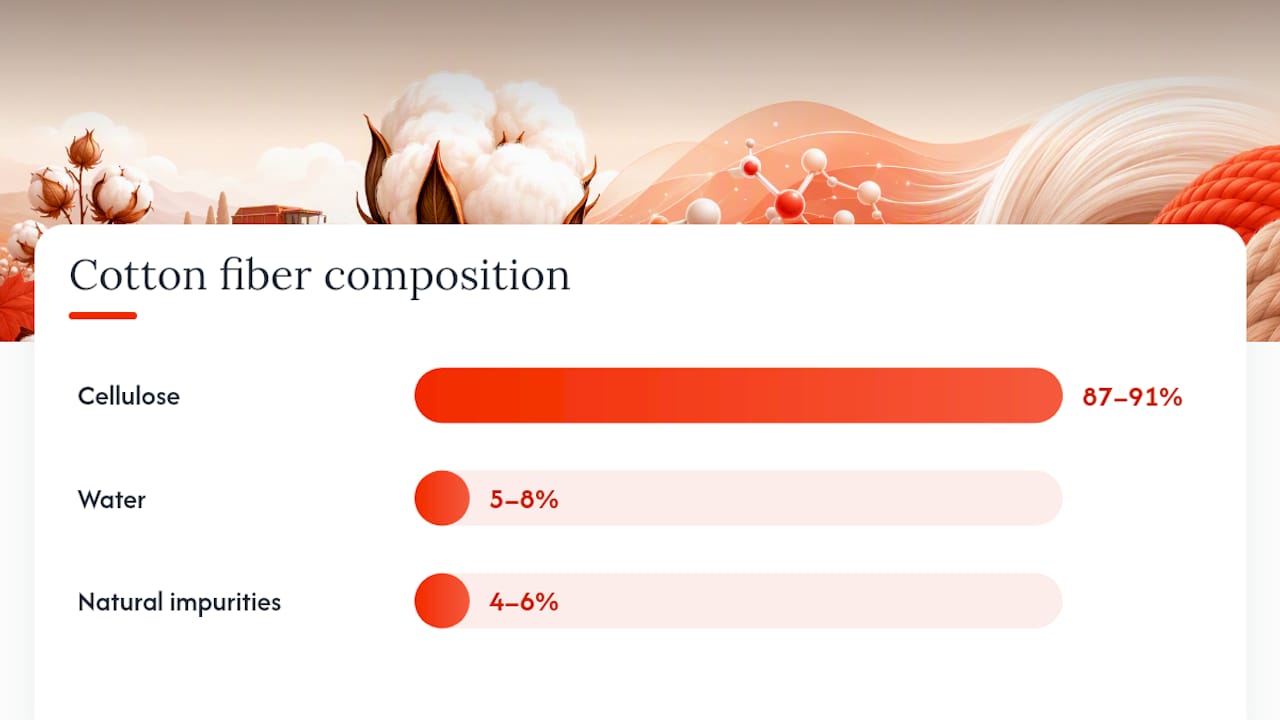
Cotton is a natural, cellulosic fiber that grows as seed hair on plants in the genus Gossypium. Each fiber is roughly 87 to 91% cellulose, with water, waxes, and trace minerals filling out the rest. That simple composition is why cotton behaves the way it does on your sewing table: breathable, absorbent, and strong when spun into yarn.
A few facts orient everything else in this guide:
U.S. textile mills alone process an average of 7.6 million bales of cotton a year, and cotton remains the most widely used natural fiber on the planet. Everything from your favorite t-shirt to a quilting square traces back to that one plant genus.
Cotton is a cellulosic seed-hair fiber from Gossypium plants, and its staple length, species, and weave determine everything from softness to durability in the finished fabric.
| Point | Details |
|---|---|
| Cotton’s composition | Fiber runs 87–91% cellulose, with water and natural impurities making up the rest. |
| Staple length drives quality | Longer staples (Pima, Egyptian, Supima) mean smoother, stronger fabric than standard upland cotton. |
| Four species dominate production | Gossypium hirsutum leads by volume; barbadense supplies extra-long-staple varieties. |
| Weight determines project fit | Lightweight voile and lawn suit garments; heavyweight canvas and duck suit upholstery. |
| Swatch-test before buying yardage | Fabric-fabric offers paid sample swatches so you can confirm drape and shrinkage before ordering. |
Cotton fiber is mostly cellulose, but the exact numbers vary a bit by source and growing region. Here’s the composition breakdown and how fibers get sorted by length before they ever reach a loom.
| Property | Typical Range | Source |
|---|---|---|
| Cellulose content | 87–91% | Wikipedia |
| Water content | 5–8% | Wikipedia |
| Natural impurities (waxes, minerals) | 4–6% | Britannica |
| Staple length categories | Short, medium, long, extra-long | Industry classification |
U.S. mills use that annual 7.6 million bales in a fairly predictable split: 57% goes into apparel, 36% into home furnishings, and 7% into industrial products. China, India, the United States, and Brazil lead global production, a ranking that has held fairly steady for years according to Statista’s production data. Staple length, which we’ll dig into shortly, is the single number that predicts more about a fabric’s feel than almost anything else on a label.
Cotton belongs to the Malvaceae family, the same botanical family as hibiscus and okra, and the genus Gossypium includes more than 50 species, though only four are grown commercially at scale. Wild cotton species evolved independently across at least three continents, which is part of why domestication happened in multiple places rather than one.
The word “cotton” traces back through Old French coton and Italian cotone, both borrowed from Arabic quṭun, itself likely rooted in a Semitic word for the fiber. That linguistic trail hints at how central the Arab world was to early cotton trade between Africa, Asia, and Europe long before it reached the Americas or Europe’s textile mills.
Domestication happened independently in at least four regions:
Cotton spread along trade routes for centuries, but the real inflection point came with mechanization. Before the cotton gin, separating fiber from seed by hand was so slow it limited how much cotton could be processed commercially. Eli Whitney’s 1793 gin changed the math entirely, and industrial spinning and weaving mills that followed in Britain and the United States turned cotton into the backbone of the first wave of textile industrialization.
Modern production has since shifted. China, India, the United States, and Brazil now anchor global output, with mechanized harvesting and ginning replacing most hand labor in large-scale operations. The plant hasn’t changed much. The machinery around it has changed almost everything else.
Cotton is an annual crop in most commercial settings, even though the plant itself is technically a perennial shrub in warmer climates. The growth cycle runs through five distinct stages before a single fiber is ready to harvest.
The fiber itself is a single elongated cell that grows outward from the seed coat. According to fiber industry research, a single cotton seed can produce 10,000 to 20,000 individual fibers, and each lock inside a boll typically contains seven to nine seeds. That’s tens of thousands of fibers packed into one small pod, which is part of why a single plant can produce a surprising amount of usable material.
Maturity at harvest matters more than most people assume. Fibers pulled too early have thinner cell walls and lower cellulose content, which shows up later as weaker yarn and duller color. Fully mature fibers have thicker walls, better twist characteristics for spinning, and higher strength.
Pro Tip: If you’re ever comparing two bolts of cotton fabric that look identical but feel different in your hands, the difference often traces back to fiber maturity at harvest, not the weave pattern.
The short answer to “what is cotton fabric made of” is cellulose, mostly. Cotton fiber runs 87 to 90% cellulose, with 5 to 8% water and the remaining few percent made up of natural waxes, minerals, and plant residue. That cellulose backbone is what gives cotton its absorbency and its tendency to wrinkle without added finishes.
Staple length, the average length of the individual fibers, is the single biggest driver of how a cotton fabric will look and perform:
| Staple category | Fiber length | Strength & sheen | Common uses |
|---|---|---|---|
| Short staple | Under 1 inch | Lower strength, matte finish | Utility fabrics, budget textiles |
| Medium staple | 1 inch | Moderate strength, standard sheen | Everyday apparel, quilting cotton |
| Long staple | 1 to 1.2 inches | Higher strength, smoother finish | Quality shirting, better bedding |
| Extra-long staple | Above 1.2 inches | Highest strength, silky sheen | Luxury bedding, heirloom quilts, fine shirting |
Beyond staple length, a handful of technical terms show up whenever fiber quality gets discussed seriously:
According to research on fiber grading, these traits are shaped by soil, climate, and how mature the boll was at harvest, not by marketing claims printed on a bolt end. If you want to know what you’re actually buying, staple length and micronaire tell you far more than a fabric’s price tag ever will.
Four Gossypium species supply nearly all commercial cotton, and knowing them helps decode the trade names you’ll see on fabric labels.
The trade names get confusing fast, so here’s the practical breakdown. Pima is an American-grown extra-long-staple cotton descended from Gossypium barbadense. Egyptian cotton refers to barbadense varieties grown in Egypt’s Nile Valley, prized for exceptionally long fibers. Supima is a certification mark for American-grown Pima cotton that meets specific quality standards, essentially a branded guarantee that what you’re buying is the real, extra-long-staple thing rather than a blend.
For everyday sewing, upland cotton (hirsutum) covers most needs at a reasonable price. Reach for Pima, Egyptian, or Supima when a project calls for extra softness and durability, like fine bedding or a garment meant to last years rather than seasons. The benefits of choosing the right cotton fabric often come down to matching that staple-length tier to what the finished piece actually needs to do.
Getting from a cotton field to a bolt of fabric takes six distinct steps, and skipping or rushing any one of them shows up in the final cloth.
Ginning produces more than just clean fiber. Cottonseed and linters, the short fuzz left on the seed after ginning, both become valuable byproducts rather than waste.
| Byproduct | Common uses |
|---|---|
| Cottonseed oil | Cooking oil, salad dressings, food processing |
| Cottonseed meal | Livestock feed |
| Cotton linters | Paper products, cosmetics, quilt batting |
| Hulls | Cattle feed, fertilizer |
That 7.6-million-bale annual average in U.S. mills isn’t just a production number, it represents an entire secondary economy built on what used to be considered scrap. Textile mills also produce billions of square yards of woven and knitted cotton goods annually, which gives you a sense of just how much fabric a relatively small number of processing steps can generate.
The same fiber produces wildly different fabrics depending on weight and weave, and more than 80 recognized types of cotton fabric exist worldwide. Knowing the weight categories saves you from buying the wrong bolt for a project.
| Weight category | Fabric examples | Typical uses |
|---|---|---|
| Lightweight | Voile, lawn, muslin | Sheer garments, linings, summer apparel |
| Medium weight | Poplin, quilting cotton | Shirts, dresses, quilting projects |
| Heavyweight | Canvas, duck, denim | Upholstery, bags, workwear |
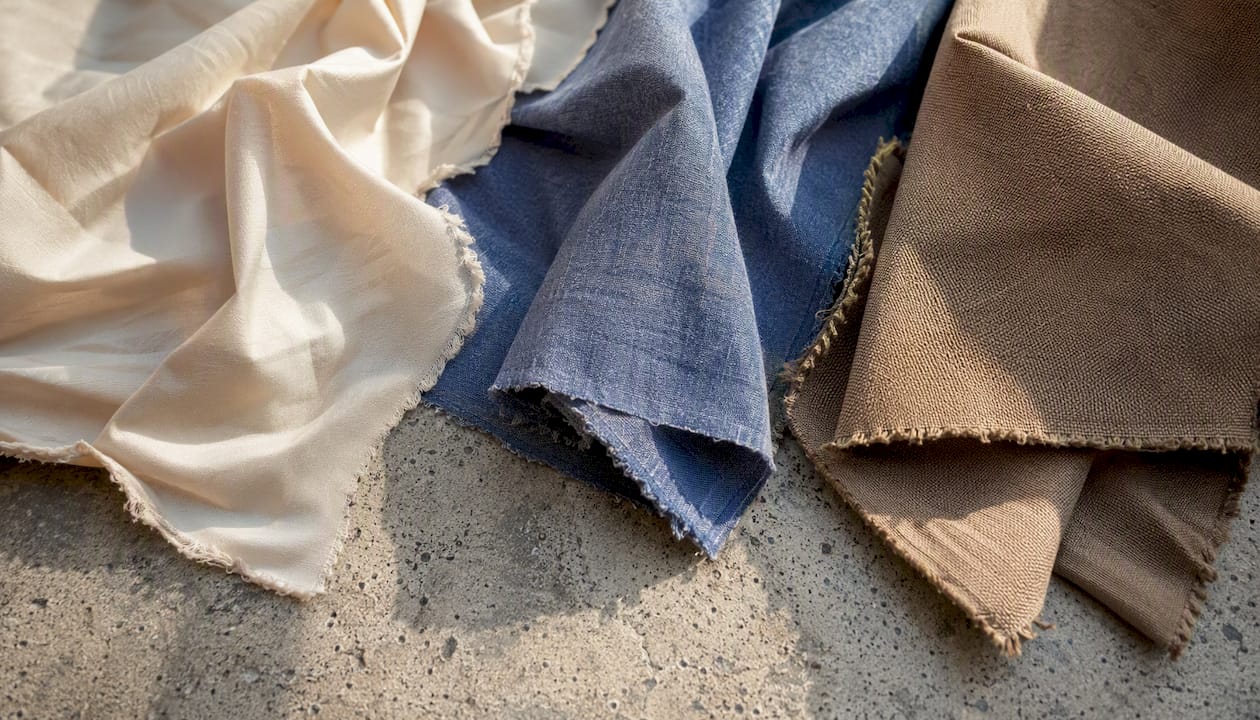
Cotton voile is a sheer, lightweight plain weave with a soft drape, ideal for flowing garments and curtains. Cotton lawn is similarly light but has a crisper hand, often used for fine blouses and heirloom sewing. Cotton muslin is an even more basic, breathable plain weave, commonly used for garment mockups (called “muslins” for that exact reason) and lightweight quilting backing. Cotton slub fabric, sometimes called slub material, has intentional irregular thickness woven into the yarn, giving it a textured, slightly rustic look that’s popular in casual apparel and home decor.
Poplin sits solidly in the medium category, tightly woven and smooth, which is why it’s a go-to for woven cotton shirting. On the heavy end, canvas and duck fabric give upholstery projects the structure that lighter weaves simply can’t provide.
Pro Tip: Match weave density to drape needs before you match color. A gorgeous print in the wrong weight will fight your pattern the entire time you’re sewing it.
Fabric grading comes down to five measurable factors: staple length, fiber strength, micronaire, color, and trash content. Retailers who understand these numbers can tell you far more about a fabric’s real quality than any marketing description on the tag.
Thread count is the most misunderstood number in the entire industry. A higher thread count doesn’t automatically mean better quality, since manufacturers can inflate the number using thinner, weaker yarns or by counting multi-ply threads as separate strands. Staple length and fiber source tell you more about durability than thread count ever will.
Before buying, ask a few direct questions:
A handful of certifications carry real meaning worth checking for:
Cotton is biodegradable, breathable, and comfortable against skin, but growing it conventionally comes with real environmental tradeoffs. Both things are true at once, and pretending otherwise doesn’t help anyone shopping for fabric.
The case for cotton:
The tradeoffs worth knowing:
If sustainability matters to your buying decisions, three terms are worth asking your fabric supplier about directly. Organic cotton is grown without synthetic pesticides or fertilizers under certified standards. Recycled cotton reclaims fiber from pre-consumer textile waste or post-consumer garments, cutting down on virgin fiber demand. Better Cotton is a global sustainability initiative that trains farmers in more efficient water use and reduced chemical input, without requiring full organic certification. None of these options are perfect, but each represents a meaningfully lower footprint than the cheapest conventional bale on the market, and asking a supplier which standard they follow is a reasonable thing to expect an answer to.
Cotton is forgiving compared to synthetic blends, but a few habits make a real difference in how long a garment or home textile lasts.
Pro Tip: Pretreat stains before washing, not after drying. Heat sets most stains permanently, turning a five-minute fix into a permanent mark.
Special finishes change these rules slightly. Pre-shrunk cotton has already gone through controlled shrinkage during manufacturing, so it holds its size better through subsequent washes. Mercerized cotton has been treated with a caustic soda process that increases sheen and dye uptake, and it typically handles washing with less fading than untreated cotton.
Picking the right cotton comes down to five checks, run in order, before you ever click “add to cart.”
For quilters specifically, weight consistency across fabrics in the same project matters more than most patterns admit, a topic covered in more depth in a dedicated quilting fabric guide.
Pro Tip: Always test-wash your swatch the same way you plan to wash the finished piece. A fabric that looks perfect dry can shrink or pucker in ways you won’t catch until it’s already cut and sewn.
The most common mistake we see buyers make isn’t choosing the wrong color or print, it’s skipping the swatch. People commit to five yards of a fabric they’ve only seen on a screen, then discover the drape is nothing like what they pictured once it’s in their hands. Staple length and weight tell you more about how a fabric will actually behave than any product photo ever will.
If there’s one habit worth building, it’s this: always request or buy a small swatch and wash-test it before ordering yardage. Check the staple-length and weight details on the product page first, then confirm with your own hands before you commit to a full cut.
Fabric-fabric carries cotton across every weight category discussed here, from sheer voile and lawn to heavyweight canvas and duck, so you’re not stuck guessing which bolt matches your project from a single photo.

Every listing includes staple-length and weight details up front, and paid sample swatches let you test drape and hand before ordering yardage, exactly the habit recommended above. Browse the home decor fabric collection for heavier cottons suited to upholstery and decor projects, or check the backdrop fabrics category if you need structured cotton for event or photography setups. Order a swatch first, confirm the feel matches what your project needs, then place your yardage order with confidence.
What is cotton, in simple terms? Cotton is a natural fiber made of cellulose that grows as a protective seed hair inside the boll of plants in the genus Gossypium. It’s spun into yarn and woven or knitted into fabric used for apparel, home textiles, and industrial goods.
What is cotton lawn fabric? Cotton lawn is a lightweight, plain-weave fabric with a crisp hand and slight sheen, commonly used for fine blouses, dresses, and heirloom sewing projects.
What is cotton voile fabric? Cotton voile is a sheer, lightweight plain weave known for its soft drape, often chosen for flowing garments, curtains, and layering pieces.
What is cotton slub fabric? Cotton slub fabric, sometimes called slub material, has intentional irregular thickness in the yarn, creating a textured, slightly uneven surface popular in casual apparel and home decor.
What is cotton muslin fabric? Cotton muslin is a basic, breathable plain-weave fabric, widely used for garment prototypes (fitting muslins), lightweight quilting layers, and simple household textiles.
What is cotton made of? Cotton fiber is made of roughly 87 to 91% cellulose, with the remainder consisting of water, natural waxes, and trace minerals left over from the plant.
How is cotton grown? Cotton grows from seed through germination, vegetative growth, flowering, and boll development before the mature boll splits open and releases fiber ready for harvest, a cycle that typically spans five to six months.
What are the main types of cotton? The four commercially significant species are Gossypium hirsutum (upland cotton), Gossypium barbadense (source of Pima and Egyptian cotton), Gossypium arboreum, and Gossypium herbaceum.