

 US Dollar

Bag Fabric Types: The Maker's Guide to Choosing Right
Posted by BLG on 2026 Aug 3rd
Posted by BLG on 2026 Aug 3rd

TL;DR:
- Matching the fabric family to the bag’s purpose ensures most design decisions fall into place. Durability depends on both material and internal stabilizers, not fabric weight alone.
Match the fabric family to the bag’s job, and most of the hard decisions make themselves. For heavy daily carry, canvas in a typical heavier weight range or Cordura nylon is the right call. For lightweight packables, ripstop or taffeta nylon keeps weight down without sacrificing tear resistance. Structured fashion bags belong in faux leather, genuine leather, or stiff upholstery fabric backed by Decovil. Here is the shortlist by bag type:
Start at fabric-fabric.com to order swatches before committing to yardage on any of these.
Fabric choice for bags is closer to structural engineering than it is to picking a color. The fiber, weave, weight, and any coating work together to determine how the bag handles load, weather, and daily abuse. Here is a practical profile of every major material you will encounter.
Canvas is a plain-weave cotton fabric; duck is a tighter, heavier version of the same thing. Both are measured in ounces per square yard, and the range matters: 7–10 oz works for light totes and pouches, while 14–24 oz canvas is the standard for serious daily bags and market totes that take real weight. Canvas breathes, takes dye well, and is forgiving to sew. The trade-off is that untreated canvas absorbs water and stains. Wax or DWR treatment fixes the weather problem but changes how the fabric feeds through a machine.
Needle: size 16–18 denim/jeans needle. Thread: heavy polyester or cotton-wrapped polyester. Interfacing: SF-101 for light canvas panels; Peltex or sew-in foam for bases.
Twill weave runs diagonally, which gives it better tear resistance than plain-weave canvas at the same weight. Denim is a specific twill, typically 10–14 oz, and it is already familiar to most home sewers. Both fabrics work well for casual totes, messenger bags, and structured pouches. They press cleanly, topstitch beautifully, and hold hardware without reinforcement tape.
Home-decor and upholstery fabrics run 54 inches wide and often 12–20 oz, with tight weaves designed for friction and abrasion. That makes them a natural for structured handbags and tote bags that need body without a thick stabilizer. The home decor fabric category at Fabric-fabric includes weights that translate directly to bag-making. Upholstery fabric can be stiff to sew through multiple layers; a walking foot is not optional here.
Nylon for bags is not one material. The four main constructions each serve a different job:
Needle: size 14 universal or microtex for lighter nylons; size 16–18 for ballistic. Thread: bonded nylon or polyester. Avoid cotton thread on nylon exteriors — it degrades faster than the shell.
Cordura is a branded high-tenacity nylon fabric from Invista, available in 500D, 1000D, and other weights. It consistently outperforms generic nylon on abrasion tests because the fiber itself is engineered for toughness, not just the weave. Backpacks, tool bags, and camera bags that take daily punishment are the natural home for Cordura. It is heavier and stiffer than standard Oxford, so factor that into your pattern’s seam allowances and hardware placement.
Faux leather (PU-coated fabric) and vinyl (PVC) give structured bags a clean, polished finish without the cost or sourcing complexity of genuine leather. PU faux leather is more flexible and breathes slightly; PVC is stiffer and fully waterproof. Neither can be pinned without leaving marks — use wonder clips or binder clips. A Teflon or roller presser foot prevents drag. Seam allowances need to be glued or taped open because they will not press flat with an iron.
Leather is measured in ounces (thickness) rather than GSM. A 2–3 oz leather works for small pouches and card holders; 4–6 oz is the standard for handbags and totes; 8 oz and above is saddle and strap territory. Leather is forgiving of imprecise cuts because edges can be burnished, but it punishes poor seam planning because stitch holes are permanent. Use a leather needle (wedge point), heavy bonded nylon thread, and a rubber mallet for seam flattening.
Waxed canvas starts as plain or twill cotton canvas and gets a paraffin or beeswax treatment that makes it water-resistant and gives it a distinctive patina over time. The wax makes it slightly stiff and can gum up a needle. Wipe the needle frequently, use a size 16–18 jeans needle, and avoid steam pressing — heat melts the wax coating unevenly. Waxed canvas is a strong choice for messenger bags, tote bags, and small duffels where a rugged, heritage look is part of the brief.
Oilcloth is a cotton base with a PVC coating on one side, making it fully waterproof and wipe-clean. It is popular for market bags, lunch bags, and pouches. Sewing behavior is similar to faux leather: no pins, use a Teflon foot, and keep seam allowances consistent because the coating does not ease. Oilcloth does not fray, so raw edges inside a bag are fine.
At 3–5 oz, quilting cotton is too light for any bag that will carry real weight on its own. Paired with SF-101 interfacing on every panel, it becomes a reasonable choice for small pouches, cosmetic bags, and zippered pouches where the load is light and the look matters more than the longevity. It is the most beginner-friendly fabric on this list: it presses perfectly, pins easily, and sews at any speed.
Cork fabric is a thin layer of natural cork bonded to a fabric or leather backing. It is naturally water-resistant, antimicrobial, and has a distinctive texture that reads as premium. Weight runs 200–400 GSM depending on backing thickness. Cork is brittle at tight curves, so avoid sharp corners in pattern design. Use a size 14 universal needle and reduce presser foot pressure to avoid cracking the surface.
Pro Tip: Before cutting into your main yardage, sew a test seam on a scrap of the same fabric with your chosen interfacing. Check that the needle does not skip, the seam lies flat, and the stitch length looks right. Two minutes of testing saves a ruined panel.
| Fabric | Typical Weight / Denier | Best Bag Types |
|---|---|---|
| Cotton canvas (light) | 7–10 oz | Totes, pouches, market bags |
| Cotton canvas (heavy) | 14–24 oz | Daily carry totes, duffels |
| Cotton twill / denim | 10–14 oz | Casual totes, messenger bags |
| Upholstery fabric | 12–20 oz | Structured handbags, totes |
| Ripstop nylon | 210D (70–90 GSM) | Packable daypacks, stuff sacks |
| Oxford nylon | 420D | Everyday backpacks, tech bags |
| Ballistic nylon | 840D–1050D | Luggage, heavy-duty backpacks |
| Cordura | 500D–1000D | Tool bags, camera bags, packs |
| Faux leather / PU | 300–600 GSM | Structured handbags, clutches |
| Waxed canvas | 10–14 oz (treated) | Messenger bags, duffels |
| Oilcloth / PVC | 200–350 GSM | Lunch bags, market bags, pouches |
| Quilting cotton | 3–5 oz | Small pouches, cosmetic bags |
| Cork fabric | 200–400 GSM | Wallets, small structured bags |
Start with one rule: match the fabric family to the bag’s job. Load, exposure to weather, desired structure, and expected lifespan each point toward a different material. Durability is multidimensional — abrasion resistance and tear resistance measure different failure modes, and a fabric that scores well on one can fail on the other if the weave and fiber are mismatched to the load.
Ask these questions before you buy a single yard:
Here is a quick project-to-fabric matrix:
| Project Profile | Primary Fabric | Backup Option |
|---|---|---|
| Everyday tote, light loads | 10–12 oz cotton canvas | Cotton twill |
| Hiking / travel backpack | 420D–600D Cordura or Oxford nylon | Ballistic nylon (heavier) |
| Structured fashion handbag | Faux leather or upholstery fabric | Genuine leather |
| Packable travel daypack | 210D ripstop nylon | Lightweight Oxford nylon |
Step-by-step pick process:
Pick the product that matches the role, not the one labeled “heavy.” Interfacing changes a fabric’s feel; stabilizers define and hold a 3D shape. Using the wrong one in the wrong place is the most common reason a bag collapses or feels floppy after the first use.
SF-101 is a lightweight fusible woven interfacing. It adds body and prevents stretch without making a fabric stiff. Use it on every panel of a quilting cotton or light canvas bag, on zipper facings, and on strap pieces that need to stay flat. It is the workhorse of everyday bag making.
Decovil Light gives fabric a leather-like drape and body. Decovil Heavy is stiffer and holds a structured shape on its own. Both are fusible. Use Decovil Light for handbag panels and flap closures; use Decovil Heavy for bag bases and sides that need to stand upright. Matching specific products to the pattern’s structural needs produces far better results than reaching for a generic “heavyweight” interfacing.
Peltex is a non-woven, ultra-firm stabilizer available in sew-in and fusible versions. It is the right choice for bag bases that need to stay completely flat and rigid — think structured tote bottoms and box-shaped bags. The sew-in version is preferred for bases because it does not shift during construction.
Sew-in foam (such as ByAnnie’s Soft and Stable or similar products) gives bags a padded, structured look. Professional makers prefer sew-in foam over fusible foam because fusible versions create uneven bulk at seams and make turning difficult. Sew-in foam is basted to the wrong side of the fabric before construction, then trimmed from seam allowances to reduce bulk.
Pro Tip: Never use fusible foam on a bag that requires turning through a small opening. The adhesive creates stiff, lumpy seams that are nearly impossible to push out cleanly. Sew-in foam trims away from seam allowances and turns without fighting you.
Match needle, thread, and seam construction to the fabric and the load it will carry. A wrong needle on coated fabric shreds the coating; the wrong thread on a strap seam fails long before the fabric does.
Pro Tip: On coated fabrics like PVC oilcloth or faux leather, sew at a steady medium speed without stopping and starting repeatedly. Needle heat builds up fast on coated materials and can melt the coating around the stitch hole, weakening the seam.
A walking foot is non-negotiable for heavy canvas, upholstery fabric, and any layered construction with foam or thick interfacing. It feeds all layers at the same rate and prevents the top layer from creeping forward. A Teflon or roller foot handles faux leather, vinyl, and oilcloth without drag or sticking.
For straps and handles, use a box-X stitch (a rectangle with an X inside) at every attachment point. This distributes load across eight anchor points instead of one line of stitching. On heavy canvas and Cordura, add a bartack at the top and bottom of every strap seam for extra reinforcement.
Topstitching does two jobs: it flattens seam allowances that cannot be pressed open (leather, coated fabrics) and it adds visual structure to bag edges and panels. Use a longer stitch length (3.0–3.5 mm) and a topstitching needle for clean results on thick layers.
Performance specs translate directly into use-case thresholds. Understanding three numbers — hydrostatic head, denier, and Martindale abrasion cycles — tells you whether a fabric will actually survive the job you are asking it to do.
Hydrostatic head measures how much water pressure a fabric resists before it leaks, expressed in millimeters. A rating of 1,500 mm handles light rain. Travel and outdoor bags that need reliable weather protection should use fabrics or laminates with a hydrostatic head of at least 5,000 mm. Most coated nylons and waxed canvas fall in the 3,000–10,000 mm range depending on coating weight.
Denier measures the weight of a single yarn, not the strength of the finished fabric. A higher denier number does not automatically produce higher strength — fiber quality, weave tightness, and coating compatibility matter just as much. High-tenacity nylon 6,6 at 420D outperforms a generic nylon at 600D in real-world tear tests. Check the fiber specification, not just the denier number.
Martindale abrasion cycles measure how many rubs a fabric survives before the surface breaks down. Upholstery fabric rated above 20,000 Martindale cycles handles daily bag use comfortably. Cordura and ballistic nylon exceed this threshold by a wide margin. Quilting cotton does not — which is why it belongs in low-stress pouches, not daily-carry totes.
For fabric care guidance that covers a wider range of textile types, Fabric-fabric’s care resource is a useful reference.
Bench tests before you buy yardage: squeeze the fabric and feel whether the hand matches the pattern’s structure requirements. Hold it up to light and check weave tightness — loose weaves abrade faster. Scratch the coating gently with a fingernail; if it flakes immediately, the coating adhesion is poor and the fabric will not last.
Pick sellers that list fabric weight or GSM, denier for synthetics, and clear care instructions on the product page. If those specs are missing, move on. Order swatches before committing to yardage — handle, drape, and coating behavior are impossible to judge from a photo alone.
The single most reliable rule in bag making: match the fabric family to the bag’s job, then choose the interfacing that gives the structure the pattern requires.
| Point | Details |
|---|---|
| Match fabric to load | Bags carrying more than 15–20 lb need 14–24 oz canvas or 600D+ nylon as a minimum. |
| Test before you cut | Order swatches and sew a test seam with your chosen interfacing before cutting into full yardage. |
| Use sew-in stabilizers for structure | Sew-in foam and Peltex outperform fusible foam for 3D bag shapes; trim from seam allowances to reduce bulk. |
| Match hardware to fabric strength | Use heavy-duty metal rivets and rated D-rings for canvas and Cordura; lightweight aluminum or plastic hardware for ripstop nylon. |
| Fabric-fabric for sourcing | Fabric-fabric.com lists fabric weights and uses on product pages, making it a practical starting point for swatches and yardage. |
The conventional wisdom says “use a heavier fabric for a stronger bag.” That is true as far as it goes, but it misses the more important variable: the interfacing and stabilizer system underneath the exterior. A 14 oz canvas bag with no base stabilizer will sag and deform faster than a 10 oz canvas bag built over a Peltex base and sew-in foam panels. The exterior fabric sets the ceiling on durability; the internal structure determines whether the bag actually holds its shape through daily use.
The second thing makers underestimate is the cost of the wrong needle. Skipped stitches on coated fabrics are not a tension problem — they are a needle problem. A ballpoint needle on ripstop nylon, a wedge-point leather needle on genuine leather, a Microtex on faux leather: each one is engineered for a specific yarn structure. Switching needles costs almost nothing. Resewing a bag panel costs an afternoon.
For beginners, the most forgiving starting point is 10–12 oz cotton canvas with SF-101 on every panel and a sew-in foam base. That combination is easy to sew, holds its shape, and teaches you how interfacing changes a fabric’s behavior before you commit to more expensive materials. Order a swatch, sew a small test pouch, and iterate from there. The fabric knowledge compounds quickly once you have a few projects under your belt.
Fabric-fabric.com carries a range of the fabrics discussed here, with product pages that list weights, intended uses, and care instructions. That spec transparency is exactly what you need when you are comparing options before cutting.
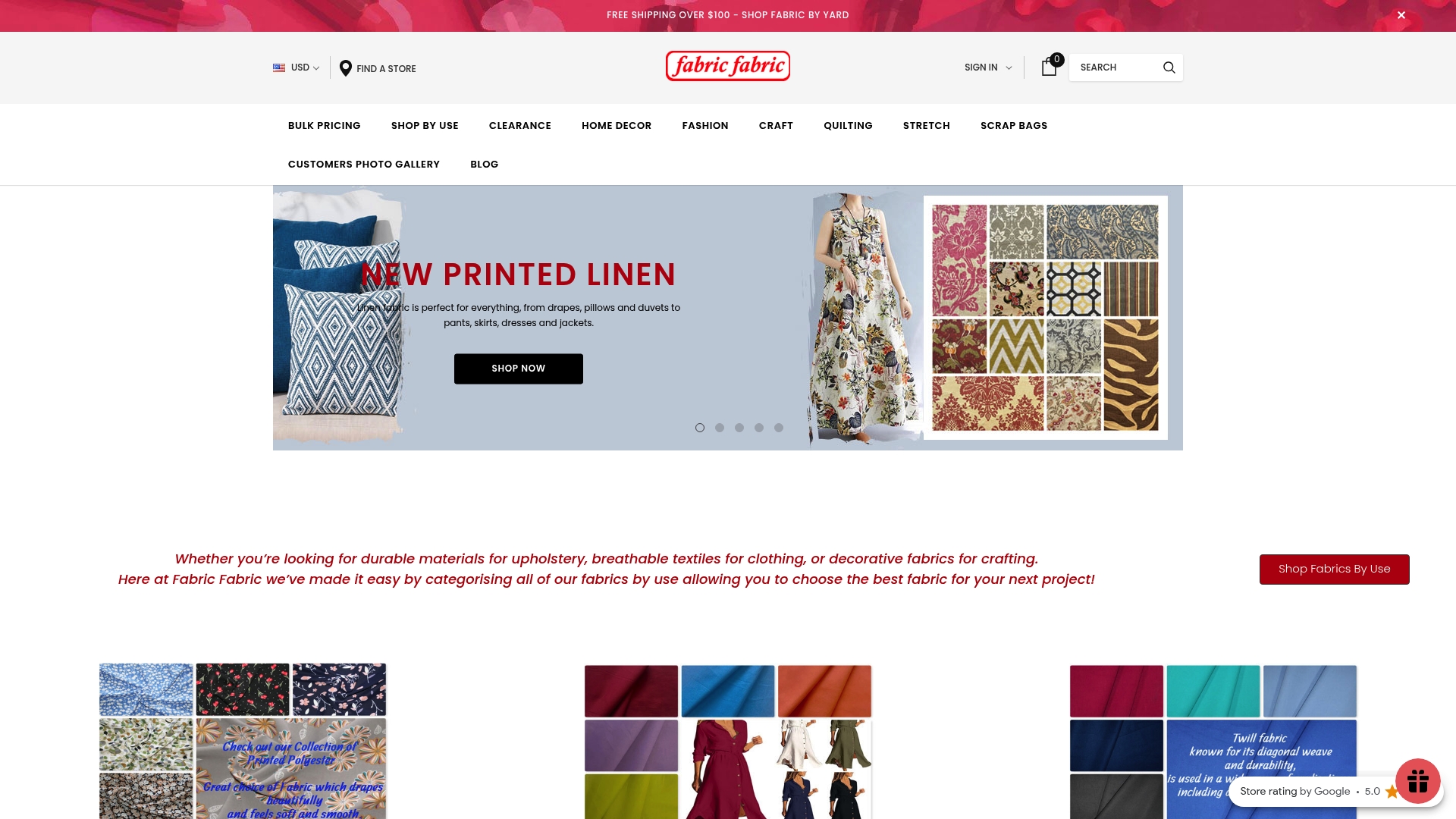
For heavier textiles suited to structured bags and totes, the home decor fabric section is the right place to start browsing upholstery-weight and decorator canvas options. The backdrop fabrics page gives you a clear look at heavier yardage options with enough product detail to make a confident choice.
Order swatches first, confirm the coating type (PU vs. TPU on any coated fabric), and check the return policy before placing a full yardage order. When you are ready to browse by weight and application, start at fabric-fabric.com and use the search bar to filter by fabric type or intended use.
These references back the factual claims throughout this guide and are worth bookmarking for deeper technical detail.