

 Canadian Dollars

What Is Colorfastness? A Practical Fabric Guide
Posted by BLG on 2026 May 22nd
Posted by BLG on 2026 May 22nd

TL;DR:
- Colorfastness is a multi-dimensional property that indicates a fabric’s resistance to specific stresses like washing, light, or rubbing, but not as a simple pass/fail. Different tests and grades are needed for various end uses, such as garments, upholstery, or swimwear, to ensure long-term performance. Proper testing, specifying exact standards and grades, prevents costly failures and reveals manufacturing quality issues.
Colorfastness is one of the most misunderstood properties in textiles, and that gap in understanding costs people real money. Whether you’re a designer sourcing fabric for a client’s living room, a crafter choosing quilting cotton, or a manufacturer specifying materials for a product line, you need to know what colorfastness actually means before you trust a label or a supplier’s word. It is not a single pass/fail property. It is a collection of resistances to specific stresses, and a fabric can score well on one test while failing another completely. This guide unpacks the colorfastness definition, explains how testing works, and gives you the tools to make smarter fabric decisions.
| Point | Details |
|---|---|
| Colorfastness is multi-dimensional | A fabric may resist light fading but still bleed when wet, so always specify which type matters for your project. |
| Industry grading uses two scales | Washing and rubbing tests use a 1-5 scale; lightfastness uses 1-8, with higher numbers meaning better performance. |
| Home tests have real limits | A damp cloth rub test can catch obvious failures, but only lab testing reveals the full picture. |
| Match tests to end use | Swimwear, curtains, and apparel each require different colorfastness priorities, not a generic “colorfast” claim. |
| Prevention beats remediation | Most colorfastness failures trace back to poor dye-fiber bonding, something quality control catches before fabric ships. |
At its core, colorfastness is a fabric’s ability to maintain color under stress, not just look vivid on the bolt. The stress can be physical, chemical, or environmental, and the colorfastness definition always refers to a specific type of stress rather than a blanket quality.
Think of it this way: a red cotton shirt that keeps its color through 50 washes but fades noticeably after a summer in a sunny window has excellent washing colorfastness and poor lightfastness. Both are valid measurements. Neither tells the full story alone.
The conditions that affect colorfastness in fabrics include:
The grading system ties everything together. Ratings use a 5-point scale for washing and rubbing tests, where Grade 5 means no change and Grade 1 means severe fading or staining. Lightfastness uses an 8-point scale, with 8 representing the highest resistance to UV degradation. Commercial products typically need to hit at least Grade 4 for washing color change and Grade 4 to 5 for lightfastness to meet buyer requirements.
Understanding why colorfastness matters comes down to product performance and real-world consequences. Poor colorfastness causes costly returns, shipment rejections, and customer complaints across the textile supply chain. For anyone buying fabric for apparel, home decor, or crafts, it directly affects whether your finished project looks the same in six months as it does the day you complete it.
Knowing the colorfastness definition is one thing. Understanding how it gets measured is where you gain real control over quality decisions.
The two dominant testing frameworks are the ISO 105 series and the AATCC methods. ISO 105 is a family of tests that simulates various real-world stresses, from washing to perspiration to light exposure, and it functions as a decision framework rather than a simple checklist. AATCC methods, developed in the United States, cover similar ground but use different detergent formulations and test parameters.
This distinction matters because ISO and AATCC standards are not interchangeable. A Grade 4 result under ISO 105-C06 and a Grade 4 result under AATCC 61 are not equivalent. If you’re specifying requirements in a purchase order, always name the exact test method and the minimum grade, not just a generic “colorfast” label.
Here’s a quick comparison of the most common test types:
| Test type | Standard example | What it simulates |
|---|---|---|
| Washing fastness | ISO 105-C06, AATCC 61 | Repeated laundering at specified temperatures |
| Lightfastness | ISO 105-B02, AATCC 16 | Prolonged UV exposure from sunlight |
| Rubbing (crocking) | ISO 105-X12, AATCC 8 | Surface friction, both dry and wet |
| Perspiration fastness | ISO 105-E04, AATCC 15 | Acid and alkaline sweat contact |
| Chlorine fastness | ISO 105-E03 | Swimming pool and bleach exposure |
Visual assessment of results relies on grayscale cards under controlled lighting to avoid perceptual errors. The evaluator compares the tested sample to a standardized gray scale to assign a numeric grade. Without controlled conditions, even experienced assessors can misjudge results.
You do not always need a lab to catch obvious colorfastness problems. Simple at-home tests can flag serious issues before you commit fabric to a project. The most reliable quick check is rubbing a damp white cloth on a hidden seam or interior edge of the fabric. If dye transfers immediately and heavily, that fabric is a poor candidate for any application where it contacts skin or other textiles.
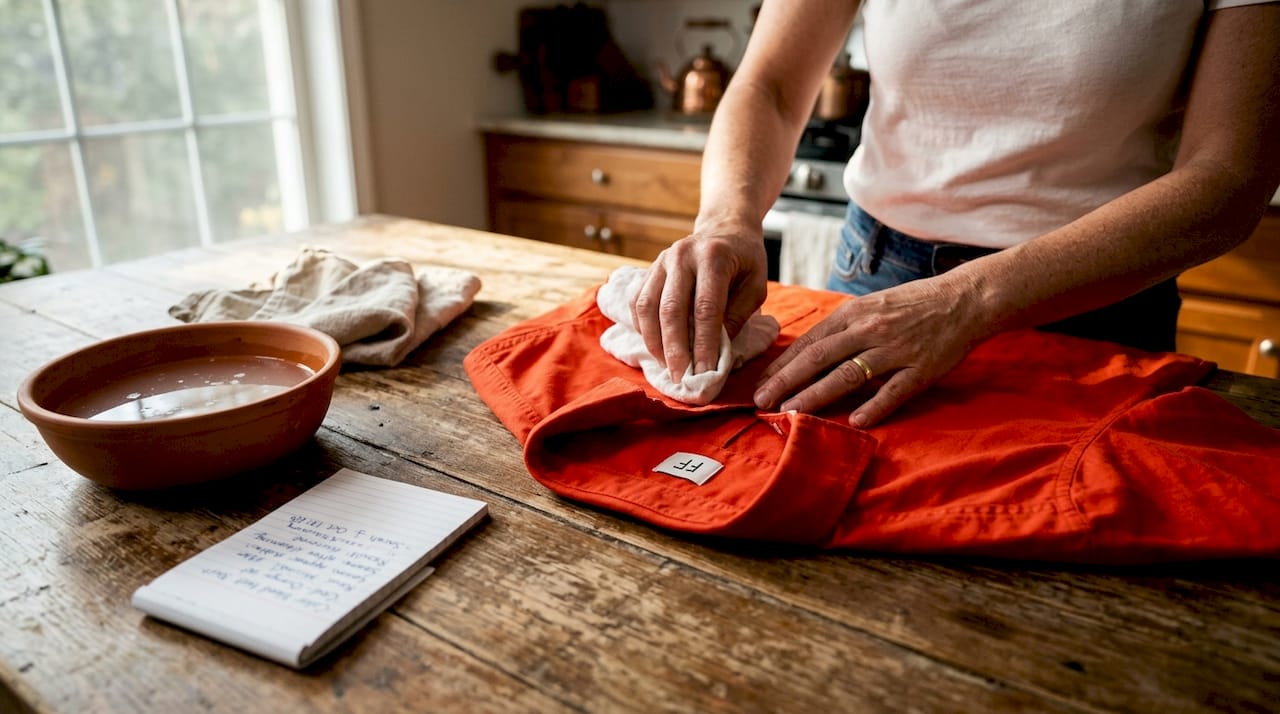
A vinegar soak test, where you submerge a small swatch in diluted white vinegar and observe dye release, simulates an acidic perspiration environment. Neither test gives you a numeric grade. Neither replaces a certified lab report. But both can save you from buying 10 yards of fabric that will bleed in its first wash.
Pro Tip: Before buying any fabric in large quantities, cut a small swatch and perform both a dry rub test and a damp rub test on a white paper towel. If you see significant color transfer with either, ask the supplier for lab test documentation before committing.
One of the most persistent misconceptions about colorfastness in fabrics is that a fabric either has it or it doesn’t. In reality, different tests must match the fabric’s intended end use. A fabric can be outstanding in one category and completely unsuitable in another.
Consider these real-world scenarios:
Colorfastness is the ultimate process truth test. It reveals the quality of the dye and the manufacturing process behind every yard of fabric, not just how it looks on the surface.
The practical implication is that buyers should specify exact test methods and grades, never just request that fabric be “colorfast.” This applies whether you’re a procurement manager placing a commercial order or a serious hobbyist buying fabric online. Knowing which tests matter for your specific application transforms colorfastness from a vague quality claim into a concrete, verifiable specification.
Most colorfastness failures are predictable. They stem from specific, identifiable causes rather than random bad luck.
The primary causes of failure are:
Colorfastness failure is almost always predictable and preventable with proper testing and quality control at the manufacturing stage. The reason it still occurs frequently is cost pressure: fixation steps take time, high-quality dyes cost more, and testing adds to overhead.
Understanding why fabric finishes affect colorfastness and durability helps you ask the right questions when sourcing. Finishes applied after dyeing can actually improve colorfastness by sealing the fiber surface or adding UV-protective coatings, but only if they were designed and applied correctly.
Pro Tip: When reviewing fabric samples from a new supplier, ask specifically for ISO 105 test results for the end-use conditions your project will face. A supplier who cannot produce those documents should prompt serious caution.
Knowing the importance of colorfastness shapes how you should care for fabric after purchase as well as how you select it in the first place.
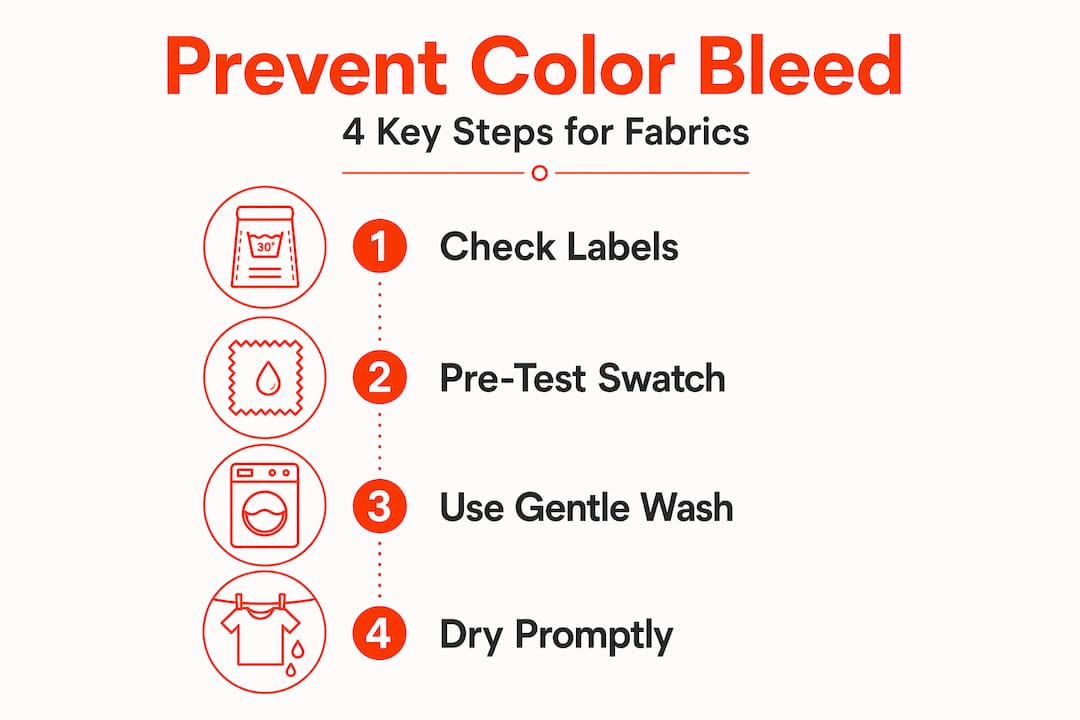
For testing fabric you already own:
For ongoing care, always follow the manufacturer’s care label closely. Cold water washing, gentle cycles, and low-heat drying all reduce mechanical and thermal stress on dye-fiber bonds. Harsh detergents with optical brighteners or bleaching agents can degrade dyes even in small concentrations over time.
When to seek professional testing: if you’re a designer, manufacturer, or retailer specifying fabric for a client project, a commercial product line, or any application with legal compliance requirements, lab testing is not optional. A proper fabric selection guide for designers and decorators should always include colorfastness specifications alongside other performance criteria.
For anyone working with fade-resistant fabrics for home decor, lightfastness ratings from a certified lab are the only reliable indicator of long-term performance. Visual appearance at purchase tells you nothing about how a fabric will perform after a year near a window.
I’ve spent years looking at fabric quality issues, and the single most common problem I see is people using the word “colorfast” as if it’s a binary switch. A supplier says the fabric is colorfast. The buyer nods. Three months later, the upholstery has faded into a completely different shade, or the quilt bled during its first wash.
The word “colorfast” without a test method and a grade attached to it means almost nothing. What I’ve found is that this vagueness is often used to avoid accountability rather than to convey actual information.
What actually works is treating colorfastness the same way you’d treat any other technical specification. You wouldn’t accept “strong enough” as a structural rating for furniture. Don’t accept “colorfast” as a quality claim for fabric. Specify ISO 105-C06 Grade 4 minimum for washing, or AATCC 16 Grade 4 minimum for lightfastness, depending on your application.
The other lesson I keep coming back to is that colorfastness testing is not just a quality control box to check. It is a diagnostic tool. When a fabric fails a test, that failure tells you exactly where in the manufacturing process something went wrong. That information is worth more than the pass/fail result itself.
— kev
Understanding the importance of colorfastness changes how you shop for fabric, and that’s where Fabric-fabric makes a real difference. The Fabric-fabric catalog is built for people who care about what their fabric actually does, not just how it looks on a screen. Whether you’re sourcing material for photography sets, event staging, or home interiors, the backdrop fabric collection includes options chosen for reliable color performance under real-world use. For decorating and upholstery projects, the home decor fabric range covers everything from durable upholstery weight materials to lighter drapery options. Browse by project type, read the product details carefully, and shop with the colorfastness knowledge you now have to make choices that hold up over time.
Colorfastness is a fabric’s resistance to losing or transferring color when exposed to specific stresses such as washing, light, rubbing, or perspiration. It is measured using standardized tests and expressed as a numeric grade.
Rub a damp white cloth on a hidden seam of the fabric. If dye transfers onto the cloth, the fabric has poor wet crocking fastness. You can also soak a small cutting in water and check if the surrounding water changes color significantly.
Poor colorfastness leads to fading, bleeding, and staining that ruin finished projects and generate costly returns. It directly determines whether a fabric maintains its appearance through the conditions it will face in actual use.
Washing and rubbing tests use a scale from 1 to 5, where Grade 5 means no color change and Grade 1 means severe change. Lightfastness uses a scale from 1 to 8. Most commercial fabrics require at least Grade 4 to meet buyer standards.
No. ISO and AATCC tests use different detergents, temperatures, and procedures, so their results are not directly comparable. Always specify which standard you require when purchasing fabric commercially.