

 US Dollar

What is suiting fabric? A designer's guide 2026
Posted by BLG on 2026 Mar 11th
Posted by BLG on 2026 Mar 11th


You probably assume all suiting fabric is fundamentally the same. Many designers underestimate the complexity of fabric selection, thinking one suit cloth works everywhere. In reality, choosing the right suiting fabric affects garment performance, longevity, and aesthetics in ways most tailors only discover through costly mistakes. This guide reveals the essential fabric insights you need to create suits that perform beautifully across seasons and wear cycles.
| Point | Details | |-------|---------|| | Fabric weight and weave directly control suit comfort, durability, and seasonality | Lighter fabrics under 9oz suit warm weather while heavier fabrics (11oz and up) excel in cooler climates. | | Wool and worsted wool dominate professional suiting for good reason | Natural breathability, elasticity, and structure make wool the foundation of tailored garments. | | Yarn twist and weave patterns determine how suits age over time | Low-twist yarns stretch and bag at stress points, while twill weave resists wrinkles better than plain weave. | | Fabric composition balances breathability, drape, and cost | Pure wool offers superior performance while blends add durability and affordability. | | Climate and style goals should drive your fabric selection | Understanding weave characteristics helps you match fabric to body type, season, and formality level. |
Suiting fabric isn’t a single category. The fiber content, weight, and weave pattern each influence how a finished garment performs. Getting these fundamentals right prevents the common issue of suits that bag, wrinkle excessively, or feel uncomfortable in the wrong climate.
Suiting fabrics typically use wool, cotton, linen, or blends as their base fibers. Wool dominates professional tailoring because of its natural crimp, which creates elasticity and shape retention. Cotton and linen offer breathability for warm climates but wrinkle more easily. Wool blends typically combine 50 to 70% wool with synthetics like polyester or viscose, adding durability and wrinkle resistance at lower price points.
Fabric weight significantly impacts seasonal suitability, with lighter fabrics under 9oz ideal for warmer weather and heavier fabrics 11oz and up better for cooler climates. Understanding fabric weight importance helps you specify the right material for each project and climate zone.
Weave patterns create dramatically different fabric behaviors. Plain weave offers basic structure with maximum breathability. Twill weave produces diagonal ridges that enhance drape and hide wrinkles. Hopsack creates a textured, looser weave perfect for summer suits. Satin weave delivers smooth, lustrous surfaces ideal for formal wear. Herringbone adds visual interest through its distinctive V-shaped pattern. Fabric weave significantly impacts drape, breathability, and overall feel, influencing both aesthetics and performance.
When choosing suiting fabric basics, consider these factors:
Wool earned its dominance in professional suiting through superior natural properties. Wool offers natural insulation, breathability, and elasticity due to its crimped fibers, which create tiny air pockets that regulate temperature. These same crimp structures allow wool to stretch and recover, preventing the permanent deformation common in other fibers.
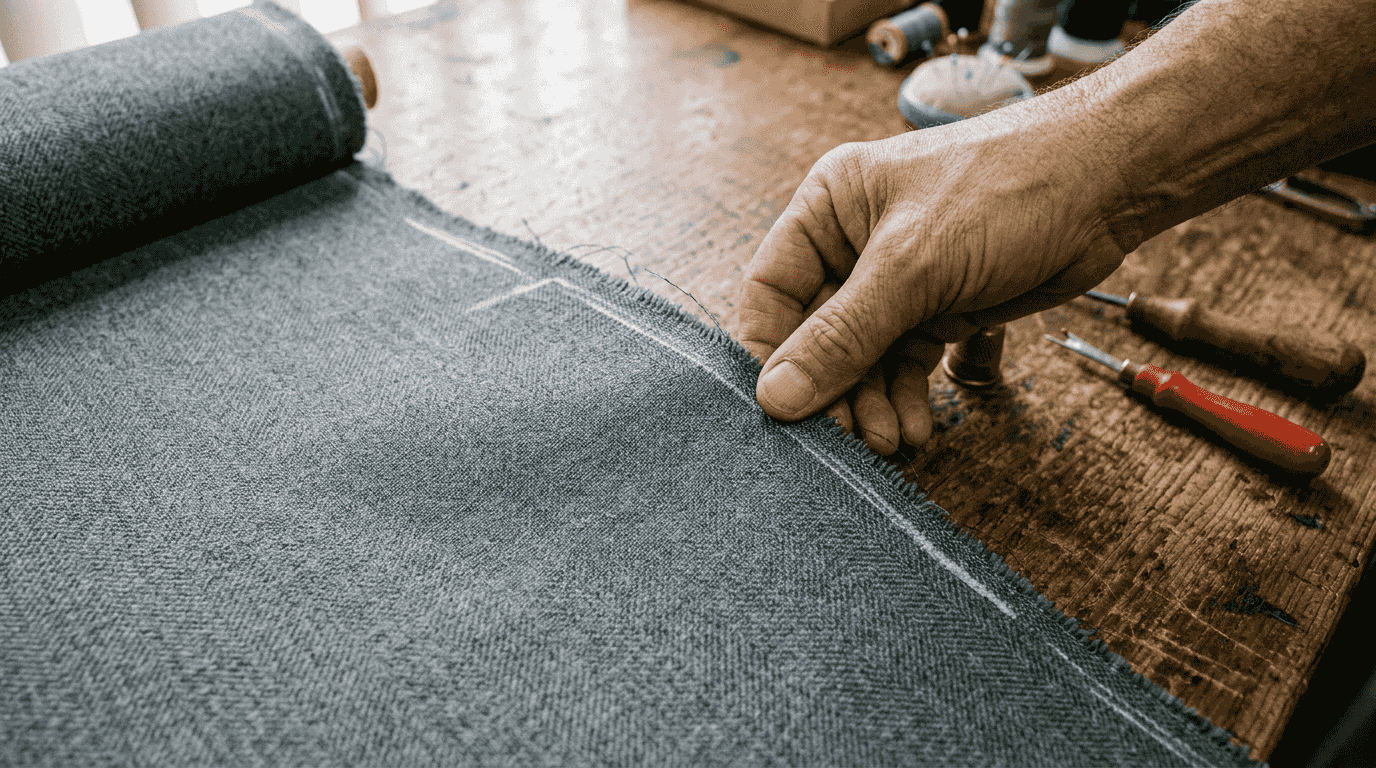
Worsted wool represents the refined version of standard wool. The worsted spinning process combs out short fibers, leaving only long, parallel fibers that create smoother, stronger yarn. This produces fabric with a tight, smooth surface that resists pilling and maintains a crisp appearance through repeated wear. Worsted wool is the backbone of corporate style due to its durability and subtle sheen.
You’ll encounter Super numbers (Super 100s, Super 120s, Super 150s) when specifying worsted wool. These numbers indicate fiber fineness, with higher numbers representing finer, softer fibers. While Super 180s sound luxurious, they sacrifice durability for softness. Choosing Super 100 to 120 cloth is advised for frequent wearers seeking durability without sacrificing luxury.
Worsted wool suits deliver multiple performance benefits that make them ideal for daily professional wear:
Exploring essential suit fabrics helps you understand how different wool types compare for specific garment applications.
Pro Tip: For clients wearing suits four or more days weekly, specify Super 100s to 120s worsted wool in medium weights (10 to 11oz). This combination delivers professional appearance with exceptional longevity, avoiding the premature wear common in finer Super numbers.
Fabric doesn’t just look different. It ages differently based on composition and construction. Fabric composition significantly impacts suit performance, with pure wool offering superior breathability and drape while blends balance durability and cost. Understanding these performance factors prevents the disappointment of suits that look worn after minimal use.
Yarn twist plays a critical role in fabric resilience that most designers overlook. Low-twist yarns stretch and bag at elbows and knees, with friction wearing fabric down in high-contact zones, especially with lighter fabrics. Higher twist creates tighter, more stable yarn that resists deformation under stress. When specifying fabric, ask about yarn twist, particularly for suits that will see frequent wear.
Weave structure determines how well fabric maintains its appearance. Twill weave is more durable and wrinkle-resistant than plain weave, ideal for suits needing superior shape retention. The diagonal structure of twill distributes stress more evenly, preventing localized wear. Plain weave offers better breathability but shows wrinkles more readily.
| Fabric Attribute | Lightweight (7-9oz) | Medium Weight (10-11oz) | Heavyweight (12oz+) |
|---|---|---|---|
| Season suitability | Spring, summer, warm climates | Year-round, transitional | Fall, winter, cold climates |
| Durability rating | Moderate (careful wear) | High (daily professional use) | Very high (extended lifespan) |
| Wrinkle resistance | Lower (requires more care) | Good (recovers naturally) | Excellent (minimal maintenance) |
| Shape retention | Moderate (bags more easily) | Strong (holds structure well) | Superior (exceptional stability) |
| Drape quality | Lighter, more fluid | Balanced structure and flow | Heavier, more structured |
Understanding fabric durability in suits helps you specify materials that match client expectations and wear patterns.
Common fabric performance factors to evaluate:
Pro Tip: Avoid ultra-fine Super 150s and above for business suits. These delicate fabrics work beautifully for occasional formal wear but fail quickly under daily use. The slight texture of Super 100s to 120s actually hides minor imperfections better than perfectly smooth high-Super fabrics.
Climate drives fabric selection more than most designers realize. Lighter fabrics under 9oz are ideal for warm weather while heavier fabrics 11oz and above better suit colder climates. Matching fabric weight to seasonal temperature prevents suits that feel stifling in summer or provide inadequate warmth in winter.
Weave patterns deliver different seasonal and aesthetic benefits beyond simple appearance. Plain weave offers more breathability and wrinkle resistance while twill weave provides superior drape and wrinkle hiding properties. This makes plain weave excellent for tropical weights, while twill excels in year-round business suits.
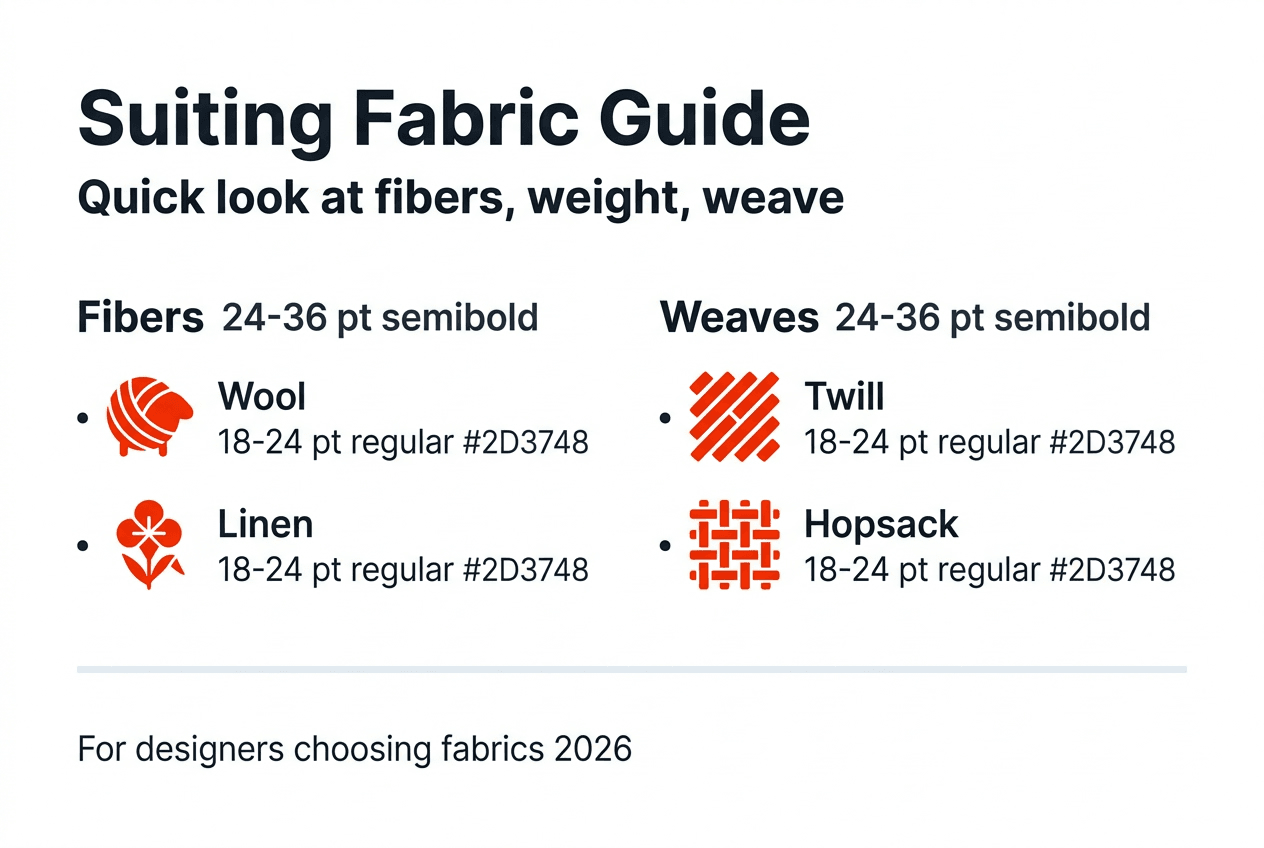
Hopsack weave suits travel and summer wear, herringbone suits autumn and winter, while satin weave suits formal wear aesthetics. Each weave creates different visual weight and texture that you can match to client body types and style goals. Hopsack’s loose, textured surface adds visual interest to lightweight fabrics. Herringbone’s diagonal pattern creates slimming vertical lines. Satin’s smooth finish emphasizes formal elegance.
| Weave Type | Best Season | Visual Character | Body Type Suitability | Formality Level |
|---|---|---|---|---|
| Plain | Summer, warm climates | Clean, simple texture | All body types | Business to casual |
| Twill | Year-round | Subtle diagonal texture | All body types, adds structure | Business to formal |
| Hopsack | Spring, summer, travel | Textured, relaxed appearance | Larger builds (adds dimension) | Business casual to casual |
| Herringbone | Fall, winter | Distinctive V-pattern | Slimmer builds (creates vertical lines) | Business to smart casual |
| Satin | Formal events, evening | Smooth, lustrous surface | Slimmer builds (emphasizes drape) | Formal to black tie |
Exploring lightweight summer fabrics and custom suiting fabric types expands your options for climate-specific projects.
Key factors when balancing climate and garment aesthetics:
Choosing quality suiting fabric transforms good designs into exceptional garments. After understanding how fiber, weight, and weave affect performance, the next step is sourcing materials that deliver on these technical requirements.
Fabric-Fabric.com offers curated selections that support informed tailoring decisions across seasons and styles. Whether you need breathable summer weights or structured winter fabrics, exploring diverse fabric options helps you match material to specific project needs. Quality fabric from trusted sources elevates garment durability and client satisfaction, turning technical knowledge into tangible results. Browse the backdrop fabrics collection or explore specialty options in the home decor fabric selection for inspiration on texture and weave variations.
Suiting fabric refers to textiles specifically designed and woven for tailored garments like suits, blazers, and dress trousers. These fabrics prioritize structure, drape, and durability while maintaining professional appearance through repeated wear and cleaning.
Wool is the general fiber category from sheep. Worsted wool undergoes additional combing that removes short fibers, creating smoother, stronger yarn with better drape and a finer surface texture ideal for professional suiting.
Select fabrics under 9oz for warm weather and summer suits, 10 to 11oz for year-round versatility, and 12oz and above for fall and winter garments. Climate control in offices may allow heavier weights even in warmer regions.
Bagging occurs when low-twist yarns or very fine Super numbers stretch under stress without recovering. Choosing medium-twist yarns in Super 100s to 120s range prevents this common problem in frequently worn suits.
Twill weave offers the best combination of durability, wrinkle resistance, and drape for daily business wear. Its diagonal structure distributes stress evenly and hides minor wrinkles better than plain weave.
No. Fabric weight and weave must match climate conditions for comfort and performance. A 7oz tropical weight fabric provides inadequate warmth in winter, while a 13oz fabric causes discomfort in summer heat.