

 US Dollar

What is seersucker fabric? Your guide to breezy comfort
Posted by BLG on 2026 Apr 3rd
Posted by BLG on 2026 Apr 3rd


TL;DR:
- Seersucker is a lightweight fabric with a distinctive puckered texture created during weaving.
- Its breathability, wrinkle resistance, and easy care make it ideal for hot weather clothing and home decor.
- Modern fiber blends like cotton-polyester enhance durability, while pure cotton maintains maximum breathability.
Seersucker is one of those fabrics that earns a second look the moment you touch it. That signature crinkled texture isn’t a defect or a trend—it’s the whole point. While plenty of lightweight fabrics compete for attention in warm months, seersucker has held its ground for centuries thanks to a weaving technique that’s genuinely clever. This guide covers everything you need to know: what seersucker is, how it’s made, its standout properties, the best fiber blends for your projects, how to use it, and how to keep it looking great wash after wash.
| Point | Details |
|---|---|
| Distinctive crinkled texture | Seersucker stands out for its puckered weave and breathability. |
| Versatile fiber choices | Modern seersucker can be found in cotton, blends, and other variations to suit your project. |
| Ideal for hot weather | Superior airflow makes seersucker perfect for summer clothing and home decor. |
| Low-maintenance care | Most seersucker fabrics are easy to wash, require little to no ironing, and stay crisp with simple care. |
| Broad project applications | From fashion to home decor, seersucker offers creative possibilities for beginners and pros alike. |
At its core, seersucker is a lightweight fabric typically made from cotton, defined by a distinctive puckered or crinkled texture created entirely during the weaving process. No post-production chemicals or heat treatments are needed to achieve that look. The texture comes from a technique called slack-tension weaving, where some warp threads (the lengthwise threads on a loom) are held taut while others are left loose. The loose threads pucker up, creating alternating smooth and crinkled stripes or checks. It’s a structural feature baked right into the cloth.
The name itself tells a story. Seersucker traces back to the Persian phrase shir o shekar, meaning “milk and sugar,” a poetic reference to the contrast between the fabric’s smooth and puckered sections. The fabric originated in India and Persia before British traders brought it to Western markets. Early versions sometimes alternated silk and cotton yarns that shrank at different rates when washed, naturally producing that rippled effect. Modern production is more controlled and consistent, but the spirit of the original technique lives on.
Here’s a quick look at how seersucker stacks up against other summer staples at a glance:
| Feature | Seersucker | Voile | Chambray |
|---|---|---|---|
| Texture | Puckered, crinkled | Smooth, sheer | Smooth, soft |
| Breathability | Very high | High | Moderate |
| Wrinkle resistance | High | Low | Moderate |
| Care ease | Easy | Moderate | Easy |
“Seersucker’s puckered weave isn’t just visual flair—it’s a functional design that lifts fabric away from the skin, allowing air to circulate more freely than a flat-woven cloth of the same weight.”
If you’re exploring the best fabrics for summer, seersucker consistently earns its place at the top of the list. Its combination of structure and breathability is hard to beat for warm-weather sewing and styling.
With the basics covered, it’s time to dig into the functional features that help seersucker stand apart in everyday use.
The puckered texture does more than look interesting. Air pockets created by the crinkle allow superior airflow and cooling, which is why seersucker has been a go-to for hot climates for generations. The fabric sits slightly away from the skin rather than clinging, which means sweat evaporates faster and you stay more comfortable. That same pre-puckered state also makes seersucker naturally wrinkle-resistant. Because the fabric is already textured, additional creases from wear or washing simply don’t show the way they would on a flat-woven cotton.

Low maintenance is another major selling point. Seersucker is machine washable, dries quickly, and rarely needs ironing. For sewists and home decorators, that translates to finished projects that hold up well without constant upkeep.
Here’s how seersucker compares to two other popular lightweight fabrics:
| Property | Seersucker | Cotton poplin | Linen |
|---|---|---|---|
| Weight | Light | Light to medium | Light to medium |
| Breathability | Very high | Moderate | Very high |
| Wrinkle resistance | High | Low | Very low |
| Care needs | Easy (machine wash) | Easy | Moderate |
| Texture | Puckered | Smooth | Textured, stiff |
Key advantages at a glance:
Pro Tip: When shopping for seersucker, run your fingers across the fabric. Quality seersucker has a consistent, even pucker with clearly defined smooth stripes. If the texture feels random or uneven, the weave tension may be inconsistent, which can affect how the fabric behaves when cut and sewn.
For a broader look at how seersucker fits into warm-weather textile choices, the guide to lightweight fabrics for summer is worth a read before you commit to a project.
Now that we’ve analyzed what makes seersucker special, let’s examine the variety of fiber options available to match specific project needs.
Seersucker is primarily made from 100% cotton for breathability and comfort in hot weather, but modern manufacturing has introduced several useful blends. Each has tradeoffs worth understanding before you buy.
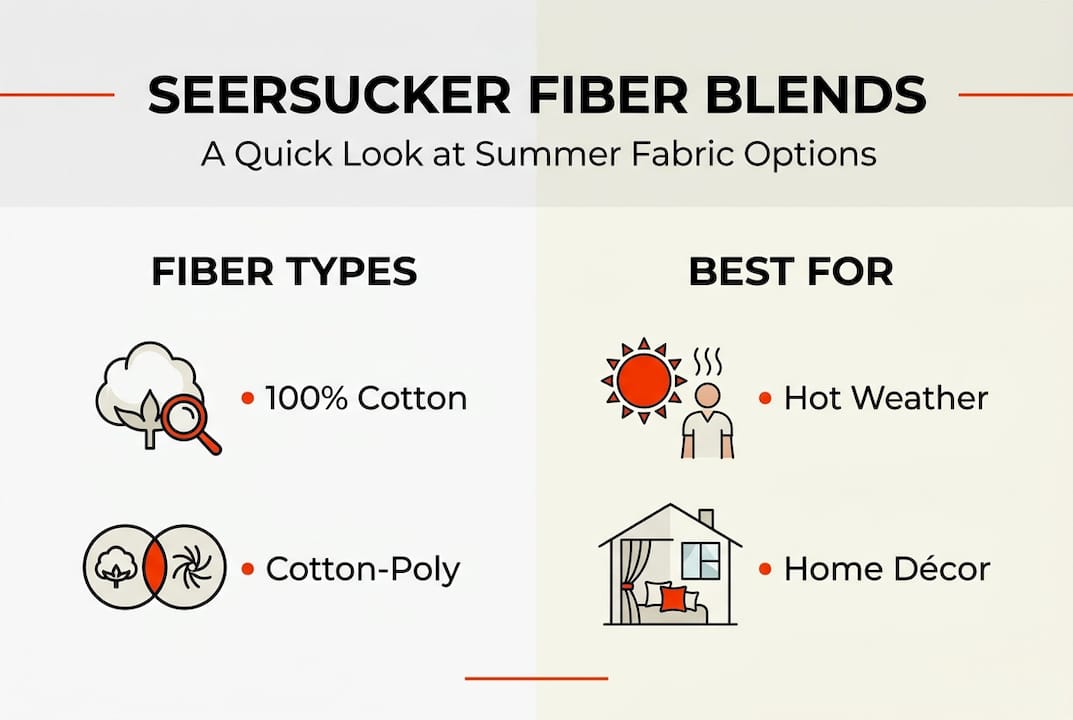
| Blend type | Breathability | Durability | Care | Best for |
|---|---|---|---|---|
| 100% cotton | Excellent | Good | Machine wash cold | Clothing, kids’ wear |
| Cotton-polyester | Moderate | Very good | Easy, wrinkle-resistant | Home decor, uniforms |
| Cotton-linen | Very good | Good | Hand or gentle machine | Fashion, structured garments |
| Cotton-spandex | Good | Good | Gentle machine | Fitted clothing, activewear |
Polyester blends offer better durability and moisture-wicking properties but sacrifice some breathability compared to 100% cotton. For sewing projects where natural feel and maximum airflow matter most, pure cotton seersucker is the clear winner. For items that need to endure heavy use or frequent washing, a cotton-polyester blend holds up better over time.
Here’s a quick guide to matching fiber to project:
Pro Tip: For home decor projects like curtains or pillow covers, lean toward a cotton-polyester seersucker. The added polyester content resists fading and holds its shape better through repeated washing, which matters when a piece needs to look fresh for years. For anything worn directly against the skin, stick with 100% cotton.
If you’re working on a project that combines seersucker with other specialty fabrics, the tips in this guide to sewing silk and blends can help you navigate mixed-material construction.
Once you know your fiber and blend options, the next step is understanding where seersucker truly shines in practical use.
Seersucker is widely used for summer clothing including suits, shirts, dresses, and trousers, as well as bedding, curtains, and children’s wear. Its lightweight stability makes it easy to cut and sew, which is why it shows up in so many beginner and intermediate sewing projects.
Here are some of the best creative projects to try with seersucker:
“Designers working in warm climates return to seersucker season after season because it solves a real problem: how to look polished without overheating. The fabric does the work so the wearer doesn’t have to.”
For quilters, seersucker can add unexpected texture to patchwork designs. Browse geometric quilting fabric options to see how seersucker’s stripes and checks pair with other patterns. And if curtains are on your project list, pairing seersucker with cotton drapery options gives you a clean, cohesive look for any room.
After exploring how seersucker is used, it’s crucial to ensure your fabric stays in top shape long term. A few simple care habits make all the difference.
Seersucker is low-maintenance by nature, but a little attention goes a long way in preserving that signature texture. Avoid high heat when washing or drying cotton seersucker, as excessive heat can flatten the pucker and reduce the fabric’s visual appeal over time.
Follow these steps to keep your seersucker projects looking their best:
Mistakes to avoid:
Pro Tip: For seersucker curtains or home decor items, spot clean when possible between full washes. This keeps the fabric fresh without the repeated heat exposure that gradually flattens the texture.
For more detailed guidance, the fabric care guide covers a wide range of textile types, and the fabric care checklist is a handy reference to keep nearby when starting any new project.
Seersucker often gets written off as old-fashioned—a fabric for grandpa’s summer suit or a novelty print for kids. That’s a mistake worth correcting. The truth is, seersucker’s core features align almost perfectly with what modern sewists and decorators actually want: easy care, natural breathability, visual texture without added embellishment, and durability that doesn’t require babying.
There’s also a sustainability angle that rarely gets mentioned. Because seersucker’s texture is built into the weave rather than applied with chemicals or coatings, it doesn’t rely on finishing treatments that break down over time or wash into waterways. What you see is what the fabric actually is. That kind of honest construction is increasingly rare.
We think seersucker’s real appeal is that it works hard without asking for much in return. It doesn’t wrinkle dramatically, it doesn’t need special washing, and it doesn’t lose its character after a season of use. For anyone building a fabric stash or planning a summer sewing project, overlooking seersucker means missing one of the most practical and underrated textiles available.
Ready to put seersucker to work? Whether you’re planning a summer wardrobe refresh, updating your home decor, or stocking up on versatile fabrics for upcoming projects, the right textile makes all the difference.

At fabric-fabric.com, you’ll find a wide range of home decor fabric options suited to everything from curtains to cushion covers, including textured and lightweight choices that complement seersucker beautifully. If you’re working on a larger installation or display, explore the selection of backdrop fabrics for creative and functional inspiration. Browse the full collection to find the fabrics that match your vision, your budget, and your next great project.
Yes, seersucker is stable, lightweight, and easy to handle, making it an excellent choice for beginner sewing projects. Its texture also helps hide minor imperfections in seams.
No, seersucker is naturally wrinkle-resistant due to its pre-puckered state, so it rarely needs ironing. Simply hang it to dry and it’s ready to wear or use.
Wash in cold water and dry on low heat or air-dry to preserve the crinkled texture. High heat is the main culprit behind flattened seersucker.
Choose cotton-polyester blends for durable, wrinkle-resistant home decor, and pure cotton seersucker for maximum breathability in clothing worn against the skin.