

 US Dollar

What is pile fabric? A 2026 guide for crafters
Posted by BLG on 2026 Mar 8th
Posted by BLG on 2026 Mar 8th

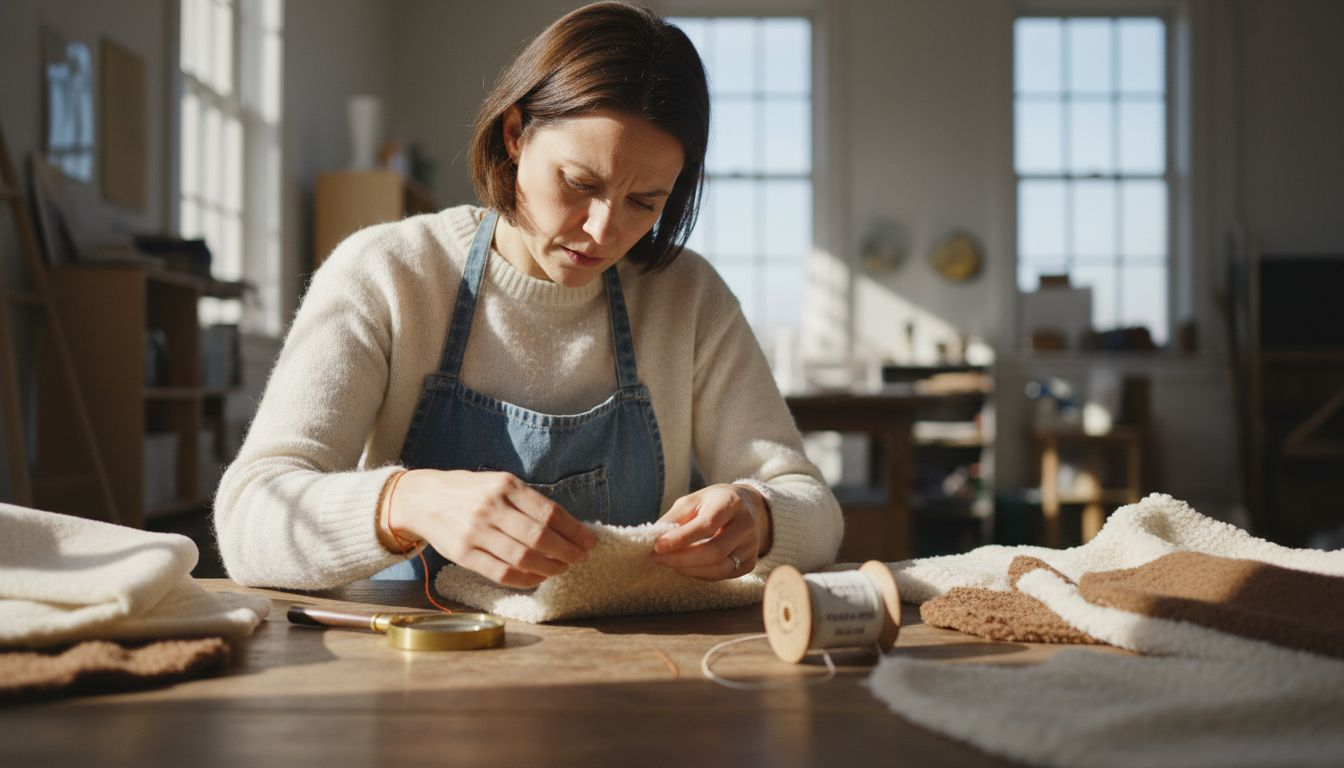
Many crafters believe pile fabrics only mean velvet or plush materials. That’s not quite right. 48% of crafters incorrectly identify velour and velvet as the same fabric. Pile fabric actually describes any textile with a raised surface created from loops or cut fibers. Understanding these distinctions helps you choose the right material for your next DIY project, whether you’re making towels, upholstery, or garments.
| Point | Details |
|---|---|
| Pile fabric features raised surfaces | Made from loops or cut fibers creating distinct textures for different uses |
| Main types include cut and looped pile | Velvet uses cut pile while terry cloth uses looped pile construction |
| Fiber content affects durability and care | Natural fibers like silk differ from synthetics like polyester in performance |
| Proper maintenance preserves texture | Care methods vary by pile type and fiber composition |
| Common misconceptions lead to poor choices | Not all pile fabrics are velvet; looped pile serves different purposes |
Pile fabric refers to any textile with a raised surface formed by loops or cut fibers standing upright from a base fabric. This construction creates the soft, textured feel you recognize in materials like velvet, terry cloth, and velour.
The key characteristics that define pile fabric include pile height, pile density, and loop structure. Pile height measures how tall the fibers stand from the base. Pile density indicates how closely packed these fibers are. These factors directly influence the fabric’s texture, durability, and performance in your projects.
Crafters and DIY enthusiasts choose pile fabrics for several compelling reasons:
The construction creates tiny air pockets that trap warmth, making pile fabrics ideal for cozy throws, winter garments, and upholstery. Understanding pile terminology helps you communicate clearly when shopping for materials. When you see “pile” in fabric descriptions, you’re looking at a specific construction method, not a single fabric type.
Pile fabric production uses specialized weaving or knitting techniques to create raised surfaces. Two main construction methods produce distinctly different results.
Looped pile construction keeps fiber loops intact on the fabric surface. Weaving machines pull yarns through the base fabric to form these loops without cutting them. This creates durable, textured fabrics with excellent absorbency. The loops trap moisture effectively, making this construction perfect for terry cloth towels and bath mats.
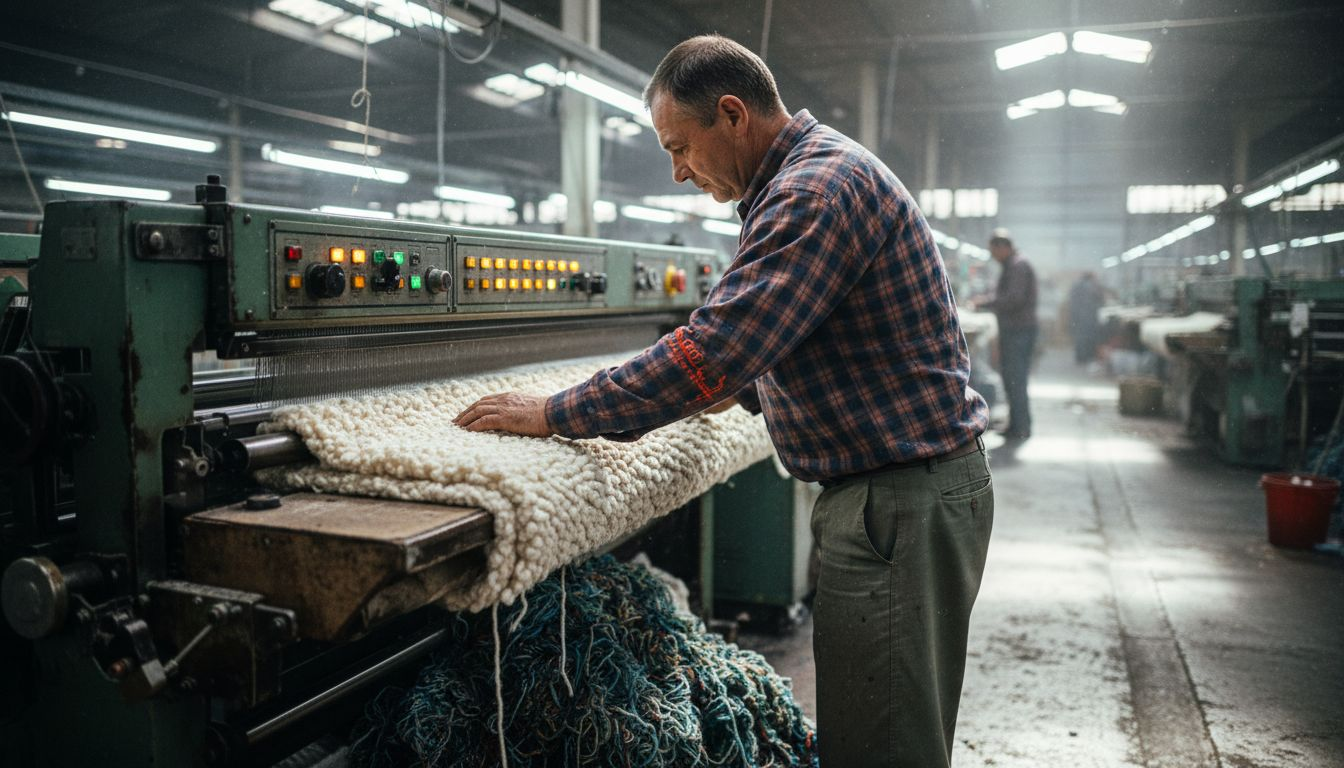
Cut pile construction takes those loops one step further. After weaving, manufacturers cut the loops open to create individual fiber ends standing upright. This produces the soft, plush surface you feel in velvet and velour. The cut ends reflect light differently, creating the characteristic sheen of these fabrics.
Pile height differences create distinct fabric personalities:
Manufacturing steps for looped pile:
Manufacturing steps for cut pile:
| Construction Type | Loop Status | Texture | Best Uses |
|---|---|---|---|
| Looped Pile | Intact loops | Textured, durable | Towels, upholstery, cleaning cloths |
| Cut Pile | Cut fiber ends | Soft, plush | Velvet garments, luxury upholstery |
| Mixed Pile | Combination | Patterned surface | Decorative fabrics, sculptured designs |
Pro Tip: Run your fingers across the fabric surface. If you feel distinct loops, it’s looped pile. If the surface feels uniformly smooth and plush, you’re touching cut pile.
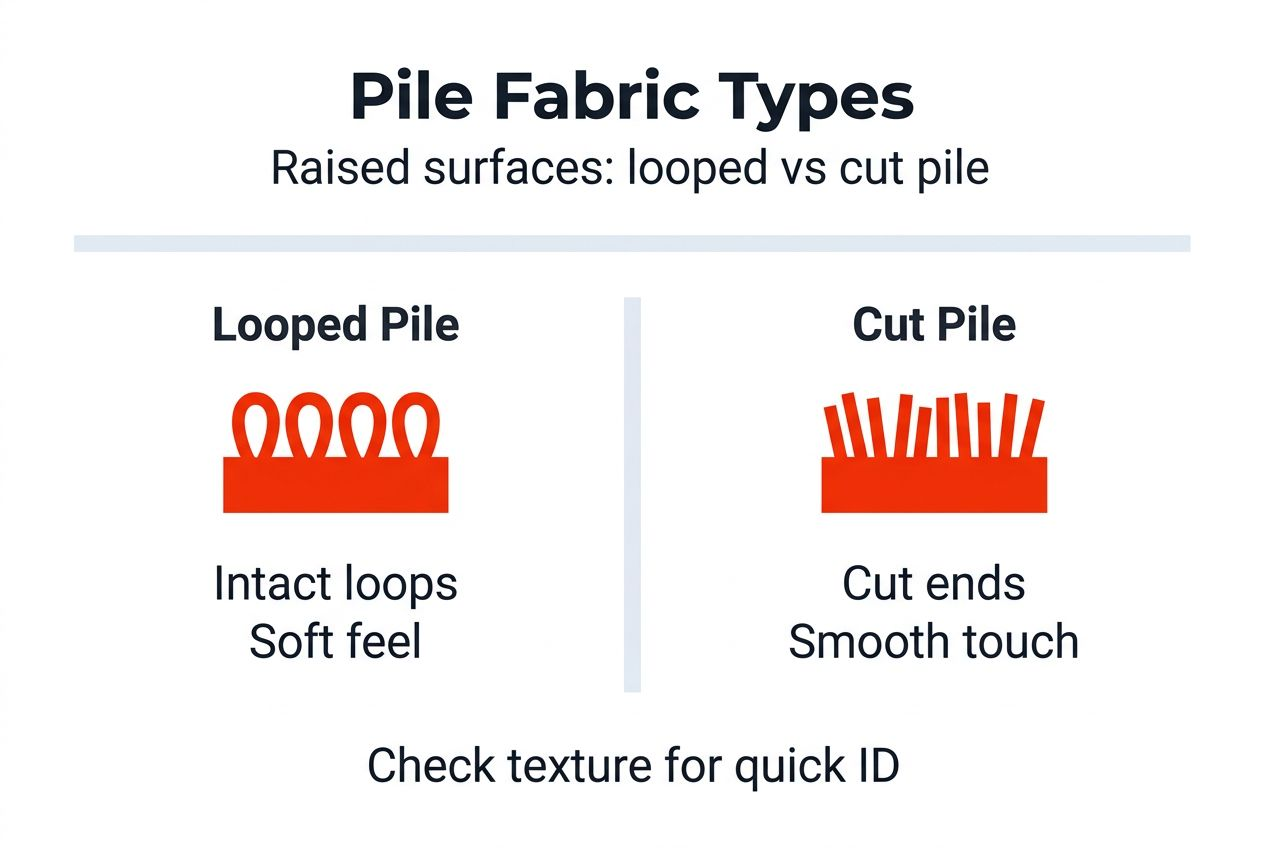
The velvet vs velour difference comes down to pile height and fiber type. Both use cut pile construction, but velvet typically features longer pile from silk or rayon. Velour uses shorter pile from cotton or synthetic blends. Looped pile fabrics like terry cloth have intact loops ideal for absorbency, while cut pile like velvet provides plush texture.
The pile fabric family includes diverse members with distinct characteristics. Understanding these variations helps you select the right material for your specific project needs.
Velvet and velour often get confused, but they differ significantly. Velvet often made from silk with longer pile, velour from cotton or polyester with shorter pile and different uses. Velvet drapes beautifully for elegant garments and curtains. Velour works better for casual clothing and upholstery that needs regular washing.
Fiber content dramatically affects pile fabric performance:
Silk velvet represents the luxury end of pile fabrics. The natural fiber creates exceptional luster and drape. However, it requires dry cleaning and careful handling. Polyester velour offers practical advantages. It resists wrinkles, tolerates machine washing, and costs substantially less.
Cotton dominates terry cloth production. The natural fiber absorbs moisture efficiently while remaining soft against skin. Egyptian and Pima cotton varieties create premium terry cloth with longer, stronger fibers. Synthetic terry cloth dries faster but may feel less absorbent.
Price and quality factors to consider:
For deeper exploration of velvet varieties, check out what is velvet and discover types of velvet fabric designer guide. Professional costume designers share insights on velvet virtuoso deep textures for stage applications.
Several common misunderstandings about pile fabrics lead crafters to make poor material choices. Let’s clear up the confusion.
The biggest mistake? Assuming all pile fabrics are velvet. Terry cloth, corduroy, and fleece all qualify as pile fabrics despite looking and performing completely differently. Nearly half of crafters confuse velour and velvet leading to poor fabric choices. This mix up causes project failures when the selected fabric doesn’t perform as expected.
Looped versus cut pile confusion creates another problem:
Terminology challenges compound the issue. “Pile” sounds like “piling,” the unwanted fabric pills that form from wear. These are completely different phenomena. Pile is intentional construction. Pilling is fiber degradation.
Many crafters believe all pile fabrics need delicate care. That’s not true. Terry cloth tolerates hot water washing and tumble drying. Synthetic velour handles gentle machine cycles. However, silk velvet does require dry cleaning. Always check the specific fabric’s care requirements rather than applying blanket assumptions.
Other frequent errors include:
Pro Tip: Before committing to a large fabric purchase, buy a small sample and test it for your intended use. Wash it according to planned care methods and evaluate how it performs.
Pile fabric characteristics translate into specific advantages for various crafting and DIY projects. Understanding these benefits helps you maximize material performance.
Key benefits by pile type:
Pile fabrics’ unique texture and insulation make them ideal for upholstery, clothing, and absorbent textiles. The looped structure in terry cloth towels absorbs water far better than flat weave fabrics, making them essential for bath and kitchen use.
Common crafting applications include:
Framework for matching pile fabric to project needs:
Texture contributions enhance craft design beyond mere functionality. The way pile catches light creates visual movement. Contrasting pile direction produces pattern effects without multiple colors. These design possibilities make pile fabrics valuable for creative projects.
Explore related concepts like understanding why use quilted fabric for layered texture approaches and learn why fabric finishes matter for surface treatments. Professional insights on how fabrics are made deepen your textile knowledge.
Proper care preserves pile fabric appearance and extends usable life. Care requirements vary significantly based on pile type and fiber content.
Cut pile fabrics like velvet demand gentle treatment. Improper care can flatten pile height and reduce softness; cleaning varies by pile type. Dry cleaning works best for silk velvet and structured velvet garments. Some cotton or synthetic velvets tolerate hand washing in cool water with mild detergent.
Looped pile fabrics like terry cloth are more forgiving:
Consequences of improper care include pile matting where fibers compress and lose their upright structure, loss of characteristic texture and visual appeal, reduced softness making fabrics feel rough or stiff, and color changes from inappropriate cleaning methods.
General maintenance tips for all pile fabrics:
Fabric specific considerations depend on fiber content. Silk requires professional cleaning and careful storage away from light. Cotton tolerates more aggressive washing but may shrink if exposed to high heat. Polyester resists wrinkles and maintains color but can develop static.
For comprehensive guidance, review how to care for fabrics step guide covering various textile types. Professional wardrobe specialists offer expert garment care guidelines for maintaining quality textiles.
You now understand pile fabric as any textile with a raised surface created from loops or cut fibers. The main types include looped pile construction for absorbent, durable fabrics like terry cloth, and cut pile construction for soft, plush materials like velvet and velour.
Key takeaways for successful projects:
Proper care maintains fabric appearance and extends project life. Looped pile tolerates machine washing while many cut pile fabrics need gentle treatment or dry cleaning. Understanding these differences prevents damage and disappointment.
Exploring pile fabrics opens creative possibilities for craft and DIY work. The variety of textures, weights, and fiber options means you can find ideal materials for upholstery, garments, home textiles, and decorative projects. Source quality pile fabrics thoughtfully by examining pile density, checking fiber content labels, and verifying care requirements before purchase.
Ready to put your pile fabric knowledge into action? We stock quality velvet, velour, and specialty pile fabrics perfect for your crafting needs. Our backdrop fabrics collection includes luxurious pile options ideal for photography and event staging.
Browse our home decor fabric by the yard selection for upholstery weight pile fabrics in diverse colors and textures. Whether you’re creating throw pillows, reupholstering furniture, or sewing garments, you’ll find materials suited to your project requirements. Visit the fabric fabric homepage to explore our complete inventory and take advantage of current promotions on premium textiles.
Pile fabric uses natural fibers like cotton, silk, or wool, or synthetic materials such as polyester, nylon, and acrylic. The pile surface consists of loops or cut fiber ends standing upright from a woven or knitted base fabric. Fiber choice affects softness, durability, cost, and care requirements for the finished textile.
Examine the fabric surface closely for intact loops indicating looped pile, or individual cut fiber ends showing cut pile construction. Run your fingers across the material; looped pile feels textured with distinct loops you can catch your finger on, while cut pile feels uniformly smooth and plush. The visual appearance also differs, with looped pile showing clear loop structure and cut pile displaying a dense, velvety surface.
Machine washing velvet is generally not recommended, especially for silk or rayon varieties that require dry cleaning or gentle hand washing. Cotton or polyester velour often tolerates gentle machine cycles with cool water and mild detergent. Always check the care label on your specific fabric, as fiber content and construction quality determine appropriate cleaning methods. When in doubt, test a small hidden area or choose professional cleaning for valuable items.
Pile fabric provides soft texture that adds comfort and visual appeal to craft projects. The construction creates warmth and insulation by trapping air between fibers, perfect for cozy items like blankets and winter garments. Looped pile varieties like terry cloth offer excellent absorbency for practical items including towels, bath mats, and cleaning cloths. The dimensional surface creates light play and depth that flat fabrics cannot achieve, enhancing decorative projects with rich texture.