

 US Dollar

What Is Muslin? A Crafter's Guide to Uses, Types, and Tips
Posted by BLG on 2026 Apr 21st
Posted by BLG on 2026 Apr 21st

TL;DR:
- Muslin is a versatile, breathable cotton fabric used for prototypes, quilting, and heirloom projects.
- It comes in different grades, from utility and budget options to soft organic and handwoven varieties.
- Proper pre-washing, care, and selection enhance its functionality for dyeing, embroidery, and lasting keepsakes.
Muslin gets written off as the plain, forgettable cousin in a fabric store full of satins and velvets. That reputation could not be more misleading. This humble cotton weave has dressed royalty, backed countless quilts, and saved thousands of sewing projects from costly mistakes. Its open weave structure enhances airflow and drape in ways that tightly woven fabrics simply cannot match. Whether you are just starting out or you have been quilting for decades, understanding muslin will change how you approach your projects. This guide covers what muslin is, how it differs by grade, and the smartest ways to use it.
| Point | Details |
|---|---|
| Muslin’s versatility | Muslin is suitable for quilting, drafts, linings, and creative crafts. |
| Choosing the grade | Upgrade to organic muslin for projects needing softness and durability. |
| Care and sourcing | Muslin is easy to wash and widely available by the yard online and in shops. |
| Crafting tips | Use utility muslin for mock-ups and premium for finished projects. |
Muslin is one of the oldest cotton fabrics in the world. Its roots trace back to the city of Mosul in present-day Iraq, though historians also credit the Dhaka region of Bangladesh as an early center of fine muslin production. For centuries, artisans wove it by hand into featherlight cloth prized by traders and royalty alike. Today, it remains one of the most widely used fabrics in sewing rooms and craft studios across the country.
What sets muslin apart starts at the loom. Its “one over, one under” weave uses low-twist yarns to create an open, breathable structure. This is called a plain weave, and it is the most basic weave pattern in textile production. The low twist in the yarn keeps the threads loose enough to allow air to move through the fabric, which gives muslin its signature softness and drape.
Here are a few key terms every crafter should know before buying muslin:
| Muslin type | Weave finish | Common use |
|---|---|---|
| Greige (unbleached) | Raw, cream-colored | Patterns, mock-ups |
| Bleached muslin | Bright white finish | Photography, linings |
| Organic/handwoven | Fine, soft texture | Heirloom quilts, baby items |
| Printed muslin | Dyed or screen printed | Quilting, home decor |
“The best fabric for a job is the one that fits the need, not just the budget. Muslin earns its place at every skill level.”
Mass-produced muslin and handwoven organic muslin look similar at a glance, but they feel and perform differently. You can explore the full range in our muslin fabric guide or browse the range of available muslin varieties to see what suits your project.
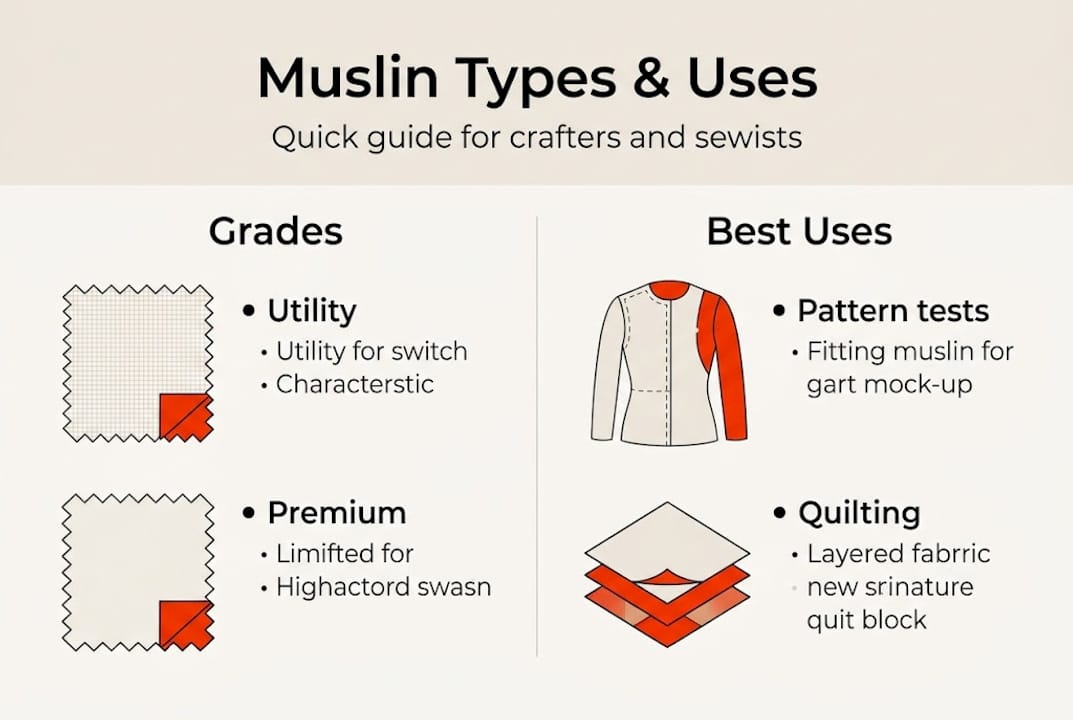
Not all muslin is created equal, and choosing the wrong grade is one of the most common mistakes crafters make. Muslin generally falls into three broad categories: utility grade, premium grade, and organic or handwoven muslin. Each has a real purpose, and picking the right one saves you time, money, and frustration.
Here is how to think about each grade:
| Grade | Softness | Cost | Best for |
|---|---|---|---|
| Utility | Stiff | Low | Mock-ups, patterns |
| Premium | Medium | Moderate | Linings, quilting |
| Organic/handwoven | Very soft | Higher | Heirlooms, wearables |
For crafters interested in the environmental side of fabric choices, reading about organic cotton benefits can help you decide when the upgrade is worth it. If you are still exploring how cotton fabrics compare across projects, checking out information on cotton types for crafts gives you a wider picture.
One common mistake is reaching for utility muslin when making a lined garment. Utility grade can feel rough against the skin after sewing. For anything that touches the body, premium or organic is a smarter call. Guidance on selecting lining fabric walks through this in more detail.
Pro Tip: If you are working on a complicated pattern with multiple fitting adjustments, use utility grade for all your practice versions. Once you have the fit nailed, switch to organic or premium muslin for the final piece. You will protect your investment without sacrificing quality.
Understanding muslin grades makes it easier to unlock its full creative potential. Here is how crafters and DIY lovers use muslin in real projects.
Muslin’s versatility spans a surprisingly wide range of applications:
One of muslin’s most underrated qualities is how well it takes dye. Because the fibers are loosely twisted and the weave is open, fabric dye penetrates deeply and evenly. This makes muslin a go-to fabric for tie-dye, natural dyeing with plants, and ombre effects. You can start with an inexpensive bolt of greige muslin and transform it into something completely custom.
Muslin also softens significantly with washing, especially organic varieties. Post-wash softness in handwoven muslin surpasses most mass-produced alternatives, which is why it is the preferred choice for heirloom quilts. For quilting projects in particular, browsing options like quilting fabric or patterns such as geometric quilting fabric and animals quilting fabric can inspire how you incorporate muslin into layered designs.
If you are new to quilting with muslin, the article on why use quilted fabric breaks down the structural advantages in more depth.
Pro Tip: Always buy a little more muslin than you think you need. Shrinkage after pre-washing is real, and running short mid-project is a frustrating problem to solve.
With project ideas in mind, sourcing quality muslin and caring for it is the next priority for crafters.
When buying muslin, train your eye to look for a few quality markers:
Buying online is convenient, and reputable fabric retailers let you filter by grade, width, and finish. The muslin fabric selection at fabric-fabric.com covers a range of options so you can compare before you commit.
Muslin’s open weave structure allows significantly more airflow than tightly woven cotton, which is why it stays fresh and breathable even in warm conditions. That same openness also means it responds quickly to heat and water during washing.
For care, keep these guidelines in mind:
With all the facts covered, here is a fresh perspective on muslin’s real place in the craft world.
Most crafters think of muslin as a throwaway fabric. Something you use up, discard, and forget. That view misses the point entirely. Muslin’s “plainness” is exactly what makes it so powerful. A blank canvas does not lack value because it is blank. It has value because of what it allows.
Experienced sewists know this intuitively. They use muslin for prototypes, yes, but they also reach for it when the final product demands breathability, gentleness, or a surface that takes dye, embroidery, or layering without resistance. The same fabric that saves a costly mistake also becomes the finished heirloom quilt a family hands down through generations. Organic cotton in particular grows softer and more beautiful over time, unlike synthetic blends that pill and fade.
The softness of organic muslin post-wash is proof that simplicity and longevity are not opposites. The makers who get the most out of muslin are the ones who stop seeing it as a placeholder and start treating it as a deliberate, skilled choice.
Ready to find quality muslin for your next project? Here is where to start.
At fabric-fabric.com, we carry muslin options for every skill level and project type. Whether you need utility grade for pattern testing or soft organic muslin for an heirloom quilt, the selection covers the full range. If you are thinking about photography setups, event decoration, or theatrical projects, our backdrop fabrics collection has you covered with the right weights and finishes.

For crafters working on home decor or soft furnishing projects, the home decor fabric category offers coordinating options that pair well with muslin bases. Every product listing includes usage suggestions and detailed specifications so you can shop with confidence, whether you are a first-time buyer or restocking a well-loved stash.
Yes, muslin is widely used for quilting in both top layers and backing. Organic muslin is especially popular for heirloom quilts because it grows softer with every wash.
Yes, muslin’s open weave structure and cotton fibers absorb dye deeply and evenly, making it one of the best base fabrics for custom coloring and dyeing techniques.
Pre-washing is strongly recommended to remove manufacturing sizing, soften the fabric, and account for shrinkage before you cut your pattern pieces. Post-wash softness improves noticeably, especially in organic grades.
Muslin uses low-twist yarns and a plain weave to create a more open, breathable structure compared to the tighter weave found in standard dress cotton or quilting cotton.
Muslin is available from online fabric retailers and local craft stores, often sold by the yard. Look for specialty fabric sites that let you filter by grade and finish to find the right type for your project.